*This page contains affiliate links. We may earn a commission if you make a purchase through these links.
Nobody in Aoashi can set a ball on fire. No one jumps three stories to head it in, and no striker grows a glowing aura before he shoots. What the show gives you instead is the reason each goal goes in, and the reason the defense fell apart a few seconds earlier. Its hero, Ashito Aoi, is a fifteen-year-old from a small town in Ehime who knows almost nothing about tactics, so every time a coach explains something to him, you get to listen in.
My bias, up front: I support Arsenal in the Premier League and Kawasaki Frontale in the J.League, and Aoashi is my favorite soccer manga. Season 2 started airing in Japan on October 4, 2026, so this is a good moment to catch up on the first 24 episodes. This page covers which US services carry Season 1, where to find Season 2, and the parts where the anime falls short of the manga.
📺 Where to Watch Aoashi Season 1 (October 2026)
| Service | Status | Notes |
|---|---|---|
| Crunchyroll | Streaming | Japanese audio with subtitles, English dub, Season 2 weekly |
| Amazon Prime Video | Add-on | Through the Crunchyroll channel, billed separately |
| Apple TV | Rent / Buy | Purchase only |
| Google Play | Rent / Buy | Purchase only |
| Netflix | Not available | Streams in Japan, not in the US catalog |
| Hulu | Not available | Not carried |
| HBO Max | Not available | Not carried |
As of October 13, 2026, Crunchyroll is the only regular US subscription that includes Aoashi Season 1. It carries the Japanese audio with English subtitles as well as the English dub, which premiered in April 2022. Crunchyroll also began streaming Season 2 on October 4, 2026, with new episodes following the weekly broadcast in Japan, so one subscription covers both. Prime Video only offers it through the Crunchyroll channel, which is billed separately from your Prime membership. Netflix carries Aoashi in Japan, not in the US. Streaming rights change hands quietly, so confirm on Crunchyroll before subscribing.
Here because of Season 2? Start with Season 1 anyway. The section after the synopsis explains why.
🎬 Trailer
Crunchyroll’s own Aoashi videos are blocked in Japan, where this site is edited, and we couldn’t find an official English trailer we could check from here. This is the official Japanese promo from ShoPro, one of the show’s producers, released before the 2022 premiere.
Work Info
- Title: Aoashi, Season 1
- Broadcast in Japan: April 9 to September 24, 2022 (NHK Educational TV)
- Episodes: 24
- Director: Akira Sato / Series Composition: Masahiro Yokotani
- Animation Production: Production I.G
- Original Manga: Yugo Kobayashi (Shogakukan, Weekly Big Comic Spirits)
- Japanese Voice Cast: Koki Osuzu (Ashito Aoi), Chikahiro Kobayashi (Tatsuya Fukuda), Maki Kawase (Hana Ichijo)
- English Dub: Ciaran Strange (Ashito Aoi)
- Music: Masaru Yokoyama
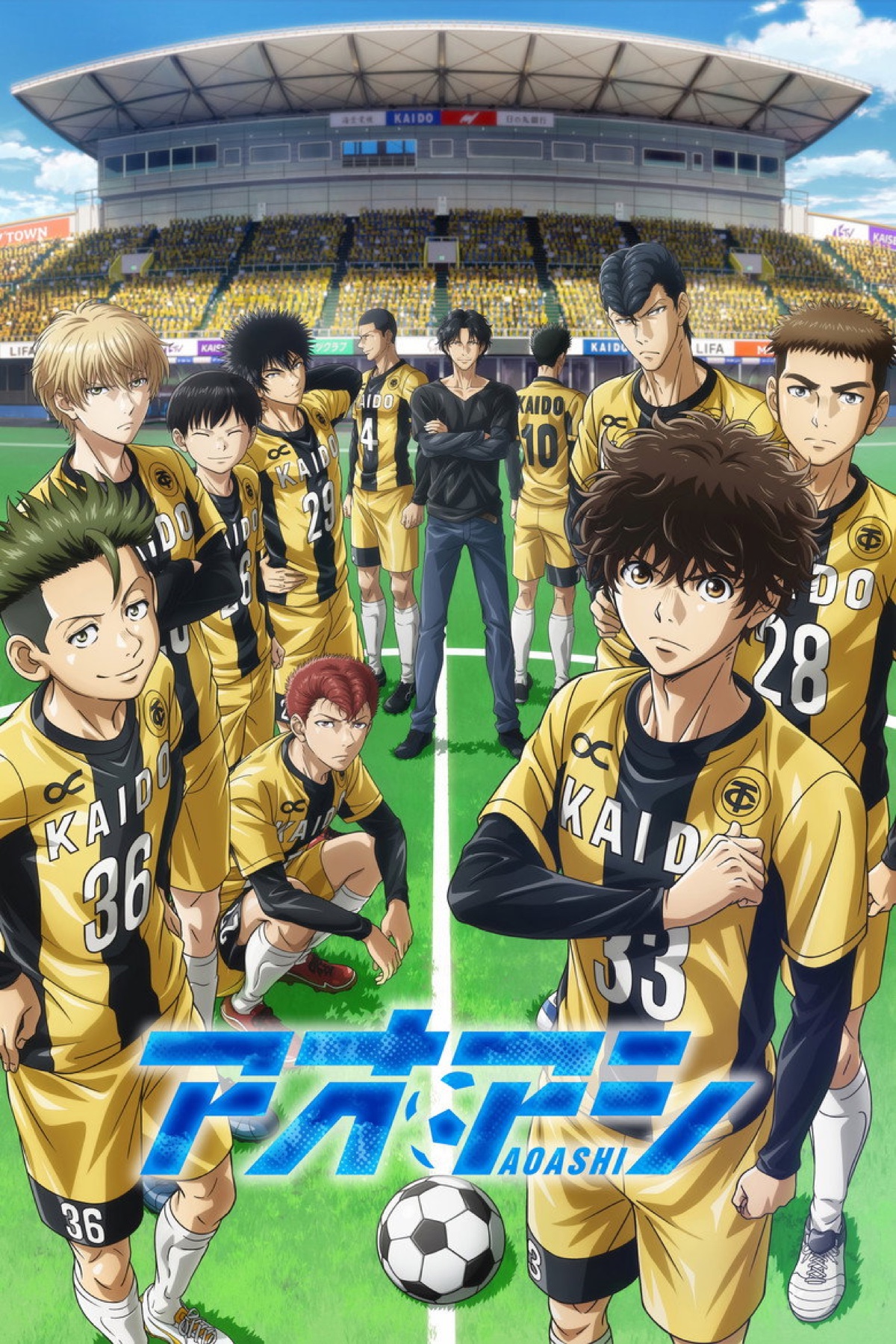
📖 Synopsis – No Spoilers
Ashito Aoi is the ace of a weak junior high team in Ehime, on the island of Shikoku. In his last prefectural tournament, the opposing goalkeeper needles him, Ashito snaps, gets a red card, and his team goes out. He is running along the shore to burn off the anger when a stranger stops him: Tatsuya Fukuda, the coach of the youth team at Tokyo City Esperion FC, a fictional club in the J.League’s top flight.
Fukuda invites him to the club’s tryout in Tokyo, and Ashito goes alone. The other hopefuls arrive with résumés. Ashito arrives with nothing on paper. If he gets in, what waits for him is a squad of teammates who are far ahead of him in technique and in their understanding of the game, and a daily training session where the gap is impossible to hide.
🤔 Do You Need Aoashi Season 1 Before Season 2?
Yes. Season 2 picks up straight from the end of Season 1 and does not stop to explain. Its first episode, “Starting Line,” opens with Ashito already promoted to the club’s A team. If you haven’t seen what he lost over the first 24 episodes, and how he came to accept it, that premiere plays as nothing more than a hard first day of practice.
| Aoashi Season 2 | Details |
|---|---|
| Broadcast in Japan | NHK Educational TV, Sundays at 5:00 p.m. JST, from October 4, 2026 |
| US streaming | Crunchyroll, from October 4, 2026 |
| Studio | TMS Entertainment, directed by Kazuki Yokoyama (Season 1 was Production I.G) |
| Theme songs | Opening: “Fortress Defense” by 10-FEET. Ending: “Triangle” by Ai Higuchi |
| Where it’s set | The A team’s league, called the Premier League in Japan |
If “Premier League” makes you think of England, as it will for most readers here: in Aoashi it means Japan’s top national league for under-18 players, where club academies and high school teams play each other. The studio changed for Season 2, but Koki Osuzu is still the voice of Ashito. Episode 2 is titled “A Thinking Reed,” and that one lands harder in Japanese. Ashito’s given name is written with the character for “reed,” and Pascal’s line that a human being is a thinking reed is one most people in Japan remember from school.
(Above: the official Japanese main promo for Season 2.)
✨ What Makes It Special
Why It’s Exceptional
- Every match answers the question of why a goal went in
- Ashito starts out knowing nothing about tactics, so you learn the game alongside him
- A striker told to find his place inside a team: the older you are, the harder it hits
- Set in a pro club’s youth academy, where talent and reasoning decide who stays, not grit
No Superpowers, and You Still Can’t Look Away
Blue Lock and Captain Tsubasa are full of players with abilities no real footballer has. Aoashi has none. Nobody curves a shot around half the defense, and nobody flies. In that sense it sits with Giant Killing: everything that happens on the pitch could happen in a real match.
What the show spends its care on instead is the why of each play. Who moved where before the goal. How much depends on simply controlling the ball and passing it cleanly. What a fullback or a center back is actually standing there to do. In Japan, that first idea has a name, tomete, keru, “stop it, kick it.” Frontale supporters will recognize it: Yahiro Kazama, who coached Kawasaki from 2012 to 2016, built his teaching on those two verbs. Each time Ashito understands one more thing, the story moves forward one step. Learning is the plot.
Episode 12 shows how it works. Down 0-3 in the second half against Seikyo High, Ashito finally sees what it means to carry the ball forward as a three with Kuroda and Asari, and the comeback starts from there. The show tells you the route before the ball travels it, so when the goal comes, you already know why it worked.
Because Ashito is the one being taught, you never need to know the game to follow it. If you never watch soccer, the coaches are explaining it to you too. If you watch every weekend, the talk about seeing the whole pitch from above, and about using the wide areas, will change how you read the next match on TV. As a soccer fan, this is what I got the most out of.
But here’s where I have to be honest: the show is not firing on all cylinders from episode 1. It gets going once Ashito is in the academy and the B team starts playing real matches.
Episode 13 Changes the Striker’s Job
This part touches what happens at the midpoint of Season 1. Season 2 starts from the aftermath, so I think it is fair to know before you go in.
At the end of episode 13, “Turn,” Fukuda tells Ashito he will no longer play up front. He is moving to defense, to fullback. For a kid whose whole sense of himself is scoring goals, it is close to unacceptable, and episode 14 is titled “It’s Just Soccer” for a reason. The arc works because it is about what happens when the player you want to be is not the player the team needs. Anyone who has been moved to a job they didn’t ask for will recognize it. From there Ashito falls, struggles, finds something new to love in the role, and slowly starts to grow into it. The show takes each of those steps in order, so the change in him never feels forced.
A Youth Academy, Not a High School Club
In Japan, a talented fifteen-year-old has two roads: a high school club, or a pro club’s youth academy. Most soccer manga for boys take the first road. Aoashi takes the second, and the difference shows. The question in an academy is whether you will turn pro, and nobody wins that by outrunning the other side on willpower. Tactics and teamwork decide it. Esperion’s B team also plays in a Tokyo league against high school teams, so you get a pro club’s thinking colliding with high school soccer habits, and a group of gifted teenagers being sorted without much mercy.
Deeper Themes
Season 1 keeps asking what you are for. Ashito arrives sure that his value is the goals he scores, and the club keeps telling him that his value is what he makes possible for the other ten. Most sports stories treat that as a lesson in humility. Aoashi treats it as a question of seeing: the player who understands the whole pitch matters more than the one who only sees the goal.
🎭 Memorable Scenes
Episode 5, “Orange Scenery,” leaving home. When the acceptance letter comes, everyone around Ashito celebrates, except his mother, Noriko, who looks quietly sad. They try to talk before he leaves for Tokyo and keep missing each other, right up to the day he goes. I won’t say how her feelings finally reach him. You don’t need to know a single rule of soccer for this one to get you.
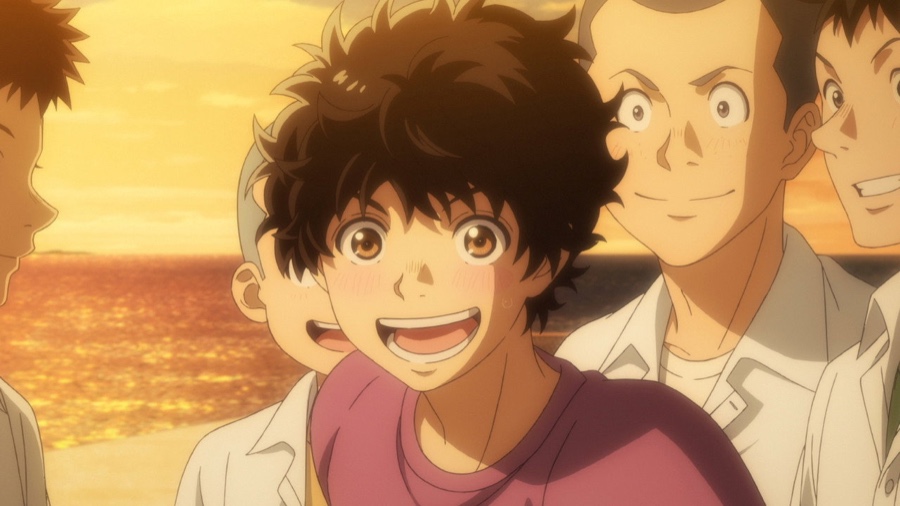
The end of episode 13, Fukuda’s verdict. It comes right after Ashito has played well in a match with promotion to the A team at stake, which is exactly why it drops so far. One moment he is flying, the next the ground goes out from under him. This is the hinge of the season.
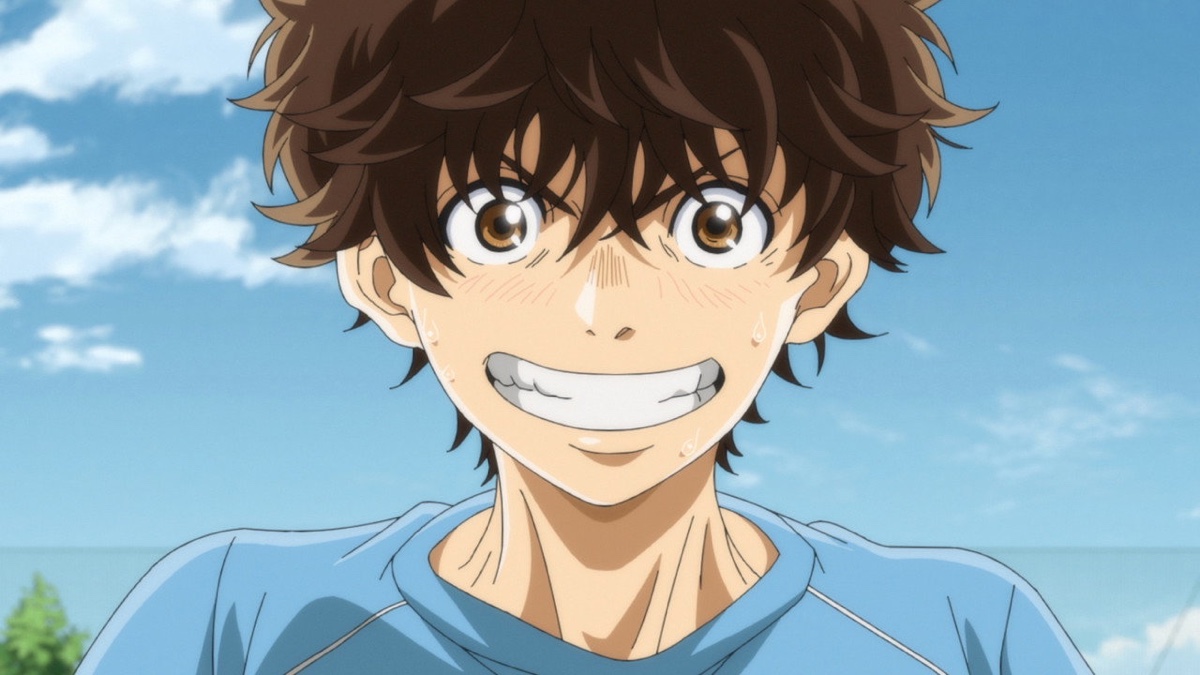
Episode 24, “From Now,” against Musashino. Ashito’s new way of reading the whole pitch from above finally becomes his own, and it pulls apart Musashino’s compact defense for the equalizer. A player who joined the academy as a forward changes a match from his new position. Once you’ve watched it, the episode title makes complete sense.
💭 How It Made Me Feel
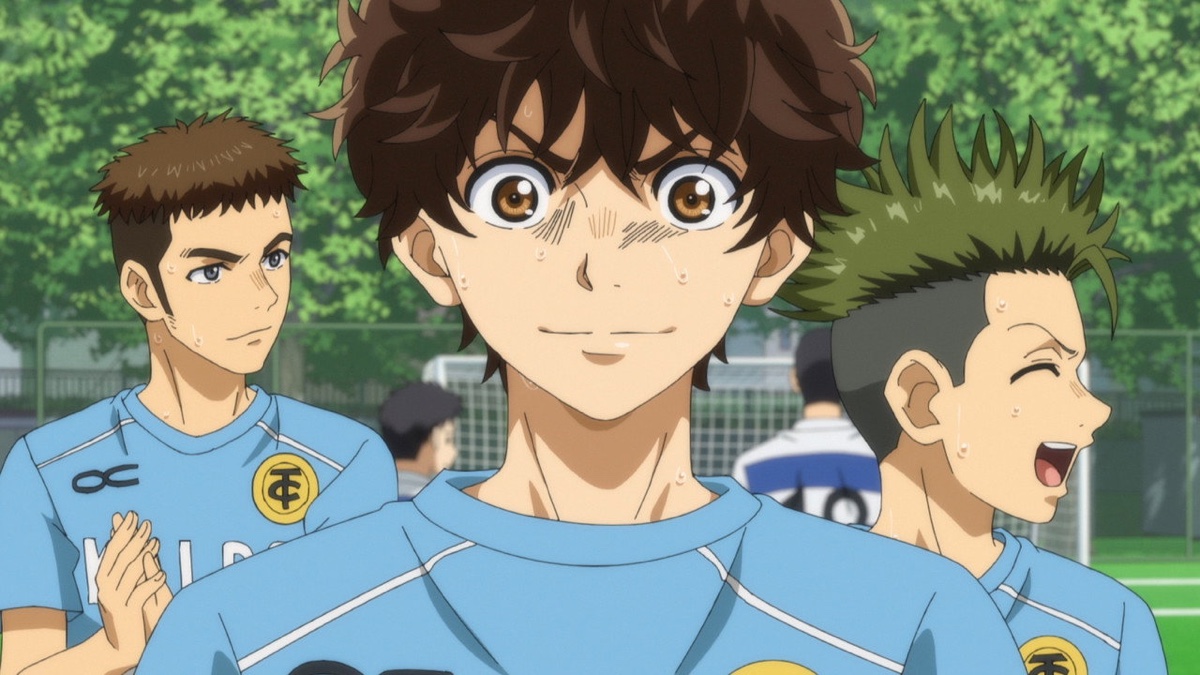
I enjoy the loud soccer manga too. Blue Lock, where ego wins matches, has a thrill that doesn’t need explaining. Still, if you ask what I prefer, it is Aoashi, as I said at the top. From the fall in episode 13 to the moment he gets back up in the finale, every step Ashito takes has a reason behind it, and nothing in his change rang false to me.
Season 1 is the run-up: 24 episodes of Ashito becoming a player who thinks. It ends just as he starts running, and that is exactly what makes you reach for Season 2.
😅 Where It Falls Short
I’ve been singing this show’s praises, so here are the three things that held it back for me.
When Does Aoashi Get Good? Around Episode 12
The opening stretch, from the tryout to joining the academy, spends more time on Ashito’s family and new teammates than on matches. Even after he joins, the friction inside the squad drags on for a while, and I understand anyone who drops off there. My rule of thumb: give it until episode 12 or 13. If the Seikyo High match in episode 12 grabs you, the rest of the season goes fast. If it doesn’t, you can stop without guilt.
24 Episodes to Reach the Starting Line
The finale ends with Ashito only beginning to find the new version of himself. Manga readers will tell you the real story starts here. Viewers in 2022 waited four years for Season 2. You don’t have to, since it is airing now, but go in planning to keep watching. Season 1 on its own is a beginning.
The Manga’s Big Panels Hit Harder
I wouldn’t call this a flaw, exactly. But the anime doesn’t fully reproduce the manga’s sense of motion, and there are plenty of moments where I prefer the panel. In fairness, soccer is one of the hardest sports to animate. All 22 players keep moving and fighting for space the whole time, which a manga artist can freeze in one drawing and an animator cannot. Given that, getting the tactics across clearly earns the anime a pass from me.
The Weak Spots
- The early episodes lean on relationships, and the payoff takes about 12 episodes to show
- Season 1 stops right as the story begins, so plan on Season 2
- Some of the manga’s big moments lose force in animation
Who Should Watch This?
- Blue Lock fans looking for a soccer anime closer to the real game
- Newcomers to soccer who want to pick up tactics alongside the hero
- Anyone who watches matches and can’t help explaining why a goal went in (most of all)
Who Might Not Enjoy This?
- Anyone hoping for big matches from episode 1
- Fans of special moves and superhuman plays
- Viewers who want one season to tell a complete story
📺 Streaming Guide by Service
Which Service Should You Use?
In the US this one is simple. Crunchyroll has all 24 episodes of Season 1 with subtitles and the dub, and it is where Season 2 is arriving week by week, so you can finish Season 1 and keep going without switching services. Two episodes a day gets you through Season 1 in under two weeks. If you already pay for Prime, the Crunchyroll channel can be added from your Amazon account. If you would rather own it, Apple TV and Google Play sell the season.
Where to Start Watching
- Crunchyroll: Streaming (Season 1, subtitled and dubbed; Season 2 weekly)
- Amazon Prime Video: Add-on (through the Crunchyroll channel)
- Apple TV: Buy only
- Google Play: Buy only
Soundtrack
- First cour (episodes 1 to 12): opening “Mushin Hakusu” by [Alexandros] / ending “Blue Diary” by Rinne
- Second cour (episodes 13 to 24): opening “Presence” by Superfly / ending “Color Lily no Koibumi” by Kami wa Saikoro wo Furanai
- Score: Masaru Yokoyama. The original soundtrack is on Apple Music
📚 The Source Manga
Yugo Kobayashi’s manga ran in Shogakukan’s Weekly Big Comic Spirits from 2015 to June 2025 and finished at 40 volumes. Spirits is a magazine for adult readers, not a boys’ weekly, which tells you something about the audience it was written for. Titan began an English edition in June 2026 as 3-in-1 omnibuses, starting with Aoashi (3-in-1 Edition) Volume 1, which collects Japanese volumes 1 to 3.
Season 1 of the anime ends around Japanese volume 11, partway through the Musashino match, and volume 12 picks up with Ashito’s first A team practice. The English edition hasn’t reached that point yet, so for now it is a way to reread Season 1 in the manga’s own panels rather than a way to read ahead.
🎬 If You Loved Aoashi, Watch These 3 Next
Blue Lock (Season 1)
Its TV anime started in the same year, 2022, with the opposite idea of what soccer is. Japan’s federation locks 300 high school forwards in one facility to produce a single world-class striker, and the watchword is ego. The belief Aoashi takes apart in episode 13, that the player who scores is the star, is the one Blue Lock holds onto to the end. Watch them back to back and it is hard to believe they are about the same sport. In the US, Season 1 streams on Crunchyroll and Netflix.
👉 Blue Lock, Aoashi and 8 more soccer anime to stream in the US
Nasu: Summer in Andalusia
Road cycling is a team sport in which the other riders shield the leader from the wind and burn their own legs so he can win. This 47-minute film, set during the Vuelta a España, shows both that team logic and the moment a rider goes forward on his own legs anyway. How do you race when you are not the star? That is the question Ashito runs into after episode 13, and here a grown professional gives one answer. In the US it is free on Hoopla with a participating library card, or a cheap rental on Prime Video.
👉 Where to watch Nasu: Summer in Andalusia
Giant Killing
The other grounded soccer story with no superhumans in it. The difference is that the hero is the manager, not a player. Takeshi Tatsumi, 35, takes over the struggling club ETU and goes after bigger teams with nothing but selection and in-game decisions. If Aoashi left you wanting to see inside Coach Fukuda’s head, this puts you on the bench for a whole season. The TV anime aired in Japan in 2010 and runs 26 episodes. The catch is that no US service streams it right now; Kodansha has released the manga digitally in English. (No official anime trailer survives online, so the video above is Kodansha’s official Japanese promo for the manga.)
❓ Aoashi Season 1 FAQ
How many episodes are in Aoashi Season 1?
24, aired in Japan from April to September 2022. The second half begins with episode 13, which is also where Ashito’s position changes, so if you are splitting the season into two sittings, stop after episode 12.
Is Aoashi dubbed in English?
Season 1 is. Crunchyroll added the English dub in April 2022, with Ciaran Strange as Ashito, and the dub sits on the same page as the subtitled Japanese version.
Where does Season 2 start in the manga?
Around Japanese volume 12, with Ashito’s first practice after his promotion to the A team. The manga is complete at 40 volumes, so the two anime seasons together still cover only a fraction of it.
📝 Final Thoughts
Aoashi Season 1 takes a junior high kid from Ehime through a youth academy tryout, strips him of the one role he thought he had, and leaves him finding the answer somewhere else. There are no special moves, yet Ashito learns something in every match, and what he learns is what makes the later matches so much better. The first dozen episodes are slow, and the season ends at a beginning. That is most of why I land at 7.5 and not higher.
Remember the ball that never catches fire? That turns out to be the whole point. Season 2 is already airing. If you want to watch the new episodes as they land, start episode 1 this week.
⭐ Series at a Glance
| Category | Rating | Comment |
|---|---|---|
| Tactics | ★★★★★ | Every goal comes with its reason |
| Ashito’s growth | ★★★★★ | Each step of his change is earned |
| Characters | ★★★★☆ | A squad of rivals who are better than him at first |
| Animation | ★★★☆☆ | Clear tactics; less punch than the manga panels |
| Early pacing | ★★☆☆☆ | Takes about 12 episodes to click |
| Easy for soccer newcomers | ★★★★☆ | You learn the game with the hero |
Usagi’s Recommendation Score
⭐⭐⭐⭐⭐⭐⭐☆☆☆
7.5 / 10
Stop it, kick it, think it through. That is all soccer needs to be this good.

 streams on Crunchyroll in the US, where Season 2 is now airing too. A )