*This page contains affiliate links. We may earn a commission if you make a purchase through these links.
Coco is a film that plays the same song twice. The first time, Remember Me is a star’s big number, sung from a stage out to a crowd. The second time, it is one guitar and one listener. The title of the song is a request, “don’t forget me,” and by the end of the film the person making that request, and the person it is made to, have both changed. In Japan the film was even released under the song’s title, Remember Me.
In Japan it is one of the titles people reach for when you ask for a film that will make you cry, and it is packed with moments built to do that. I did not cry. Saying so up front, a story in which one song comes to mean something completely different by the end is a wonderful thing to watch. Below: where it streams in the US, why the song works, what Japan’s Obon has to do with it, and the one rule in the film that I could not stop poking at.
📺 Where to Watch Coco (October 2026)
| Service | Status | Notes |
|---|---|---|
| Disney+ | Streaming | The only US subscription carrying it |
| Amazon Prime Video | Rent / Buy | Prime membership does not cover it |
| Apple TV | Rent / Buy | Also on YouTube, Google Play, Fandango at Home |
| Hulu | Not available | Not in Hulu’s own library |
| Netflix | Not available | Not licensed to Netflix in the US |
As of October 6, 2026, Coco is included with exactly one US subscription, Disney+. Everywhere else it is pay-per-title, and none of the free ad-supported services list it. If you were hoping to catch it free before Día de Muertos, the honest answer is a Disney+ subscription or a rental. Licensing deals do shift, so check Disney+ itself before paying for a single film.
👉 Lee Unkrich, who directed Coco, made Toy Story 3 seven years earlier. That one tells the fear of being left behind from the toys’ side, and the two make a revealing pair.
🎬 Trailer
Work Info
- Title: Coco (2017), released in Japan as Remember Me
- Director: Lee Unkrich (co-directed by Adrian Molina)
- Screenplay: Adrian Molina, Matthew Aldrich
- Music: Michael Giacchino; the song Remember Me by Kristen Anderson-Lopez with Robert Lopez
- Voices: Anthony Gonzalez (Miguel), Gael García Bernal (Héctor), Benjamin Bratt (Ernesto de la Cruz), Alanna Ubach (Mamá Imelda)
- Japanese dub: Hiiro Ishibashi (Miguel), Naohito Fujiki (Héctor), Satoshi Hashimoto (Ernesto de la Cruz), Yasuko Matsuyuki (Mamá Imelda)
- Runtime: 105 minutes, rated PG
- Released: November 22, 2017 in the US, March 16, 2018 in Japan
- Awards: Best Animated Feature, Best Original Song (Remember Me) at the 90th Academy Awards
- Studio: Pixar Animation Studios / Distributed by Disney
- Source: TMDB
📖 Synopsis – No Spoilers
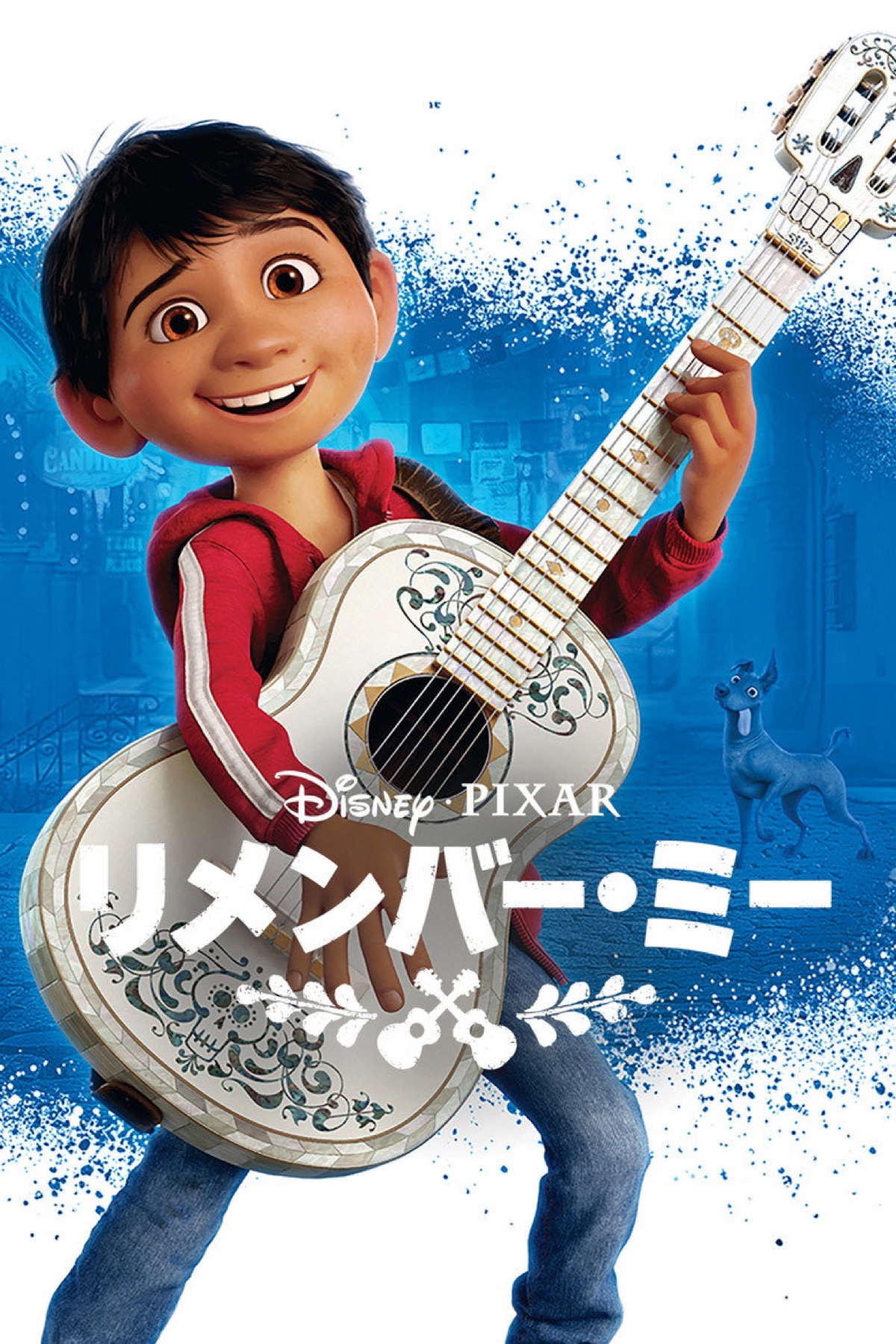
Twelve-year-old Miguel lives in Santa Cecilia, a small town in Mexico, and loves the guitar more than anything. His family, the Riveras, are shoemakers, and in their house music is forbidden. Generations ago, a musician in the family walked out on his wife and their small daughter, and the Riveras have kept music out ever since. So Miguel practices in secret, in a hideout in the attic, playing along to old films of the legendary singer Ernesto de la Cruz.
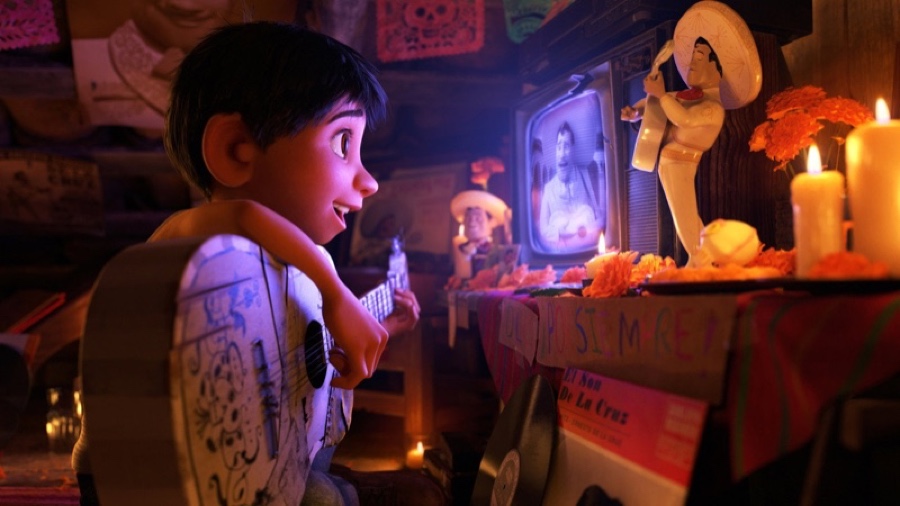
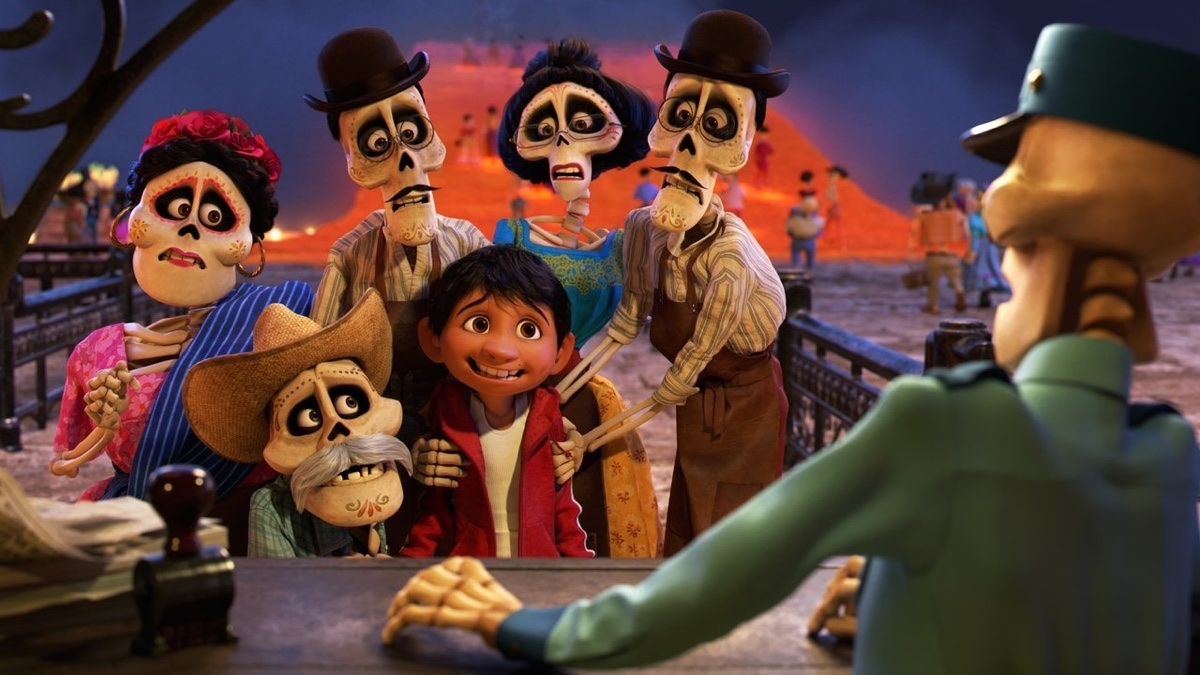
Día de Muertos is the one night a year when the family’s dead come home. An old photo on the family ofrenda convinces Miguel that de la Cruz is his great-great-grandfather, and after one reckless act he finds himself, still alive, in the Land of the Dead. He has until sunrise to get his family’s blessing and go back, or he stays there for good. There he meets Héctor, a fast-talking skeleton who wants to cross over to the living world and cannot. Nobody has put his photo on an ofrenda.
✨ What Makes It Special
Why It’s Exceptional
- One cruel rule runs under a joyful Land of the Dead: forgotten by the living, you vanish
- Remember Me is sung twice, and the second time it is a different song
- Mamá Coco’s wrinkles say more than her few lines of dialogue
- The marigold bridge and the colors of the city at night
When no one remembers you, you are gone from the Land of the Dead too
The Land of the Dead in this film is bright. Skeletons dance, the city glows all night, and the streets are full of music. Almost none of the gloom you expect from an afterlife is there. But that cheerful world runs on one cruel rule. When no one left in the living world remembers you, you disappear from the Land of the Dead as well.
What works for me is that the rule never stays an explanation. Midway through, an old acquaintance asks Héctor to play him a song. As he listens, he quietly breaks apart into specks of light and is gone. Nobody makes a scene. Only Miguel and Héctor are there to see it. That is the moment you understand what runs beneath all the brightness. And Héctor, whose photo no one will put up, has already begun to flicker himself.
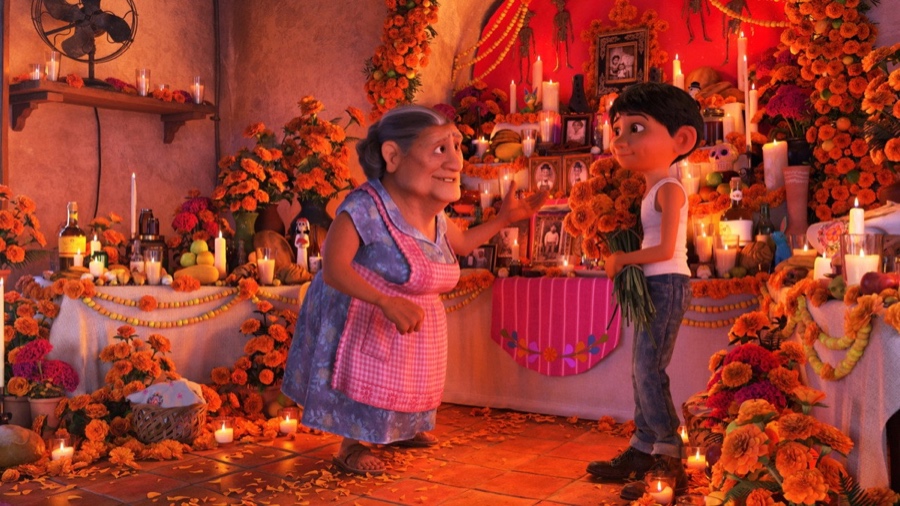
There is a saying that a person dies three times, and the last death comes when the last person who remembers them is gone. Coco takes that final death and builds it into the Land of the Dead as a visible rule. Then it sets the whole story on Día de Muertos, when families put photos of the dead on the ofrenda and lay a trail of orange marigold petals to guide them home. The custom and the idea of vanishing when you are forgotten fit together startlingly well.
Watching from Japan, it is hard not to think of Obon, the summer festival when families welcome their ancestors’ spirits home, light small fires to guide them, and send them off again a few days later. Under the film’s rule, keeping a photo on the family Buddhist altar, the butsudan, or saying a name at a grave becomes the very act that holds someone in the world. I found the idea of a family handing memory down, one generation to the next, deeply appealing. The more you have had to say goodbye to someone you love, the deeper this premise is likely to reach you.
The same Remember Me, and by the end it is another song
Remember Me is a song in which someone who has to go far away asks the ones staying behind not to forget them. Early in the film it appears as de la Cruz’s signature hit. A star in a dazzling costume sings “remember me” from the stage out to his audience, and it sounds every bit the crowd-pleaser it is meant to be.
Near the end, the same song is sung once more. This time the accompaniment is one guitar, and the audience is one person. What comes to light in the meantime stays out of this review. After it does, though, the “me” and the “you” in the lyrics point at different people. A song that was sung to a crowd becomes a song sung to one person. The melody barely changes, and it lands completely differently, for exactly that reason.
If you already knew the song before watching, I suspect you will hear it differently afterward. The Oscar for Best Original Song went to more than a good melody; it went to a song that carries the whole story on its back. In the Japanese dub, Miguel’s singing is done by his voice actor Hiiro Ishibashi, then a young teenager. When Nippon TV aired the film again on its prime-time movie slot Friday Road Show in March 2022, Naohito Fujiki, the Japanese Héctor, told viewers not to miss Ishibashi’s precious singing voice from before it changed.
Mamá Coco’s wrinkles, and the colors of the dead
Mamá Coco, Miguel’s great-grandmother, is very old. She sits in a wheelchair, her eyes nearly closed, no longer quite sure whose faces are around her. She has few lines. Even so, the deep wrinkles and the small movements around her eyes and mouth tell you more than words would. Set her next to the humans in Toy Story (1995) and you can see how far Pixar’s people came in twenty-two years.
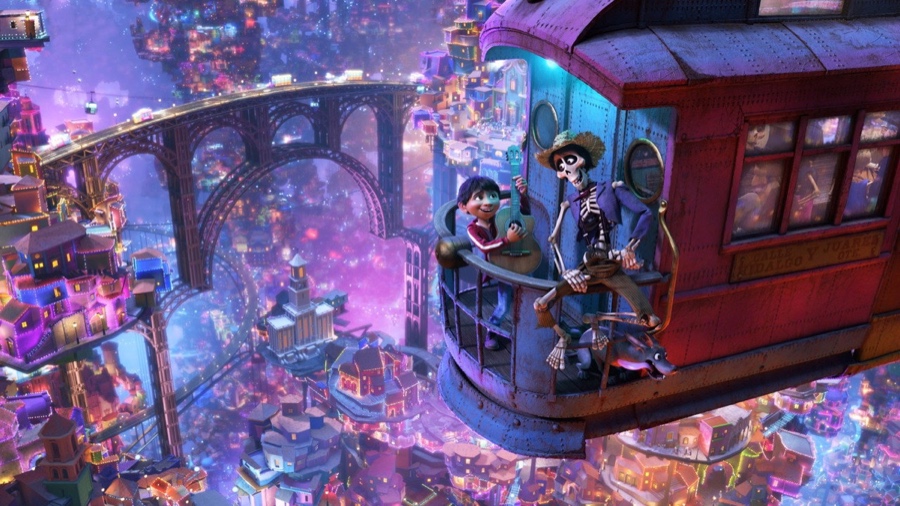
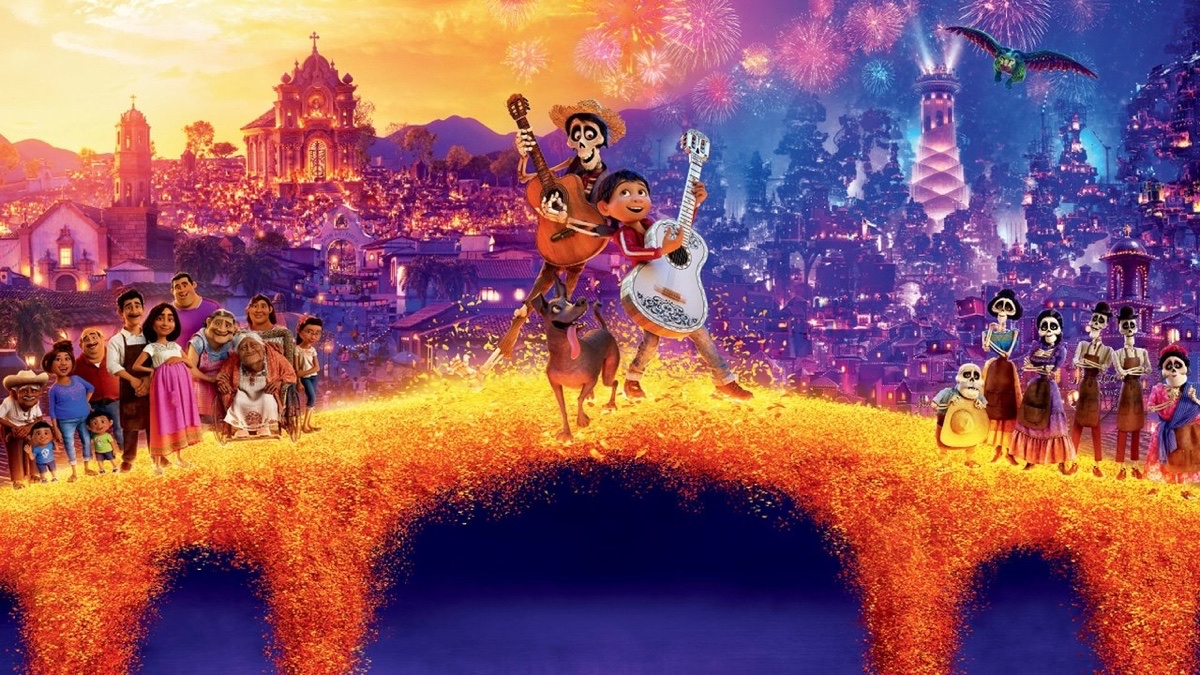
And I was pulled in by how beautiful it is. A bridge carpeted in marigold petals, glowing orange. Beyond it, the city of the dead stacked tier on tier into the night sky. Winged, brightly painted creatures, part cat and part something else. Pause on almost any shot and you could hang it on a wall; that is how much color is on screen.
Deeper Themes
A photo on an ofrenda, a photo on a butsudan, a name said out loud at a grave: seen through Coco, each of these rituals is a way of keeping someone from the last death. What the film adds is the reason: these rituals are for the dead as much as for the living, and in Coco the message travels by song, the one thing almost anyone can carry.
🎭 Memorable Scenes
Seize your moment.
1. Miguel sits down in front of Mamá Coco with his guitar
If you have read this far, you can probably guess what he sings. A face that has stayed still for most of the film begins, slowly, to change partway through the song. Most of the reason Coco gets called a tearjerker lives in these few minutes.
2. The thing Mamá Coco never let go of
What she had kept is small, and it is on screen only briefly. Still, that one object tells you what she has been holding close for all those years.
3. The first walk across the marigold bridge
The petals glow under Miguel’s feet, and the city of the dead rises in front of him, tier after tier of lights. Nothing much happens in story terms. It is simply the moment the film shows you the world it built, and it is where the visuals first pulled me in.
💭 How It Made Me Feel
If whether it will make you cry is what has you on the fence, you do not need to come prepared to cry. I didn’t, and the moment the song turns over still reached me.
Look, I know I am close to gushing. But what stays with me is the range of the studio. Toys, monsters, the dead: whatever Pixar picks up, it lands as a story about family. (It makes that look easy, which it is not.)
👉 To watch it tonight in the US, it is on Disney+.
😅 Where It Falls Short
Now for the part I owe you. Three things snagged, and the biggest is not in the story at all. It is in the rule the film sets up.
The most infamous people would never vanish
As long as a family keeps passing a memory down, that person lives on in the Land of the Dead. It is a lovely idea. Turn it over, though, and something nags. Someone with the worldwide infamy of Hitler will be remembered for as long as human history continues. By this rule, the people the world remembers for the worst reasons would be the ones who never disappear.
The film does separate being famous from being remembered by the people close to you, and it is clear which one it values. Even so, that does not close the hole in the rule itself. This one point stuck in my throat to the end, a small fishbone. Along the same lines, the film’s comfort depends on having a family that will remember you. For anyone on bad terms with their family, the story may be a little harder to step into.
The family’s ban on music is heavy-handed
The Riveras’ hatred of music is something the story needs. Even knowing it is setup for later, the early scene where Abuelita smashes Miguel’s guitar in front of him is too much. She takes away his dream without asking a single question, and for a good while it is hard to feel anything for the family side of the story.
You can guess one character’s real identity early
From the middle of the film on, the family’s secrets twist and turn. If you are quick, though, you will work out who one particular character really is well before the reveal. Anyone expecting a jaw-dropping twist may come away a little short-changed. Then again, Coco is not built to shock you into tears. The scene you know is coming does come, and the song still hits at full strength when it does. That is a strength of its own.
The Downsides
- Under the “remembered means alive” rule, the most infamous people would never vanish
- The music-banning family is drawn with too heavy a hand early on
- One character’s real identity is easy to guess ahead of time
Who Should Watch This?
- Adults who skipped it as a kids’ movie, a tearjerker, or “the one with the skeletons”
- Anyone who has wondered what rituals for the dead, from Día de Muertos to Obon to a memorial service, are really for
- Anyone who has lost a parent, a grandparent, or someone close (especially you)
Who Might Not Enjoy This?
- Anyone estranged from family who cannot get on board with “family comes first”
- Viewers who want a twist they will never see coming
- Very young kids who are scared of skeletons. Pixar keeps the scares well in check, but I think some little ones will still be frightened. Sit next to them, and do show it to them anyway
📺 Streaming Guide by Service
Is Coco on Netflix or Hulu? No. Only Disney+ carries it
Coco is not on US Netflix, and it is not in Hulu’s own library either. Disney+ is the only subscription that includes Coco. Toy Story 3, from the same director, and most of Pixar’s other features are there too, so if this one sends you off to more Pixar, you will not need a second service.
Just want to see Coco once? A rental on Amazon Prime Video or Apple TV covers that. Being a Prime member makes no difference here; it is a separate charge on both.
Where to Stream
- Disney+: Streaming, the only US subscription with it
- Amazon Prime Video: rent or buy, not included with Prime
- Apple TV: rent or buy, also offered on YouTube, Google Play, Fandango at Home
- Hulu / Netflix: not available in the US
Soundtrack
- Apple Music: available
- Apple Music (Deluxe Edition): available
- Spotify (Deluxe Edition): available
The standard album already pairs the songs with Michael Giacchino’s score, and the Deluxe Edition stretches it to 53 tracks. There is also a Spanish-language soundtrack album on Apple Music, which is worth a listen if you know the songs only in English.
📀 On Disc
There is no novel or manga to buy for Coco; it is a Pixar original, and a disc is the way to keep it. If you want to replay Miguel’s song as often as you want without worrying about streaming deals, this is the way.
🎬 If You Loved Coco, Watch These 3 Next
Big Fish
Tim Burton’s 2003 film. Edward Bloom tells tall tales full of giants and witches, and his son Will, even as a grown man, cannot believe a word of them. With his father dying, Will starts tracing where the stories came from. The same story means something completely different at the end than it did at the start, which is exactly the shape of the song in Coco. A person whose stories are passed on keeps living inside them. If Coco’s view of death spoke to you, this one will go straight in.
Night on the Galactic Railroad
A 1985 Japanese animated film of Kenji Miyazawa’s classic story, with the characters drawn as cats. The boy Giovanni rides a train across the galaxy for one night with his best friend Campanella. Coco paints the land of the dead as a fiesta; this film walks the border of life and death on a quiet screen with very little sound. Two films facing the same question at opposite temperatures, and they are fascinating side by side. Miyazawa’s story is one of the best-loved classics of Japanese children’s literature, which is part of why the film carries the weight it does here.
👉 Read the Night on the Galactic Railroad review
The Book of Life
For the third pick, a confession: this is a film I have yet to watch myself. It came out in the US in 2014, three years before Coco, directed by the Mexican-born Jorge R. Gutierrez with Guillermo del Toro producing. Manolo, a gentle young man from a family of bullfighters, his childhood friend Joaquín, and María form a love triangle, and on the Day of the Dead the rulers of the afterlife place a bet on how it turns out. I cannot vouch for how good it is, but it takes the same Day of the Dead and the same land of the dead and draws them in a style that has nothing in common with Pixar’s, and that alone makes it worth setting next to Coco. In Japan it never reached theaters and went straight to DVD, which may be why it is so little known there. It streams on Disney+ in the US, and on Peacock as well.
📝 Final Thoughts
Coco sets its story in a Land of the Dead where you disappear once nobody remembers you, and it plays one song for you twice. The bright world of the dead, Mamá Coco’s wrinkles, and the second time through that song. The fishbone about infamous people never vanishing stayed with me to the end, but it never took anything away from the power of the song scene.
Día de Muertos falls at the start of November, and Japan’s Obon comes in August. Any time from one to the other, with someone from your family in mind, is the best time to watch it. When it ends, ask yourself once more whose words “remember me” turned out to be.
⭐ The Film at a Glance
| Category | Rating | Note |
|---|---|---|
| Story | ★★★★☆ | One song, two meanings |
| Animation | ★★★★★ | The marigold bridge, Mamá Coco’s face |
| Music | ★★★★★ | An Oscar-winning song that carries the plot |
| Characters | ★★★★☆ | Héctor steals the show |
| Tearjerker | ★★★★☆ | Built to make you cry; I didn’t |
| Family Viewing | ★★★★☆ | Rated PG, a few skeletons may spook toddlers |
Usagi’s Recommendation Score
⭐⭐⭐⭐⭐⭐⭐☆☆☆
7.5 / 10
No tears from me, and the few minutes where the song changes meaning are still worth the whole watch.

