*This page contains affiliate links. We may earn a commission if you make a purchase through these links.
What happens to your love of drawing once drawing becomes your job? I did not expect a manga-club anime set on a small island to ask me that. Going in, I expected Draw This, Then Die! to be the story of Ai Yasumi, a first-year high school student who reads manga every spare minute and decides to start making her own. That story is here, and it is a good one. Running right beside it is a second story: her homeroom teacher, Rei Teshima, is the manga artist Ai worships, and somewhere along the way manga hurt her badly enough that she put the pen down.
So the show has two leads: a student looking toward her future and a teacher tied to her past. The episodes trade between them, which means you get the bright side of making things and the dark side of it in turns. It went well past what I had expected. And if you are here to find out whether it is worth your time, my answer is yes: across all 12 episodes I hit almost no dull stretch. The people who drop it tend to be put off by the blunt title and the round, old-fashioned art before the story ever gets a chance, which is a real waste.
📺 Where to Watch Draw This, Then Die! (October 2026)
| Service | Status | Notes |
|---|---|---|
| Crunchyroll | Streaming | All 12 episodes, English subtitles |
| Amazon Prime Video | Add-on | Through the paid Crunchyroll channel on top of Prime |
| Netflix | Not available | Streams in Japan and parts of Asia, not in the US |
| Hulu | Not available | No US license |
| HBO Max | Not available | No US license |
As of October 1, 2026, Crunchyroll is the only US subscription streaming Draw This, Then Die!, with all 12 episodes in Japanese with English subtitles. Prime members can reach the same episodes through the Crunchyroll channel on Amazon, which is a separate monthly charge. An English dub does exist, but it was recorded for the Netflix release in Asia, and Netflix does not carry the show in the US. If you want the dub, check the audio menu in the Crunchyroll app before you pay; I could not find confirmation that it is offered there. Licenses move without much warning, so check the service itself before you sign up.
The same summer, the same lead actress, Akira Sekine, was also voicing the heroine of Jaadugar: A Witch in Mongolia. Ai is pushed forward by the manga she loves; the girl in Jaadugar turns the books she has read into a weapon.
🎬 Trailer
No official channel has posted an English-language trailer yet, so this is the Japanese main trailer from VAP, one of the show’s producers. It runs over the opening theme by Tatsuya Kitani, released in English as “Final Draft.” The Japanese title, Isho, is the word for a last will, which tells you something about the show’s sense of humor. Keep an eye out for the colder shots that slip in between the cheerful club scenes.
Work Info
- Title: Draw This, Then Die! (Kore Kaite Shine)
- Broadcast in Japan: July 3 to September 25, 2026 (12 episodes), Nippon TV’s Friday Anime Night block
- Original Work: Minoru Toyoda (manga, serialized in Shogakukan’s Monthly Shōnen Sunday and still running)
- Director: Hiroaki Akagi / Series Composition: Hiroko Fukuda / Character Design: Takekazu Segawa
- Animation Production: Shin-Ei Animation
- Music: Hiroaki Tsutsumi / Opening: “Isho” (Final Draft) by Tatsuya Kitani / Ending: “Conifer” by Regal Lily
- Japanese Cast: Akira Sekine (Ai Yasumi) / Saori Hayami (Rei Teshima) / Saya Hitomi (Kokoro Fujimori) / Kanon Fujimura (Sachi Akafuku) / Inori Minase (Hikaru Sekiryu) / Atsumi Tanezaki (Nana Teramura) / Noriko Hidaka (Pokota)
📖 Synopsis – No Spoilers
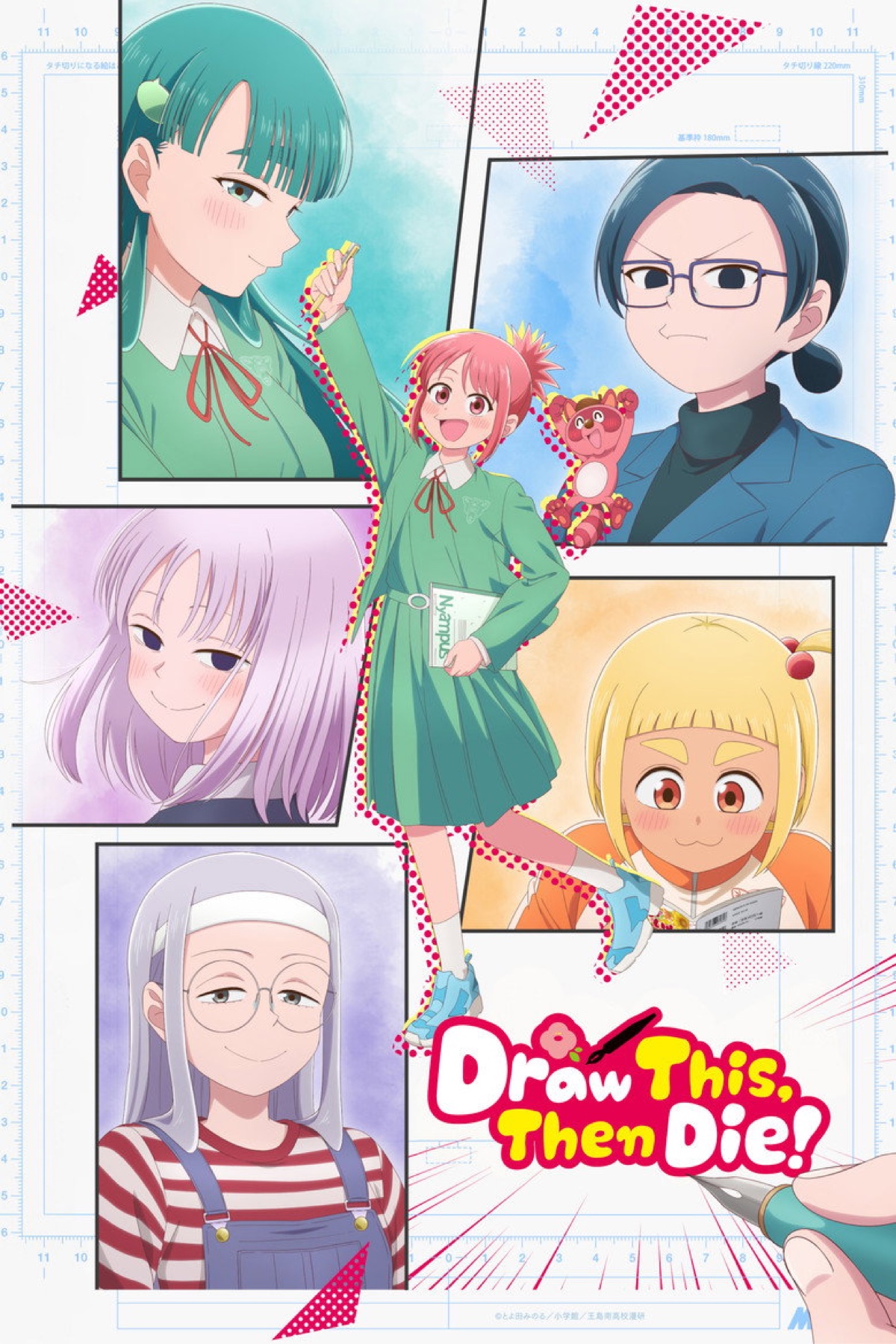
The setting is an island modeled on Izu Ōshima, a real island out in the Pacific that is, oddly enough, part of Tokyo. Ai Yasumi, a first-year high school student, loves a manga called Robota and Pokota so much that Pokota, one of its characters, goes everywhere with her as an imaginary friend. One day her homeroom teacher, Ms. Teshima, confiscates the manga Ai is reading in class and dismisses manga itself while she is at it. What lifts Ai back up is news that the artist behind Robota and Pokota will be selling a new work at Comitia, a Tokyo convention devoted entirely to original self-published comics.
The artist, it turns out, is Ms. Teshima, the very teacher who told her manga was a waste of time. Ai and her classmate Sachi Akafuku ask to start a manga club, and Teshima, reluctant, sets one condition: Ai has to finish a manga of her own first. So a girl who has only ever read manga starts drawing it. From there the story moves back and forth between the club’s days on the island and the years Teshima spent as a working manga artist.
✨ What Makes It Special
In one line: 12 episodes about someone who is about to start drawing and someone who stopped, sharing the same club room.
Why It’s Exceptional
- Two leads, cut together: Ai’s present and Ms. Teshima’s past, episode by episode
- A club adviser who keeps saying “as a hobby” and refuses to hype her students’ dreams
- Every member of the supporting cast gets real depth, down to the owner of the rental-manga shop
- Episode 10, where the club member who does not draw changes how the whole show reads
I Came for Ai’s Dream and Found the Teacher’s Story Too
What I pictured before pressing play was Ai moving toward her dream one step at a time. That is not wrong. She founds the club, gathers members, finishes her first pages and puts her own book on a table at Comitia. As a cheerful club anime, the show keeps that line intact right to the end.
In between, though, Teshima’s past keeps cutting in. In episode 7 she is 23 and gets a job as assistant to a hit manga artist she has idolized for years. What follows is the slow process of something she started out of love turning into work, and then wearing her down. The Japanese title of that episode translates as “Draw with the Intent to Kill.” The show wears the face of a sunny club anime, yet nearly all of its violent language sits on the teacher’s side of the story. The title Draw This, Then Die! may fit the young Teshima far better than it fits Ai.
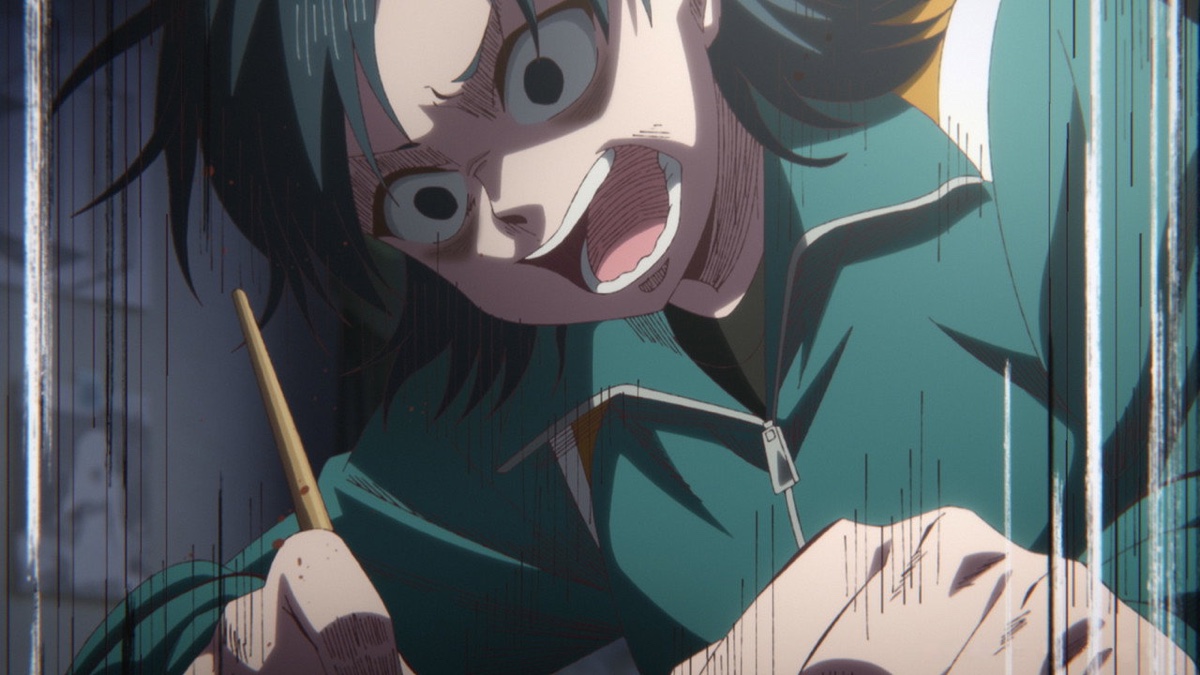
I make things myself, both for work and as a hobby. Ai’s half of the show kept giving me scenes where I wanted to say “yes, I know that feeling,” and Teshima’s half kept giving me scenes that hit uncomfortably close to home. The hopeful side of making things and the heavy side of it are handed to you alternately, inside the same 12 episodes. I have rarely seen an anime hold both at once this well.
The two timelines do not just sit side by side, either. In episode 8, Teshima gives Ai a notebook to jot story ideas in. On the first page, in handwriting that someone once erased, is the heading “100 Things I Want to Draw for Manga!!!” If you have been paying attention, you can guess whose handwriting it is. The past passes into the future’s hands without a word being said. The show links its two timelines with a single prop instead of a line of explanation, and that is where its craft shows.
An Adult Who Keeps Saying “Only as a Hobby”
Teshima tells the club, again and again, to keep manga a hobby. I will be straight with you, though: the first time you hear it, it comes across as an adult throwing cold water on teenagers. A club adviser in this kind of show usually does the opposite and cheers from the sidelines.
Hear the same line after the flashback episodes and it stops being a brake and turns into protection. She knows firsthand what happens when the thing you love becomes your living. So she neither crushes the kids’ dreams nor feeds them. She teaches them the basics of putting a manuscript together and goes to Comitia with them, and she still draws a line. A single grounded adult of that kind makes the whole dream-chasing story easier to trust.
You End Up Loving All of Them, Even the One Who Does Not Draw
Nobody in the supporting cast is left standing in the background. There is Kokoro Fujimori, the shy art-club girl who can already draw beautifully, and Hikaru Sekiryu, the transfer student who is a skilled amateur manga artist. Nana Teramura, Teshima’s old friend, lends the club a room in her rental-manga shop. By the last episode I loved every one of them, Ai included. Sachi Akafuku is the most interesting case: she co-founds the club and then neither draws nor writes. In a room full of artists, she is the one with a reader’s eyes, and episode 10 is where that turns out to matter more than anything.
Deeper Themes
One manga can hold up the person who reads it and break the person who drew it. For Ai, Robota and Pokota matters enough to give her an imaginary friend. For Teshima, who drew it, the manga world is where she got hurt. The show sets those two sides of the same book next to each other at the close range of teacher and student. The first episode’s subtitle, “What Would a Manga Protagonist Do Here?”, is Ai’s habit of thinking, and it is a small piece of proof that stories really do change what people do. Several episode titles also open with the names of classic manga (episode 7 borrows Osamu Tezuka’s Lost World, episode 8 Mitsuru Adachi’s Touch), a nod Japanese viewers pick up instantly. Can fiction actually move a person? These 12 episodes were built to answer yes.
🎭 Memorable Scenes
Meeting the artist she idolizes. Leaving the island to buy her favorite artist’s new book is already an adventure for a high schooler, and then Ai learns who the artist is. The teacher who dismissed the thing she loves is the person who made it. Putting that contradiction at the starting line means Teshima walks on in episode 1 already carrying a mystery. Why would someone who drew manga turn against it? Wanting that answer is what kept me watching through her flashbacks.
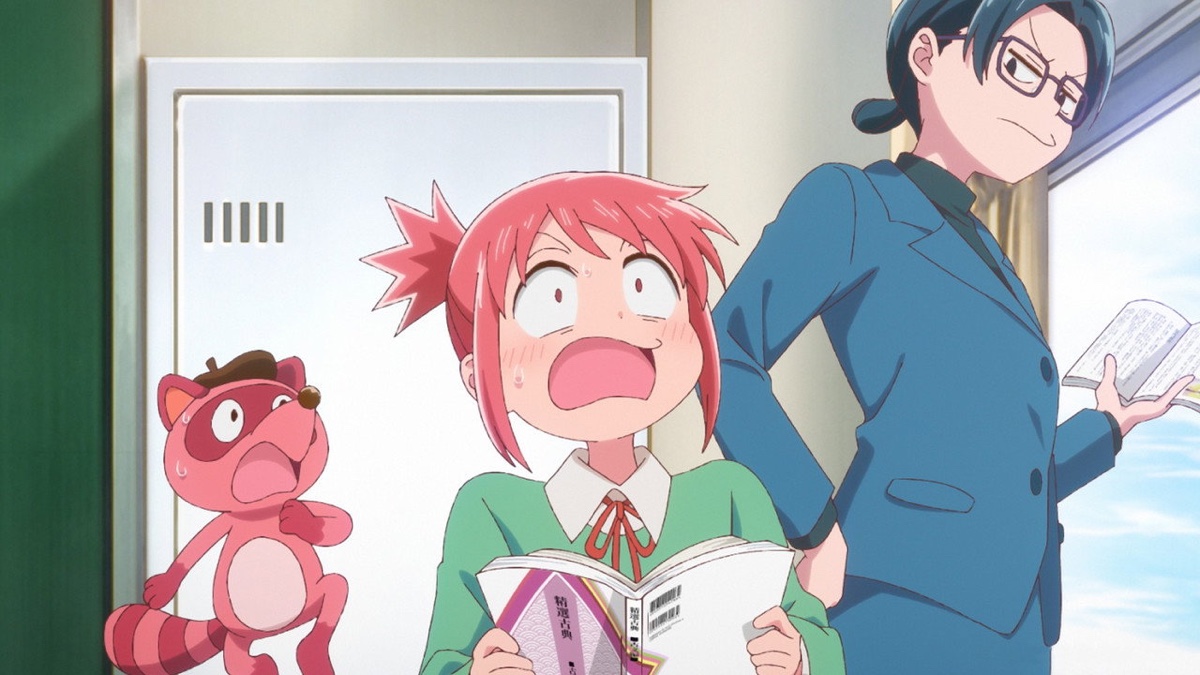
Episode 10, where Akafuku loosens Sekiryu’s chains. Since she was small, Hikaru Sekiryu has been raised on one rule from her mother:
“Ninety percent of anything is garbage.”
So she has to be in the other ten percent, always. That idea is wrapped around her manga and her friendships. Episode 10 is the episode where Akafuku undoes it, and the way she does it is the best part. She does not argue with Sekiryu. She does not cheer her on. She simply does not care in the slightest about being in the ninety percent. That easygoing indifference is what shakes Sekiryu’s whole value system. Akafuku does not own the ruler that sorts people into talented and untalented, and the episode shows how much it can help just to have a person with that attitude nearby.
The finale, where one thing Ai says reaches her teacher. In the last episode, Teshima, who has spent the whole season saying “only as a hobby,” asks Ai whether she wants to go pro. What happens next you should see for yourself. I will say one thing: the teacher who has been tormented by manga is set free by something Ai says. I felt that release all the way through the screen. It made clear that everything the two of them built over 12 episodes had been leading to this scene.
💭 How It Made Me Feel
For a show that spends so long in the dark side of making things, what it hands you at the end is love for the work. The more you know how painful it can be to make something you care about, the more that ending lands.
What stayed with me afterward was the urge to push it on people. Almost anyone can find something in it, and far too many turn back at the door because of the art style. That is most of the reason I am recommending it this hard.
😅 Where It Falls Short
I have been gushing, I know. But hear me out on the other side, because there are real reasons some people drop this show partway.
The Gap Between the Bright Club and the Heavy Past Is Steep
Ai’s side of the show is gentle: island walks, matching T-shirts for their first Comitia. Then Teshima’s flashbacks cut in, and those are about harsh reality, hitting the limits of your own ability, and being cornered by the thing you used to love. The swing between light and dark is sharp enough that some viewers reject it outright. If you only want a cozy club anime, the middle stretch will feel heavy.
That gap is also the show’s backbone. If the teacher’s chapters feel too long in the middle, the finale explains what all that weight was for. The two episodes that stayed with me most were episode 10 and the last one, both near the end. If the heaviness snags you, please at least stay that far.
The Round Art Style Splits People
The character lines are round, and the mouths are drawn the way children’s manga drew them a generation ago. The studio is Shin-Ei Animation, which in Japan is simply the Doraemon and Crayon Shin-chan studio. If you are used to glossier modern anime, it is easy to take one look at episode 1 and decide it is a kids’ show.
That same art style is what keeps the teacher’s flashbacks from getting too raw to sit through, and a show about drawing manga suits a line with a manga feel to it. If the art is the reason you have been avoiding it, you are exactly who I want to watch it. I rank it alongside Jaadugar as the best of Japan’s summer 2026 season.
Who Should Watch This?
- Anyone who has been rescued, even a little, by a manga or book they loved
- People who make things, for work or for fun, now or in the past
- Fans of stories about creators, from Bakuman to Keep Your Hands Off Eizouken!
📺 Streaming Guide by Service
Which Service Should You Use?
In the US there is really one answer: Crunchyroll carries all 12 episodes on its regular plan. If you already pay for Prime and would rather not open another app, the Crunchyroll channel on Amazon gets you the same episodes for an extra monthly fee. A second season has been announced, with no air date yet, so there is time to catch up on these 12 before it arrives.
Where to Start Watching
- Crunchyroll: Streaming (all 12 episodes, subtitled)
- Amazon Prime Video: Add-on via the paid Crunchyroll channel
- Netflix, Hulu, HBO Max: Not available in the US
Soundtrack
- Spotify: Available
- Apple Music: Available
Hiroaki Tsutsumi’s score has been out as an original soundtrack album since September 2, 2026.
📚 The Source Manga
The original is Minoru Toyoda’s manga of the same name, still running in Shogakukan’s Monthly Shōnen Sunday. In Japan it won the Manga Taisho in 2023, the award chosen largely by bookstore staff, and it has reached 10 volumes there. Seven Seas publishes it in English, and Draw This, Then Die! Vol. 1 came out in paperback on August 11, 2026. No one has officially said where the 12 episodes stop, but matching them against the Japanese volumes puts the end at around volume 4, so the English edition is a good way to meet Ai and Teshima again from the beginning while you wait for Season 2.
🎬 If You Loved Draw This, Then Die!, Watch These 3 Next
Bakuman (Season 1)
Another manga-artist story, facing the opposite direction. Two middle schoolers start drawing with one goal from day one: a serialization in Weekly Shōnen Jump. Where Ms. Teshima draws the line at “a hobby,” these two sprint straight into the professional world that Draw This, Then Die! shows only in its flashbacks. Watch both and you see the same industry from the entrance and from the exit. In the US, Bakuman streams on Hulu.
👉 Read our Bakuman Season 1 review
Keep Your Hands Off Eizouken!
The pick for anyone who found the middle of Draw This, Then Die! too heavy. Three high school girls obsessed with animation turn a school club into a studio. There is very little adult failure on screen; the heart of it is the fun and heat of making things. It plays as if Ai’s half of the show were concentrated and then run through director Masaaki Yuasa’s imagination. The club-and-creation overlap is large, and it lets you enjoy “making” again from the side with fewer shadows. It streams on Crunchyroll in the US.
Look Back (2024 Anime Film)
Full disclosure: I have not seen this one yet. I am listing it anyway because this film version of Tatsuki Fujimoto’s one-shot manga is about two girls who draw manga. If it puts the joy and the pain of drawing in the same frame, it should sit very close to Draw This, Then Die! Note that a live-action film with the same title opened in Japan in September 2026; the one I mean is the 2024 animated film, which streams on Amazon Prime Video in the US.
📝 Final Thoughts
Draw This, Then Die! wins over the people who flinched at the title and the people who almost skipped it for the art. It moves back and forth between a bright club story and the story of an adult who got hurt in the professional world, and it lands, in the end, on love for manga. Ai, Akafuku, Fujimori, Sekiryu and Teramura: not one of them finishes the season as a thin character.
A second season was announced on September 25, 2026, the night the finale aired in Japan. It is still a way off, which makes now a good moment to catch up on all 12 episodes. Remember that alarming title from the top of this page? After the finale, I heard it completely differently, and I expect you will too.
⭐ Series at a Glance
| Category | Rating | Comment |
|---|---|---|
| Story | ★★★★★ | Two timelines, one teacher and one student, joined at the finale |
| Characters | ★★★★★ | Every club member and every adult gets depth |
| Art Style | ★★★★☆ | Round and old-fashioned, and a good fit for a manga story |
| Music | ★★★★☆ | Tatsuya Kitani’s opening sets the tone |
| Ease for Newcomers | ★★★★☆ | 12 episodes, no prior knowledge needed |
Usagi’s Recommendation Score
⭐⭐⭐⭐⭐⭐⭐⭐☆☆
8.4 / 10
Twelve episodes with something for the people who read manga and the people who draw it

