*This page contains affiliate links. We may earn a commission if you make a purchase through these links.
I put off My Hero Academia for years without ever giving it a real try. When I finally started it, I couldn’t stop, and I watched all the way through the Final Season, Season 8.
I’ll be upfront about Season 1, though. The first five episodes are mostly exams and introductions, and they move slowly. It gets good with the battle trial in episodes 6 to 8, when Deku and his childhood friend Bakugo finally go at each other head-on. Stay that long. Below I answer when the show gets good and what each of the 13 episodes covers, then lay out the cast in one chart, and finish with what I loved and what bugged me.
📺 Where to Watch My Hero Academia Season 1 (November 2026)
| Service | Status | Notes |
|---|---|---|
| Crunchyroll | Streaming | All 13 episodes |
| Netflix | Streaming | All 13 episodes, ad plan included |
| Amazon Prime Video | Add-on | Needs the Crunchyroll channel on top of Prime |
| Apple TV | Rent / Buy | Season purchase |
| Hulu | Not available | Hulu has Seasons 2 to 5, not Season 1 |
| HBO Max | Not available | Not in the US catalog |
| Disney+ | Not available | Not in the US catalog |
As of November 7, 2026, Crunchyroll and Netflix both stream all 13 episodes of Season 1 in the US, so if you already pay for either one, you’re set. Prime Video only opens it through the Crunchyroll channel, a separate monthly charge added to Prime. Hulu is the trap: it carries Seasons 2 through 5 but not Season 1. Rakuten Viki also lists the season, but its free tier with ads covers only one episode. Over here in Japan, five services include Season 1, Netflix among them. Licenses change, so check the service itself before you pay for anything.
📣 Planning past Season 1? My My Hero Academia watch order covers all eight seasons and the four movies, plus the two seasons Netflix is missing.
🎬 Trailer
Animax Asia ran this 30-second spot in April 2016, when it aired Season 1 on the same day as Japan.
Work Info
- Title: My Hero Academia, Season 1 (Japanese title: Boku no Hero Academia)
- Aired in Japan: April 3 to June 26, 2016 (MBS/TBS, Sundays at 5 p.m.)
- Episodes: 13, about 24 minutes each
- Director: Kenji Nagasaki
- Series composition: Yosuke Kuroda
- Music: Yuki Hayashi
- Japanese cast: Daiki Yamashita (Izuku Midoriya), Nobuhiko Okamoto (Katsuki Bakugo), Kenta Miyake (All Might), Ayane Sakura (Ochaco Uraraka), Kaito Ishikawa (Tenya Iida), Yuki Kaji (Shoto Todoroki), Aoi Yuki (Tsuyu Asui), Junichi Suwabe (Shota Aizawa)
- Original manga: Kohei Horikoshi, serialized in Shueisha’s Weekly Shonen Jump (English edition: VIZ Media)
- Studio: Bones
- English dub: Funimation
📖 Synopsis – No Spoilers
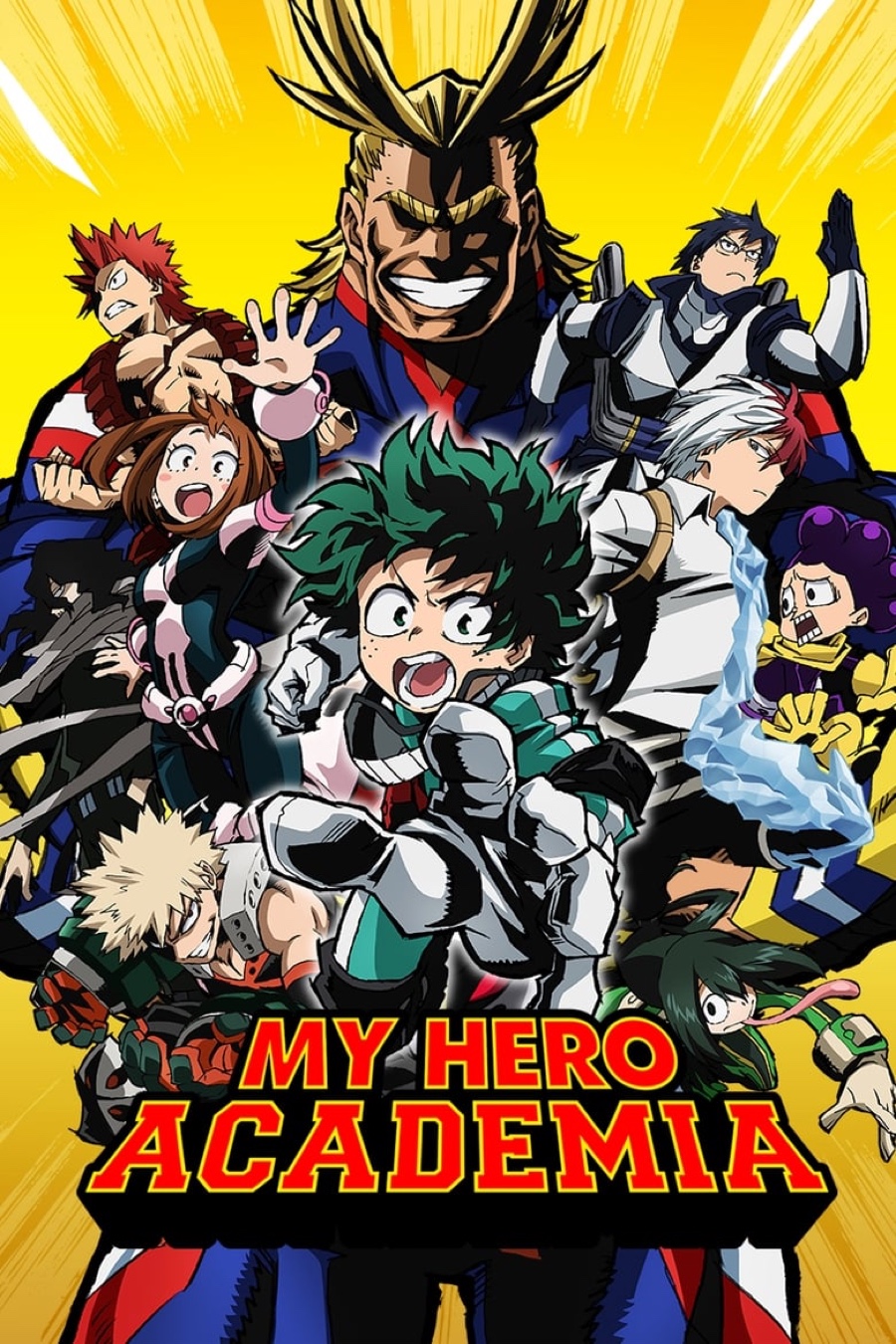
In this world, about 80 percent of people are born with a superpower called a Quirk, and heroes who use theirs to protect others have become an actual profession. Middle schooler Izuku Midoriya wants to be one more than anything, but he was born Quirkless. His childhood friend Katsuki Bakugo has looked down on him for it for as long as he can remember.
One day a villain attacks Izuku, and the hero he idolizes most, No. 1 hero All Might, saves him. Later, when Bakugo is caught by a villain, Izuku runs in to help before he has time to think. Watching that, All Might decides to pass his own Quirk, One For All, on to Izuku. Izuku sets his sights on the entrance exam at U.A. High School, the hardest hero school in the country to get into.
🧭 When Does My Hero Academia Get Good? The Battle Trial in Episodes 6 to 8
Short answer: it gets good at the battle trial, episodes 6 through 8. In All Might’s class, the students pair off into teams of two, one side playing heroes and the other playing villains. In episode 7, Deku ends up on a hero team and Bakugo on a villain team.
But here’s where I have to be honest. The five episodes before that are the entrance exam and a first-day fitness test, with a crowd of new students arriving all at once. Learning everyone’s name and Quirk is about all you can do. Don’t judge the show by episode 5. Give it through episode 8.
How Many Episodes Is My Hero Academia Season 1? 13, About Five Hours
Season 1 runs 13 episodes of about 24 minutes each, roughly five hours in total, so a weekend covers it. Here is what each episode does, kept light on spoilers:
| Ep. | Title | What happens |
|---|---|---|
| 1 | Izuku Midoriya: Origin | Quirkless Izuku meets All Might |
| 2 | What It Takes to Be a Hero | Izuku asks All Might if a Quirkless kid can still be a hero |
| 3 | Roaring Muscles | Training to inherit All Might’s Quirk |
| 4 | Start Line | U.A.’s practical entrance exam |
| 5 | What I Can Do for Now | The Quirk Apprehension Test on day one |
| 6 | Rage, You Damn Nerd | All Might’s two-on-two battle trial begins |
| 7 | Deku vs. Kacchan | Deku on a hero team faces Bakugo on a villain team |
| 8 | Bakugo’s Start Line | Bakugo is stunned to have lost to Deku |
| 9 | Yeah, Just Do Your Best, Iida! | The class picks a class rep; at the end, villains show up at rescue training |
| 10 | Encounter with the Unknown | The League of Villains goes after the students |
| 11 | Game Over | Scattered students fight wherever they land |
| 12 | All Might | All Might takes on Nomu |
| 13 | In Each of Our Hearts | The attack ends, followed by its aftermath |
Once you’re past the battle trial, a group of villains storms the rescue training site at the end of episode 9. For the first time the students run into real malice instead of a drill, and from there to the finale, Season 1 goes by in one sitting.
👥 My Hero Academia Season 1 Characters: Who’s Who in Class 1-A
Season 1 follows U.A. High’s hero course, Class 1-A, from the entrance exam to the first real attack on the school. The cast arrives fast, so I put the 14 characters you meet in Season 1, and how they connect, on one chart. Nothing past Season 1 is on it, and neither is the ending.
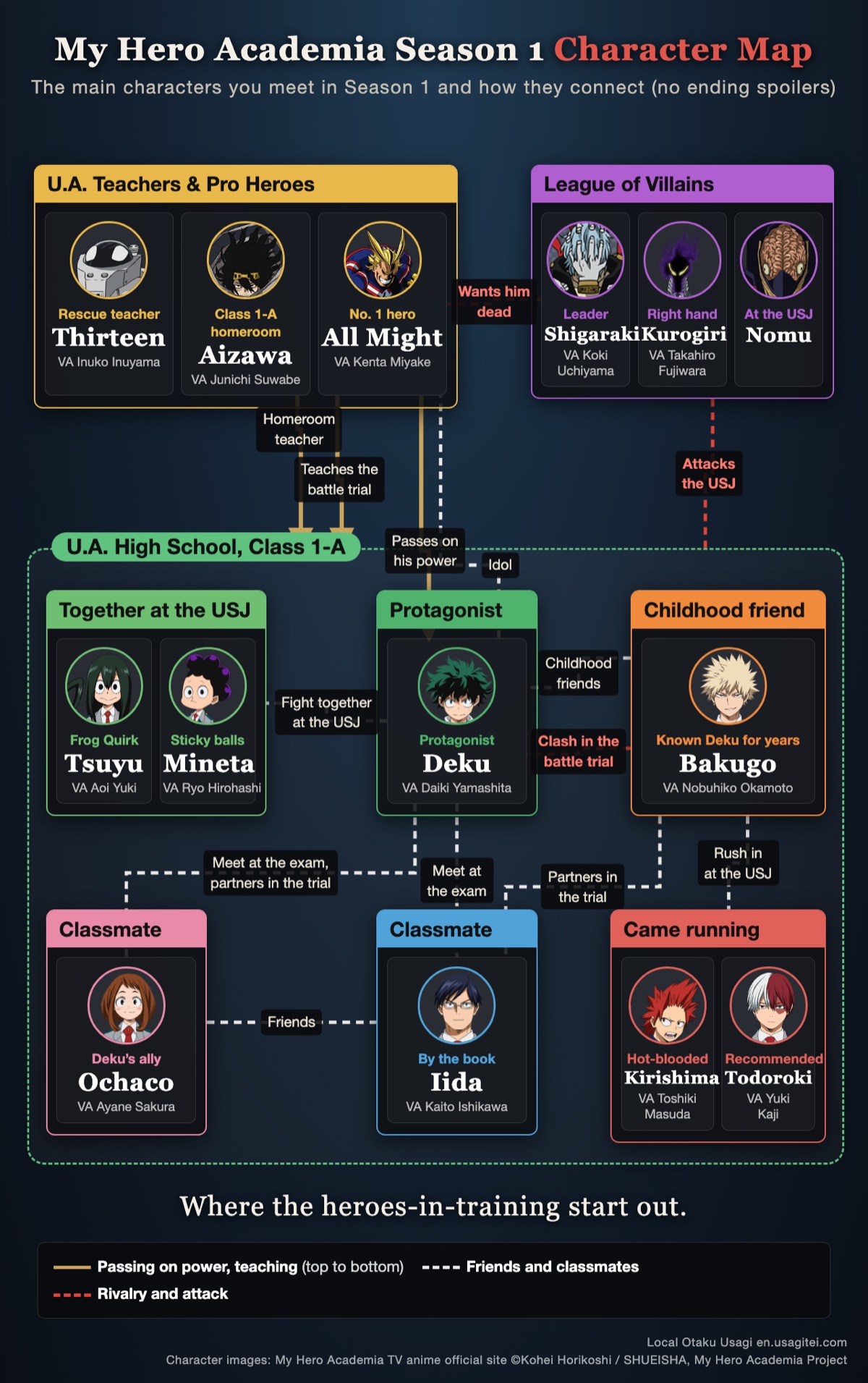
Start with the gold lines. The line from All Might to Deku, where he passes on his power, is where the whole show begins, and Deku’s friends and rivals branch out from there. The other two gold lines run into Class 1-A: Aizawa as homeroom teacher, and All Might as the teacher of the battle trial.
Dashed lines connect students. Deku befriends Ochaco and Iida, whom he meets at the entrance exam, and he faces his childhood friend Bakugo in the battle trial of episodes 6 and 7, where Deku and Ochaco play the heroes and Bakugo and Iida play the villains. The red lines are the League of Villains. Shigaraki wants All Might dead, and the League attacks the students during rescue training at the USJ. In that attack, which begins at the end of episode 9, Deku fights in the water alongside Tsuyu and Mineta, while Bakugo, Todoroki and Kirishima each fight their own battles before they come running.
U.A. High School, Class 1-A
U.A. Teachers
The League of Villains
✨ What Makes It Special
Why It’s Exceptional
- A Quirkless boy fights with a power he inherited, not one he was born with
- Bakugo turns out to be more than just a jerk
- All Might and the teachers show what grown-up heroes are for
- A huge roster of heroes, and every one of them still stands out
A Quirkless Kid Who Fights With Borrowed Power
In a world where heroes are everywhere, the main character is the one person with nothing. That premise alone got me excited. Shonen Jump heroes usually win on talent they were born with, or on their bloodline. Deku’s power is neither. It’s borrowed, handed down by the person he looks up to most.
And it doesn’t fit him. Until he learns to control it, every use wrecks his arm or his fingers, so Deku fights while falling apart. The hero-analysis notebooks he filled back when he was Quirkless finally pay off here: he takes a cold look at what he can and can’t do, and closes the gap with strategy.
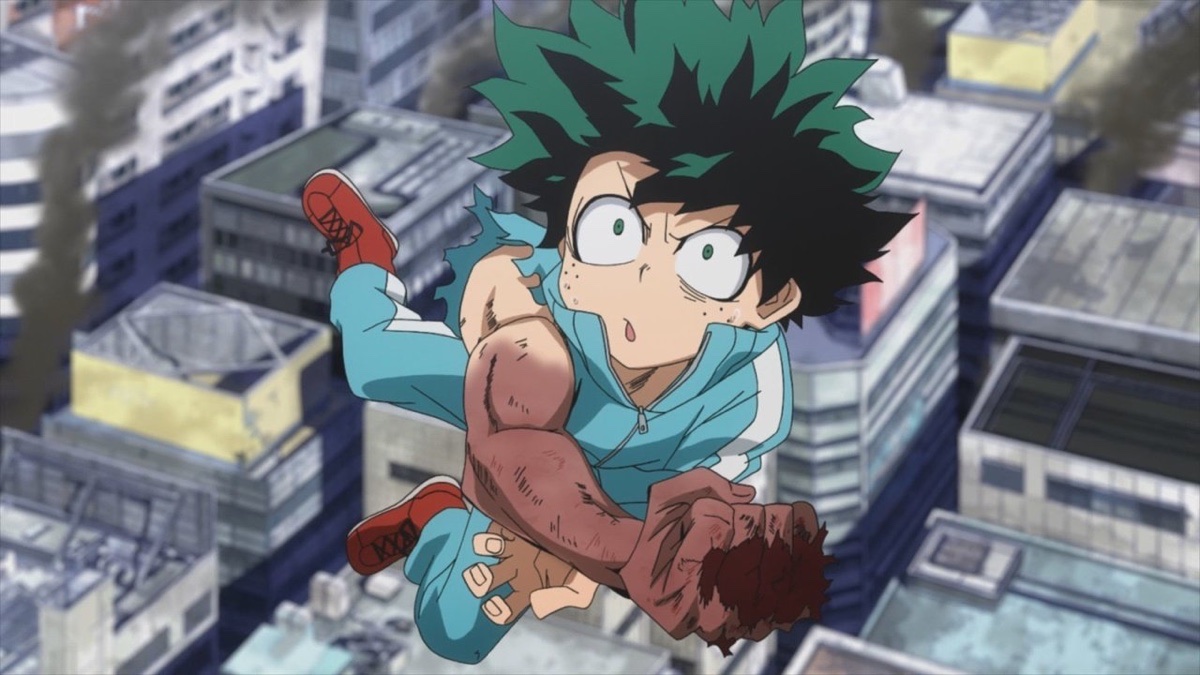
All Might didn’t choose him for strength, either. When his childhood friend was caught by a villain, Deku moved before he’d stopped to ask whether he could win, and All Might saw a hero in that. To hear “You can become a hero” from the hero himself, when nobody else would say it: that is the core of Season 1.
Bakugo Turns Out to Be More Than a Bully
In Season 1, Bakugo comes off as a jerk. He looks down on Quirkless Deku and throws insults at him. But he’s such a textbook bully that I could tell from the start he was written to change.
Even the names carry it. In Japanese, “Deku” started as Bakugo’s put-down, short for dekunobou, a good-for-nothing (the word literally means a wooden puppet). Ochaco hears it differently, as something closer to “you can do it,” and the show slowly turns the insult into a name worth wearing. “Kacchan,” meanwhile, is the kid nickname Deku still uses for Bakugo, which tells you how far back the two of them go.
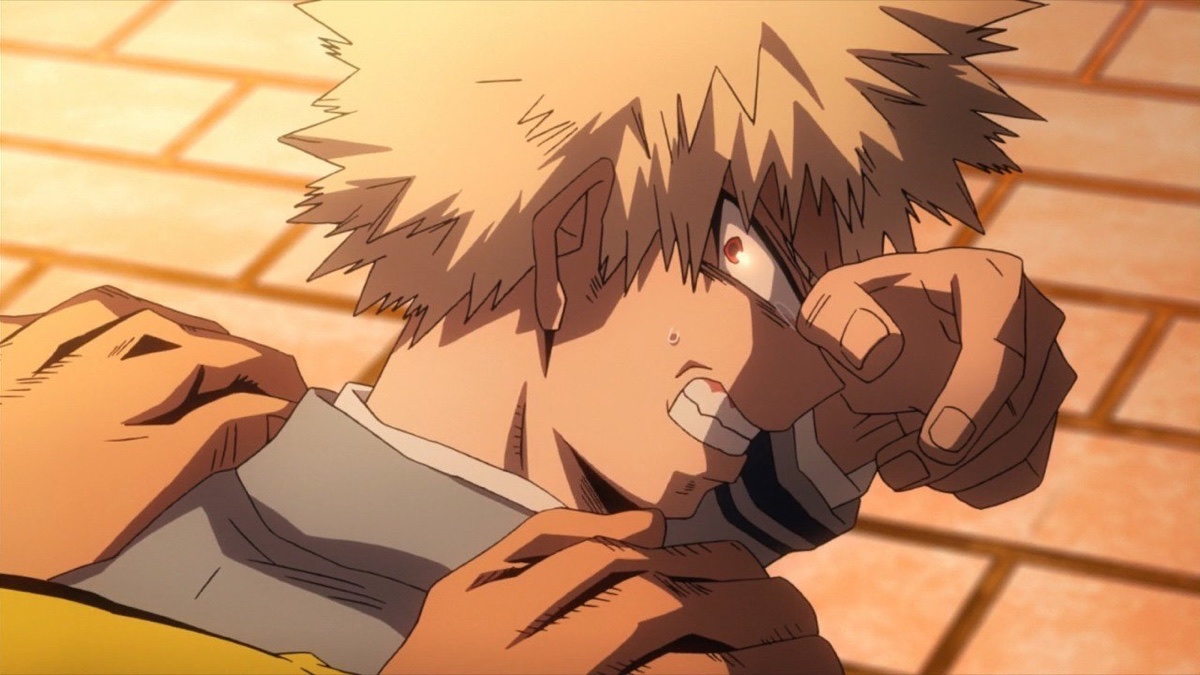
The first turn comes in episodes 7 and 8. Bakugo, who has always been good at everything, loses the battle trial to the kid who supposedly couldn’t do anything. Episode 8 is titled “Bakugo’s Start Line.” Inside the main hero’s story, the show sets down the starting point of a second one. The harder Deku tries to help, the deeper Bakugo’s pride is cut, and that relationship pulls the whole series forward.
All Might and the Teachers Show What Adult Heroes Do
All Might is called the Symbol of Peace; the idea is that one man’s presence keeps villain crime down. In episode 12, the adult carrying that title trades blows with Nomu head-on. Before that, in episodes 10 and 11, homeroom teacher Aizawa (Eraser Head) puts his body on the line alone to protect his students. It’s a story about students, yet it gives real screen time to adults showing what the job of a hero is.
So Many Heroes, and Every One Stands Out
It’s a hero school, so heroes pour in. Even so, the faces and names never blur. The Japanese word translated as Quirk, kosei, also means individuality, so one word names both the power and the person. Tsuyu, with her Frog Quirk, may not look entirely human, but you know who she is the moment she speaks. Fights turn on how Quirks match up and how they’re used, so every battle hands somebody a moment.
Deeper Themes: A Society Where Talent Shows Early
In this world, whether you have a Quirk becomes clear when you’re small, and with it, roughly where your life is headed. Once Deku turns out to be Quirkless, even the adults around him treat hero work as out of the question. Because talent is visible, other people decide what you can and can’t do before you get a say. That isn’t only a comic-book problem.
What gave the show depth for me was this texture of discrimination underneath the fun of a hero story. Having power doesn’t make you a hero if you don’t want to help people. Deku proves the reverse with his own body.
🎭 Memorable Scenes
“You can become a hero.”
All Might
Early on, All Might tells Deku he can become a hero. Ever since he was found to be Quirkless, nobody had said that to him. I suspect a lot of viewers decided to stick with the show right there, watching Deku cry.
The practical entrance exam in episode 4. Points come from taking down mock villains, and Deku can’t score a single one. Then what he does at the very end flips the whole exam on its head. Being recognized for what you do rather than for your power, the theme of Season 1, takes shape for the first time here.
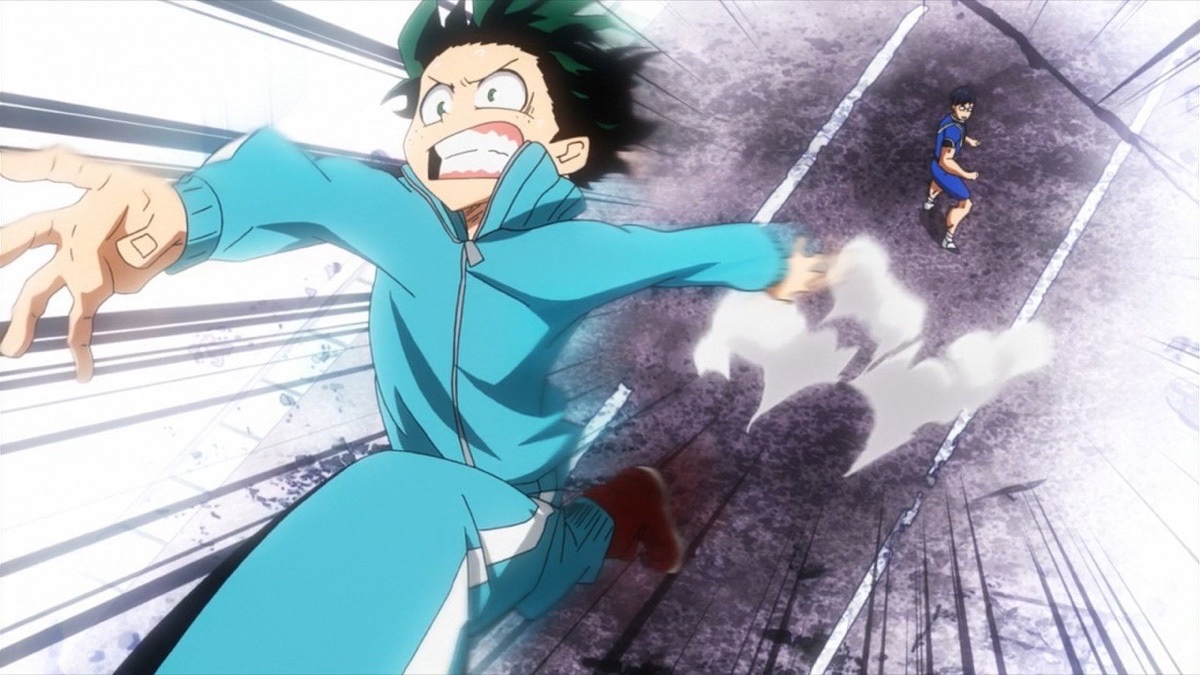
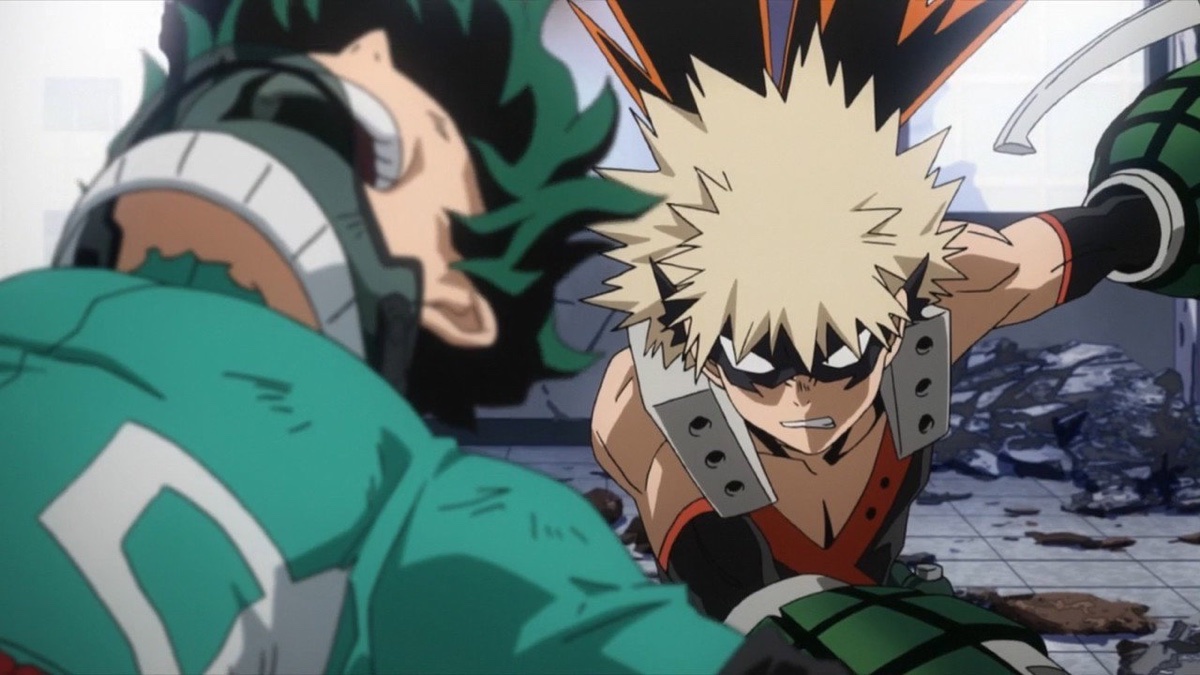
Then the battle trial in episodes 7 and 8. Deku draws up a plan to win and pushes it through even as it wrecks his body. Deku is the one who wins, yet the face that stays with you is the loser’s: Bakugo’s.
💭 How It Made Me Feel
What stayed with me after Season 1 was simply wanting more of this world. The 13 episodes end just as Class 1-A has finally come together. As the doorway to a long story, Season 1 does its job: it makes you want the next season right away.
If you want another anime about a nobody who gets back on his feet holding something someone handed him, my pick is Gurren Lagann, where Simon carries the words of his big-brother figure Kamina until he can stand on his own. I come back to it in the recommendations below.
😅 Where It Falls Short
I’ve been singing this show’s praises, but two things nagged at me.
Five Episodes of Exams That Are Really Character Introductions
With a cast this size, the opening stretch introduces people one at a time through the entrance exam and the fitness test. More time goes to who has which Quirk than to the tests themselves. The slow pacing here bothered me too. If anyone drops Season 1, my guess is it happens during these five episodes.
Friendship, Effort, Victory: You Can See the Turns Coming
Weekly Shonen Jump has run on three words for decades: friendship, effort, victory (yujo, doryoku, shori). My Hero Academia follows them to the letter, so you know in advance that the hero will turn things around and that his friends will come running. The explanations are thorough and the voices run loud, and some scenes play young for adult viewers. That fits where it aired in Japan: Sunday at 5 p.m., family viewing time. If straight-ahead shonen isn’t your thing, Season 1 will feel long.
Both of these bugged me. And I still went on to watch every season.
Who Should Watch This?
- Anyone unsure about starting a series that runs all the way to a Final Season (Season 1 is a 13-episode test)
- Anyone who has skipped classic shonen because they assumed it was for kids
- Fans of superhero films such as X-Men, where people with powers live in a society that has to deal with them
Who Might Not Enjoy This?
- Viewers who want Season 1’s 13 episodes to work as one complete story on their own
- Viewers who want twists they can’t see coming
- Viewers who can’t stand anime acting where everyone yells
📺 Streaming Guide by Service
Which Service Should You Use?
If you already have Netflix or Crunchyroll, use it: both carry all 13 episodes. If you’re picking one service to keep for the whole series, Crunchyroll is the one with every season. Netflix has six of the eight and is missing Season 6 and the Final Season (the details are in my watch order guide). At about 24 minutes an episode, Season 1 fits in a weekend.
Where to Start Watching
- Crunchyroll: Streaming (all 13 episodes)
- Netflix: Streaming (all 13 episodes)
- Amazon Prime Video: Add-on (Crunchyroll channel)
- Apple TV: Buy the season
- Hulu, HBO Max, Disney+: Not available in the US
Theme Songs
- Opening: “THE DAY” by Porno Graffitti
- Ending: “HEROES” by Brian the Sun
The score is by Yuki Hayashi.
📚 The Original Manga
The original is Kohei Horikoshi’s manga, serialized in Weekly Shonen Jump and finished at 42 volumes (the last one came out in Japan on December 4, 2024). VIZ Media publishes it in English. Season 1 adapts chapters 1 to 21, which ends partway into Volume 3, so Volume 3 is where to pick up the story after episode 13.
🎬 If You Loved My Hero Academia Season 1, Watch These 3 Next
Gurren Lagann
A 2007 TV anime. Simon, a boy who digs tunnels in an underground village, gets dragged up to the surface by his big-brother figure Kamina and ends up fighting in a giant robot. A boy who can’t believe in himself holds on to the words his big brother gave him, and eventually stands on his own. The bones of it are close to Deku taking up the power All Might handed him. It runs hotter than My Hero Academia, so you get the same inherited-hero story with the volume turned up. US viewers can find it on Netflix, Hulu and Crunchyroll.
👉 Read my Gurren Lagann review
One-Punch Man Season 1
A 2015 TV anime. Saitama, a hero for fun, beats every enemy with a single punch, and he has gotten so strong that fights no longer give him any thrill. Deku is just learning to handle his power; Saitama is bored after reaching the top. They stand at opposite ends. Its society, where heroes register with an association and get ranked, shows My Hero Academia’s idea of hero work as a profession from another angle. In the US, Season 1 streams on Netflix and Hulu.
👉 Read my One-Punch Man Season 1 review
X-Men
Bryan Singer’s 2000 film. People born with special abilities, the mutants, are feared and discriminated against by everyone else, and Professor X gathers young mutants at his school to protect them. A school for people with powers, and the discrimination those powers bring: it’s the texture underneath My Hero Academia’s Quirk society, told from the side where people with powers are the minority. In the US it streams on Disney+.
📝 Final Thoughts
My Hero Academia Season 1 is 13 episodes that take a Quirkless boy from inheriting All Might’s power to facing real villains for the first time at U.A. The opening moves slowly through exams and introductions, and then the story takes off once Deku and Bakugo collide in the battle trial of episodes 6 to 8.
Remember how I put this show off for years? I’m the same person who then watched it through to the Final Season. The predictable shonen beats are there. Still, a hero who fights with borrowed power, plus the sting of a society where talent shows early, keep it from being simple good versus evil. If you’ve been avoiding it too, give it through episode 8. When you’re ready to keep going, here’s the full watch order.
⭐ Series at a Glance
| Category | Rating | Comment |
|---|---|---|
| Premise & World | ★★★★★ | A Quirkless hero in a world where 80% have powers |
| Characters | ★★★★★ | A big cast, with every member distinct |
| Battles | ★★★★☆ | Won on Quirk matchups plus planning |
| Pacing | ★★★☆☆ | Slow through episode 5 while the class is introduced |
| Surprise | ★★☆☆☆ | Classic shonen, so you see the turns coming |
Usagi’s Recommendation Score
⭐⭐⭐⭐⭐⭐⭐✨☆☆
7.6 / 10
It catches fire at episode 6, and then you won’t stop until the Final Season

