*This page contains affiliate links. We may earn a commission if you make a purchase through these links.
Five Toy Story films ask the same question, and answer it differently every time. That is why people kept coming back for thirty years. What happens to a toy once the kid stops choosing it? The 1995 original asked it, and the 2026 fifth film is still working on it. Same exam, five times, five different answers.
I have reviewed all five on this site and scored each one. The high is Toy Story 3 at 8.5, the low is Toy Story 4 at 6.5. It is not a series that improved year by year. It peaked in the middle, dipped right after, and recovered with the newest one.
I write from Tokyo, and that turns out to matter for this particular series. Japan is where Toy Story grew the most, and Japan is also the one place where you still cannot watch the new one at home. The individual films get their own reviews; this page covers what only shows up when you line all five up — how many there are, what order, whether the shorts count, and where each one streams in the US right now.
🔥 Why Audiences Kept Coming Back for Thirty Years
The reaction to the new arrival flips completely across thirty years
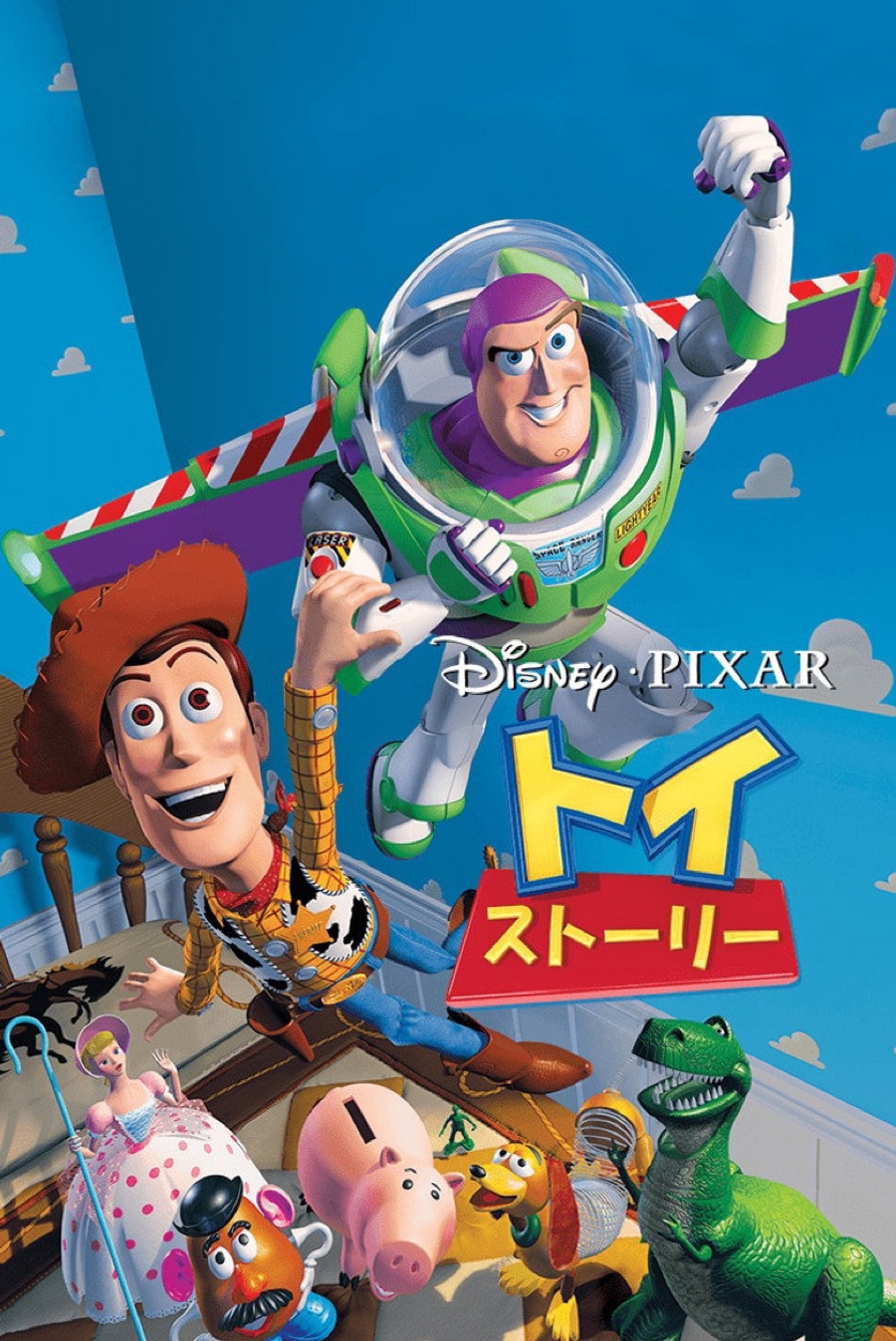
In the first film, Woody spends the opening act trying to get the newcomer out of the room. Buzz Lightyear lights up and talks, and as far as he is concerned he flies. Woody is a pull-string doll with a voice box, and he cannot compete. So he pushes Buzz out a window. The hero’s opening move is removal.
The newcomer in the fifth film is Lilypad, a tablet-shaped electronic toy. The setup is identical: something arrives that the toys cannot match. What changes is the ending, because this time the film does not defeat the new arrival. A story about pushing it out became a story about living alongside it, and the series never lectures you about the shift. It just stages the same scene again and lets it land somewhere else.
The three films in between run on the same frame. The second asks whether to sit in a glass case forever or return to a room where you will eventually be outgrown. The third asks what happens after the kid leaves. The fourth asks whether a toy can live without an owner at all. Every one of them is a rephrasing of the same question about what is left when your job ends.
Japan’s box office multiplied by seven; North America’s by 2.4
This is the part I can tell you from here. The first Toy Story took about ¥1.5 billion in Japan in 1996. The fifth one reached ¥11.07 billion in its first 41 days (as of August 12, 2026), the highest gross any Pixar film has ever managed in Japan. That is roughly seven times the original.
North America went from $199 million to $477 million over the same stretch, a 2.4× increase. So the Japanese audience grew almost three times faster than the North American one. The turning point was 2010. Toy Story 3 took ¥10.8 billion here and became the series high at the time, because the kids who saw the original in 1996 were exactly the right age, fourteen years later, for a film about a kid leaving home. The audience aged into the subject at the same speed the series did.
The one film without Woody’s crew reached far fewer people
Lightyear arrived in 2022 as a spin-off: not the toy, but the astronaut the toy was modeled on. It grossed $226 million worldwide. All five main films cleared $375 million, and three of them passed a billion, so the gap is wide.
That gap tells you where the series actually lives. What people show up for is the group on the shelf, all of them sharing the same fear of being left behind. Widen the setting and that group leaves the frame. It is also why the fifth film still works with Woody pushed toward the edge of the plot. The ensemble was the engine the whole time.
✨ What Holds Up Across All Five Films
Every new character is built to carry a theme
Buzz, Jessie, Lotso, Forky, Gabby Gabby, Lilypad. Each film adds someone, and that someone always arrives holding the subject. Without Jessie, the memory of being given away never enters the series. Without Forky, the question of what makes something a toy at all has no way in.
The additions also move everyone already in the room. Jessie’s arrival takes Woody out of the top spot; Forky’s turns him into a guardian. Watch them back to back and the newcomers read as rearrangement rather than expansion.
The villains are never left as villains
Lotso in the third film was left behind by his kid. Gabby Gabby in the fourth was never chosen because of a manufacturing defect. Lilypad in the fifth wants to be useful to the child in the house, which is the exact thing every other toy in the room wants.
So the antagonists sit where the main characters would have ended up after one wrong turn. Apart from Sid, the kid in the first film, almost nobody here acts out of malice. You cannot finish them off and move on, and that is what stays with you afterward.
It keeps a children’s surface over an adult conversation
Taken as films about toys running around, all five work for a child from start to finish. The same scenes read differently at thirty. “What am I here for” and “what is left of me once I am not needed” land straight on anyone who has been through a version of that at work or at home.
The series has held that double layer for thirty years without difficult vocabulary, without characters explaining the theme aloud, and with every metaphor converted into something a toy physically does. Holding that line is how it kept family audiences while quietly accumulating adult ones.
Who Should Read This Guide
- Anyone who saw the first two as a kid and never caught up with the rest
- Anyone who liked the fifth film and wants to rewatch the run from the start
- Anyone trying to work out which shorts and spin-offs are worth the time (start here)
📊 Are All Five Films Worth It?
| Film | Year | Runtime | Director | Score |
|---|---|---|---|---|
| Toy Story | 1995 | 81 min | John Lasseter | 7.4 |
| Toy Story 2 | 1999 | 92 min | John Lasseter | 7.1 |
| Toy Story 3 | 2010 | 103 min | Lee Unkrich | 8.5 |
| Toy Story 4 | 2019 | 100 min | Josh Cooley | 6.5 |
| Toy Story 5 | 2026 | 102 min | Andrew Stanton | 8.0 |
Five films come to 478 minutes, or seven hours and 58 minutes. One free day covers the whole run, or one film a night for a week. Compared with getting into a long-running series, the total commitment here is small, which makes it an easy set to revisit.
The dip is easy to locate. Only the fourth film sits in the sixes, and the quality of the filmmaking is not the reason. It follows a third film that closed the story completely, and a well-made sequel to a finished story sends you back into an ending you had already made your peace with. So the fourth scores higher on its own and lower right after the third. It pays a price for its position in the run.
What is striking is that the box office shows none of this. Toy Story 3 and Toy Story 4 grossed $1.0688 billion and $1.0711 billion — near-identical numbers for two films that leave you in completely different places. As a demonstration that grosses do not measure what a film does to you, this pair is hard to beat.
🔭 What Happens After the Fifth Film
For most people the live question is not a sixth film but when the fifth one can be watched at home. In the US that already happened: digital purchase and rental opened on August 18, 2026, with 4K UHD, Blu-ray and DVD following on September 22. It is not on Disney+ yet. The service currently carries only a two-minute Special Look.
Japan is a different situation entirely. As of August 23, 2026, Toy Story 5 is on no Japanese service at all, rental included, and no release date has been announced. The film opened here on July 3 and is still running in cinemas. So a reader in Chicago can buy it tonight, and I cannot — which is the reverse of how this usually goes for me with Japanese titles.
As for a sixth film, there is no announcement as of August 2026. The fifth has passed $1.11 billion worldwide and set the series record, so the numbers are not the obstacle.
😅 The Same Weak Spots, Five Times Over
All five move through the story the same way
The toys leave the room and get separated. They end up somewhere dangerous. Somebody comes for them, and they go home with something rearranged. All five run on that track. The themes make each one feel distinct, but the skeleton is a single line, and by the third film you can see the shape coming.
It is a weakness and also the reason the series kept its footing. A fixed frame is what let them swap the subject every time. Still, watching them close together brings the familiarity forward, so a day between films gets you more out of each one.
The original crew gets less to do as the run goes on
Mr. Potato Head, Rex, Hamm, Slinky. The toys who made Woody’s room feel like a room in 1995 have noticeably less screen time and fewer lines from the fourth film onward. That is the cost of handing each new theme to a new character. Don Rickles, the voice of Mr. Potato Head, died in 2017, and the fourth film assembled his lines from unused recordings; a new actor takes over from the fifth film on. That history adds its own weight to those scenes.
The posters have not caught up. The films give the old crew less room than the artwork suggests, and if you came back for the atmosphere of the first three, the difference registers.
The tear-jerk timing starts to show
From the third film on, you can tell when a film is lining up to move you: the timing of the score, the placement of the flashback, the length of a held face with the dialogue stopped. It works, and I have been got by all of them, but on a second viewing the construction arrives before the feeling does.
One more: the humans stay lightly drawn throughout. Andy and Bonnie remain as the toys see them. Five films of interiority went to the toys, and the owners got very little of it.
🗺️ Watch Order, the Shorts, and the Spin-off
The five films go in numerical order. There is nothing to rearrange. The work is in sorting out everything around them: seven shorts (eight if you are on US Disney+), one spin-off feature, and an anniversary special.
- Toy Story (81 min)
- Toy Story 2 (92 min)
- Toy Story 3 (103 min)
- Toy Story 4 (100 min)
- Toy Story 5 (102 min, in theaters in Japan and digital in the US)
The shorts can wait until after the features
Disney+ carries the shorts: Hawaiian Vacation, Small Fry, Partysaurus Rex, Toy Story of Terror!, Toy Story That Time Forgot, Lamp Life, and the ten-episode Forky Asks a Question. None of them is required reading for the features. They fill gaps: daily life after the move to Bonnie’s house, or where Bo Peep went between films. None of it needs a slot in the order.
Pick them up by character once the five films are done. They run from about five minutes to twenty-two, which makes them a good length for the evening after. US Disney+ also carries a short I could not find on the Japanese library when I last looked, Toy Story Back-to-School Lunchbox Disaster!.
Lightyear is not the next chapter
Some people pick up Lightyear (2022) expecting something between the fourth and fifth films. It is not a sequel to the series. The conceit is that it is the in-universe movie that made a Buzz Lightyear toy exist, and it is a science-fiction feature rather than a story about the toys in the room.
Everything the features need is already in the features. Watch it as its own SF film if you are curious, and note that in the US it streams on Disney+, the same place as films 1 through 4.
Save the anniversary special for last
Disney+ also has Toy Story 30 Years and Beyond, a 20/20 special about the making of the series. It plays differently once all five features are behind you, so leave it at the end.
📺 Where to Watch Toy Story in the US (August 2026)
| Service | Films 1–4 | Toy Story 5 | Shorts |
|---|---|---|---|
| Disney+ | Streaming | Not yet (Special Look only) | Streaming |
| Hulu | Toy Story (1995) only | Not available | Not available |
| Prime Video | Rent / Buy | Rent / Buy | Not available |
| Apple TV | Rent / Buy | Rent / Buy | Not available |
| Netflix | Not available | Not available | Not available |
As of August 23, 2026, Disney+ is the only subscription that carries the first four films, and it holds the shorts and the anniversary special as well, which makes it the one place to follow the whole series. Toy Story 5 is not there yet. The way to watch it at home right now is to rent or buy it, which opened on August 18. Netflix carries none of them, Lightyear included. These listings change without notice, so confirm on the service itself before paying for anything.
One note from this side of the Pacific: none of the above applies in Japan. Here, Disney+ has the first four and nothing else — Toy Story 5 cannot be rented, bought or streamed at any price, because it is still in cinemas with no announced release date.
🧭 Every Film, and Where the Full Reviews Live
Toy Story (1995 · 81 min)
Watched as part of the run, these 81 minutes lay the foundation for the other four. The fear of losing your spot, the premise that a toy exists for its kid. All of it starts here. Thirty years show plainly in the images, so on its own it lands at 7.4. Skip it and half of what the fifth film is doing goes missing.
👉 Read the full Toy Story review
Toy Story 2 (1999 · 92 min)
It is the least flashy of the five, but in a full run it works as the hinge. This is where the idea that a toy has two possible lives enters the series, and the three films after it turn on that choice. The adventure resolves a little too neatly, which brings it to 7.1.
👉 Read the full Toy Story 2 review
Toy Story 3 (2010 · 103 min)
The highest score of the five at 8.5. The series closes itself cleanly here, and in a full run this is where it peaks. Arrive with the first two behind you and it plays like a finale; arrive cold and it is merely a good film. No entry in the series loses more that way.
👉 Read the full Toy Story 3 review
Toy Story 4 (2019 · 100 min)
Better made than the films before it and still the lowest score of the five at 6.5, because following a finished story is a position that works against it. In a full run, leave a few days after the third one before starting this and it reads differently. The new characters are among the best in the series.
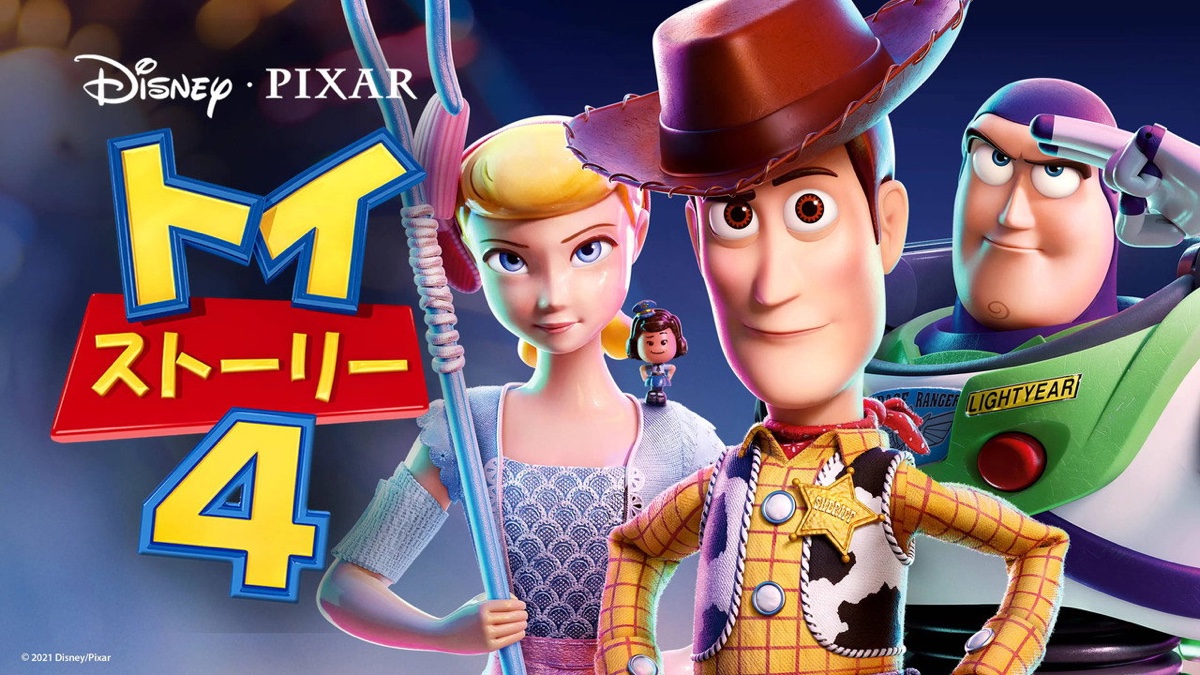
👉 Read the full Toy Story 4 review
Toy Story 5 (2026 · 102 min)
Placed at the end of the run, it works as a thirty-year answer key. The more of the first film you are carrying, the more it hands back; on its own the stakes stay gentle. It scores 8.0. I would tell anyone to watch the four films first.
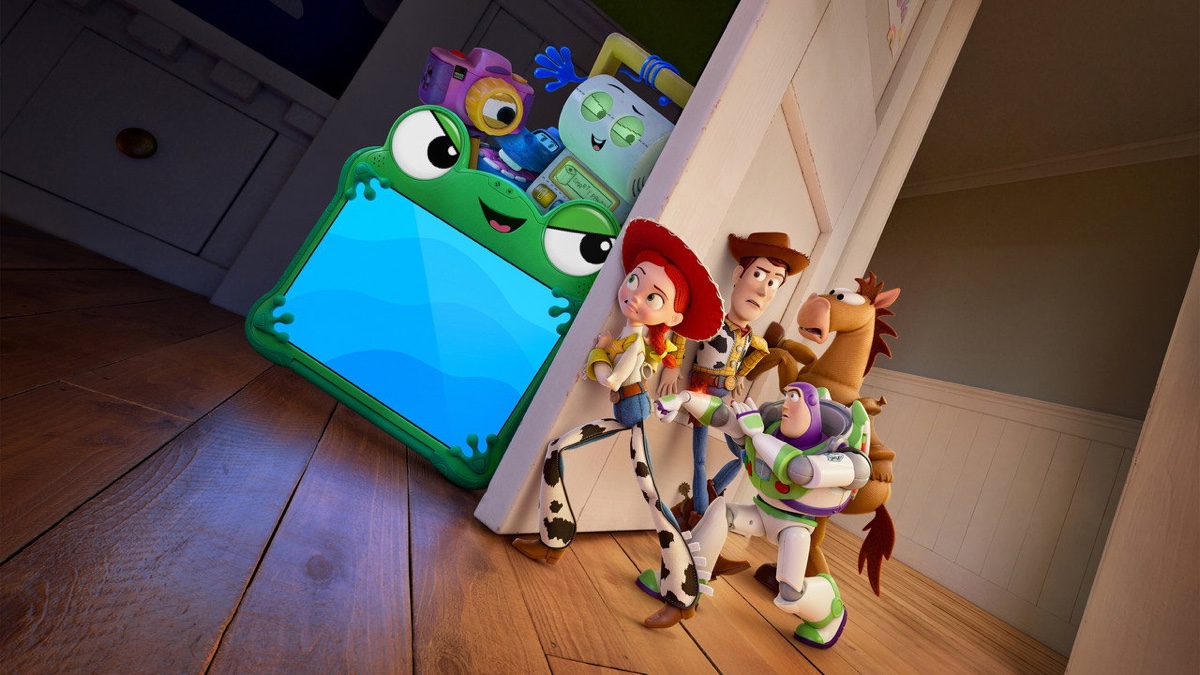
👉 Read the full Toy Story 5 review
❓ Frequently Asked Questions
How many Toy Story movies are there?
Five features in the main series, plus seven shorts (eight on US Disney+), the spin-off feature Lightyear, and a 30th-anniversary special. The five features together run seven hours and 58 minutes.
What order should I watch them in?
Numerical order, first through fifth. There is no split timeline and no alternate version of any film, so nothing is gained by rearranging them.
Do I need to watch the shorts or Lightyear?
Neither is required. The shorts are worth picking up after the features, and Lightyear is a separate science-fiction film without the toys in it, so skipping it costs you nothing in the main story.
When is Toy Story 5 streaming?
In the US it went on digital rental and purchase on August 18, 2026, with discs following on September 22. A Disney+ date has not been announced, and in Japan the film is still cinemas-only with no release date at all.
Which one is the best?
On my scoring, Toy Story 3 at 8.5, then Toy Story 5 at 8.0. The rest run 7.4 for the original, 7.1 for the second and 6.5 for the fourth.
Why do people say Toy Story 4 was unnecessary?
It is about position rather than quality. The third film closed the story, and any sequel after that has to reopen it. The section above on whether all five are worth it goes into it.
📝 Final Thoughts
The logistics fit in four sentences. Five films, numerical order, just under eight hours. The shorts and Lightyear can wait. Disney+ has the first four in the US, Toy Story 5 is rent-or-buy for now, and in Japan it is cinemas only.
What comes through in a full run is the distance between the first film and the fifth. A story about shoving the new arrival out a window turned into a story about making room for it. Over the same thirty years the Japanese box office multiplied by seven, and the kids who saw the original here in 1996 are watching the fifth from the parent’s seat. The thing that moved most over three decades is the age of the audience, and you can only see that with all five lined up.
If you want more from the director of the fifth film, my review of WALL-E covers the other time Andrew Stanton built a story around something that cannot speak for itself.

