*This page contains affiliate links. We may earn a commission if you make a purchase through these links.
Twelve episodes. Across those twelve, the Survey Corps fires its gear through alleyways, sits through interrogations, and fights almost no Titans at all. The opponent is other people. That single fact is the reason Attack on Titan Season 3 has a reputation for being the hard one, and I should say this before anything else: I find those twelve episodes a little slow myself. Nothing in them is wasted. They are still the slowest stretch in the series.
And I finished all 22 episodes convinced I had just watched a story built without a single loose part. From episode 50 onward, the back half spends everything the first twelve quietly put aside, down to the last coin. That conviction held for about a year. Then I read what comes after it in the manga. This article covers what the first half is actually doing, which chapters the season adapts, and where to watch it in the US.
📺 Where to Watch Attack on Titan Season 3 (October 2026)
| Service | Status | Notes |
|---|---|---|
| Crunchyroll | Streaming | Sub plus English dub, all 22 episodes |
| Hulu | Streaming | All 22 episodes on the base plan |
| Amazon Prime Video | Add-on | Through the Crunchyroll channel; the season is also for sale |
| Apple TV | Rent / Buy | Sold by the season |
| Netflix | Not available | Streams in Japan, not in the US |
| Disney+ | Not available | Not in the US catalog |
Season 3 streams on Crunchyroll and Hulu in the US, and both hold all 22 episodes. On Amazon it sits behind the Crunchyroll add-on channel rather than inside Prime itself, and Apple TV only sells it. A few services list Part 1 (12 episodes) and Part 2 (10 episodes) as separate entries, so a page showing 12 is showing you half the season. Netflix carries the show in Japan but not in the US, which is why so many Japanese listings point you somewhere you cannot follow.
Season 3 opens straight out of the previous season with no recap at all. If the earlier events have gone soft, our Attack on Titan Season 2 review covers the reveal everything here is built on, and the Season 1 review goes back to the beginning.
🔢 How Many Episodes Is Attack on Titan Season 3?
Season 3 has 22 episodes, numbered 38 to 59 in the series count. They come in two blocks: Part 1 is episodes 38 to 49, which aired from July to October 2018, and Part 2 is episodes 50 to 59, which aired from April to July 2019. Each runs about 24 minutes, so the whole season comes to a little under nine hours with the openings and endings left in.
The gap between those two blocks is the most useful number here when you plan your own viewing. In Japan we waited from mid-October to the end of April between episode 49 and episode 50, and I think the season is built around that pause: Part 1 settles one fight over who runs the walls, and Part 2 starts a different fight entirely. So when I rewatch it, I split it the same way. Part 1 over three or four evenings, a real break, then Part 2.
The one place I would never stop is between episodes 53 and 55. Perfect Game, Hero, and Midnight Sun play as one long stretch, and cutting it at a broadcast boundary takes the air out of it. On a weeknight with time for only one more, I stop after episode 52 and keep the next three for an evening when they can run back to back.
🎬 Trailer
Work Info
- Title: Attack on Titan Season 3
- Aired: Part 1, July 23 to October 15, 2018 / Part 2, April 29 to July 1, 2019
- Episodes: 22 total (Part 1 is 12 episodes, #38–49 / Part 2 is 10 episodes, #50–59)
- Studio: WIT STUDIO
- Chief director: Tetsuro Araki / Director: Masashi Koizuka
- Music: Hiroyuki Sawano
- Original manga: Hajime Isayama, volume 13 through chapter 90, the final chapter of volume 22
- Japanese broadcast: NHK General TV, the national public channel
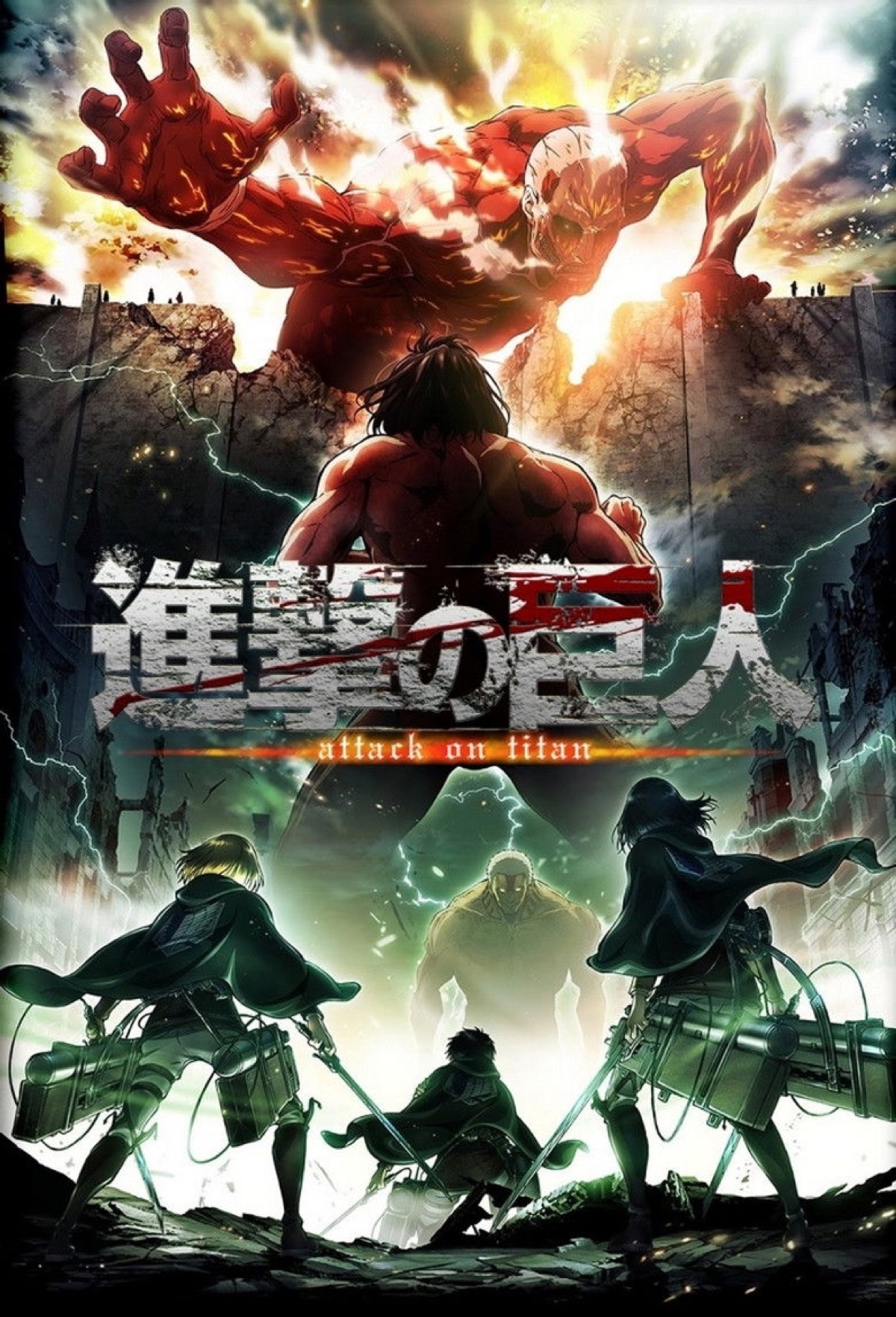
📖 Synopsis – No Spoilers
Titans come from outside the walls. That had been the rule of this world for two seasons. In the first half of Season 3, the people baring their teeth at the Survey Corps live on the inside: the Military Police, the royal government, and a killer with the nickname Kenny the Ripper. Eren and Historia are taken. The Survey Corps is declared wanted. Soldiers equipped to fight fifteen-meter monsters end up using vertical maneuvering gear on human beings in narrow streets.
The back half turns completely. The operation to retake Wall Maria begins, five years after the home territory was lost, and everything the Survey Corps has is committed to reaching one destination: the basement of the house Eren grew up in, and whatever his father left there. When what the first half revealed meets what the second half costs, you can finally see what this story has been keeping from you.
✨ What Makes It Special
Why It’s Exceptional
- Across the first 12 episodes, the enemy stops being a monster and becomes a person
- Episodes 53 to 55 run at a density the series never reaches again
- A choice between two people, handled without letting anyone off the hook
- A closing scene that quietly changes meaning once you know more
The twelve episodes without Titans move the world the most
The first half exists so that the face of the enemy can change.
Up to this point, Attack on Titan had been a show about fighting something that came from outside. The terror was total, but the shape of it was simple: humanity on one side, Titans on the other. In the Uprising arc, what the Survey Corps has to face instead is people who speak the same language and grew up inside the same walls. They do not roar. They decide things in meeting rooms and erase people with paperwork.
Over those twelve episodes, the viewer has to put down an assumption they have been carrying since episode one: that inside the walls is the thing worth protecting. Something not worth protecting turns out to have been mixed in there the whole time. Watch the war in the back half knowing that, and the exact same phrase, retake the wall, carries a completely different weight. Skip ahead to the good part and I doubt half of it lands.
Some practical numbers, since this is the thing people search for. Season 3 splits into Part 1, 12 episodes, #38 to #49 and Part 2, 10 episodes, #50 to #59, for 22 episodes total. In manga terms it runs from volume 13 through chapter 90, which is the last chapter of volume 22. That is roughly ten volumes covered in 22 episodes. If you came out of it feeling like you had been handed more information than you could file, that is not a failure of attention. It is a genuine density problem, and it is the single most common thing Japanese viewers say about this season.
One more thing about the first half: it is funnier than its reputation. Levi’s vocabulary for insulting his own subordinates is weirdly rich, and in a run of episodes this tense it works as a place to breathe. I watched the whole Uprising arc across two evenings, and both times the thing that made me sit up was a joke.
Worth noting for anyone reading from outside Japan: Season 3 moved to NHK General TV, the national public broadcaster, after the first two seasons ran in late-night slots on commercial channels. That is the channel that carries the evening news. A show about people being eaten alive, on the family channel, at a civilized hour. It signalled that this had stopped being a cult title here.
Episodes 53 to 55 are the peak of the whole series
Somewhere past the midpoint of the back half the temperature changes. Episode 53, Perfect Game, drops the situation into something close to hopeless. Episode 54, Hero, pushes every major character to a limit. Episode 55, Midnight Sun, lands the whole thing without letting anybody feel like they won. There is not one minute across those three episodes you can watch with half your attention.
What makes the run work is not spectacle. It is that the sequence includes a commander telling the soldiers who cannot win to go and die anyway, and the show films the face of the person giving that order instead of cutting away from it. Nobody in the scene has an exit. A five-minute briefing holds your attention because all five minutes are about people who are about to be dead.
This is also where Hiroyuki Sawano’s score does its best work. Sawano is the composer Japanese studios call when a show needs to feel enormous, and the obvious move here would have been to let him lift things. He does the opposite. The music arrives and you understand that the scene has passed the point of return. (For the avoidance of doubt: this is not a fun season. It is compelling without being enjoyable, which is a harder thing to build.)
Look, I know I have spent several paragraphs defending twelve episodes I opened this article by calling slow. Both things are true at once, and the back half is what makes them true.
The show refuses to discard the option it did not take
Late in the back half there is a scene where only one of two people can be saved. Both are people the story cannot afford to lose. Both have a real argument for surviving. The others present disagree, loudly, and the scene does not pretend there is a clean answer waiting.
What makes those few minutes exceptional is not the decision. It is that the person who makes it is shown carrying the weight of having made it. No vote, no coin toss, no convenient interruption. One man decides, and then keeps walking with that decision inside him. I have watched a lot of anime built around impossible choices. Very few of them are willing to stay in the room afterward.
Everything I have just written has a date stamped on it, though. The date I finished episode 59. Hold that thought.
The last few minutes change meaning later
At the end of episode 22, the Survey Corps stands in front of the thing they have been dreaming about since they were children. Everyone is looking at the same view. One of them, obviously, is not feeling what the others are feeling.
First time through, that reads as nothing more than a protagonist out of step with his celebrating friends. Why those particular seconds are shot with such care only becomes clear when you come back to them knowing what follows. Rewatch it later and the identical cut is playing a different scene. Somebody was looking a very long way ahead when they framed that.
Deeper Themes
What Season 3 is really about is the logic of the people who manage fear. Somebody took memory and information away from a population and handed back a single picture in exchange: outside the wall is despair, and there is nothing else you need to know. Run that for a hundred years and the act of asking becomes the crime. The Titans were only ever the entrance to this show’s horror. Sitting behind them is a structure where whoever holds the truth decides how much of it everyone else is allowed. That is why the first twelve episodes have to be a political drama. Without that groundwork, the war in the back half would be nothing but an exchange of fire.
🎭 Memorable Scenes
This is the story you started.
A single line, placed near the end. I am not going to say who says it or who hears it. What I will say is that by the time the scene arrives, 22 episodes of accumulated weight collect at one point and stop moving. It gets passed around as a great quote, which it is, and knowing the situation immediately before it turns it into something considerably crueller than a great quote.
Second: the face of the person who chooses, in the scene where only one of two can be saved. The dialogue is short. The staging is plain. All of the weight that a decision leaves behind is sitting there on the screen anyway. That scene alone would be reason enough to recommend the season.
Third: the final episode. Pay less attention to the view and more to how long the camera holds on each individual face looking at it. Watch it today and it plays as a happy scene. It is supposed to.
💭 How It Made Me Feel
When the credits rolled on episode 59, I thought I had just watched a complete story. The best animation in the series carrying the best writing in the series, and standing on top of both, people refusing to accept a cruel world on its own terms. Everything a season needs, in one season.
That reading changed when I read on in the manga. I am not going to describe what happens there. What I can tell you is that those 22 episodes show a different face once you know what comes next, and the change is not small. The same work surprised me twice, years apart, and the second time it did it by making me re-evaluate something I had already filed as finished. Bottomless is the closest word I have for it.
It did not hit me while I was reading, either. It hit me the following weekend, when I went back and put on the last ten minutes of episode 59 with the manga still open next to me. Same footage. Different film.
Which is why treating this season as a waypoint on the route to the finale seems like a waste. Watch it once as a finished object first. You only get to do that once.
😅 Where It Falls Short
Twelve episodes of slow is still twelve episodes of slow. So why is a stretch with nothing wasted in it also a stretch people quit on?
The first half loses pace, and it is not subtle
Whether the Uprising arc is necessary and whether it is fun to sit through are separate questions. Meetings, interrogations, political maneuvering, and human beings chasing other human beings through streets. To a viewer who showed up for Titans, it looks like a different program started without warning. Japanese fans call these the hito-kai, the human episodes, and it is not usually meant as a compliment. I understand why people stop here.
Information arrives faster than you can file it
On top of the pacing, the first half updates its own premises constantly. Something you thought you understood gets revised roughly every episode, so watching with half your attention leaves you tangled in who is related to whom, who reports to which organization, and which of those two facts matters. I know people who kept an explainer video running in a second window. Give it your full attention and it holds together fine. Put it on in the background and it will not.
The animation is uneven away from the setpieces
The vertical maneuvering sequences are beyond criticism. Away from them, in conversation scenes and flashback cuts, viewers have been pointing out thinner linework since the original broadcast, and screenshots of the worst examples still circulate. That criticism exists, and I am not going to pretend otherwise. My own view is that 22 episodes at this level of movement explains a lot, and I would still call this the best animation the series ever produced. It is a weakness that photographs badly rather than one you feel while watching.
The Downsides
- The first 12 episodes drop in pace. Turning up for Titan combat means waiting a long time
- Dense enough that background viewing loses track of who is who
- Linework in conversation scenes has drawn criticism since it aired
Who Should Watch This?
- Anyone stalled somewhere in the Uprising arc (best fit)
- Viewers who got through it but could never straighten the plot out afterward
- Manga readers who dropped the series during the same arc on the page
- Anyone who welcomes politics and power struggles inside a war story
Who Might Not Enjoy This?
- Anyone here purely for Titan action. The first 12 episodes are humans against humans
- Background viewers who want to half-watch. The premise moves every episode
- Anyone who has not seen Seasons 1 or 2. This starts mid-sentence, with no recap
📺 Streaming Guide by Service
Is Attack on Titan Season 3 on Netflix in the US?
No. Attack on Titan streams on Netflix in Japan, but the US Netflix catalog does not carry it (checked October 2, 2026). Any page telling you otherwise was almost certainly written for a Japanese audience, which is a fair description of most of the internet’s Attack on Titan streaming pages.
In the US it lives on Crunchyroll and Hulu. Crunchyroll is the stronger pick: both the subtitled version and the English dub, with every season including the finale on one page. On Amazon it is not part of Prime itself: you either add the Crunchyroll channel or buy the season. Plan for the long haul if you are starting the series from scratch, because the complete run is close to 100 episodes, though Season 3 on its own is 22 episodes of about 24 minutes each, which is a comfortable week.
Where to Stream
- Crunchyroll: streaming, sub plus English dub, every season in one place
- Hulu: streaming, every season, included with the base plan
- Amazon Prime Video: through the Crunchyroll add-on channel, or buy the season
- Netflix: not available in the US, though it does stream in Japan
Soundtrack
Hiroyuki Sawano’s Attack on Titan Season 3 original soundtrack runs to 31 tracks. The cues that play under the back-half battles are far quieter in isolation than you remember them being on screen, which tells you something about how they were placed.
📚 Read the Manga
The source is Hajime Isayama’s Attack on Titan, published in English by Kodansha Comics and complete at 34 volumes. Season 3 adapts volume 13 through chapter 90, the final chapter of volume 22, which puts the season’s ending around two thirds of the way through the story. Nothing major diverges between the anime and the page, so volume 23 is where you pick up if you would rather read on than wait. Fair warning from personal experience: what comes next is the part that made me reconsider everything above.
🎬 If You Liked Attack on Titan Season 3, Watch These 3 Next
Legend of the Galactic Heroes
If the Uprising arc worked on you rather than against you, this is the logical next stop. Across 110 episodes it spends more time in council chambers than in fleet battles, and it keeps you there by putting a rotting democracy and a benevolent autocracy on screen together without ever telling you which one it prefers. Our review covers the feature-length film that works as the entry point.
👉 Read our Legend of the Galactic Heroes review
Orb: On the Movements of the Earth
The people holding the correct answer get silenced by the people holding the power. Season 3 tells that story through a hundred years of managed memory; this one tells it through fifteenth-century European astronomy. What the two share is the patience to explain why the side suppressing the truth believes it is right. It is on Netflix worldwide, which makes it an easy follow-up.
👉 Read our Orb: On the Movements of the Earth review
PLUTO
For anyone who came out of the first half thinking that people make far worse opponents than monsters. Naoki Urasawa built eight episodes around a murder investigation in which the question is never who did it but what a war does to whoever survives it. The hatred here is inherited and structural, exactly as it is in Attack on Titan, and it hurts in the same specific way.
📝 Final Thoughts
Attack on Titan Season 3 is 22 episodes. The first 12 swap the enemy from monsters to people, and the last 10 settle the story of life inside the walls for the time being. It moves through roughly ten volumes of manga in that span, so the complaint that one viewing is not enough to absorb it is completely reasonable. Put differently, the payoff for sitting down and giving it your attention is guaranteed in a way very little television manages.
If you are stalled in the first half, there is only one thing I want to say to you. Get as far as episode 50, The Town Where Everything Began. After that the reasons to stop run out. I am scoring this 8.2, and I should flag that it is an unstable 8.2: I finished these 22 episodes certain I had seen a perfect story, then read on and had to take that certainty apart. Both of those reactions came from the same season. That is the strange thing I keep coming back to.
If anyone asks why Attack on Titan belongs among our best anime of all time, episodes 50 to 59 are what I would sit them down in front of.
⭐ Series at a Glance
| Category | Rating |
|---|---|
| Story | ★★★★★ |
| Animation / action | ★★★★★ |
| Music | ★★★★★ |
| Pacing | ★★★☆☆ |
| Clarity on a first watch | ★★★☆☆ |
| Standalone resolution | ★★★★☆ (the walls arc lands here) |
Usagi’s Recommendation Score
⭐⭐⭐⭐⭐⭐⭐⭐☆☆
8.2 / 10
Twelve episodes to change the face of the enemy, then the ten best episodes the series ever made.

