*This page contains affiliate links. We may earn a commission if you make a purchase through these links.
The Final Season opens in a trench. Artillery, barbed wire, a four-year war grinding toward its end, and a girl small enough to crawl under an armored train with explosives strapped to her back. No walls. No Survey Corps. No vertical maneuvering gear. Fifty-nine episodes of buildup, and episode 60 drops you into somebody else’s war, fought by teenagers whose names you do not know.
Full disclosure before anything else: I read the manga first, so I knew what was happening and never got lost. Which is exactly why I want to be blunt about the thing I did not personally suffer. If the anime is your only route in, that opening stretch will throw you, and plenty of people quit inside it. The confusion is not a mistake. The Final Season exists to turn the previous 59 episodes inside out, and the first job on that list is taking away the ground you were standing on. This article covers what Part 1 and Part 2 each contain, how many episodes they run, and where to watch them in the US.
📺 Where to Watch Attack on Titan: The Final Season (October 2026)
| Service | Status | Notes |
|---|---|---|
| Crunchyroll | Streaming | Sub plus English dub, all 28 episodes |
| Hulu | Streaming | Both parts on the base plan |
| Amazon Prime Video | Add-on | Crunchyroll channel; episodes also for sale |
| Apple TV | Rent / Buy | Sold by episode, also by season |
| Netflix | Not available | Japan has it, the US does not |
| Disney+ | Not available | Not carried in the US |
Crunchyroll and Hulu are the two US subscriptions where the whole Final Season is included, Part 1 and Part 2 together. Amazon only streams it if you pay for the Crunchyroll channel on top of Prime, and Apple TV sells it. Listing pages tend to show 16 episodes for Part 1 and 12 for Part 2, so a page showing 16 is not missing anything. The US Netflix catalog does not have it. Checked October 2.
Part 1 starts cold, with no recap of anything. If the walls arc has gone fuzzy, our Attack on Titan Season 3 review covers the 22 episodes immediately before this one, and the Season 2 review holds the reveal the whole Final Season is built on.
🧩 Season 4, The Final Season, Part 3: Which Name Means What?
Three labels float around for the last stretch of this show, and they overlap more than they should. Season 4 and The Final Season are the same 28 episodes, numbered 60 to 87. Part 1 is episodes 60 to 75, sixteen of them, aired from December 2020 to March 2021. Part 2 is episodes 76 to 87, twelve of them, aired from January to April 2022. Each episode is about 24 minutes.
What people search for as Part 3 is the Final Chapters: two long specials from 2023 that finish the story. In Japan they went out as the first and second halves of the completion, not as a new season, and US services file them at the tail of the same season, which is why Season 4 sometimes shows 30 entries instead of 28. Crunchyroll and Hulu carry the two specials alongside the rest.
Here is how I would line it up if I were starting today. Part 1 and Part 2 back to back, with no gap at all, because the long wait we had in Japan between them did nothing good for anyone. Then leave a day before the specials. Episode 87 ends on a cliff, and the first special opens at full speed, so I found I needed one night to let the end of Part 2 settle before going over the edge with it.
🎬 Trailer
The Part 1 promo does the whole job in a little over two minutes. No vertical maneuvering, no roaring, no walls. Shells, trenches, uniforms. The series is telling you before you press play that it has turned into a war story.
Work Info
- Title: Attack on Titan: The Final Season, Part 1 plus Part 2
- Episodes: 28 total. Part 1 is 16 episodes, #60 to #75. Part 2 is 12 episodes, #76 to #87
- Aired: Part 1, December 7, 2020 to March 29, 2021. Part 2, January 10 to April 4, 2022
- Studio: MAPPA, taking over from WIT STUDIO
- Director: Yuichiro Hayashi
- Music: Hiroyuki Sawano with KOHTA YAMAMOTO
- Original manga: Hajime Isayama, opening at chapter 91, the first chapter of volume 23
- Japanese broadcast: NHK General TV, the national public channel
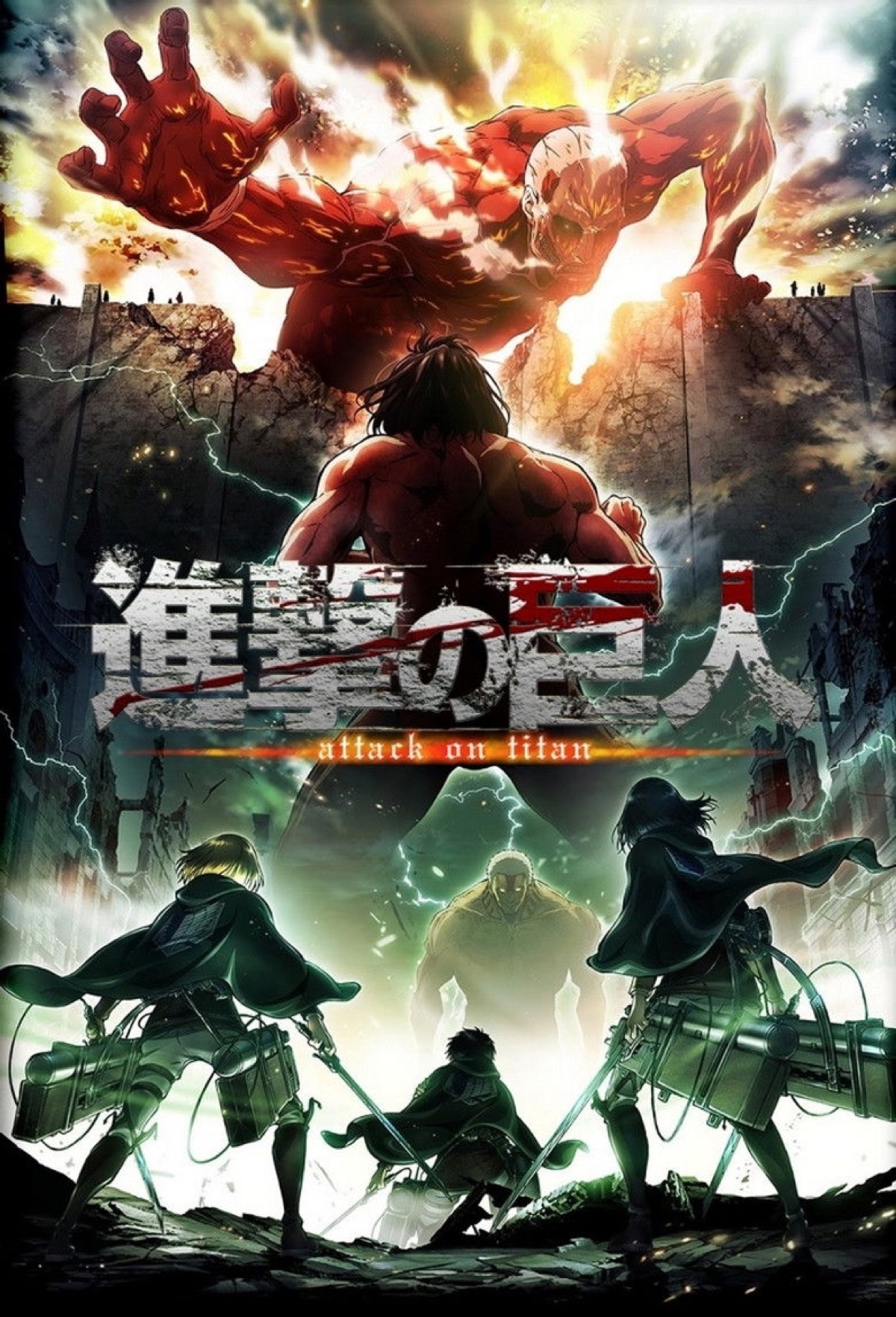
📖 Synopsis – No Spoilers
The setting is not inside the walls. It is Marley, a military state on the far side of the ocean, where people of Eldian descent live penned into an internment zone and wear an armband so that everyone can tell. Being able to turn into a Titan is the one thing that makes them useful, so the single route out of the zone is to be chosen as a Warrior and go fight for the country that despises you. The season begins with the children competing for that slot, lying in the dirt of a trench.
Then the name Paradis Island comes up in conversation. The people inside the walls, who spent three seasons believing they were the last humans alive, turn out to be, in the rest of the world’s telling, the devils that everyone has hated for a hundred years. Every event the earlier seasons showed you gets retold as the enemy’s history lesson. From this point on, which side is the aggressor changes hands every few episodes.
✨ What Makes It Special
Why It’s Exceptional
- The protagonists switch sides. This time the invasion is yours
- Every antagonist gets an argument you cannot easily refuse
- 59 episodes of established fact stay identical while changing meaning
- Not one filler episode across the 28
The story reverses, and this time you are the invasion
For three seasons, Attack on Titan only ever looked outward from inside a wall. Everything past it was blank, and anything that came out of the blank was a threat. The Final Season stands in the blank and starts the story over from there. Seen from Marley, Paradis is a quarantine island holding the descendants of a people who once trampled the world flat, and the Survey Corps is a pack of monsters that will eventually cross the water.
What makes the reversal land is that nothing new is added. The day the wall was breached, the day a certain identity came out, the day the monarchy fell. Not one of those events changes. The camera moves, and the same facts turn over. There is a run of episodes in Part 1 that follows Reiner through the years leading up to the breach, from his side, and afterwards the first episode of Season 1 plays like a different film. The people who knocked that wall down had somewhere they wanted to get home to.
The reason a boy on the enemy side can say that you and I are the same without it sounding cheap is that the season spends sixteen episodes building the floor he says it from. What the children in the internment zone are taught, what they believe, what they volunteer for. Only after all of that does the show sit both sides down at one table. This is less about making you sympathize with the enemy than about dismantling the category.
If the structure sounds familiar from outside anime, it should. Clint Eastwood shot Iwo Jima twice, once from the American side, once from the Japanese, and in the second film the identical artillery sounds like something else. Attack on Titan pulls the same move inside one continuous story, on characters you have already spent 59 episodes loving. That is a considerably harder trick, and I do not know of another long-running anime that has tried it at this scale.
But I have to admit something. None of this is enjoyable while Part 1 is happening. It is engineered not to be. The thrill gets confiscated and discomfort is set down in its place, and you only find out that was deliberate once Part 2 starts. Judge the season on Part 1 alone and it reads as sixteen episodes of complicated and grim.
One more thing that shaped how this landed here at home. Seasons 1 through 3 were animated by WIT STUDIO. The Final Season moved to MAPPA, and the announcement set off a genuine panic among Japanese fans months before broadcast, and the new character designs were picked apart frame by frame on every timeline. Then episode 60 aired on NHK General, the national public broadcaster, and the argument about linework got very quiet very fast, because everybody had found something else to argue about.
Everyone is following their own justice, and that is the tragedy
There is almost no straightforward villain across these 28 episodes. Marley’s soldiers are defending their country. The Eldian restorationists are trying to free their people. The Survey Corps is trying to keep the island breathing. The volunteers are people who could no longer stomach how their own nation operates. Everybody moves according to a belief, and the tragedy accumulates in proportion to how many beliefs are in the room.
The character who carries that most sharply is Gabi, a Warrior candidate out of Marley who has never spent one second doubting that the devils on the island deserve to die. She is built from the same material as Eren. The heat of the boy who screamed that he would wipe out every last Titan, pointed the other way. A boy and a girl in a mirror, walking toward each other, both certain they are right.
Japanese viewers hated her. Not mildly disliked, hated, weekly, in a way that filled every comment section through Part 1. I know because I was reading those comment sections. That reaction is the machinery working precisely as designed, and the season is entirely aware of what it is doing to you.
Which is why winning cannot fix anything here, and the story says so from the first episode. Whoever wins, the losing side produces the next Eren and the next Gabi. The moment you understand you are watching a world that has run that loop for a century, your own footing goes.
Did Eren change, or did the world just get bigger?
The Eren of Part 1 looks like somebody else. Fewer expressions, fewer words, cold even toward his own side. A lot of people hit that and feel like a character they loved is being taken away, and that reaction is correct. The reading that he has not changed at all since episode 1 also holds up completely. He has only ever run on one intolerance, which is being told where he may and may not go. What changed is not him but the size of the thing he can see.
The season refuses to kill off either reading. Watch it again and the answer moves again. I have switched sides twice now, and I expect to switch back.
Deeper Themes
What these 28 episodes are actually working on is the question of where a cycle of hatred can be stopped. A crime a hundred years ago, the retaliation for it, the retaliation for that. Nobody alive witnessed the first blow, and every single person is still returning it. The show gives the condition its own name, the idea of getting out of the forest, and it deliberately lines up the people trying to climb out beside the people who never manage it and hand the whole thing to their children instead. And the person put in a position to break the loop is almost always the one who was hating hardest.
🎭 Memorable Scenes
Reiner and Eren end up at the same table. Two people who spent years trying to kill each other, sitting across a small space with the faces of men who have run out of room, going through what they have each done. What I love about it is that the hatred never dissolves. No reconciliation, no settlement. Just the fact that they were the same, left sitting there between them.
Then there is the sequence where Eren travels back through his father’s memories. Following old footage, the title of this entire series finally resolves into a shape. I am not going to say what it resolves into. What I will say is that the instant it lands, it reaches all the way back and rewrites what episode 1 of Season 1 was about. Calling that a payoff badly undersells how much moves.
The heaviest scene is quieter than either of those. In Part 1, in episode 72, Children of the Forest, a girl who shot a soldier is taken in by a child that same soldier once saved, and then seated at a dinner table with the dead soldier’s family. What gets said over that meal is the largest decision anyone makes all season. The show lands its entire argument about breaking a cycle of hatred using nothing but conversation over food. You could reasonably argue the other 27 episodes exist to make that dinner possible.
I’ll wipe them out. Every last one of them.
Eren, in episode 2 of Season 1, right after watching his mother eaten. He was talking about Titans. The same declaration comes back in Part 2, in episode 80, From You, 2,000 Years Ago, with the wording barely touched: he intends to wipe out every life on the other side of the sea. The verb survives intact. The target has quietly become people. That one substitution is the entire season in miniature.
💭 How It Made Me Feel
What arrives when the credits roll on episode 87 is not relief. There is no victory available to celebrate, and Part 2 closes on acceleration rather than resolution. I still finished these 28 episodes, went on to finish the manga, and came out certain it is the best story I have ever read or watched.
The reason is specific. There is not one wasted episode, and beyond that, there is barely a wasted line. A throwaway remark detonates twenty episodes later, then it happens again, and it keeps happening for the whole run. If Hajime Isayama laid all of that out in advance, he is a genuinely frightening writer. The catch is that none of it is visible the first time through. First time through you simply get dragged.
It did not hit me while I was watching, either. It hit me a week later on a train, when a line from Part 1 that I had filed away as scenery suddenly explained something in Part 2. I got off at the wrong station.
Since then I have gone back and rewatched Season 1 episode 1 three separate times, purely to check how differently it plays. It plays differently every time, which is not a sentence I get to write about much television.
😅 Where It Falls Short
Everything above is praise, so here is the part I would say to a friend before they pressed play.
The way into Part 1 will lose a first-time viewer
The opening episodes throw new personal names, country names and organization names at you all at once, and the timeline jumps around. There is nobody on screen you recognize. How many years have passed since the last season goes unstated for a good while. I had the manga in my head, so I never went under. Watching with only the anime to go on, I completely understand why people fall off right here.
The fix is simple enough. Do not try to memorize names early on. Track which country a person belongs to and nothing else, and by the third or fourth episode it starts joining up on its own. Once you are through that, the rest carries you. Stopping here is the worst possible outcome, because the sixteen episodes that annoyed you are the setup for the twelve that collect.
The nine-month gap damaged the original viewing experience
Part 1 ended in March 2021. Part 2 started in January 2022. In Japan that meant holding a deliberately unresolved, deliberately uncomfortable sixteen episodes in your head for nine months with nothing to release the pressure, and a fair number of people never came back for the second half. Streaming makes this a non-issue for anybody starting today. It is worth naming anyway, because it explains why the season’s reputation here is worse than the season is.
The animation is strong, though not always even
MAPPA’s battle sequences stand up against anything in the series, and the sound work in the Marley siege is the best the show has ever had. Away from that, some conversation scenes and long shots run thinner, and the shift in character design away from WIT’s version drew steady complaints all through Part 1. I stopped noticing somewhere around episode 65. The criticism is real and it photographs far worse than it plays.
The Downsides
- Early Part 1 introduces too many people at once to follow on a first watch
- Character designs changed with the studio, which took some viewers a while
- Part 1 was engineered to feel unresolved, so stopping between the parts leaves a bad taste
Who Should Watch This?
- Anyone who finished Season 3 and is hesitating over whether to carry on (best fit)
- Viewers who cannot work out how Part 1, Part 2 and the finale are divided up
- Film fans looking for a war story that refuses to name a correct side
- Anyone who preferred Season 3’s politics to its Titans
Who Might Not Enjoy This?
- Anyone hoping for the thrill of vertical maneuvering against Titans inside the walls
- Viewers who need the protagonist to stay morally clean to the end
- Anyone who has not seen Seasons 1 to 3. This one starts mid-thought
📺 Streaming Guide by Service
Is Attack on Titan: The Final Season on Netflix in the US?
No. US Netflix does not carry it; the Japanese one does, and that mismatch is where the bad advice comes from.
Crunchyroll and Hulu both have it. If you start from episode 1, Crunchyroll keeps all four seasons and the specials on one page, with the English dub alongside the subtitles; Hulu does too, on the base plan. Apple TV sells it by the episode or by the season, and Amazon streams it only through the Crunchyroll add-on channel. On time commitment, 28 episodes at roughly 24 minutes each is a little over eleven hours, which is a long weekend rather than a project.
Where to Stream
- Crunchyroll: streaming, sub plus English dub, every season in one place
- Hulu: streaming, all 28 episodes, included with the base plan
- Amazon Prime Video: through the Crunchyroll add-on channel, with episodes also for sale
- Apple TV: purchase only, sold by episode as well as by season
- Netflix: not available in the US, although it does stream in Japan
Soundtrack
The Final Season score is shared between Hiroyuki Sawano, who has scored this series since 2013, and KOHTA YAMAMOTO. The Final Season original soundtrack album runs 23 tracks and is credited to Yamamoto, and it is noticeably colder than the wall-era music. Fewer horns. More empty space.
📚 Read the Manga
The source is Hajime Isayama’s Attack on Titan, published in English by Kodansha Comics and complete at 34 volumes. The Final Season opens with chapter 91, The Other Side of the Sea, which is the first chapter of volume 23. If Part 1 lost you, reading volume 23 alongside it is the fastest repair available: the Marley cast sorts itself out in a single sitting on the page in a way it stubbornly refuses to do on screen. The claim that the season has no wasted line is also the kind of thing you can only really confirm on a reread.
🎬 If You Liked Attack on Titan: The Final Season, Watch These 3 Next
Legend of the Galactic Heroes
If Marley’s side of the story is the part that gripped you, here is a series that runs on nothing else. Two empires, a fleet war stretched across 110 episodes, and a narration that lays out the case for each side so evenly that viewers still argue over which one they were meant to back. Nobody in it is written as wrong. Our review covers the feature-length film that works as the way in.
👉 Read our Legend of the Galactic Heroes review
PLUTO
Naoki Urasawa redrawing an Osamu Tezuka story into eight episodes about what a war leaves inside the people who survive it. The character the story cares about most is the one trying to stop the retaliation from continuing. If Gabi’s position in the Final Season is what caught you, this catches you in the same place, and it is on Netflix worldwide.
Jin-Roh: The Wolf Brigade
A special police unit, an anti-government movement, and a girl carrying explosives. The film is told from inside the state’s enforcement arm, which means you spend ninety minutes attached to the side doing the crushing. Written by Mamoru Oshii, and about as far from a story with a good side as animation has gone. Go here if the trench in episode 60 is the image that stayed with you.
👉 Read our Jin-Roh: The Wolf Brigade review
📝 Final Thoughts
Attack on Titan: The Final Season is 28 episodes. Part 1 is 16 of them, numbered 60 to 75. Part 2 is the remaining 12, numbered 76 to 87, and the finale still sits beyond that. Having the count in front of you helps more than it sounds like it should, because a lot of what makes Part 1 hard to sit through is not knowing how long the discomfort is meant to last.
What these 28 episodes do is not advance the story so much as turn it over. The enemy has a case. The invasion is yours now. Everybody acts on principle and the bodies stack up in proportion. And the job of breaking the cycle gets handed to the girl who was standing closest to the hatred. I am scoring this 9.8, and the two tenths I am holding back are entirely about that opening hour I warned you about at the top. Remember the trench? That is the price of admission, and it is worth paying. This is where Attack on Titan finally starts talking about what it came to talk about.
⭐ Series at a Glance
| Category | Rating |
|---|---|
| Story | ★★★★★ |
| Worldbuilding | ★★★★★ |
| Characters | ★★★★★ |
| Animation | ★★★★☆ |
| Music | ★★★★★ |
| Ease of entry on a first watch | ★★★☆☆ |
Usagi’s Recommendation Score
⭐⭐⭐⭐⭐⭐⭐⭐⭐☆
9.8 / 10
Fifty-nine episodes of story, turned over in twenty-eight.

