*This page contains affiliate links. We may earn a commission if you make a purchase through these links.
*This page contains affiliate links. We may earn a commission if you make a purchase through these links.
“Do it, Reiner. Right here, right now.” Delivered at the temperature of small talk, in the middle of a conversation that had nothing to do with anything. In those few seconds of episode 31, Attack on Titan stops being a show about humanity versus monsters. The identity of whoever broke the wall five years ago comes out, and from that point the word “enemy” no longer means what it meant before.
One thing I should say up front, having now watched the series to its end: Season 2 delivers the smallest shock of any season. An enormous secret is opened, and yet the plot itself barely advances. In a hop-step-jump, this is unmistakably the step. It still isn’t a season you can skip, and this article is about why.
📺 Where to Watch Attack on Titan Season 2 (August 2026)
| Service | Status | Notes |
|---|---|---|
| Crunchyroll | Streaming | Sub and English dub |
| Hulu | Streaming | All seasons |
| Amazon Prime Video | Purchase only | Not included with Prime |
| Netflix | Not available | Streams in Japan, not in the US |
| Disney+ | Not available | — |
As of August 4, 2026, Season 2 streams on Crunchyroll and Hulu in the US. Season 2 is only 12 episodes (#26–37 overall), so it’s a single evening’s work, though the full series runs close to 100 episodes if you keep going. Worth knowing: this show streams on Netflix in Japan but not in the US, so Japanese listings will name a service you can’t use here. Availability shifts, so confirm on the service’s own page before you start.
Season 2 picks up directly from the previous season with no recap. If Season 1 has faded, refresh it with our Attack on Titan Season 1 review first. Episode 31 lands very differently when the earlier events are still sharp.
🎬 Trailer
Work Info
- Title: Attack on Titan Season 2
- Aired: April 1 – June 17, 2017 (12 episodes, #26–37 overall)
- Chief director: Tetsuro Araki / Director: Masashi Koizuka
- Series composition: Yasuko Kobayashi / Character design: Kyoji Asano
- Studio: WIT STUDIO
- Original manga: Hajime Isayama (Bessatsu Shonen Magazine)
- Music: Hiroyuki Sawano
- Opening: Linked Horizon “Shinzou wo Sasageyo!” / Ending: Shinsei Kamattechan “Yuugure no Tori”
- Cast: Yuki Kaji (Eren) / Yui Ishikawa (Mikasa) / Marina Inoue (Armin) / Yoshimasa Hosoya / Hiroshi Kamiya (Levi) / Daisuke Ono (Erwin)
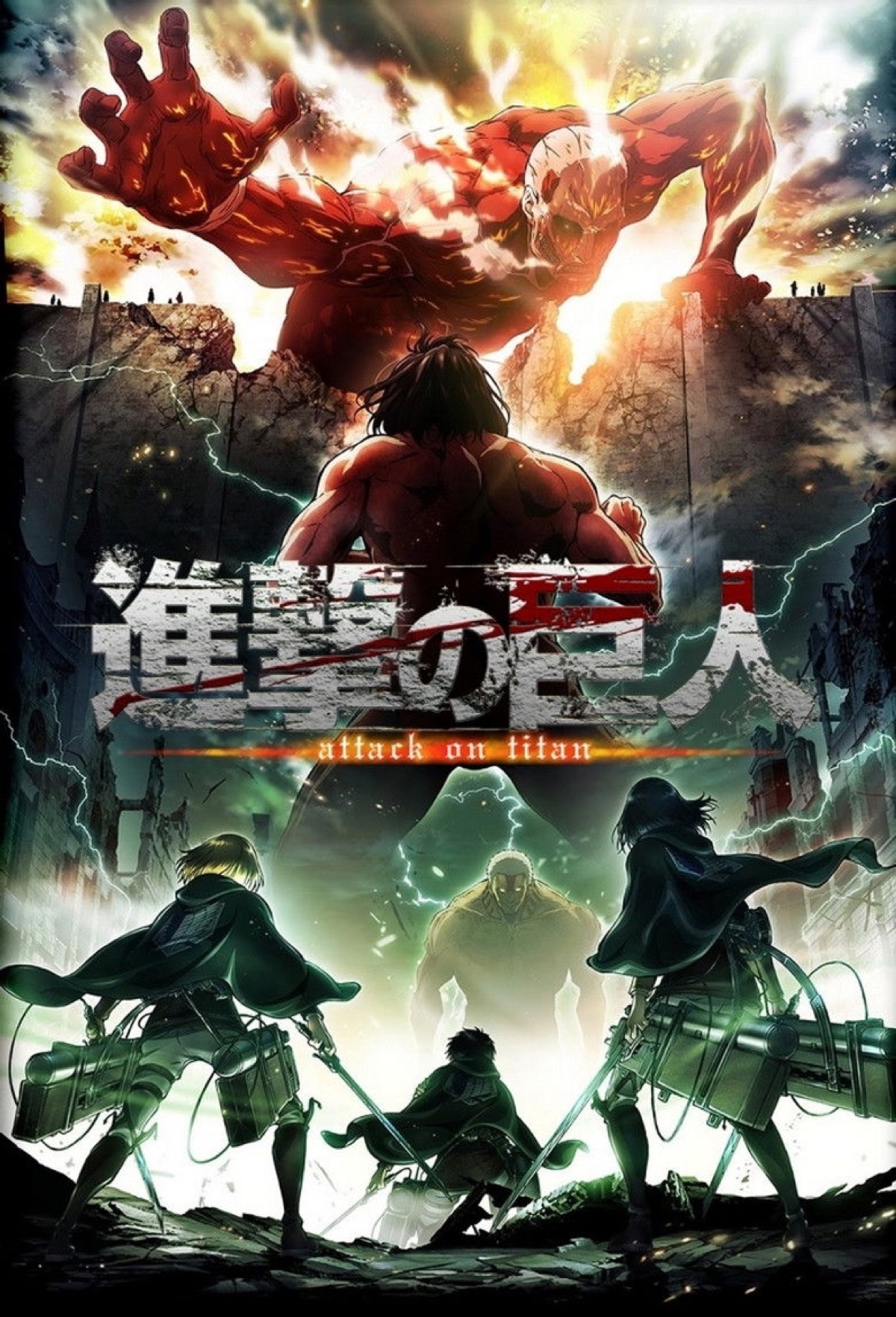
📖 Synopsis – No Spoilers
Twelve hours before the battle with the Female Titan. Inside Wall Rose (the second wall) Titans have appeared. No breach can be found anywhere along it. So how did they get in? The Survey Corps rides southwest hunting for an answer, and on the way meets something new: a Titan that speaks.
Running alongside that are the private histories of the 104th Cadet Corps: Sasha’s hometown, Connie’s village, and the things Ymir and Krista have kept quiet about. After a siege at an isolated ruined castle, the story lands somewhere nobody was expecting. Season 2 is only twelve episodes, and the events inside it span just a few days. The density is the highest in the series.
✨ What Makes It Special
Why It’s Exceptional
- Episode 31 rewrites the definition of “enemy” and changes the show’s genre
- A voice performance that conveys collapse through delivery, not dialogue
- Ymir and Historia: the one emotional thread running through all twelve episodes
- WIT STUDIO’s animation, and an opening theme that straightens your spine
Episode 31 changes what kind of story this is
Most of Season 2’s value sits in this single episode. Until it, the show was humanity inside the walls against an unreasoning disaster from outside. Titans were closer to a natural phenomenon than an opponent. You couldn’t negotiate with them, which is exactly what made them frightening.
Episode 31 dismantles that premise. The enemy has objectives, has a name, and already knew your face. The identity behind the two Titans that broke the wall five years ago is revealed here. And the confession doesn’t arrive as a dramatic speech. It comes out at the temperature of an ordinary conversation, from someone who mostly sounds tired.
The genre swaps out at that moment. From “humanity versus Titans” to “a story about doubting the relationships you trusted.” The nature of the fear changes with it: no longer the terror of an unknown thing coming at you, but the despair of understanding exactly what you’re facing and how far out of your league it is. In most horror the fear evaporates once the culprit is named. Here the temperature keeps dropping after.
What deserves separate credit is the voice work in this scene. The character at the center has lost track of which of his two roles he’s speaking from, and at some point stops being able to tell himself. That confusion is conveyed entirely through vocal delivery rather than through what he says: the same person’s voice quality shifts between the lines before and after. In Japan this performance is still brought up as a career-defining piece of work. It’s worth listening to on audio alone.
Ymir and Historia, the one thread of feeling
The emotional core of Season 2 isn’t Eren. It’s these two. Krista tries to live for other people; Ymir has decided to live for herself. They look like opposites, and they share the identical problem underneath: neither can say her own real name out loud.
When Ymir finally acts to protect the others, the show doesn’t frame it as bravery. It’s the moment she gives up a secret, and everything she does afterward follows one rule: no more lying. In a season this short, theirs is the only relationship that runs unbroken from first episode to last. Even in the episodes weighed down by tactical exposition, the story’s temperature comes back whenever those two speak.
WIT STUDIO, and “Shinzou wo Sasageyo!”
Four years passed between seasons, and the animation didn’t slip. If anything, the increase in Titan-versus-Titan combat forced the studio to render both the speed of the vertical maneuvering gear and the weight of enormous bodies colliding, and it delivers on both. The grappling in the back half is visibly built on mixed martial arts: actual joint locks, executed by fifteen-meter bodies.
The opening theme needs no introduction. Not many songs make you sit up straight during the intro. The ending, “Yuugure no Tori,” is the opposite: unsettling, hard to read, and easy to dismiss at the time. Watch it again after finishing the series and it’s clearly signposting what’s coming. It was a quiet spoiler hiding in plain sight.
That covers what Season 2 does well on its own terms. Next is what looks different once you’ve seen the whole series.
Deeper Themes
What Season 2 is really about is how position makes people. Everyone whose identity surfaces here had their available choices removed before they were old enough to choose, by where they were born and what role they were handed. Their actions don’t come from malice; they come from a position they were made to accept. The people inside the walls hate Titans for exactly the same reason the people outside hate them back. That structure runs underneath the entire series, all the way to the final episode.
🎭 Memorable Scenes
First, that line in episode 31.
Do it, Reiner. Right here, right now.
Minutes earlier it was a conversation about looking after an injured comrade. One sentence turns it into the start of a fight. The air doesn’t change. Everyone realizes it was always like this. That’s the order of operations, and it’s what makes the scene frightening. I rewound it twice on first watch, convinced I’d misheard.
Second, Ymir’s transformation and what she says to Historia around it. The line about wanting to live for herself if she could be born again comes from someone deciding how to live, not from someone about to die, and the same words mean the opposite thing depending on which of those it is.
Third, the final episode, where in the middle of an absolute massacre two characters stop to say thank you for a scarf. Some viewers found this jarring, a romance breaking out mid-catastrophe. That reading is fair. But Season 2 has spent twelve episodes on things being taken away, so ending it with one thing being given seems like a deliberate piece of construction.
💭 How It Made Me Feel
I had Season 3’s first episode open before the closing credits finished. The reason the wall contains Titans, the identity of the Beast Titan, an explanation for whatever Eren does at the very end. Not one of these gets resolved before the handoff. “You watch on because nothing was settled” is not a complicated mechanism, but the way this show builds that suspension is unusually good.
The thing is, I didn’t want it resolved. Season 2’s job was never to answer the questions. It was to replace them. And once the questions change, your reason for continuing changes too. I’d started out wanting to know how they beat the Titans. By the end I wanted to know what this world actually is.
Who Should Watch This?
- Anyone stalled after Season 1, deciding whether to continue (best fit)
- Viewers who enjoy watching how setups are engineered and paid off
- People who want a long series to settle into: this one is finished
- Anyone who watches for voice acting. Episode 31 is worth it on audio alone
😅 Where It Falls Short
The biggest reveal, the smallest amount of progress
Looking back after finishing the series, Season 2 carries the smallest total shock of any season. That isn’t a dismissal of episode 31, which is among the best the show ever produced. But measure the distance the plot actually travels across twelve episodes and you get a few days’ worth of events.
Season 1 has the wall coming down. Season 3 has the internal coup and the truth beyond the walls. Against those, Season 2’s job is to open one enormous question and hand it forward without showing you the contents. It’s the step in a hop-step-jump, necessary for the leap, and unremarkable in isolation.
Twelve episodes is also noticeably short next to the other seasons. It’s the rare complaint of high density and insufficient volume at the same time. Another two or three episodes would have reached the doorway of the next arc.
The flashbacks kill the momentum
This isn’t unique to Season 2, but this show loses speed the instant it enters a flashback. Ymir’s past, Krista’s upbringing, the backgrounds of the people whose identities surface here. The information all pays off later, yet dropping a long flashback between tense combat sequences cools the viewer down too.
Ymir’s past is the heaviest offender relative to what it reveals. The present-day story covers a few days while the flashbacks reach back years, which thins the sense of forward motion even further. It reads better on a rewatch. As a first-time experience, it costs the season something.
Too many people turn out to be Titans
One at the end of Season 1, three more in Season 2. That’s five members of a single cadet corps with the ability, and what was supposed to be an extraordinary power suddenly feels common. It functions as escalating mystery, but the scarcity that made Eren’s situation remarkable is definitively gone.
To be fair, this discomfort is itself accounted for later. Getting you to ask “why are they all from the same cadet class?” turns out to be the point, and the answer arrives in a later season. The cheapness you feel on a first watch is a cost the writer knowingly paid.
The Downsides
- Only twelve episodes, covering a few days of story time
- Momentum drops in the flashbacks; Ymir’s past is especially heavy
- The number of characters who can transform dilutes how special it was
- Across the whole series, this season lands the smallest total shock
Who Might Not Enjoy This?
- Anyone who hasn’t seen Season 1. This starts immediately after, with no recap
- Viewers who need a season to resolve something. Every question carries forward
- Anyone with a low tolerance for people being eaten. It’s less merciful than Season 1
🎬 If You Liked Attack on Titan Season 2, Watch These 3 Next
Fullmetal Alchemist: Brotherhood
If you’re here for how setups get engineered and paid off, go here next. It runs 64 episodes and closes every thread it opens. Where Attack on Titan keeps replacing its own questions, this one knows the answer from page one: two opposite design philosophies inside the same long-form format.
👉 Read our Fullmetal Alchemist: Brotherhood review
Mushoku Tensei: Jobless Reincarnation Season 1
A fantasy series built on the same principle: getting stronger doesn’t make the world any kinder. In Attack on Titan terms, it’s the feeling of having power and still arriving too late. Three seasons deep and finished with none of them, so there’s plenty of runway.
👉 Read our Mushoku Tensei Season 1 review
Frieren: Beyond Journey’s End
For recovering afterward. This is the story after the demon king is already dead, spent slowly counting what was lost. Attack on Titan shows you the moment things are taken; Frieren shows you the time left over once they’re gone. Same subject, entirely different temperature.
👉 Read our Frieren: Beyond Journey’s End review
📺 Streaming Guide by Service
Is Attack on Titan Season 2 on Netflix in the US?
No, and this catches people out constantly. Attack on Titan streams on Netflix in Japan, but the US Netflix catalog doesn’t carry it (checked August 4, 2026). Any page telling you otherwise was almost certainly written for a Japanese audience.
In the US it lives on Crunchyroll and Hulu. Crunchyroll is the stronger pick: it carries both the sub and the English dub, and every season including the finale sits in the same place. Budget for it honestly: Season 2 alone is twelve episodes, but the complete run is close to 100 episodes. Amazon Prime Video sells the season rather than including it with Prime.
Where to Stream
- Crunchyroll: streaming, sub and English dub, all seasons
- Hulu: streaming, all seasons
- Amazon Prime Video: purchase only, not included with Prime
- Netflix: not available in the US (streams in Japan)
📚 Read the Manga
The source is Hajime Isayama’s Attack on Titan, complete at 34 volumes and published in English by Kodansha Comics. Season 2 adapts from volume 8 through chapter 51 in volume 13, and Season 3 begins from that same chapter, so volume 13 is the entry point if you’d rather read ahead than wait. The series is finished, so nothing stops you reading it straight to the end.
📝 Final Thoughts
People say Season 2 is skippable. Having watched the series to the end, I’d say that’s half right. Measured by plot distance, this is the shortest season in the show. A few days of events, and nearly every question it opens gets handed forward unanswered. On raw shock value it doesn’t reach Season 1 or Season 3.
But the series on either side of episode 31 is not the same series. The definition of “enemy” is rewritten, and every later development is built on that one episode as its foundation. Skip it and you won’t understand what’s happening from Season 3 onward. You can’t take the step out of a hop-step-jump and still land the leap. If you’ve been stalled after Season 1, these twelve episodes are a straightforward yes.
We file this one under INTJ. Personality typing is a blunt instrument for fiction, but it is a useful shorthand for who a story is built to satisfy, and it is how this site sorts its recommendations. If you want the reverse lookup, our MBTI anime quiz takes all sixteen types and points each one at something from Japan.
⭐ Series at a Glance
| Category | Rating |
|---|---|
| Animation | ★★★★★ |
| Impact of the reveal | ★★★★★ |
| Pace of progress | ★★☆☆☆ |
| Characters | ★★★★★ |
| Music | ★★★★★ |
| Standalone resolution | ★☆☆☆☆ (everything carries forward) |
Usagi’s Recommendation Score
⭐⭐⭐⭐⭐⭐⭐⭐☆☆
8.5 / 10
Shortest distance travelled, largest premise rewritten. You can’t skip the step and still land the jump.

