*This page contains affiliate links. We may earn a commission if you make a purchase through these links.
This page contains affiliate links. We may earn a commission if you make a purchase through these links.
You can watch My Neighbor Totoro tonight. Open HBO Max and press play. I live in Japan, and I can’t do that. Totoro has never been available on a single streaming service here — not one, not once, not for a day. If I want to watch it, I wait for the annual TV broadcast or I put a disc in a player, the way we did in 1998.
That matters, because it shapes how the film lives here. We don’t stream it. We rewatch it together on one night in August, once a year, for decades. Here’s what that taught me: almost nothing happens in this movie, yet I can describe every single shot. Ask me the plot and I’ll stumble. Ask me about the bus stop in the rain and I’ll talk for ten minutes.
📺 Where to Watch My Neighbor Totoro in August 2026
| Service | Status | Notes |
|---|---|---|
| HBO Max | Streaming | Japanese audio + English dub |
| YouTube TV | Streaming | Included with subscription |
| Amazon Video, Apple TV | Paid rental | Also on Fandango at Home, Google Play, Plex |
| Netflix US | Not available | Ghibli streams on Netflix outside the US, not inside it |
| Crunchyroll | Not available | Ghibli has never been part of the Crunchyroll catalog |
As of August 5, 2026, HBO Max holds the US streaming rights for the entire Studio Ghibli catalog, and My Neighbor Totoro is included with a standard subscription. Both the Japanese audio with subtitles and the English dub, the one with Dakota and Elle Fanning as the sisters, are available. Rental runs about four dollars if you’d rather not subscribe. Availability shifts, so it’s worth confirming on the service itself.
Now the part that surprises people. In Japan, this film is on zero streaming services. Not Netflix, not Amazon, not Hulu, not Disney+, not the local platforms. There isn’t even a rental option. Nippon TV holds the domestic broadcast rights and has kept Ghibli off subscription platforms for over twenty years, which is why the Japanese release calendar still revolves around television. My Neighbor Totoro airs on Nippon TV on August 21, 2026, and for millions of households here, that broadcast is the only time all year the film is available at all.
If you want another Ghibli film with the same strange status, Castle in the Sky sits in exactly the same position: freely streamable where you are, locked behind a TV schedule where I am.
🎬 Trailer
Work Info
- Title: My Neighbor Totoro, known in Japan as Tonari no Totoro
- Released: April 16, 1988. Runtime 86 minutes
- Written and directed by Hayao Miyazaki for Studio Ghibli
- Music: Joe Hisaishi
- Japanese cast: Noriko Hidaka as Satsuki, Chika Sakamoto as Mei, Shigesato Itoi as the father, Sumi Shimamoto as the mother, Tanie Kitabayashi as Granny
- English dub: Dakota Fanning, Elle Fanning, Tim Daly, Lea Salonga
- Double billed with: Grave of the Fireflies
- Theatrical earnings: roughly 590 million yen, about 800,000 admissions
📖 Synopsis – No Spoilers
Rural Japan, late 1950s. An academic moves into an old house in the countryside with his two daughters, eleven-year-old Satsuki and four-year-old Mei to be closer to the hospital where their mother is recovering from a long illness. The local kids call the place haunted, and when the family starts cleaning, small black things scatter out of the dark corners.
One afternoon Mei follows something small into the woods, falls through the roots of an enormous camphor tree, and lands on the belly of a sleeping creature the size of a truck. It never says its name. Mei decides it said “Totoro,” and that settles it. Later, the mother’s discharge is postponed, a crack opens between the two sisters, and the film finally moves. That stretch lasts maybe twenty minutes. The rest is daily life.
✨ What Makes It Special
Why It’s Exceptional
- The light changes with the hour. Late afternoon actually looks like late afternoon
- Everything around Totoro is so precise that Totoro himself becomes believable
- The observation of a four-year-old, how she runs and how she mispronounces words, is unreasonably exact
- Not one antagonist in the entire film, and the tension still holds
The film where Miyazaki started drawing light and air
Nausicaä of the Valley of the Wind and Castle in the Sky are extraordinary pieces of animation. The God Warrior melting, the weight of a body suspended by a levitation stone. Every frame is engineered. But what those two films draw is movement.
Totoro draws light and air instead. The obvious fact that color changes with the time of day is rendered here with a stubbornness nobody had bothered with before. A rice field at noon and the same field at dusk are different temperatures. Interiors go dim when clouds pass. You can practically smell the rain coming.
The payoff arrives when Satsuki runs through the village looking for her missing sister. She starts out in daylight. Every corner she turns, the sun drops further. The sky goes gold, shadows stretch, and night closes in on her. Her panic is never stated out loud. It’s measured in how much light is left. Watching it, your own breathing gets shallow.
Then the thread snaps and Satsuki, who has been the adult of the household for the entire film, finally cries like the child she is. The first time I saw it, the realism made me physically uncomfortable. Being unsettled by how true something feels is not a common experience in animation.
I keep talking about the images rather than the story. There’s a reason for that: nearly everything this film has to say is carried by the images.
The realism is what makes Totoro believable
Look at Totoro objectively and the design is absurd. He isn’t a bear, a raccoon, or an owl. He opens an enormous mouth to roar, then spins into the sky like a top. By any normal logic, he belongs in a picture book and nowhere else.
The reason audiences accept him anyway is that everything except Totoro is accurate. The cold of well water, the texture of a mosquito net, the way you feed a wood-fired bath, the dust thrown up by cleaning. Growing up in Japan, I recognized every one of those objects from my grandparents’ house. Put one impossible creature into a world where nothing else lies, and the creature reads as real rather than invented.
The children get the same treatment. Mei mispronounces words the way actual four-year-olds do, swapping syllables inside a word, not simplifying it. Miyazaki never had a daughter. He got to this resolution through observation alone, which is frankly unnerving.
What fascinates me most is that everything leading up to Totoro’s first appearance is staged like horror. Acorns dropping from the top of a dark staircase. Blackness deliberately placed at the back of the frame. A presence built entirely out of sound before anything is shown. The grammar of fear, aimed at something that turns out not to be frightening at all. That entrance is unforgettable because the technique behind it is correct.
There is no villain anywhere in it
No bully, no unpleasant landlord, no adult who refuses to listen. Kanta mocks the sisters, then silently leaves his umbrella behind on a rainy afternoon. When Mei goes missing, the entire village drags the pond and Granny hands over her own vegetables. Kindness gets expressed through action rather than dialogue, which is why the film never turns preachy. Holding an audience for eighty-six minutes with no antagonist requires that groundwork.
Deeper Themes
Satsuki is eleven. With her mother hospitalized, she cooks, packs lunches, and raises her sister. Western viewers would call her a young carer. The quietest thing in this film is that when she finally breaks, the person she runs to is not an adult — it’s Totoro. There is nobody else she can say it to, so the forest has to take it. The film treats that as an ordinary form of rescue rather than a tragedy.
🎭 Memorable Scenes
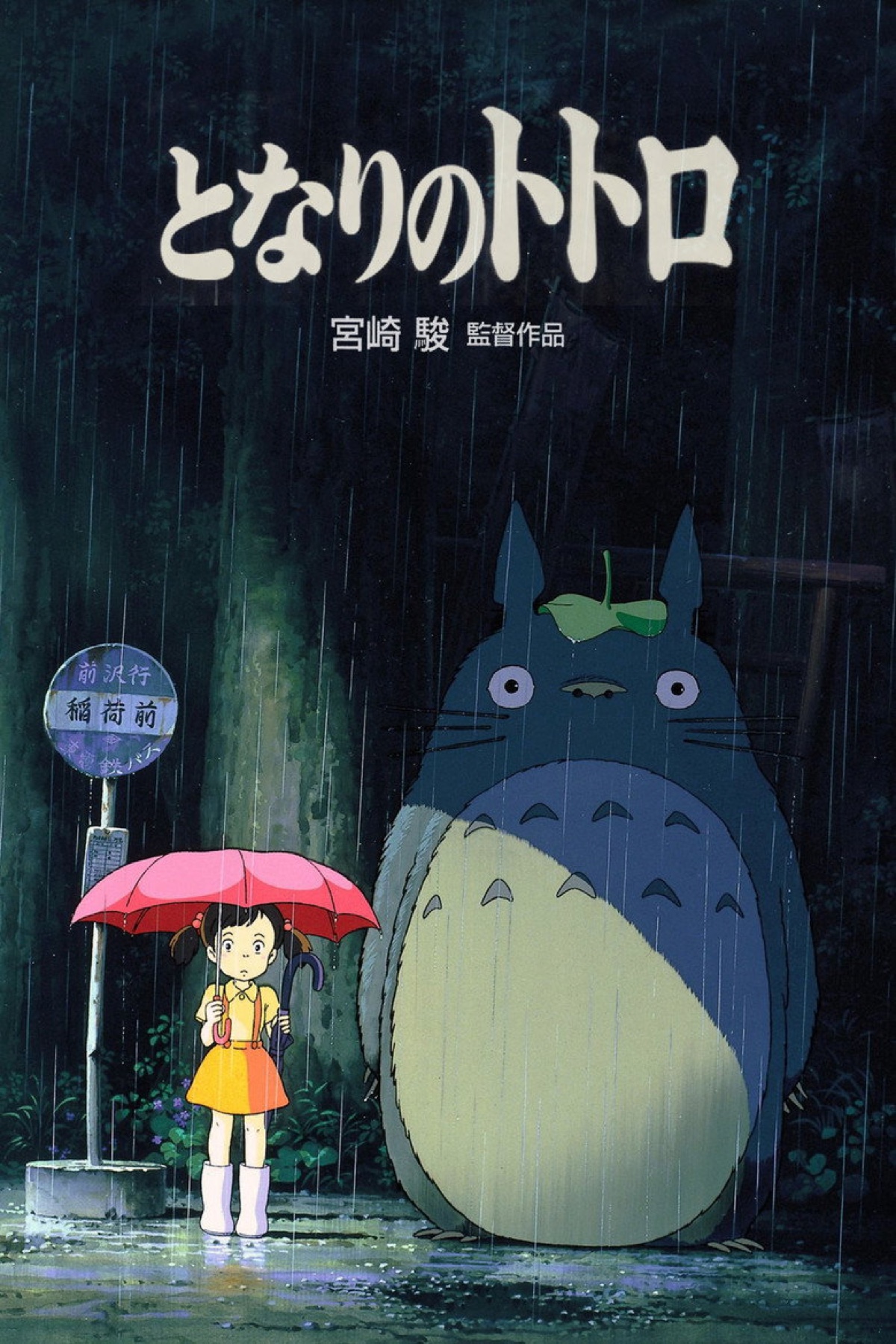
The bus stop, first. Satsuki waits for her father in the dark, and Totoro turns up beside her. She lends him an umbrella. He has no idea what an umbrella is for, so when water drums on the fabric above him he jumps at the noise. There is almost no dialogue for the length of that scene. Rain, a wet road, and one pair of headlights carry the whole thing.
Plenty of Japanese adults still think of that sound whenever rain hits an umbrella. When sound design leaks into daily life thirty-seven years later, something was built properly.
Then the line everyone quotes:
It was a dream. But it wasn’t a dream.
The sisters find seedlings in the garden the next morning and shout it while jumping. An entire negotiation between fantasy and reality, settled in one sentence. No explanation, no rules. The children accepted it, so it stands.
And near the end, the Catbus run to the hospital. The sisters find their mother through a window from a tree branch, and then go home without going in. They don’t run to her. Confirming she looks well is enough. Refusing the tearful reunion is the single classiest decision in the film.
💭 How It Made Me Feel
What’s left afterward isn’t plot, it’s temperature. This isn’t a film you replay in your head to work out what happened; it’s a film that leaves you in a better mood for a few hours. Doing that twenty times over without losing potency is a serious achievement.
My own kid is still too small for it. I’m genuinely looking forward to the year we watch this together. Half the reason Ghibli stays on Japanese television forever is this exact structure: you see it as a child, then you see it again on the same screen as a parent, with a different person sitting next to you.
One more thing worth knowing, since it rarely travels outside Japan. This film flopped. It earned roughly 590 million yen and drew about 800,000 admissions, released as one half of a double bill with Grave of the Fireflies, a pairing that sent families out of the theater in pieces. Totoro became a national icon through television reruns and home video, not through its theatrical run. The most beloved animated film in the country was, at the time, a commercial disappointment.
Who Should Watch This?
- Parents picking a first film to watch with a young child
- Anyone who knows Totoro as a logo but has never sat through the film
- Viewers who watch for craft rather than plot
😅 Where It Falls Short
From here on, this is a matter of taste rather than quality.
The countryside is too beautiful
The rural Japan on screen is the version we like to imagine, not the one that existed. Real villages came with boredom, claustrophobia, and social obligations that outsiders rarely escaped. A family arriving from the city would not have been folded in this smoothly. It’s a deliberate choice and I don’t hold it against the film, but nobody should move to the Japanese countryside expecting this.
It doesn’t leave much to think about
This is why I can’t rank it at the top of Miyazaki’s filmography. The thematic depth is thin. Everything is loaded into the images and very little into the meaning. That’s exactly why it survives endless rewatches, and also why you finish it without anything to chew on.
Princess Mononoke and Nausicaä bury unanswerable questions everywhere. The Nausicaä manga goes further still, running far past the film into much bleaker territory. Humans or forest. What justice costs. What you sacrifice to survive. If that’s the Miyazaki you’re after, Totoro will feel slight.
To be fair to it: this is a film that chose not to make you think, and I’m complaining that it doesn’t make me think. The number of people who name it their favorite Ghibli is the evidence that the design was right.
Who Might Not Enjoy This?
- Anyone who needs a clear three-act structure and a climax
- Anyone expecting heavy themes worth arguing about afterward
🔍 About the “Totoro is a death god” rumor
You’ve probably met this one: the sisters die partway through, Totoro is a god of death, the film encodes a real 1963 kidnapping case. It resurfaces here every time the movie airs, so here’s the short version.
Studio Ghibli’s PR department publicly denied it in 2007. Their statement was direct: Totoro being a death god, or Mei being dead, is neither a fact nor a setting in the film. The missing shadows people cite were simply omitted in the artwork because they weren’t considered necessary. The connection to the 1963 case doesn’t survive a calendar check either. The film is set in the late 1950s, and the link exists only because both involve the same region.
The interesting question isn’t whether it’s true. It’s why the theory took root so easily. The answer is that the buildup to Totoro’s arrival is shot like a horror film — the dark, the sounds, the presence you can’t see. Add a creature only children can perceive and you have material any reader can twist. There was never a hidden layer. The craft was just good enough to support one.
Soundtrack
Joe Hisaishi. Opening with “Hey Let’s Go” and closing with the title theme is a structure that still holds up, and the score itself works by subtraction — the darker the scene, the fewer instruments he uses.
- Apple Music: My Neighbor Totoro Soundtrack: available
- Spotify: My Neighbor Totoro Soundtrack: available
🎬 If You Loved My Neighbor Totoro, Watch These 5 Next
Princess Mononoke
I said Totoro leaves you nothing to think about. Here’s the same director, the same forest, and the opposite answer. Totoro’s woods rescue a child; these woods go to war with humanity. Work out which one is the real Miyazaki and you’ll be busy for a while.
👉 Read the Princess Mononoke review
A Letter to Momo
A girl moves to the countryside after a family loss and meets three creatures nobody else can see. The closest thing to a direct descendant of Totoro anyone has made. Hand this to someone who finished Totoro and wanted the same feeling again.
👉 Read the A Letter to Momo review
Castle in the Sky
Two years before Totoro, and the polar opposite in tempo. Where Totoro holds a single image long enough for you to breathe in it, this one never stops moving. Watching them back to back shows you how far Miyazaki traveled in twenty-four months.
👉 Read the Castle in the Sky review
Mushishi
Take Totoro’s premise, invisible things living quietly in nature, and age it up twenty years. The difference is that these spirits will also take your eyesight or eat your memories without malice. It suggests Totoro was gentle only because he happened to appear in front of children.
Your Name
The modern equivalent of what Totoro did for rural Japan on screen. Shinkai paints countryside light with the same obsessiveness, then builds the plot Totoro refuses to have. Good pick if the visuals worked on you but you wanted a story attached.
📺 Streaming Guide by Service
HBO Max has it. Netflix and Crunchyroll don’t.
For US viewers this is straightforward. HBO Max carries the full Ghibli catalog, Totoro included, at no extra cost on a standard plan. YouTube TV subscribers also have access. If you’d rather pay once, the rental on Amazon or Apple TV runs a few dollars. Netflix streams Ghibli in most of the world but not in the United States, and Crunchyroll has never held these titles at all.
For me, the options are these: wait for the August 21 broadcast, order a disc, or use a mail-order rental service. That’s the entire list. Registering for every streaming platform in Japan would not produce this film. The one crack in the wall appeared last month, when Grave of the Fireflies became the first Ghibli title to stream domestically on Netflix. Whether Totoro follows, nobody knows.
Where to Watch
- HBO Max: Streaming, subtitled + dubbed
- YouTube TV: Streaming
- Amazon Video, Apple TV, Fandango at Home: paid rental
- Netflix US, Crunchyroll: not available
📀 Blu-ray
The 30th Anniversary Edition from GKIDS and Shout! Factory is the current US release, carrying both the Japanese track and the Fanning-sisters dub. Worth owning if this becomes a film you put on for a child repeatedly, and from where I sit, the only way anyone in Japan can watch it whenever they want.
If what stayed with you was the countryside itself, my list of anime set in the Japanese countryside treats Totoro as the film that set the template for every rural anime after it.
📝 Final Thoughts
The story barely moves. The themes don’t go deep. And yet eighty-six minutes of images transfer into your head intact and stay there. The bus stop, the belly, the tree shooting upward at night, the Catbus tearing across the fields. You forget what happened and remember what you saw. Miyazaki started drawing light and air with this film, and thirty-seven years later that work hasn’t dimmed.
It failed in theaters, then became a national icon through decades of television. You can press play tonight; I’ll be watching it on August 21 with everyone else in this country. Different routes, same eighty-six minutes. Yours is easier. Use it.
If the Catbus was your favourite part, Japanese animation has a whole shelf of stories built on rails. I sorted ten train anime by how much work the train actually does, from Galaxy Express 999 to the sea train in Spirited Away.
Totoro has the Catbus, but Japanese animation treats cats as something stranger than pets more often than not. I sorted ten cat anime by what the cat actually is, from a lost kitten to a spirit sealed inside a lucky-cat ornament.
⭐ Series at a Glance
| Category | Rating |
|---|---|
| Animation | ★★★★★ |
| Characters | ★★★★★ |
| Music | ★★★★★ |
| Rewatchability | ★★★★★ |
| Plot momentum | ★★☆☆☆ |
| Thematic depth | ★★★☆☆ |
Usagi’s Recommendation Score
⭐⭐⭐⭐⭐⭐⭐⭐☆☆
8.0 / 10
You forget the plot. The images stay. Twenty broadcasts prove it.

