*This page contains affiliate links. We may earn a commission if you make a purchase through these links.
In a world where civilization ended, a phone rings. Three thousand seven hundred years after every human being on Earth turned to stone, someone has built a vacuum tube, strung a wire, and planted a working military radio inside enemy territory. Dr. Stone: Stone Wars is the eleven episodes where that single line decides a war.
My problem with “brains versus brawn” stories is simple. The muscle side almost always gets written cheap. Shout a lot, think never, lose to the smart guy, roll credits. I spend the whole runtime mildly annoyed. Season 2 refuses to do that, and the strongest weapon the Kingdom of Science builds does not carry a battle report on its first call. The line was laid for war, and the first thing it carried was somebody asking if his friends were still alive. This season looks like a show about science. It is really a show about information and words.
📺 Where to Watch Dr. Stone: Stone Wars (October 2026)
| Service | Status | Notes |
|---|---|---|
| Crunchyroll | Streaming | All 11 episodes, sub and dub |
| Netflix | Streaming | Ad-supported plan included |
| Crunchyroll Amazon Channel | Add-on | Paid channel on top of Prime |
| Amazon Prime Video | Rent / Buy | Sold per episode. Prime alone does not include it |
| Hulu | Not available | Season 1 only |
| Disney+ | Not available | No US offer |
Netflix and Crunchyroll both have all eleven episodes on a regular plan. On Amazon you either buy the episodes or add the paid Crunchyroll channel to Prime.
If Season 1 has faded a bit, my Season 1 review built its case on the joy of crafting things from nothing. Season 2 takes that pleasure and moves it off center stage.
🔁 Finished Season 1 on Hulu? Picking Up Stone Wars
Hulu’s Dr. Stone page ends with Season 1, so Stone Wars means moving to Netflix or Crunchyroll. Both have the complete season; Crunchyroll also has the dub.
Before you cancel anything, give Hulu one last evening. Stone Wars does not ease you in. Its first three episodes are “Stone Wars Beginning,” “Hot Line” and “Call from the Dead,” and the season opens by putting the telephone Senku finished at the end of Season 1 to work. The first call only lands if you remember what it took to build that phone. If those closing episodes have gone hazy, rewatch them where you already have them, then switch.
Which service to move to depends on how far you mean to go. Netflix carries Dr. Stone through Season 3 and stops there. Crunchyroll has all four seasons plus the Ryusui TV special that aired after this one. If you already know you want the ending, one move to Crunchyroll saves you a second move later.
🎬 Trailer
This is the Japanese official PV from TOHO animation. Every English-language official trailer for this season is region-locked from where I am sitting in Japan, which means I cannot verify that the embed actually plays. A trailer nobody can watch is worse than a Japanese one you can.
Work Info
- Title: Dr. Stone: Stone Wars (Season 2)
- Aired: January to March 2021 (11 episodes)
- Director: Shinya Iino
- Series Composition: Yuichiro Kido
- Animation: TMS Entertainment
- Original Manga: Riichiro Inagaki and Boichi (Weekly Shonen Jump)
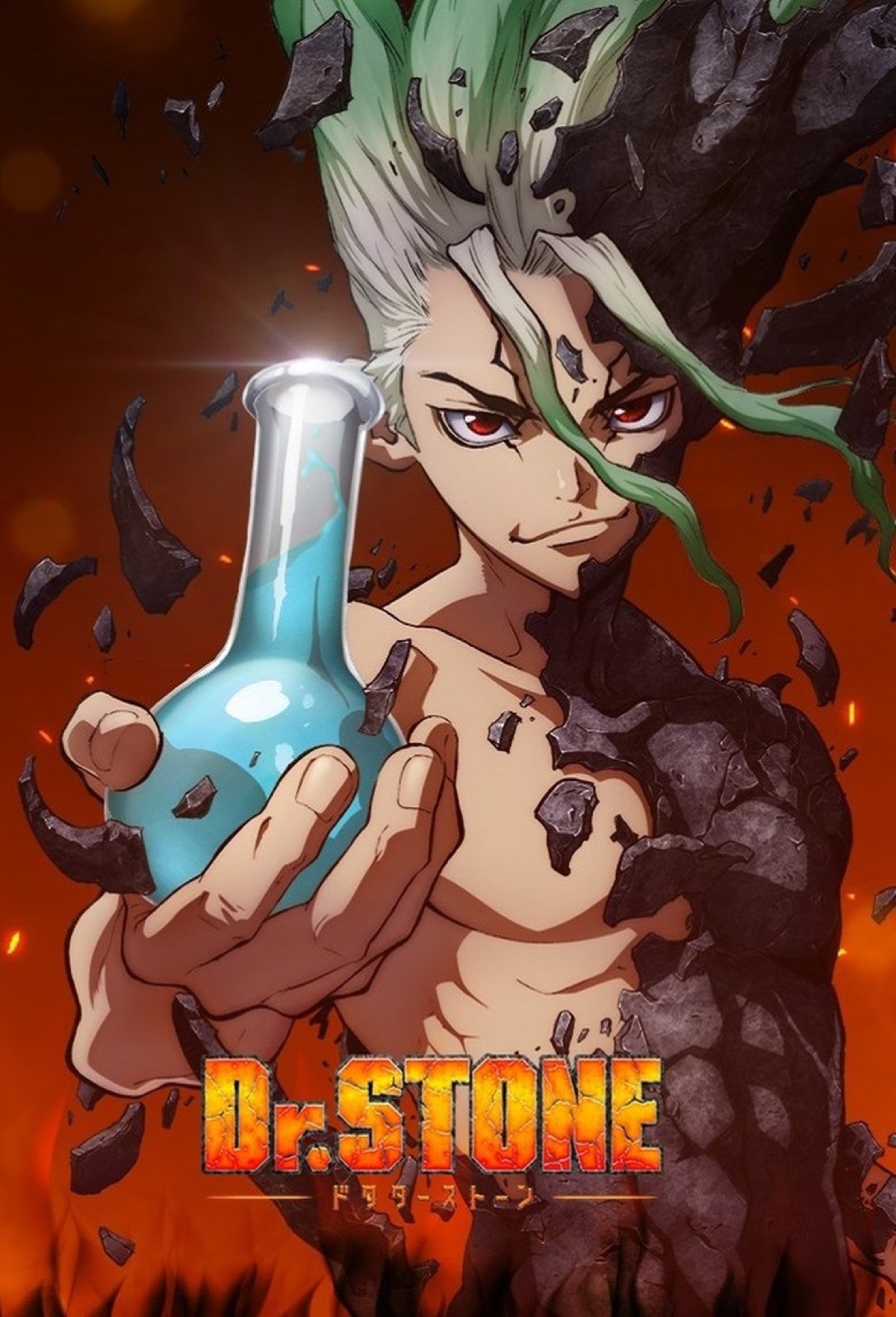
📖 Synopsis – No Spoilers
Roughly 3,700 years after every human on the planet was petrified, Senku Ishigami woke up in a world with no metal, no glass and no medicine, and started rebuilding civilization from the periodic table upward. By the end of Season 1 he had a village, a workshop and a name for it all: the Kingdom of Science. Standing against him is Tsukasa Shishio, who also came back from the stone and decided that the world should be rebuilt only with people he considers worth reviving.
Season 2 picks up seconds later. Facing an enemy with overwhelming physical force, the last thing Senku assembled in Season 1 was not a weapon but a communication device. Stone Wars opens with that single handmade phone being smuggled into the heart of Tsukasa’s camp and switched on. Whoever controls information controls the battlefield: an obvious rule, replayed from scratch in a world where nobody remembers it.
✨ What Makes It Special
Why It’s Exceptional
- The enemy’s argument is never flattened into stupidity
- Communication, negotiation and intel are the real battlefield
- Characters other than Senku get their own decisive wins
- Eleven episodes without a single dead one
Two people who want the same thing, fighting over how to get it
Senku and Tsukasa are both trying to answer the same question: what do you do with seven billion petrified human beings? Their goals point the same direction. Only the method differs. Senku hunts for a way to revive everyone; Tsukasa wants to choose who comes back. His position is brutal, and the show takes the time to show you what he saw that brought him there.
The Japanese review that has drawn the most likes for this season sums it up in a single line: a war between people whose goals are identical and whose methods collide. That is exactly the shape of it. Most shows in this genre buy their smart protagonist a cheap win by making the strong side thoughtless, and once that happens there is no game left to play — you are just watching a report of who was cleverer. Stone Wars never takes that shortcut. The Empire of Might has command, judgment and internal doubt.
What makes it work is that Tsukasa’s camp contains people who have not fully signed up. They follow orders while quietly measuring whether those orders are right. Stop treating an army as one solid block, and it immediately becomes a group of humans, which is precisely why negotiation functions as a tactic here. Senku’s plans are built around that hesitation rather than around firepower.
Then there is how it ends. No details here, but the way victory is defined tells you everything about how Senku thinks. It builds to a shonen climax and lands somewhere nobody has to die. For a story set in a world with no laws and no institutions left, holding that line all the way through is rare.
And the thing I remember most from these eleven episodes is not a fight.
What the war line actually carried first
The phone Senku finished at the end of Season 1 is unambiguously a weapon. It exists to reach the spies planted inside Tsukasa’s camp and to track enemy movement. In a world with no infrastructure, the side with a working network and the side without one are not playing the same game.
Then the line opens for the first time, and what travels down it is not an intelligence briefing. It is a voice nobody has heard for a year, and confirmation that its owner is still breathing. The tactical value arrives second. The relief arrives first, and the people who built the thing let that happen.
Underneath the whole season runs a quiet question about whether pointless conversation is worth anything. Humans invented long-distance communication so they could say things that contribute nothing to survival. Science is the craft of building objects, but what the objects carry is information and words. Stone Wars demonstrates that in the middle of a war.
The same trick returns with a record — a piece of recorded music deployed as a strategic asset that ends up melting the other side instead. If you asked me for the single best sequence in the season, I would take that one. The moment a weapon does something other than what weapons do is where this show’s personality lives.
Senku stops carrying the show alone
Season 1 ran on a simple engine: Senku supplies knowledge, everyone else supplies hands. Season 2 breaks that up. Chrome’s improvisation, Gen’s manipulation and Kaseki’s craftsmanship each become an independent path to victory. The number of problems solved by somebody who is not Senku goes up sharply.
Gen the mentalist matters most here. Where chemistry cannot reach, he pushes back with nothing but talk, reading how the other side will move and bending the situation with it. For a group called the Kingdom of Science, a remarkable share of these eleven episodes is won with skills that are not science at all.
Deeper Themes
Tsukasa’s selection and Hyoga’s selection are not the same thing, and the season is careful about the difference. Tsukasa wants a world uncontaminated by adult corruption. Hyoga goes further and says outright that a population you cannot support should be culled. The premise underneath, that this planet cannot carry everyone, is one our own societies have not answered either. Senku’s reply is almost childishly simple: if you cannot support them, get everyone together and hunt for a way to support them. Defining science as humanity’s collective effort is the spine of the whole series.
🎭 Memorable Scenes
If one moment stands for the whole season, it is the first time the line connects. On paper it is a single sentence of plot: contact established with the infiltrators. What comes through the screen instead is the relief of hearing a voice after a year of silence. People who built a weapon used it, first, for that.
The second is the late scene where Senku’s entire philosophy compresses into one answer. Confronted with the argument that the planet can no longer support seven billion people, so somebody has to decide who lives, he replies that if seven billion cannot be supported, then seven billion people should go looking for a way to support them, and that this is how science operates. It reframes every invention that came before it.
💭 How It Made Me Feel
Not once did the show hold the muscle side up for mockery. Getting through eleven episodes without the low-grade irritation I described at the top is a large part of why I rate this season as highly as I do. Leaving the enemy’s logic intact and winning anyway is the harder road for a writer. This one takes it.
Look at what I keep listing: conversations. A voice down a wire, a song drifting into an enemy camp, an exchange right before the ending. Under a banner reading science versus force, what actually got tested was how each side handled information and words. An article that opened by complaining about the genre is now, somehow, ending in praise.
Who Should Watch This?
- Anyone who needs the antagonist to have a real argument
- Viewers who prefer negotiation and intel work to punching
- Anyone who liked science class, or wants something to watch with a kid (especially recommended)
😅 Where It Falls Short
Having spent this long praising a show for leaving its enemy’s logic standing, it would be poor form for this review to end without leaving some complaints standing too.
Eleven episodes is short for this story
Season 1 ran 24 episodes. Season 2 gets 11. The content is not thin, but with the plot in wartime mode there are simply fewer inventions, and the pleasure of watching a process unfold step by step, which made Season 1 addictive back when they were making glass and iron, moves into the background.
As a self-contained arc it lands cleanly. Japanese viewers said the same thing over and over when it aired, though: it was over too fast. Plenty of them binged the whole thing in one sitting and then complained there was nothing left.
The comedy sometimes lands at the wrong moment
There are episodes where a high-energy gag drops in right after the tension peaks. I understand it as a deliberate move to keep the show’s overall brightness intact, but there are scenes where I wanted the pressure held and instead somebody flipped the switch off. (Mileage varies wildly on this one. If it does not bother you, it really does not bother you.)
Who Might Not Enjoy This?
- Anyone who has not seen Season 1 (the relationships and the reason for the conflict are all established there)
- Viewers who want rigorous scientific plausibility (whether any of this is buildable in a stone age is a fair question)
📺 Streaming Guide by Service
Where to Stream
- Crunchyroll: Streaming (sub and dub)
- Netflix: Streaming
- Hulu: Not available (Season 1 only)
- Amazon Prime Video: Rent / Buy, or through the paid Crunchyroll channel
Soundtrack
The album for this season is Dr. STONE Original Soundtrack 3, released March 26, 2021, with 22 tracks including “One Small Step -memories-” and “Kingdom of Science.” Given that a piece of music does real strategic work inside the story, going back through the score afterwards changes how the season reads. It is on the major streaming platforms, and the track list is on the official site.
📚 Read the Manga
The original manga by Riichiro Inagaki and Boichi ran to 26 volumes, with a 27th volume of follow-up material closing the series in 2024. VIZ Media publishes the English edition. Season 2 adapts up to roughly the middle of Volume 10, so the volume to pick up is Volume 10 itself, not 11 — the back half of that book is where the anime stops. Processes the season had to rush through are laid out properly on the page.
👉 Dr. STONE, Vol. 10: Wings Of Humanity (VIZ Media, English edition)
🎬 If You Loved Dr. Stone: Stone Wars, Watch These 5 Next
Legend of the Galactic Heroes: My Conquest Is the Sea of Stars
Two commanders on opposite sides of a war, each fully aware that the other is right about something. If the part of Stone Wars you valued was an antagonist whose reasoning survives contact with the hero, this is the deepest version of that idea in anime.
NIPPON SANGOKU
A fractured near-future Japan where territory changes hands through argument, not force. If Gen’s talking was your favorite weapon in Stone Wars, this is a whole series built on that principle, and it is barely on the Western radar.
Orb: On the Movements of the Earth
Knowledge as a capital offense, and people who keep doing the math anyway. Senku replays science history alone; this one shows why science history actually moved forward. The natural companion piece to Senku’s collective definition of science.
Death Note
Two people fighting with information and nothing else. The mechanics of the duel are close to what Senku and Gen run on Tsukasa’s camp, minus any pretense that either side is being nice about it.
Attack on Titan Season 2
Another second season where the enemy turns out to have reasons, delivered with far less mercy than Dr. Stone shows. Also a useful comparison in how differently two shows can solve the same problem of following a huge first season.
▶ Next: New World — but watch the Ryusui TV special first. It sits between the two and the guide explains why.
📚 Planning to watch the whole thing? The complete Dr. STONE watch guide has the full order, the TV special, the running time and the US streaming picture in one place.
📝 Final Thoughts
Dr. Stone: Stone Wars settles the fight between the Kingdom of Science and the Empire of Might using communication and negotiation. Where Season 1 sold you on the fun of assembling civilization from raw materials, Season 2 shifts to what you do with the civilization once you have it. A phone built from vacuum tubes opens a line into enemy territory and carries a year-old anxiety instead of a battle report. A song gets deployed as a weapon and does something weapons cannot. Notice that shift and the entire conflict reads differently.
And it never sells the opposition short. Agreeing with Tsukasa is beside the point; what matters is that the show explains what he saw on his way to that conclusion, which is why the ending is satisfying rather than convenient. In Japan this season is often described as the one that turned people into science fans, and I would put it slightly differently: it is the war story for people who normally hate war stories. If you stopped after Season 1, go at least as far as the first phone call. Everything this show is lives in that scene.
⭐ Series at a Glance
| Category | Rating |
|---|---|
| Story | ★★★★☆ |
| Characters | ★★★★★ |
| Pacing | ★★★★★ |
| Science Factor | ★★★★☆ |
| Animation | ★★★☆☆ |
Usagi’s Recommendation Score
⭐⭐⭐⭐⭐⭐⭐⭐☆☆
8.2 / 10
Eleven episodes in which a line laid for war carries a safety check instead. Worth watching for the refusal to make the strong side stupid, if for nothing else.

