*This page contains affiliate links. We may earn a commission if you make a purchase through these links.
The biggest reason Demon Slayer got this big is that it asks nothing of you. Characters say what they are feeling out loud. Fear, resolve, regret, all of it becomes dialogue on the spot. In literary terms it over-explains, and it has no interest in making you read between the lines. What it gets in return is that the story reaches you while you are doing the dishes. Children keep up. So do viewers who cannot catch fine shades of Japanese.
I have written six articles on this site covering everything from the first arc to the newest film, and scored each one. Lined up they read 7.4 → 8.0 → 7.0 → 7.0 → 6.5 → 7.7. Not a gush, not a takedown. This piece is what I think now that all six are written: why it blew up, what actually holds up, where it is weak, and whether 63 episodes are worth your time.
I read the manga to the end and watched all 63 episodes plus the films, and I am writing from Japan — where, strangely enough, the newest movie is harder to watch than it is in the US. More on that below.
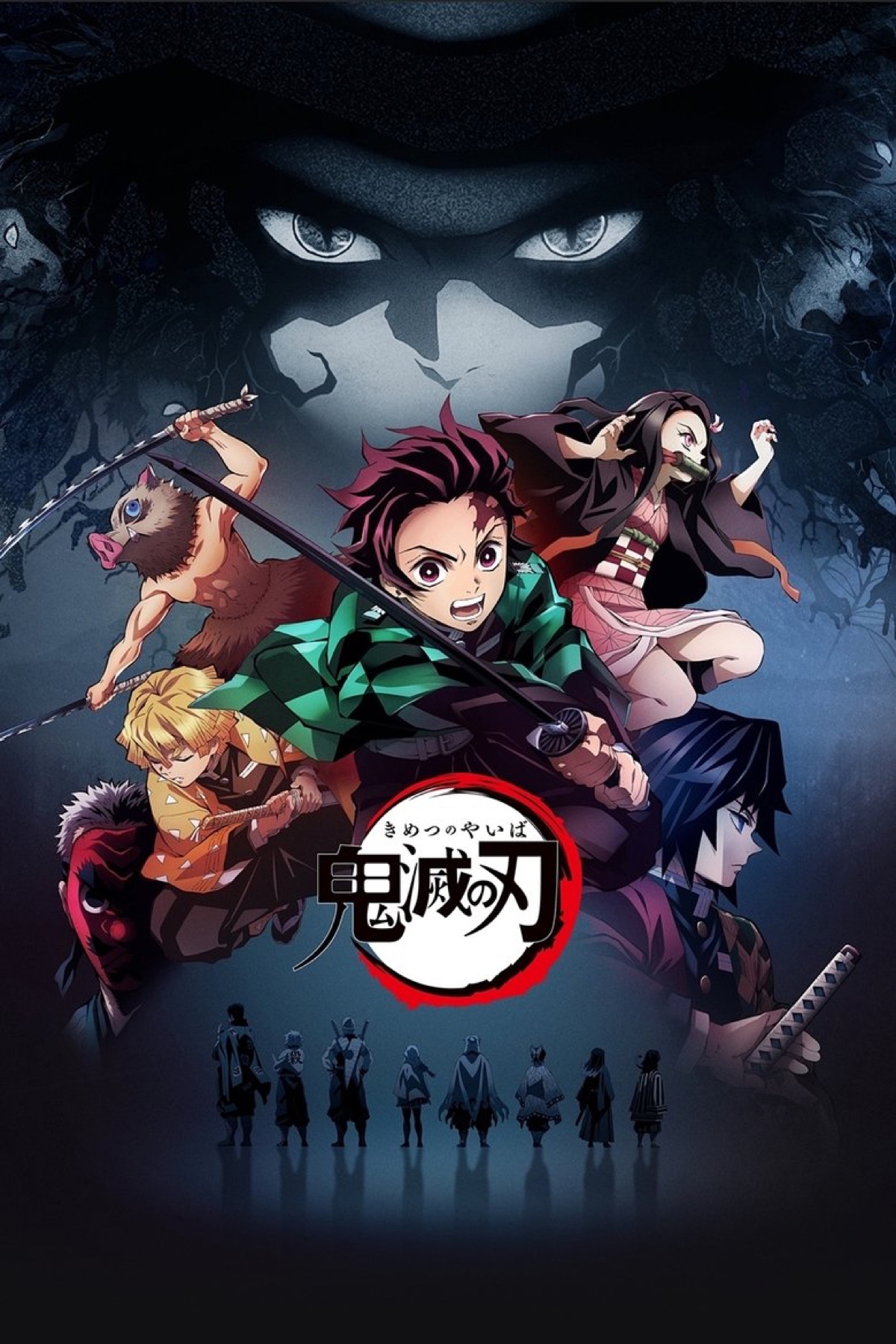
🔥 Why Did Demon Slayer Get This Big?
Mugen Train finished its Japanese run at ¥40.43 billion with 29.17 million admissions, passing Spirited Away’s ¥31.68 billion to become the highest-grossing film in Japanese history. “It was good” does not explain that. Good films come out every year. Three things had to happen at once.
It committed to being easy, and did it properly
Compare it to the other shows about fighting monsters that used to be people. Attack on Titan and Tokyo Ghoul withhold their premise and feed you information slowly so you assemble it yourself. Demon Slayer does the exact opposite. Evil is evil, demons have reasons, and you get those reasons immediately.
The same thinking governs the villain. The face of the demon behind every other demon turns up in episode 7, four fifths of the way from the end rather than at it, strolling down a city street pretending to be somebody’s father. Most shonen keeps its final target off screen for years. You know who the enemy is by episode 7, so you never get lost afterwards. It asks nothing of your comprehension and aims everything straight at your gut, at full speed.
The manga’s next arc, not a side story, went only to cinemas
Jump movies had always been original side stories. The reason is structural: hit manga run for a decade or more, one arc swells past what a film can hold, so the movie gets written separately. You can skip it and lose nothing.
Demon Slayer was done in roughly four years and 23 volumes, which meant a genuine chapter of it was small enough to become one film. So for the first time a Jump adaptation put the manga’s next chapter, rather than an invented one, into cinemas alone. Anyone who finished season one had exactly one place to see what happened next. A skippable side story never generates that.
The timing helped too. It opened October 16, 2020, mid-pandemic. Japanese cinemas had been capped at 50% capacity, and that cap was lifted on September 19, about a month before release. Rival blockbusters had been pushed back, so a film opening on 403 screens walked into a market with no competition and full seats available for the first time in months.
The “it was just the pandemic” theory did not survive Infinity Castle
That was the accepted explanation for years. Then Infinity Castle Chapter 1 opened in 2025 with none of those conditions and took ¥40.2 billion in Japan, effectively level with Mugen Train. Only these two Japanese films have ever cleared ¥40 billion domestically. Lucky circumstances do not repeat themselves five years later. The pandemic was part of the story, not the whole of it.
63 episodes, and the animation never dropped
The third factor is ufotable’s stamina. Before the Entertainment District Arc aired I assumed the film had been the ceiling and television would pull the quality back down. It did not. Eleven episodes ran at feature-film density on a weekly broadcast schedule.
Episode 10 of that arc is the proof. Japanese social media coined the phrase “felt like five minutes” for it, meaning 24 minutes had gone by like five, and having watched it I will not argue. Blades extending, figures leaping roof to roof, sparks bursting; the camera never rests and you lose track of when to breathe. The remarkable part is that this was airing as a late-night TV show.
✨ What Holds Up Across 63 Episodes
Every demon gets mourned
What keeps this from being a show about killing monsters is that every significant demon gets its past shown after it falls. In the seconds before they dissolve, whatever human they used to be surfaces again, and the boy who just killed them stays to watch it. Then he puts his hands together.
Repeat that enough times and the show quietly changes shape: from killing demons to grieving them. A journey that began as one boy trying to turn his sister human becomes an argument about how to regard demons at all. Making the audience pity what the hero just killed is Demon Slayer’s real invention, and across 63 episodes it is the thing that works hardest.
The songs arrive in impossible places
Episode 19, “Hinokami,” is the headline case. At the end of a fight Tanjiro reaches a memory of his father, and the afterimage of a dance starts overlapping the arc of his blade. Then the vocal track comes in. A vocal track over a fight scene usually kills whatever pressure the fight had built. This one raises it.
It works because of how it was stacked. Neither the father nor the dance had been placed at the centre of anything before that. Something set quietly aside lands in one spot carrying 18 episodes behind it. It is not a coincidence that most people who talk about this show date their attachment to those few minutes. The Swordsmith Village Arc pulls the same trick later, building silence for hours before letting a song do the talking.
Everyone walks away with a favourite
What stays with you after 63 episodes is faces rather than fights. Tanjiro’s decency, Zenitsu’s noise, Inosuke’s recklessness. In episode 22, nine Hashira line up in a single scene and you come away with all nine personalities even though barely any of them have spoken.
The swordplay gets the same care. Across 63 episodes no two named swordsmen cut alike, and the Swordsmith Village Arc is where the show is most obviously showing off: its two featured Hashira fight in opposite directions, one flaunting every inch of the arc her blade travels, the other showing you only the receipt. How that is built is the centrepiece of that review.
Watch this if you are…
- Late to this and quietly embarrassed about asking where to start
- Willing to spend the hours on animation and swordplay alone
- Stalled early on and wondering whether to pick it back up (especially you)
📊 Are All 63 Episodes Worth It?
| Arc | Episodes | Aired | Score |
|---|---|---|---|
| Tanjiro Kamado, Unwavering Resolve | 26 | 2019 | 7.4 |
| Mugen Train Arc (TV version) | 7 | 2021 | 8.0 |
| Entertainment District Arc | 11 | 2021–2022 | 7.0 |
| Swordsmith Village Arc | 11 | 2023 | 7.0 |
| Hashira Training Arc | 8 | 2024 | 6.5 |
| Infinity Castle Chapter 1 (film) | 155 min | 2025 | 7.7 |
That is 63 episodes at roughly 24 minutes each, about 25 hours. Two a night takes a month; ten a day clears it in under one. Read the column on the right and the back half of the television run clearly sags. The animation is not what slipped. What shrinks, arc by arc, is how much story each episode moves.
I still would not skip them, because those three arcs are the slow charge the newest film detonates. Swordsmith Village spent its time inside its characters; Hashira Training laid out what each of the elite swordsmen carries. Watch Infinity Castle and all of it goes off at once, at 7.7, higher than any of the three arcs feeding it.
So: worth it, yes. But not uniformly, and my own scores range from 6.5 to 8.0 across the run. Going in knowing there are flat stretches is the version of this show least likely to disappoint you.
😅 The Problems, Stated Honestly
The first 13 episodes really are slow
Two episodes of training, two more for the selection exam and the sword, then a long stretch of travelling between jobs. Aside from Muzan showing his face early, almost nothing structurally significant happens until episode 15. The people reporting that they quit at episode 5 or stalled at 8 are not impatient; the pacing is genuinely lopsided. If that is where you are stuck, skip ahead to episode 15. The speed past that point is a different show.
The over-explaining comes from the same place as the strength
Everything I praised at the top has a cost. Because every feeling gets verbalised, there is no space left for you to fill in. Watch it hoping to read between the lines and you will be beaten to every line. Announcing an attack by name before swinging drags the temperature down in tense moments, too.
None of it can be surgically removed, though. The decisions that let this show reach everybody are the same decisions generating the complaints. It is why I never give it a perfect score, and also why I cannot make myself dock points for it.
Flashbacks arrive at the worst possible moment
Showing the past is the show’s signature move; the problem is where they land. It saves its memories for the exact frame a blade needs to connect, and pays for it every time. Swordsmith Village is the worst offender, eleven episodes that sit considerably longer than eleven episodes should. When an entire episode is given over to one backstory it works beautifully, so the fix is not fewer flashbacks but fewer interruptions.
The villains are wildly uneven
If making you pity the defeated is the core mechanism, an antagonist with nothing to carry drags a whole arc down. Hantengu is the test case: the series hands him its usual mourning slot and finds nothing inside it worth mourning. His clones do all the fighting while he hides, so there is no physical payoff either. It is the one arc where the release that normally follows a kill simply never arrives.
Infinity Castle is the corrective. It never asks a character to get briefly stupid so the villain can look dangerous, and it gives its antagonists something to lose. That discipline is what pushed the film’s score above the three arcs feeding it.
🔭 Where the Series Goes From Here
Start with the largest number available. Infinity Castle Chapter 1 finished its global run with 98.52 million admissions and ¥117.9 billion worldwide, the highest worldwide gross any Japanese film has ever posted. Japan accounted for ¥40.2 billion of that, which leaves ¥77.7 billion from everywhere else — nearly double the domestic take, and in admissions closer to triple it (71.1 million overseas against 27.5 million at home). Demon Slayer has stopped being a Japanese hit that travels and become a film that is bigger abroad than at home. If you saw it in a US theatre, you are part of why that number looks like that.
That shift explains something that otherwise looks bizarre: the film reached streaming outside Japan first. Crunchyroll has carried it in the US since July 28, 2026, while in Japan it is still on no service at all.
Infinity Castle is built as a trilogy of films, and the 2025 release is the first of the three. As of August 23, 2026, no release date has been announced for chapters two or three. Summer 2027 circulates online but the official site carries no date, so treat it as a guess. What is confirmed is that the full television run has been re-airing in Japan every Sunday morning since April 5, 2026, the same kind of run-up that preceded the first film.
The ending itself is already available. The manga is complete at 23 volumes in English from VIZ Media. Whether you wait for the animation or read ahead is a matter of taste, though given that this show’s strengths are its images and its sound design, waiting probably pays.
🗺️ Watch Order: One Straight Line, Then Six Confusing Films
The order takes one line. Watch the five TV arcs in broadcast order, and that is all. No chronological reshuffle, no side series to clear first.
- Tanjiro Kamado, Unwavering Resolve (26 episodes)
- Mugen Train Arc, the TV version (7 episodes)
- Entertainment District Arc (11 episodes)
- Swordsmith Village Arc (11 episodes)
- Hashira Training Arc (8 episodes)
Finish those 63 and move to Infinity Castle Chapter 1. What actually trips people up is not the sequence but the pile of movies that comes back when you search the title, so here is that untangled.
Six films exist; exactly one is required
Four of the six are recut broadcast material. Sibling’s Bond stitches together episodes 1–5 and Mt. Natagumo Arc does the same for 15–21. To the Swordsmith Village and To the Hashira Training each attach the premiere of the next arc to the end of the previous one as a theatrical preview, and every one of those episodes aired normally afterwards.
So all four are already inside the 63 episodes. They were made for people keeping pace week by week, which is not your situation, and no major US service carries them anyway. The remaining two films are Mugen Train and Infinity Castle Chapter 1, and only Infinity Castle is genuinely new story.
Mugen Train exists twice: take the TV version
Mugen Train is both a 117-minute feature and a seven-episode arc telling the same story. You do not need both, and working through the series in order the TV cut is the one to take. Its first episode is entirely new footage — a full episode with Rengoku before he ever boards the train, plus roughly 70 added cuts elsewhere. The television version is simply longer. Choose the film only if you want the 117 minutes in one unbroken sitting.
📺 Where to Watch Demon Slayer in the US (August 2026)
| Service | All 63 TV episodes | Mugen Train (film) | Infinity Castle |
|---|---|---|---|
| Crunchyroll | All five arcs | Streaming | Streaming |
| Netflix | All five arcs | Not available | Not in the US |
| Hulu | All five arcs | Not available | Not available |
| Amazon Prime Video | Buy, or the Crunchyroll channel | Rent or buy | Buy |
| Apple TV | Buy | Rent or buy | Rent or buy |
Checked August 23, 2026. If the question is whether one subscription covers the whole run in order, the answer is yes on three of them: Crunchyroll, Netflix and Hulu each carry all 63 episodes. Prime Video is the trap: a Prime membership by itself opens none of it, and the Amazon listings are either purchases or a paid Crunchyroll add-on channel attached to your account.
The films are where those three separate. Only Crunchyroll carries both movies, which makes it the single service that takes you from episode 1 through the end of Infinity Castle without a second transaction. Netflix and Hulu stop at episode 63. Rights move around, so confirm on the service before subscribing.
One last thing worth stating plainly, because it almost never runs this way: on Demon Slayer, the US catalogue is currently better than the Japanese one.
🧭 Every Arc, and Where the Full Reviews Live
Tanjiro Kamado, Unwavering Resolve (26 episodes · 7.4)
The way in, and the arc that loses the most people. The gap between how heavy the first half sits and how hard episode 19 jumps is where this show’s whole design is on display. The Mt. Natagumo stretch is also the one place it trusts you to find a theme unassisted.
👉 Read the Unwavering Resolve Arc review
Mugen Train Arc (7 episodes / 117-min film · 8.0)
The series high. A chapter the manga rushed gets 117 minutes, and one Hashira’s whole life runs to its end inside them. The review covers how the lead can step aside mid-film without the structure collapsing, and what the ¥40.43 billion actually consists of.

Entertainment District Arc (11 episodes · 7.0)
You watch this one knowing the plot is thin. Episode 10 is the exception nobody has stopped talking about in four years, a half hour that survives in the record along with the broken livestreams reacting to it. The 7.0 is the gap between that episode and the rest.
👉 Read the Entertainment District Arc review
Swordsmith Village Arc (11 episodes · 7.0)
Eleven episodes that spend more time on a person’s past than on the demon in front of them. Episode 8 carries the arc almost single-handedly. The score stayed where it did because the villain never showed up with anything worth taking seriously.

👉 Read the Swordsmith Village Arc review
Hashira Training Arc (8 episodes · 6.5)
My lowest score for the series: seven of its eight episodes are drills and conversation with barely a demon on screen. It is also the only stretch where the elite swordsmen sit still long enough to be understood, and the review argues that the dull seven and the extraordinary eighth cannot be pulled apart.

👉 Read the Hashira Training Arc review
Infinity Castle Chapter 1 (155 minutes · 7.7)
Three fights share a rotating battlefield and none of them borrows its staging from the other two. The review works through why the weakest of the three still lands, and unpacks the ¥40.2 billion domestic and ¥117.9 billion worldwide figures along with the reason Japan still has no streaming release.

👉 Read the Infinity Castle Chapter 1 review
❓ Frequently Asked Questions
Why did Demon Slayer become such a phenomenon?
On the creative side, it puts nearly every emotion into dialogue and asks nothing of your interpretation. On the commercial side, it became the first Jump property where the sequel existed only in cinemas, and that landed just as Japanese theatres reopened at full capacity during the pandemic. The pandemic argument has since weakened, though: Infinity Castle took ¥40.2 billion in 2025 with none of those conditions.
How many episodes are there, and are they all worth watching?
63 television episodes at around 24 minutes each, roughly 25 hours. Worth it, but not evenly. My scores run from 6.5 to 8.0 depending on the arc. Go in expecting the flat stretches, and the show holds up much better.
What order should I watch it in?
Broadcast order. Unwavering Resolve, the Mugen Train Arc, Entertainment District, Swordsmith Village and Hashira Training, 63 episodes in all, then the film Infinity Castle Chapter 1. No alternate chronological route exists.
Why do people say the beginning is boring?
Episodes 1 to 13 are training and travel with very little structural movement, which is why so many people report quitting at episode 5 or 8. The pace changes sharply at episode 15. If you are stalled, skipping forward to there is a reasonable move.
When does Infinity Castle Chapter 2 come out?
Undecided. It is one of the two remaining films in the trilogy, but as of August 23, 2026 the official site lists no date. The summer 2027 figure floating around online is an unofficial guess. If you would rather not wait for the ending, the manga is complete at 23 volumes from VIZ Media.
📝 Final Thoughts
For years the explanation was that Demon Slayer got lucky with timing. Committing fully to being accessible, being the first Jump series whose sequel lived only in cinemas, and holding animation quality across 63 episodes — take any of those away and ¥40 billion does not happen. But a second film cleared the same bar in 2025 with none of the tailwinds, which means the work itself was carrying more of the weight than anyone credited.
The flaws come from the same source. It explains everything, so nothing is left for you; it cuts to memory to move you, so fights lose their grip; it opened the door as wide as it would go, so the opening hours crawl. Accept that going in and the 6.5 arcs and the 8.0 arcs both become worth the time. What hit me hardest walking out of Infinity Castle was that those eight slow Hashira Training episodes had been working the whole time. For somewhere to put the adrenaline afterwards, my 10 best fantasy anime list is the next stop.

