*This page contains affiliate links. We may earn a commission if you make a purchase through these links.
How many episodes do you give a show before you quit it?
For Demon Slayer that question is not idle, because the number people keep arriving at is far higher than most viewers are willing to spend. The season runs 26 episodes. It does not become the show everyone described to you until episode 15, and the episode that turned it into a national event here was 19. Plenty of people never get there. Every time this show comes up, I see the same two sentences: I dropped it at five, I dropped it at eight.
Which is strange, because the first ten minutes are merciless. A boy comes down a mountain with charcoal to sell, gets caught out after dark, and walks home the next morning to find his mother and his younger siblings dead in the snow. One sister is still breathing and is already turning into the thing that killed them. There is no build-up to any of that. It is the opening. Before the first episode was over I had no route left to not care about Tanjiro Kamado. Then the show puts him in training for two years and the engine drops to a crawl. This review is about both of those facts, and about why the thing most people complain about afterwards is the same thing that carried this series out of Japan.
📺 Where to Watch Demon Slayer Season 1 (October 2026)
| Service | Status | Notes |
|---|---|---|
| Crunchyroll | Streaming | All 26 episodes, Japanese audio with subtitles or the English dub |
| Netflix | Streaming | All 26 episodes, the ad-supported plan included |
| Hulu | Streaming | All 26 episodes with a basic Hulu plan |
| Amazon Prime Video | Add-on | Only through the paid Crunchyroll channel. A Prime membership by itself does not cover it |
| Apple TV | Rent / Buy | Season purchase |
As of October 2, 2026, all 26 episodes of Demon Slayer season 1 stream in the US on Crunchyroll, Netflix and Hulu. I rechecked each listing this morning before touching this page. Three services is a luxury on this site; most titles I cover come down to one, or a rental. If you pay for any of the three, trying this costs nothing. The exception is Prime Video. Amazon will sell you the season or the Crunchyroll channel, but a Prime membership on its own does not include a single episode.
👉 If you are between shows rather than committed to this one, our best action anime picks cover the rest of the shelf.
⏱ How Many Episodes Is Demon Slayer Season 1?
Twenty-six episodes, each about 23 minutes, so just under ten hours if you skip nothing. Streaming services label the season as the Unwavering Resolve Arc. It opens with Cruelty, the snowy morning that sets everything going, and closes with New Mission, which drops you at the platform where the Mugen Train story begins.
The number I care about more is where those ten hours bend. Episodes 1 to 14 are the slow block I complain about further down this page: training, the Final Selection, then a string of one-off missions, roughly five and a half hours in total. Mount Natagumo starts at episode 15 and wraps up at 21. That stretch runs under three hours, and it is what people actually mean when they tell you this show is great. Episodes 22 to 26 are the aftermath, a Hashira Meeting and a round of recovery training, with the train waiting at the end.
So if a friend asked me how to fit it in, I would say three sittings, cut at exactly those seams, and treat the middle one as the real test. If episodes 15 to 21 leave you cold, you can walk away with a clear conscience. I say that as someone who loves this series. The later arcs run on the same engine, and nothing after Natagumo is going to change your mind.
🎬 Trailer
That is Aniplex USA’s dub trailer, so you are hearing Zach Aguilar as Tanjiro and Abby Trott as Nezuko rather than the Japanese cast. Useful if you are deciding which track to watch in. Both versions are on Crunchyroll, and the dub is a genuinely good one.
Work Info
- Title: Demon Slayer: Kimetsu no Yaiba, Tanjiro Kamado, Unwavering Resolve Arc
- Broadcast: April 6 to September 28, 2019, 26 episodes
- Director: Haruo Sotozaki
- Character design: Akira Matsushima
- Animation production: ufotable
- Music: Yuki Kajiura and Go Shiina
- Opening theme: Gurenge by LiSA. Ending theme: from the edge by FictionJunction feat. LiSA
- Original manga: Koyoharu Gotouge, serialized in Weekly Shonen Jump, 23 volumes, complete
- English release: Crunchyroll carries subtitles plus the Aniplex of America dub. VIZ Media publishes the manga
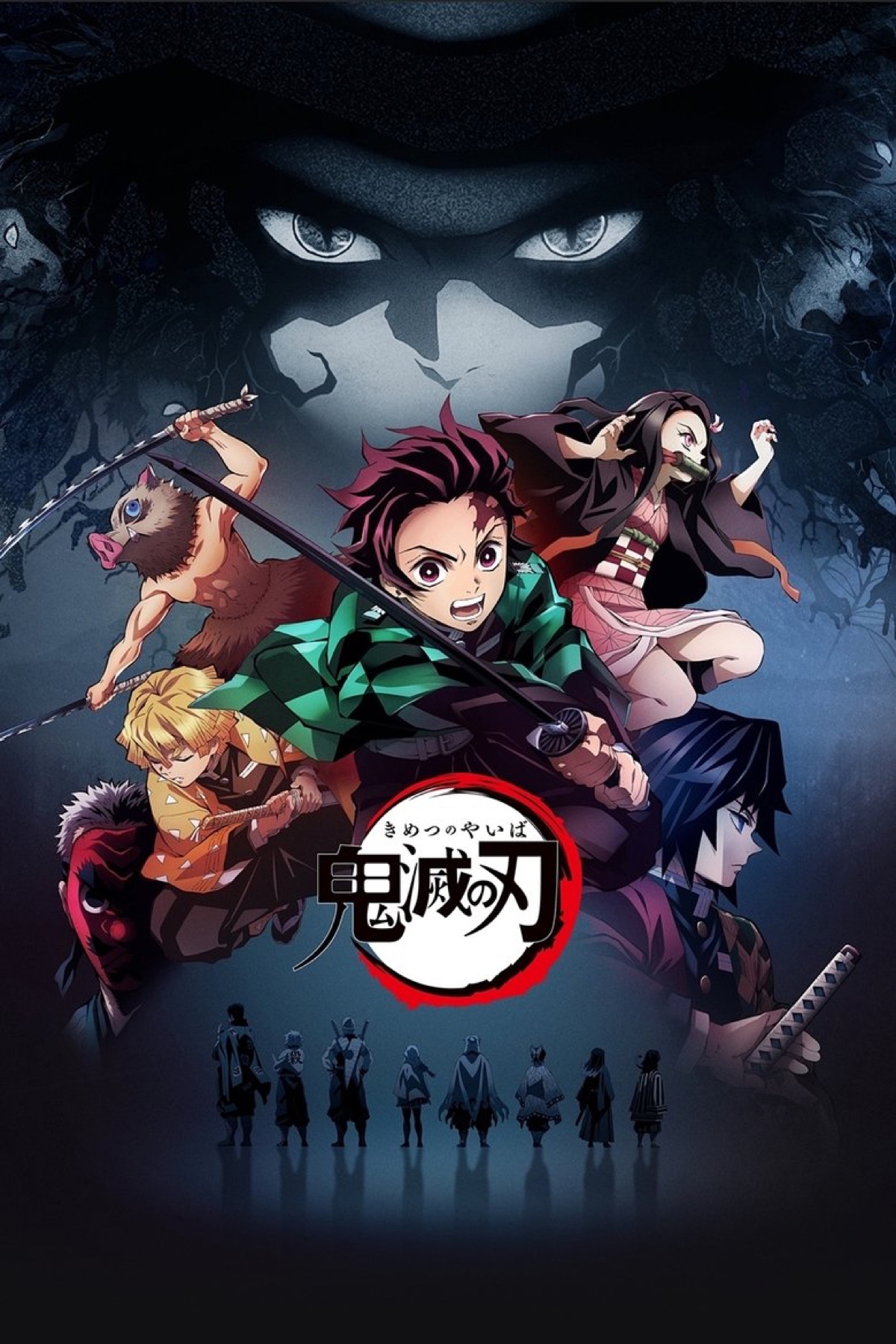
📖 Synopsis – No Spoilers
Taisho-era Japan, so the 1910s or early 1920s. Tanjiro Kamado burns charcoal on a mountain and sells it in the town below, supporting his mother and his younger brothers and sisters since their father died. One trip runs late, he is talked into staying the night partway down, and he comes home the next morning to a house full of bodies. His sister Nezuko is alive. Demon blood has gotten into her wounds, and she is becoming one of them.
To find a way of turning her back, Tanjiro joins the Demon Slayer Corps. Two years of training under an old swordsman, a Final Selection that only the survivors leave, then his first assignment. Along the road he picks up two other new recruits, Zenitsu Agatsuma and Inosuke Hashibira, and starts running into the Twelve Kizuki, the demons ranked well above the ones he has been cutting down. Behind all of them is the one who made every demon there is, and the season is careful to let you see him early. Across 26 episodes the show quietly widens Tanjiro’s job from saving his sister into something he did not sign up for.
✨ What Makes It Special
Why It’s Exceptional
- ufotable never lets the animation dip once across all 26 episodes
- Almost every demon worth naming gets a past before it dies
- Tanjiro, Zenitsu and Inosuke are pointed in three completely different directions
- Episode 19 puts the visuals, the score and eighteen episodes of setup on screen at the same instant
It says everything out loud, and that was the plan
This season comes with subtitles on its emotions.
Tanjiro narrates himself. Fear, resolve, regret, the reasoning behind a decision he is making mid-swing, all of it arrives as monologue or as dialogue aimed at nobody in particular. In literary terms that is over-explaining, and there is no room anywhere in the season for you to read between lines, because there is nothing between them.
What that buys is enormous. You can follow this show while washing up. You can follow it with your eyes off the screen. A seven-year-old can follow it. Nobody gets left behind for missing a glance or a pause, and nobody gets left behind for reading subtitles a beat late either. That last part matters more than people outside Japan tend to assume. A show built this way survives translation almost intact, because the meaning is not sitting in tone or implication or a cultural reference you would need me to explain. It is sitting in a sentence, and sentences travel.
Compare it with the obvious neighbors. Attack on Titan and Tokyo Ghoul both drop a person into a world whose monsters turn out to be far closer to human than anyone wanted, and both of them withhold. They dole out information, they let you assemble it, and they trust you to sit with an unanswered question for two seasons. Demon Slayer went the other way on purpose. Evil is evil. Demons have reasons. You get the reasons on the spot, in full, usually about ninety seconds before the demon dies. It asks you to interpret nothing and delivers feeling at a flat sprint.
The villain placement runs on the same logic. Muzan Kibutsuji, the source of every demon in the story, shows his face in episode 7 of 26. The standard move is to keep the final boss offstage until the end. This show puts him in a city street in a Western suit, walking with a woman and a child as cover, a quarter of the way in. You know exactly who the enemy is by episode 7, so the remaining nineteen never leave you wondering what any of this is building toward.
Here is the part I have to be honest about, though. Everything I just praised is also the source of the two things that annoyed me most, and I will get to that below.
Episode 19 cashes eighteen episodes at once
Episode 19 is called Hinokami. Cornered at the end of the Natagumo Mountain fight, Tanjiro reaches for a memory of his father: a dance in the snow, performed year after year in front of the family shrine, that he watched as a small child and never thought about again.
Then the picture and the music arrive together. The afterimage of the dance overlays the arc of the blade, and Kamado Tanjiro no Uta comes in, sung by Nami Nakagawa over Go Shiina’s arrangement. The placement of that vocal is the smartest thing in the season. Drop a song into the middle of a fight and you normally bleed the tension out of it. Here the temperature climbs.
And the reason it climbs is that the scene is running on the snow from episode 1. The father and the dance were never once treated as important. They were set down quietly and left alone. Eighteen episodes of small deposits land in a single place. One more thing that is invisible from outside Japan: what the father is doing is kagura, a real Shinto ritual dance, and villages and shrines here still perform it right through a winter night. Kagura is something most people here have at least seen the shape of, which is why the scene did not need explaining to a Japanese audience. The insert song went to number one on Japan’s daily iTunes song chart on August 30, 2019, four months into the broadcast. Ask people here when Demon Slayer became Demon Slayer and this is usually the number they give.
Natagumo Mountain is the one arc that keeps its mouth shut
I said the show explains everything. There is exactly one exception, and it runs from episode 15 to episode 21.
The demon holding Natagumo Mountain has bound other demons with his threads and assigned them roles. Father. Mother. Brother. Sister. Step outside the part and he punishes you. Standing a few feet away are Tanjiro and Nezuko, an actual brother and sister, one of whom is a demon. Episode 18 is titled A Forged Bond and episode 20 is titled Pretend Family. The real thing is placed directly beside the counterfeit and the show never once points at it.
Nobody says the word bond. The theme arrives anyway. If the whole season had been built at that density, we would be having a different conversation about this show entirely.
Deeper Themes
What stops this from being a show about killing monsters is what happens after each kill. The drum demon, the demon on the mountain, the ones who were tied into a family with thread: each of them returns to the person they used to be in the few seconds before they dissolve. Tanjiro watches that happen, sheathes the blade, and puts his hands together. Repeat it across 26 episodes and the series slides from killing demons to grieving for them without ever announcing the change. A journey that started as one boy’s private errand to fix his sister has quietly turned into a position on what a demon is.
🎭 Memorable Scenes
Episode 1, carrying his sister down the snow
Nezuko on his back, still breathing, and Tanjiro running down a snow slope with her. This single shot sets your expectations for the whole production. The texture of the snow, how far his feet sink into it, the weight on his back. You learn what kind of studio ufotable is inside the first few minutes, and the season spends 26 episodes keeping that promise without one weak stretch.
I could take it because I am the eldest son. If I had been the second son, I could not have.
He says it in episode 13, propping himself up in the middle of a fight he is losing at the Tsuzumi Mansion, with a bone already broken from the last one. It is played half as a joke. It became a meme in Japan and it is still one. It also contains the entire character. Worth knowing that the eldest son thing is not a throwaway here: in Taisho Japan the eldest boy inherited the house and the obligations that came with it, and enough of that expectation survives in this country that the line reads as funny and load-bearing at once. This is a show about a person who props himself up with reasoning that is not reasoning at all.
Episode 19, the circling dance
Third time I have mentioned it, which tells you something. Do not go and watch this scene on its own. It is engineered so that it does not work unless you have carried the previous eighteen episodes into it, and the clips going around without that weight are a poor advertisement for what actually happens here.
💭 How It Made Me Feel
What stayed with me at the end of 26 episodes was not the fighting. It was the people. Tanjiro’s stubborn decency, how loud Zenitsu is, how little sense Inosuke makes. By the time the nine Hashira are lined up in a garden near the end of the season, barely any of them have spoken, and you already have a read on all nine faces. Including the demon side, everyone who watches this comes away with somebody they are attached to. That is a separate achievement from the story working, and it is done purely by how sharply the cast is drawn.
Then the other thing lands, which is that this was only the introduction. A crow turns up with the next assignment and the season closes pointing straight at the train the next film is named after. For a finale, that is the correct expression to be wearing. It is the face of a first act.
👉 The season is on Crunchyroll, Netflix and Hulu in the US.
😅 Where It Falls Short
Episodes 1 to 14 are slow, and I am not going to defend them
Two episodes on training. Two more on Final Selection and getting a sword. After that a run of assignments on the road. Between the end of episode 1 and the arrival at Natagumo Mountain in episode 15, very little of consequence happens to the story. Episode 1 grabs you by the collar and then the show holds that grip loosely for the next five hours.
Which is why I keep running into the same report: stopped at five, stopped at eight. I do not read that as an audience patience problem. It is a distribution problem, and it belongs to the show. If you are parked somewhere in that stretch right now, skip ahead to 15 rather than quit. The velocity past that point is not comparable.
Everything gets said, and then the attack names get shouted
Flip over the subtitles-on-the-emotions thing I spent five paragraphs admiring and you get the complaint. Interior states are verbalized so completely that there is nothing left for you to supply. Watch it hoping to fill in gaps yourself and you will feel permanently overtaken.
My own bias, declared: I have never much liked the shonen convention of announcing the technique before performing it. Water Breathing, First Form, delivered at volume, and then the swing. In a scene that is supposed to be tightening, that drops my temperature a notch every time. It happens a lot.
Take either of those away, though, and the thing stops being Demon Slayer. What bothers me is the underside of the exact decision that got this show to a global audience, not a flaw in the execution. So no perfect score from me, and no sense that I am deducting anything either.
The Downsides
- Episodes 1 to 14 crawl, and a lot of viewers quit inside them
- Feelings are narrated so thoroughly that nothing is left to the imagination
- Attack names are shouted before every technique, which not everyone enjoys
Who Should Watch This?
- Anyone who dropped this early, or is about to drop it right now
- Anyone catching up in order before the Infinity Castle films
- People who mostly watch live action and try a couple of anime a year. Especially you
Who Might Not Enjoy This?
- Viewers who want space to infer things the story has not stated
- Viewers with no tolerance for shonen ritual, starting with the shouted techniques
- Viewers who need a season to conclude. This one is an opening act by design
📺 Streaming Guide by Service
Is Demon Slayer on Crunchyroll or Netflix in the US?
Yes to both, which makes this one of the easiest recommendations on this site to act on. Crunchyroll, Netflix and Hulu all carry the full 26 episodes, so unless you subscribe to nothing at all, you almost certainly already have access. If you are choosing between them, Crunchyroll is the one to open, because it holds the later seasons in the same place and you will want them. Netflix also carries the later arcs, so either one gets you past this season. The trap is Prime Video: Amazon sells the season and rents you the Crunchyroll channel, but the Prime membership on its own does not include this. Do not buy something you can already stream.
Where to Stream
- Crunchyroll: Streaming, subtitled plus dub, later seasons in the same place
- Netflix: Streaming, ad-supported plan included
- Hulu: Streaming, included with a subscription
- Amazon Prime Video: purchase only, not part of Prime
- Apple TV: purchase only
Soundtrack
Yuki Kajiura and Go Shiina’s score for the season runs 42 tracks, and the one you came for is Kamado Tanjiro no Uta, the vocal that enters partway through episode 19.
- Spotify: the full 42-track season 1 soundtrack
📚 Read the Manga
Koyoharu Gotouge’s original finished at 23 volumes, and VIZ Media publishes every one of them in English. Season 1 carries you to around chapter 54, which lands just inside volume 7. That makes volume 7 the one to reach for if you would rather read ahead than wait, because the Mugen Train story the next film covers starts there. Reading it is a different experience from watching it: Gotouge leaves far more air in the panels than the animation does, and the author notes tucked into the margins are strange and funny in a way nothing in the anime is.
- Demon Slayer, Vol. 7: where the Mugen Train story starts
- The full 23-volume run: for anyone starting from volume 1
🎬 If You Liked Demon Slayer, Watch These 3 Next
Three that come at this from different sides. One is the same premise built on the opposite information policy, one is the closest thing in recent years to what ufotable pulled off here, and one got to this show’s real subject twenty-two years earlier.
Attack on Titan Season 1
Same raw material, opposite policy. Humans fighting creatures that were once human, except this one tells you almost nothing and makes you wait years for the rest. If the constant narration in Demon Slayer wore you down, this is the correction. Fair warning in the other direction: the discipline it demands is real, and the first season withholds so hard that some viewers find it cold. Watching the two back to back is the clearest illustration I know of how much a single decision about information changes a show.
👉 Read the Attack on Titan Season 1 review
Dan Da Dan Season 1
The thing you actually loved about Demon Slayer, if you are honest, is watching an animation studio go completely unreasonable on a shonen property. Science SARU does the same here, in a totally different visual language, on a story about aliens and ghosts arguing with two high schoolers. I have not seen much in the last few years that looks this expensive per second. The tone will not be for everyone, since it is loud and rude where Demon Slayer is sincere, but it scratches the identical itch.
👉 Read the Dan Da Dan Season 1 review
Princess Mononoke
A boy carrying a curse he did not ask for, walking into a fight where both sides have a case, refusing to pick one. Miyazaki arrived at Demon Slayer’s actual subject in 1997 and then declined to resolve it for you. The demons in Mononoke are gods and animals turned into demons by pain and the hatred that comes with it, which is the same idea Tanjiro keeps running into every time he sheathes his sword. This is the version that does not explain itself, does not offer comfort, and is easily the harder watch of the two.
👉 Read the Princess Mononoke review
Mugen Train continues directly from the last episode of this season, so watch it next rather than skipping ahead. 👉 Read the Mugen Train review
📝 Final Thoughts
So, back to the question at the top. How many episodes do you give it? The honest answer for this season is fifteen, which is a lot to ask of anybody. Natagumo Mountain at 15, then 19. Get that far and everything the show has been quietly stacking up comes open at once, and the reason so many people talk about this series in the tone they use becomes obvious rather than baffling. If you are stalled short of that line, at least cross it before deciding.
The narration will still bother people who want room to think. The shouted techniques will still bother me. But this season knows exactly why it reached as far as it did, and it earned that reach on purpose rather than by accident. What Japan got in 2020 was less a hit show than a weather system: the checked green haori pattern on every lunchbox in every supermarket, children doing breathing forms in playgrounds, and a sequel film that took the all-time Japanese box office record off Spirited Away, which had held it since 2001. None of that happens to a series that asks you to work for it. Watch it to the end and you also find out that all 26 episodes were the prologue. As a starting line for what follows, it is superb.
⭐ Series at a Glance
| Category | Rating | Note |
|---|---|---|
| Animation | ★★★★★ | Never dips across 26 episodes |
| Characters | ★★★★★ | Demons included, all of them land |
| Music | ★★★★★ | Episode 19 takes the whole thing |
| Story | ★★★★☆ | Classic shonen, no twists |
| Pacing | ★★☆☆☆ | The first 14 are heavy going |
Usagi’s Recommendation Score
⭐⭐⭐⭐⭐⭐⭐☆☆☆
7.4 / 10
Reach episode 15 and the rest of the season carries you

