*This page contains affiliate links. We may earn a commission if you make a purchase through these links.
Mamoru Hosoda has made louder films than this one. Wolf Children asks more of you. Belle premiered at Cannes. Mirai got him an Oscar nomination. Twenty years on from his first original feature, this is still the one I would put first, and I want to be upfront that this is a minority position among the people I argue with.
The case for it is the script. It hands a teenage girl a time machine and then watches her spend it on karaoke, on a pudding her sister got to first, and on a pop quiz she flunked. Ninety-eight minutes, no world to save, nothing at stake beyond three high schoolers and their afternoons. That restraint is the whole trick, and I will get to why it works. First, though, a warning that English-speaking viewers need and Japanese ones do not: there are several Japanese films with this exact title, and the search results mix them together freely. This page is about the 2006 animated one. Streaming comes first, then the disambiguation.
📺 Where to Watch The Girl Who Leapt Through Time (October 2026)
| Service | Status | Notes |
|---|---|---|
| HBO Max | Streaming | The only US subscription with it, via the GKIDS licensing deal |
| Prime Video Channels | Add-on | Through the HBO Max channel on Amazon |
| Amazon Video | Rent / Buy | Being a Prime subscriber does not help here |
| Apple TV | Rent / Buy | A 4K option to own as well |
| Crunchyroll | Not available | This title is with GKIDS rather than Sony, so it never lands here |
| Netflix | Not available | Not in the United States. Japan’s Netflix has it |
In the United States this streams on HBO Max and nowhere else on subscription. Prime members can also reach it through the HBO Max channel on Amazon without a second app. Xumo Play, which had it free with ads over the summer, no longer lists it. Rental runs four or five dollars on Prime Video, Apple TV, Fandango at Home and Google Play. (Checked October 3, 2026.)
Worth spelling out why this was hard to find for so long. For years the American answer to “where can I watch this” was a used Bandai Entertainment DVD from 2008 and not much else. The HBO Max listing exists because of a deal that brought a batch of GKIDS titles to the service, Hosoda’s early catalog among them, alongside a 4K restoration that also went out on disc. If you tried to watch this legally in the US five years ago and gave up, that is not a memory failure. The situation changed.
One more thing before the trailer: the 1983 live-action version is free in the US on Kanopy and Hoopla if you hold a library card. That matters more than it sounds like it does, and there is a section on it further down.
🎞️ Where Does It Sit Among Mamoru Hosoda’s Movies?
It is the second of his eight features, and the first that did not come attached to a TV series. Before it came One Piece: Baron Omatsuri and the Secret Island in 2005. After it, in order: Summer Wars (2009), Wolf Children (2012), The Boy and the Beast (2015), Mirai (2018), Belle (2021) and Scarlet (2025).
The split I find most useful is the screenwriter. Satoko Okudera wrote this one, Summer Wars and Wolf Children. From The Boy and the Beast on, Hosoda writes his own scripts, and the films get bigger in their ideas and looser in their joints. My case for this film over the later ones rests mostly on the script, so if the three Okudera films are the Hosoda you love, that is probably why.
If Belle is the only one you have seen, come back here rather than moving on to the next title in the list. It is the smaller film, and to my mind the better built one.
🎬 Trailer
That is the GKIDS trailer cut for the 4K remaster. One correction to its own description, which credits Studio Chizu: that studio did not exist in 2006. This was made at Madhouse, and Hosoda founded Chizu five years later.
Work Info
- Title: The Girl Who Leapt Through Time (Toki o Kakeru Shojo)
- Released: July 15, 2006 in Japan, 98 minutes
- Animation: Madhouse
- Director: Mamoru Hosoda / Screenplay: Satoko Okudera / Character design: Yoshiyuki Sadamoto
- Music: Kiyoshi Yoshida / Theme song: “Garnet” by Hanako Oku, with the insert song “Kawaranai Mono”
- Based on the novel by Yasutaka Tsutsui, serialized from 1965 and published in book form in 1967
- Japanese cast: Riisa Naka as Makoto, Takuya Ishida as Chiaki, Mitsutaka Itakura as Kosuke, Sachie Hara as Kazuko
- English dub: Emily Hirst as Makoto, Andrew Francis as Chiaki, Alex Zahara as Kosuke, recorded at Ocean Productions for the 2008 Bandai Entertainment release
- Awards: Japan Academy Prize for Animation of the Year, Japan Media Arts Festival Grand Prize, Tokyo Anime Award
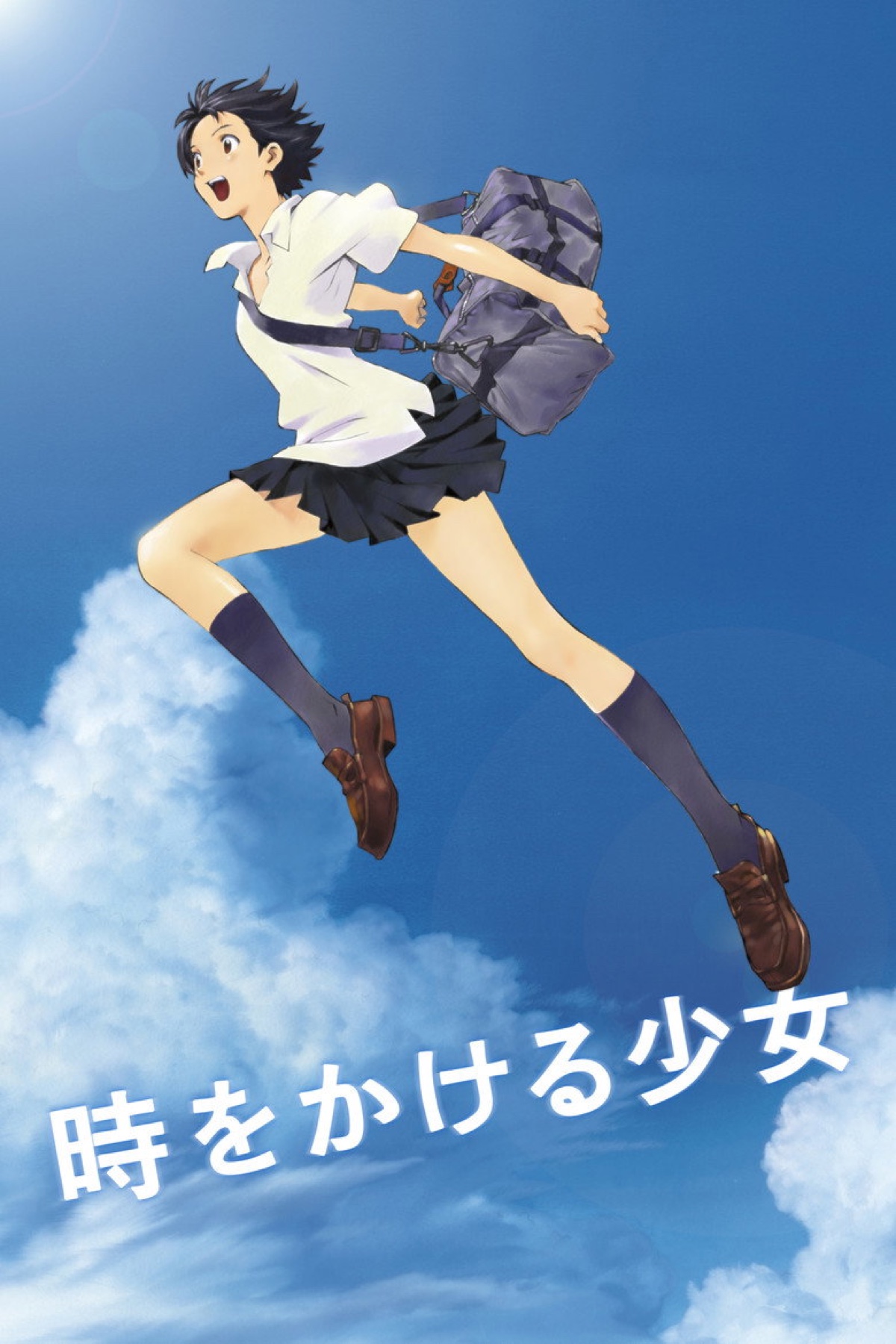
📖 Synopsis – No Spoilers
Makoto Konno is seventeen and unremarkable in the way most seventeen-year-olds are. She oversleeps, she runs late, she groans about test scores, and after class she plays catch with Chiaki and Kosuke, the two boys she has ended up in a trio with. None of the three has ever said out loud that the arrangement is temporary.
Then she takes a fall in the school science lab and comes away able to jump backwards through time. The discovery is an accident. What she does with it is a choice, and the choice is to aim as low as humanly possible: extending karaoke, re-eating desserts, retaking a quiz she already knows the answers to. Life gets frictionless. Something else quietly stops being fine, and the audience notices well before Makoto does, because every rewind she takes is being paid for by somebody standing outside her frame.
✨ What Makes It Special
Why It’s Exceptional
- It uses a do-over machine to demonstrate that youth does not get one
- The stakes never once expand past three teenagers and a school field
- The scenes where nothing happens are the ones with the most work in them
- It is a quiet sequel to a novel Japanese schoolchildren have been reading since the 1960s
A do-over machine, spent entirely on things that do not matter
There is nothing cool about the time travel in this film, and that is deliberate. Makoto’s first destinations are the unexpired portion of a karaoke booth, a dessert her sister ate, and a test she answered wrong. Not the fate of a nation. Not even the shape of her week.
What happens next is the thing I keep coming back to. You go in knowing the rewind button exists, so there is no reason to feel tense about anything. And yet somewhere in the middle of the film, I caught myself wanting her to stop using it. Every jump she takes overwrites a version of the afternoon that somebody else was living in. She cannot see that. The audience can, and the audience has no way to intervene.
As a piece of construction, this is backwards. Give a story a rewind button and it will normally drift toward reassurance, because everything becomes fixable. Okudera’s script goes the other way on purpose. It grants the power, spends it on nonsense, and uses the spending to teach the girl which things were never on the menu. Telling an audience that adolescence happens once, by way of a device that lets you repeat it, is an absurdly long way round. The distance is what makes it land.
You are not being asked to hold that thought for ninety-eight minutes, either. The first half is light and quick and properly funny, and you sit on Makoto’s side of it, enjoying the cheat codes along with her. The back half reveals that the lightness was an invoice. How long you spent laughing is exactly how hard the second half hits.
The control of tension is the part I would point a writer at. Hosoda keeps loosening the grip on purpose. A scene will tighten to the point of discomfort and then break into a gag, a bike ride, a stretch of nothing at all, and the release is timed so precisely that you stop bracing. That is exactly the intended effect, because an audience that has stopped bracing is an audience that can be hit. The film spends its first hour teaching you that everything here is recoverable, and it teaches that lesson using comedy so you will absorb it without noticing you are being taught.
Then the setups come due. Small things planted as jokes turn out to be load-bearing, and they land in a run rather than one at a time. Watching it a second time is a different experience entirely, because the jokes read as warnings. Very little in the first half is only doing the job it appears to be doing.
Time travel that refuses to save the world
Give a writer a time machine and the story usually inflates. Timelines split, history bends, a species is threatened. The premise is strong enough to carry weight, so weight gets piled on.
This film never leaves the neighborhood. A science prep room, a sports field, a riverbank, a level crossing at the bottom of a hill. Makoto’s reasons for jumping stay inside a five-meter radius: dodge a confession, undo an awkward silence, get a laugh back. The smallness is what makes it possible to fall in. Nobody has a personal memory of a species going extinct. Everybody has a memory of one sentence they would take back if the machine existed.
The trio is doing quiet work too. You can see how much they like each other, and in the same glance you can see the arrangement has an expiry date on it. Nobody in the film says so. It just sits under every scene, which means the happiest sequences are the ones where you find yourself counting down. If you came to Japanese animation through Your Name and expected this to work the same way, be ready for something much smaller and much more local.
Summer, animated at full effort
Cicadas are going before anybody speaks. Thunderheads stack over the school, a hill road glares white, riverbank grass lies flat in the wind. The care is concentrated in the shots that carry no plot at all: Makoto coasting a bicycle downhill, three kids throwing a ball around, a corridor in the afternoon. Nothing is happening in any of them, and they are dense.
That investment is collected later. Because you were made to sit inside those ordinary afternoons at length, you know exactly what is on the table when one of them is threatened. The thing worth protecting was taught to you in pictures rather than dialogue. There is a reason a large number of Japanese viewers treat this as a seasonal ritual and put it on every July. Look through Japanese reviews of it and the same sentence keeps appearing in different handwriting: when summer comes, I want to watch this again.
One detail Japanese viewers catch and subtitles cannot tell you: the piano under the leap sequences is Bach. Kiyoshi Yoshida built those cues on the Goldberg Variations, and the soundtrack lists the Aria and Variation I by name.
It is a sequel, and it never tells you
Makoto has an aunt she calls the Witch Auntie. Kazuko Yoshiyama restores paintings at a museum, listens to her niece describe time travel without blinking, and treats the whole business as ordinary.
Kazuko is the heroine of the original novel. Tsutsui wrote her for a middle-school magazine in 1965, which is a detail worth pausing on: in Japan this story arrives in childhood, through school reading, the way certain slim classics do. She is also the girl Tomoyo Harada played in the 1983 live-action film. The 2006 film is set roughly two decades after that one, with the time-leaping schoolgirl now grown up and taking the call.
None of this is announced, and the film works fine if you never learn it. But once you know, Kazuko’s advice stops sounding like a supportive adult and starts sounding like someone who has stood in that exact spot.
Deeper Themes
Where this film hits you moves depending on how old you are when you watch it. To a teenager, those afternoons look like territory still ahead. Watch it a decade after leaving school and the identical footage reads as somewhere you are locked out of. The film has not altered a frame; your seat has moved. Not many films are worth deliberately re-watching in ten years to see what your own position does to them. This is one.
🎭 Three Scenes That Stay
The first is Chiaki asking Makoto, almost idly, whether she has been leaping. There is no music sting and no confrontation. It is dropped into small talk. From that line onward, the private game Makoto had been enjoying alone becomes something other people are inside of.
The second is a pair: baseball on the riverbank, and a bicycle at the level crossing at the bottom of the hill. The peak of the film’s fun and its most irreversible event are drawn with the same physical energy. Joy and disaster are not given separate visual languages, so you have no time to change gears between them. The way a body leaves a bicycle in that shot is not something I have managed to unsee.
I’ll be waiting in the future.
The third is that line. I am not saying who says it or who hears it. Up to this point the film has been about a neighborhood; in one sentence it acquires distance, and the cruelty built into a story about time travel finally faces the camera. The reply it gets is the reason the ending works.
💭 What It Left Me With
Late on, Makoto runs. She is no longer running to rewind anything; she is running to arrive on time. Same verb, opposite direction, and that reversal is where the film got me. A power that spent the first hour pointed backwards ends up used only to move forward.
What I respect most is that it refuses the easy version of a happy ending. What was lost stays lost, and everybody faces forward regardless. The film shows you that time runs one way and then lands the whole thing cleanly anyway. That aftertaste is not the work of the final few minutes; it is the ninety-eight that were paying into it. I finished it and went looking for people I have not spoken to in years, which is not a normal response to a cartoon about a schoolgirl.
😅 Where It Falls Short
The gear change in the final act loses people
Against a loose, unhurried first half, the last stretch delivers plot and feeling at once and at speed. That jolt either switches you on or leaves you behind, and there is not much middle ground. Plenty of well-liked Japanese reviews say some version of it sags after the high point, or that the ending asks for too much.
I was switched on. Because the throwaway moments from earlier all get collected, the acceleration read to me as debts being settled rather than as rushing. Still, ninety-eight minutes is not much room for that much material, and I understand the people who call it crowded. The seam is visible enough that anyone who is not going to get along with the film finds out quickly.
Chiaki’s interior life is thin
The trio’s dynamic in the first half is observed with real precision. When Chiaki makes his move late on, though, the reasoning that carried him there has barely been dramatized. The surrounding realism is high enough that this one step reads as a jump, and that criticism holds up.
The structural defence is straightforward, since we are locked to Makoto’s point of view and cannot see what she cannot. It is consistent. It also means a version of these ninety-eight minutes told from his side is a film some viewers will keep wanting.
A harder objection turns up in Japanese reviews as well, and it is fair to record it: some viewers simply do not like watching Makoto. She behaves selfishly with a power she does not deserve, and if that reads as obnoxious rather than as seventeen, the film has no second card to play. The art style takes hits too, in particular the way faces slacken and stretch when characters shout.
And one complaint that is only mine
This last one is a preference, not a defect. I like films I get to keep playing with afterwards: loose ends, an argument to have, something unresolved to turn over on the walk home. Measured that way, this one shuts a little too neatly. Every planted thing is harvested, every feeling is landed, and there is not much left over.
Which is another way of saying it is well made, so treat this as a mismatch of appetite rather than a fault. If what you are hunting for is a film to chew on for a week, aim somewhere else. There is a recommendation below chosen specifically for that.
The Weak Points
- The loose opening and the dense finale sit at different speeds, and the change loses some viewers
- Chiaki is underwritten from the inside, so his late move can look unearned
- Makoto is meant to be exasperating early on, and for some viewers she never recovers
- It closes so completely that there is little to take away and argue about
Who Should Watch This?
- Anyone a good few years out of school. This film aims at your side of the room, not at the students in it
- Viewers who know Hosoda from Belle or Mirai and have never gone back to the start
- People who want a summer film with an actual ending and no franchise attached
- Science fiction readers worn out by heavy world-building who want a story that finishes in 98 minutes
Who Might Not Enjoy This?
- Viewers who want the paradox mechanics to hold up under auditing
- Anyone allergic to earnest teenage sincerity, because this film plays it completely straight
- People looking for something ambiguous to argue about afterwards
🔀 Which The Girl Who Leapt Through Time Is This?
Is the 2006 anime the same story as the live-action films?
No, and this trips up English-speaking viewers constantly, because several Japanese films carry this title and streaming catalogs do not always distinguish them. Even official channels muddle it. While researching this piece I opened a trailer from a legitimate distributor, on a legitimate account, and found it was selling the 1983 film. If a synopsis mentions a schoolgirl named Kazuko, you are looking at a different film from this one. Makoto is the 2006 one.
The three you are most likely to run into:
| Version | Lead | Where it is in the US |
|---|---|---|
| 2006 anime, dir. Mamoru Hosoda | Makoto Konno | HBO Max. This page |
| 1983 live-action, dir. Nobuhiko Obayashi | Kazuko Yoshiyama | Free on Kanopy and Hoopla with a library card. Also on Plex with ads |
| 2010 live-action, Time Traveller | Akari, Kazuko’s daughter | Free with ads on Tubi |
| Also out there | Various | Further Japanese adaptations from 1985 and 1997. Neither has a US listing |
The 1983 film adapts the novel directly, so its heroine is the same Kazuko who turns up in the 2006 film as Makoto’s aunt. Watch the 1983 one first and a late conversation in the anime changes character entirely, because you have met the woman giving the advice when she was the girl receiving it. Japanese broadcasters understand this and have scheduled the pair together. In the United States you can build the same double bill yourself at no charge, since the older film is on Kanopy and Hoopla. I would not call it required. I would call it the best free upgrade available to this film.
The casting on the 2010 film is worth one more line, because it is the kind of joke only this franchise could set up. Its lead, playing Kazuko’s daughter, is Riisa Naka. Naka is the actress who voiced Makoto in the 2006 anime. Four years and one medium apart, she went from playing Kazuko’s niece to playing Kazuko’s daughter. The two films are separate continuities, so this is a casting wink rather than a family tree.
📺 Streaming Guide by Service
Is the HBO Max version the restored one?
Yes. HBO Max carries the 4K restoration that GKIDS put together for the anniversary, which on a decent screen is a real difference: this is a film whose whole argument rests on how good an empty summer afternoon looks, and the restoration is where that argument gets made.
On subtitles against dubbing, an English track does exist. Ocean Productions recorded it for the 2008 release, and Emily Hirst plays Makoto in it. I watched this in Japanese and would steer you there regardless, mostly for how ungraceful Riisa Naka is willing to let the character sound. Makoto is written as a loud, unpolished seventeen-year-old, and that is a hard register to reproduce in another language without smoothing it out.
Where to Stream
- HBO Max: Streaming, the restored version, and the only US subscription with it
- Prime Video Channels: Add-on, through the HBO Max channel
- Prime Video: rent for roughly four dollars, or buy it outright
- 4K UHD and Blu-ray: the GKIDS and Shout Studios restoration on disc, which is the only version nobody can take away from you later
The Music
Kiyoshi Yoshida’s score leans on piano and flatters ordinary scenes shamelessly, with the Goldberg Variations doing the work under the leaps. The songs are Hanako Oku’s, “Garnet” over the credits and “Kawaranai Mono” placed inside the film. Japanese viewers have a running complaint that the timing of that second cue is unfair, which is not really a complaint. Oku came up playing keyboard outside train stations, and in her first year of that she hand-sold something like twenty thousand self-made CDs to people who stopped. She had been signed barely a year when this film gave her “Garnet.” A fair number of people in Japan can still tell you which station they were standing in when they first heard her.
📚 The Source Novel
Yasutaka Tsutsui wrote the original for a magazine aimed at ninth-graders, serialized from 1965. Its heroine is Kazuko Yoshiyama, the aunt in this film. Read it afterwards and you get a direct answer to the question of why she believes Makoto without argument. It is short enough for one afternoon, and there is a proper English edition: The Girl Who Leapt Through Time, translated by David Karashima. That translation did not exist until 2011, more than forty years after publication and five years after the anime. English readers effectively met the sequel first.
🎬 If You Loved The Girl Who Leapt Through Time, Watch These 3 Next
Summer Time Rendering
Identical device, opposite nerve. An island in summer, a hard cap on how many times you get to go back, and people who die for real when you get it wrong. Makoto spends her rewinds on karaoke; this protagonist spends his trying to keep a whole community breathing. Setting them beside each other shows you how much of a time-loop story comes from the mechanism and how much comes from what it costs. The thick summer air is the shared inheritance.
👉 Read the Summer Time Rendering review
Ano Koro (In Those Days)
The same stretch of life, filmed from the far end. Makoto’s group has no idea their arrangement is finite; the men in this live-action film know exactly how it ended and are trying to work out why. It follows a circle of friends built around being fans of an idol group, which sounds slight and is not. If the trio’s afternoons left something sitting heavily in your chest, this is the film that finishes the job.
Sway (Yureru)
This one is here to answer the complaint I made about myself further up. Two brothers, a woman, a bridge, and something that happens on it that the film flatly declines to resolve. Miwa Nishikawa releases you into the street still assembling what you saw. Where Hosoda ties every thread and hands it back to you finished, this keeps the knot, and it happens to be from 2006 as well. If you want a film you can carry around unsolved for a week, take this one.
📝 Final Thoughts
Ninety-eight minutes, and the world is never in danger. History is undisturbed. What moves is the after-school schedule of one girl. The residue it leaves behind still measures up against science fiction working on a far larger canvas, and I think that is because of the inversion at its center: this is a film about a power to go back, and what you carry out of it is the texture of a single day that could not be recovered.
Twenty years after it opened, it has stopped being difficult to see in the United States, which was the main thing standing in its way. If you know Hosoda from the crowded, ambitious later films and have been assuming the first one is a rough draft of them, that assumption is worth spending an evening testing. And if you can borrow the 1983 film from a library first, do that. Watching a story about the impossibility of going back in the order its own history was written turns out to be a small, satisfying joke at your expense.
⭐ The Film at a Glance
| Category | Rating | Note |
|---|---|---|
| Story | ★★★★★ | Everything light in the first half is charged to the second |
| Animation | ★★★★★ | The summer scenes where nothing happens are the densest |
| Music | ★★★★☆ | Bach under the leaps, Hanako Oku over the rest |
| Characters | ★★★★☆ | The trio is exact. Chiaki alone is underfed |
| Rewatch value | ★★★★★ | It reads differently depending on your age when you sit down |
| Room to interpret | ★★★☆☆ | It closes cleanly and leaves little to argue over |
Usagi’s Recommendation Score
⭐⭐⭐⭐⭐⭐⭐⭐☆☆
8.0 / 10
A summer you get to redo, putting down one thing you cannot redo at a time. Hosoda’s first feature, and still the one I would hand to a stranger.

