*This page contains affiliate links. We may earn a commission if you make a purchase through these links.
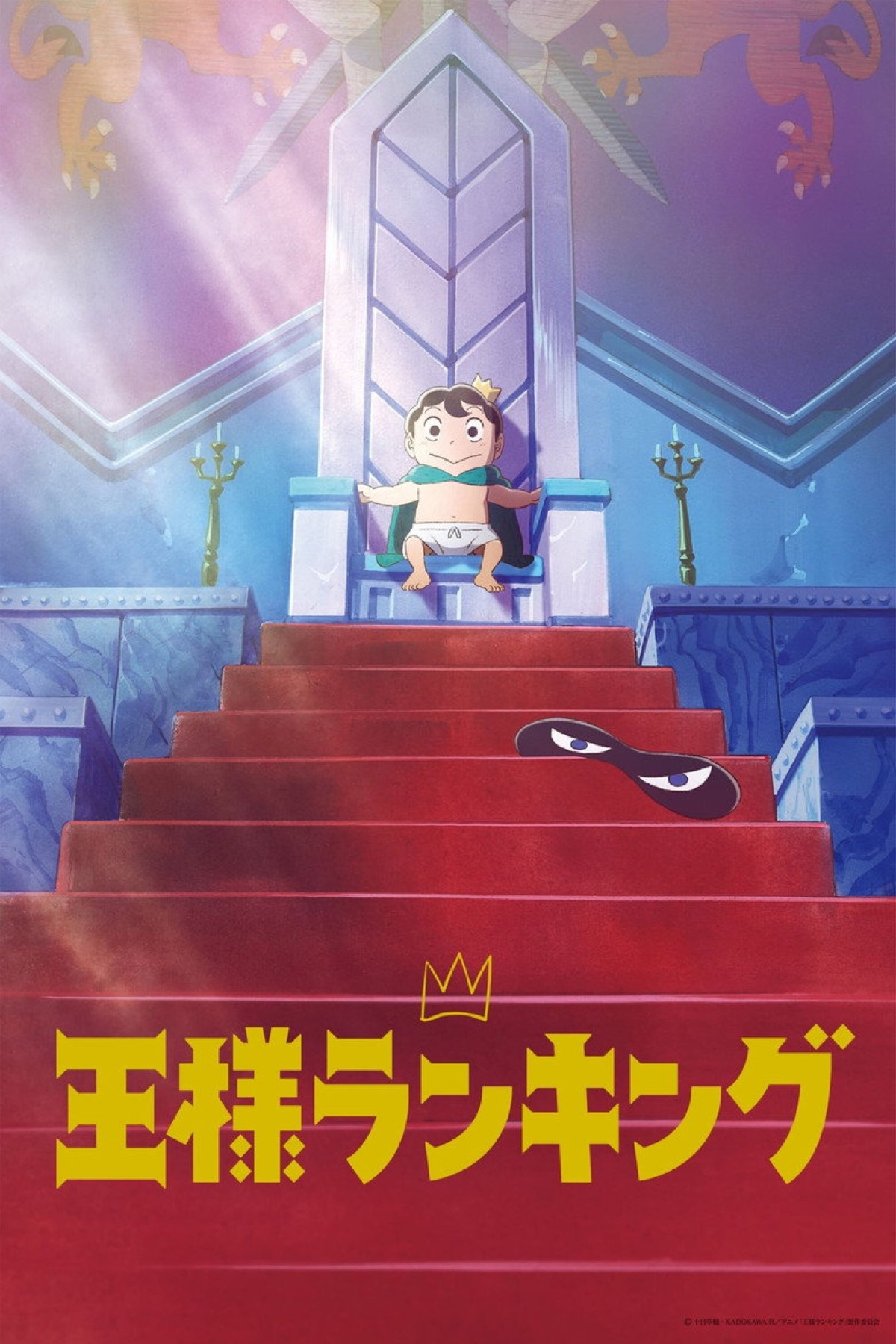
Round faces. Characters about three heads tall. Thick, soft outlines and a palette borrowed from a children’s picture book. Open the first episode cold and every visual signal tells you this was made for a six-year-old.
In Japan it aired at 12:55 in the morning. Fuji TV’s noitamina block, the slot the industry reserves for shows aimed at adults, and anyone here reading a listings page would have understood that before watching a frame. Overseas that signal does not exist, so the art has to carry the introduction on its own, and it keeps losing. The most common thing you hear from people who came to this show late is some version of “I scrolled past it for months.” The same people tend to rate it very highly once they stop scrolling.
I watched it a while back and I thought it was excellent. I also thought the back half lost something, and both of those go in this review, not just the flattering one. Streaming first, because the US answer is shorter than the Japanese one.
📺 Where to Watch Ranking of Kings (October 2026)
| Service | Status | Notes |
|---|---|---|
| Crunchyroll | Streaming | All 23 episodes, subtitled plus a complete English dub |
| Prime Video | Add-on | The paid Crunchyroll channel inside Amazon. Prime alone does not cover it |
| Amazon Video | Rent / Buy | Episodes or the full season, sold separately |
| Apple TV | Rent / Buy | Purchase only. Google Play has the same deal |
| Netflix | Not available | No US listing |
| Hulu | Not available | Nothing here |
| Disney+ | Not available | Not in the US catalog |
Japan: Netflix, Prime Video, Disney+, Hulu, U-NEXT and FOD, among others.
👉 If the fight in episode 21 makes you think of a different show, that is not a coincidence. It is the same studio. The house style started at Attack on Titan Season 1.
🔮 Is There a Ranking of Kings Season 2?
Not yet. As far as I can find, no Season 2 has been announced. What does exist is Ranking of Kings: The Treasure Chest of Courage, ten episodes that aired in Japan from April to June 2023 in the same noitamina block, animated by WIT with the original voice cast. From the outside it passes for a second season. It is a set of side stories instead, about Bojji, Kage and their companions, told around the edges of the 23 episodes, not after them.
In the US it is on Crunchyroll next to the main series, so one subscription covers both. Watch it after episode 23, not in the middle. It assumes you already know these people, and dropping it into the main run would break the build-up toward episode 21 for no gain.
If what you actually want is the story after episode 23, for now it exists only in the manga. Reading on in English is less simple than it should be; the manga box has the details.
🎬 Trailer
That is the Japanese promo from Aniplex. Crunchyroll’s English trailers for this title are region-locked and will not play from Japan, which means we cannot verify them from here, so the official Japanese cut is what goes in the page. No dialogue is required to follow it anyway, which is a joke the show would appreciate.
Work Info
- Title: Ranking of Kings (Ousama Ranking)
- Aired: October 15, 2021 to March 25, 2022, 23 episodes, Fuji TV’s noitamina block at 12:55 AM
- Animation: WIT STUDIO
- Director: Yousuke Hatta / Series Composition: Taku Kishimoto / Music: MAYUKO
- Original manga: Sousuke Toka, serialized on Manga Hack
- First cour: opening “BOY” by King Gnu, ending “Oz.” by yama
- Second cour: opening “Naked Hero” by Vaundy, ending “Flare” by milet
- English dub: Emily Fajardo as Bojji, SungWon Cho as Kage, Justin Briner as Daida, Luci Christian as Hiling, directed by Caitlin Glass
📖 Synopsis – No Spoilers
Bojji is the first prince of the Kingdom of Bosse. He is deaf, he cannot speak, and he is not strong enough to lift a practice sword without it dragging him over. The people below the castle walls laugh at him openly. The retainers inside have already concluded he is not what a throne requires. Then he meets Kage, the last survivor of an assassin clan, who turns out to be the only person alive able to read what Bojji is saying from his hands and his face.
What starts moving next is the succession. Bojji’s stepmother Queen Hiling, his younger brother Daida, the swordmasters who train them both. Everyone in the castle is working an angle, and Bojji decides the answer is to leave and get stronger somewhere else. Underneath the picture-book surface the material is betrayal, curses, revenge, and the specific damage parents hand down to children without ever deciding to. It aired after midnight for a reason.
✨ What Makes It Special
Why It’s Exceptional
- The number of people you are allowed to hate goes down every week
- No sign language, no thought captions, and you always know what the lead is saying
- The storybook art turns out to matter once the cruelty starts
- King Gnu, Vaundy, yama and milet on four theme songs for one series
Every week there is one fewer person you are allowed to hate
This is the best idea in the show and I have not seen another series run it this cleanly. Ordinary stories sharpen the villain as they go. You learn who did it, the shape of the enemy resolves, and the back half is spent going after them. Ranking of Kings runs that engine backwards. Every time it explains somebody, they stop being hateable.
Episode 2 gives you Kage’s past. Episode 3 goes to Hiling, who has spent two episodes reading as the cold stepmother out of a fairy tale, and rearranges her completely. Neither episode introduces a new event. Both of them just re-light footage you have already watched, and that is enough. The label you had stuck on somebody peels off, and the show never tells you it is doing this. It simply keeps handing you more information until the label stops fitting.
Daida gets the same treatment. So do the swordmasters, so do people introduced purely as obstacles. Somewhere past episode 10 you notice there is almost nobody left in this story you are permitted to want dead, and the way it happened is worth being precise about. These are not villains who repent. The show never stages a conversion. It shows you that they were never villains, in that order, so what gets dismantled is not their position. It is yours.
There is a moral argument riding along underneath, and it is not delivered as one. Nobody in this show gives a speech about understanding your enemies. You are just walked through the process about eight times until you start doing it on your own, ahead of the script, and that is a far more durable result than a monologue would get.
A story that removes its own antagonists has to find a new engine for the second half, and this one does not entirely manage it. That is the single reason this is not a nine.
A lead who cannot speak, used as an amplifier rather than a sad fact
Bojji is deaf and mute. The easy version of this show treats that as a reason to feel sorry for him and moves on. What this one does instead is turn it into a piece of equipment. Because he cannot answer back, the contempt aimed at him stays on screen with nothing to interrupt it. Watch how differently an insult reads when the target cannot return it. There is no exchange, no comeback, no relief. The camera just sits there with it.
Then the same mechanism runs the other way and does something much better. Affection pointed at Bojji is magnified by exactly the same physics. Anything in his head has to travel through Kage before it reaches anyone else, which means the time those two spend standing next to each other is the proof of the relationship rather than a scene about it. He got found by a friend before he got found by his family. Twenty-three episodes of that particular order of events add up to something heavy.
Deeper Themes
The question this show keeps asking is what a person does with the thing they were not given. Born without strength. Never handed the affection they wanted. Made to watch somebody else get the body or the birthright or the love. Everybody here is short of something, and the only variable is the method they pick to fill the gap. The ones who fill it by taking from other people become the antagonists. The ones who do not become the people you follow. Bojji is not exceptional because he grows strong. He is exceptional because he stays short of it and goes on trusting people anyway.
No sign language, no thought captions, and it still reads
Carrying a silent lead through 23 episodes is a harder production problem than it sounds. There is no signing system for the audience to learn. There are no italic captions for his inner voice. What the animators have to work with is face, body and timing, and it is enough. You can tell he is crying from how the eyes are drawn. When he is happy the whole body leaves the ground, so nobody needs to write the line.
This has a practical consequence for anyone weighing sub against dub. For the lead it barely matters. Emily Fajardo and Minami Hinata are both performing a character with no dialogue, so the two versions of Bojji are nearly the same object. Where the dub earns its keep is Kage, and SungWon Cho is a very good piece of casting for a fast-talking shadow who has to narrate for somebody else. Pick either. This is one of the few shows where that advice is not a dodge.
🎭 Memorable Scenes
Episode 2. The comic relief gets a past, and the show tells you what kind of show it is.
Kage arrives as a wisecracking blob with light fingers and a running commentary. Episode 2 puts a history behind him that the lightness cannot support, and the temperature of the whole series is set right there. From that point on the rule is fixed: in this show, judging by appearance is always wrong. Which is, of course, exactly the trap the art style has been setting for the audience since the title card.
The second opening sequence is the other one. From episode 13, Vaundy’s “Naked Hero” runs over an image of broken mirror shards pulling themselves back together. First time through it looks like decoration. Get far enough into the second cour and it turns out to have been a piece of information sitting in plain sight the whole time. If you skip openings, go back for this one.
And then episode 21. A protagonist with no strength, still standing, animated with enough conviction that your body reacts before your opinion does. WIT put their money on screen here and it is not close.
💭 How It Made Me Feel
The residue this leaves is a broken instinct about first impressions. An unpleasant character walks into frame and some part of you goes: right, this one gets explained in three episodes. It teaches you a reading habit and then you carry it into other shows, where it is frequently wrong and still hard to switch off.
The other thing that stays is the music, and this is worth spelling out for readers outside Japan, because the credit list here does not translate. King Gnu on the first opening. Vaundy on the second. yama and milet on the endings. Those are four of the largest names in Japanese popular music at the time, and getting all four onto one 23-episode series was itself a news item here, not a nice bonus. Overseas you hear four good songs. Domestically it read as a statement about how much confidence the production had.
The gap between the two openings does real work too. “BOY” is about a boy who has nothing. By the time “Naked Hero” arrives at episode 13, the show has changed what it is willing to claim on his behalf, and the songs move in step with that. MAYUKO’s score underneath both of them is 91 tracks long, which is a strange thing to notice about a fantasy series until you realize how much of this show has no dialogue in it at all.
😅 Where It Falls Short
The back half is the reason my score has a 1 in the decimal place, not a 5.
The best weapon in the first half becomes a procedure in the second
People do search for “Ranking of Kings boring”, and if they mean the back half, they are not making it up. There is a real thing there.
What made the early revelations land was placement and rationing. Kage in episode 2. Hiling in episode 3. Mechanically it is just withheld information released late, which is a trick that keeps working while the gaps between uses stay wide. In the second half the same device gets applied to more or less everyone. A character behaves badly, a flashback explains the circumstances, your reading updates. Then again. Then again. The eighth time a surprise arrives on schedule it is not a surprise, it is a procedure, and you can feel yourself waiting for it instead of being caught by it.
The second cour also tilts toward fighting. That costs the show its best rhythm, which was the distance between the quiet stretches and the loud ones. Flatten that contrast and the shape of the story gets harder to see. Japanese viewers split on this hard and the split has an obvious seam: “the first cour was better” is a very common verdict here, and episode 12 or 13 is usually where people put the line.
A smaller problem: a character carrying the main thread makes choices that do not fully reconcile. Protecting somebody while simultaneously putting them somewhere dangerous. You can read it as emotional inconsistency, which people do feel, but watched end to end it stays a snag, not a texture.
Most reviews get one thing wrong. The complaint is about the writing, not the animation. Go and read the people who were hardest on the second cour and you will find them praising the work around episode 21 without exception. There is no quality collapse here, no off-model stretch, no visible budget cliff. If what has been keeping you from starting is a worry that the show falls apart to look at, that particular worry is unfounded and you can go ahead.
The Downsides
- The back half leans on “there was a reason” flashbacks until the device stops surprising anyone
- The second cour weights toward combat and loses the quiet-to-loud contrast that made the first work
- A character central to the main thread behaves in ways that do not fully add up across the run
- It ends at the close of the manga’s first part, so the story is not finished, only paused
Who Should Watch This?
- Anyone who has been scrolling past this for years because of the thumbnail
- Anyone tired of protagonists whose answer to every problem is getting stronger
- Anyone who likes a succession plot with knives in it (this one especially)
Who Might Not Enjoy This?
- Anyone whose objection to the character designs is physical, not a matter of taste, since that does not always wear off
- Anyone expecting the quiet, patient character work of the first cour to hold all the way to the end
- Anyone who dislikes being asked to sympathize with every single person who does something terrible
📺 Streaming Guide by Service
Is Ranking of Kings on Netflix or Crunchyroll in the US?
Crunchyroll, and only Crunchyroll. Netflix is the question people actually type, and the answer is no in the United States even though Netflix does carry it in Japan. Hulu and Disney+ are the same story: available here, not there. I found no ad-supported free option and no library route either, so the choices are a Crunchyroll subscription, the Crunchyroll channel bolted onto Prime Video, or buying the episodes.
On buying: 23 episodes purchased individually costs considerably more than a month of the subscription that already includes them. Amazon, Apple TV and Google Play all list it, and unless you specifically want to own the thing, none of them is the sensible move. The dub is worth a word too. It is complete, it covers the full run, and Caitlin Glass directed it, so this is not a partial dub that abandons you at episode 12.
Where to Stream
- Crunchyroll: Streaming, all 23 episodes, subtitles plus the complete English dub
- Prime Video: attach the Crunchyroll channel to your Amazon account and the identical library shows up there. Individual episodes are also on sale
- Apple TV: purchase only, same for Google Play
- Netflix, Hulu, Disney+: not available in the US, despite all three carrying it in Japan
Soundtrack
MAYUKO wrote 91 cues for this. The album came out on March 23, 2022 and runs two hours and fifty-four minutes, which is a lot of music for 23 episodes until you count how many scenes here have nobody talking in them. Both American services carry the whole thing.
- Spotify: all 91 tracks
- Apple Music: the US store listing
📚 The Source, and What Comes After
Sousuke Toka has been posting this on Manga Hack, a site where anybody can submit a comic, weekly since May 2017. It was not commissioned, it was uploaded, and it climbed from there to a noitamina slot with WIT animating it. That route is much rarer in Japan than the number of webcomic success stories overseas would suggest.
The anime adapts the manga’s first part, running from volume 1 through chapter 155 in volume 12, which means episode 23 is a pause and not an ending. Volume 13 opens the second part and picks up from where the show stops. The Japanese edition is at 22 volumes as of June 12, 2026 and is still going. The one warning: I could not find a US print edition, and the English release appears to be digital only, so the Blu-ray is the thing that is actually straightforward to buy in America.
- Ranking of Kings: Season 1 Part 1 [Blu-ray]: episodes 1 to 11, Japanese audio with subtitles plus the English dub
- Part 2 and the rest of the home video: for the remaining episodes
🎬 If You Loved Ranking of Kings, Watch These 3 Next
WALL-E
If Bojji’s performance is what got you, this is the same experiment run under harsher conditions. For the first forty minutes the lead has essentially no language at all, and you never once lose track of what he wants. Taking speech away from a character makes their feelings easier to see, not harder, and Pixar proved it from a completely different direction. Same principle, robot instead of a prince.
How to Train Your Dragon
The weakest boy in a village of warriors, who never acquires the strength everyone keeps demanding of him and changes the world instead. That is Bojji’s thesis exactly, delivered in ninety minutes with no room to wander. If the back half of Ranking of Kings left you wanting, the way this one lands its argument is the fix.
👉 Read the How to Train Your Dragon review
Fullmetal Alchemist: Brotherhood
Here is what the trick looks like when a series can sustain it. Explaining the enemy until you cannot hate them is the identical move, and this one runs it across 64 episodes without the device ever going slack. If the thing that disappointed you about Ranking of Kings was structural stamina, this is that problem solved. It also starts with bodies that are missing pieces, which puts the two shows closer together than the art styles suggest.
👉 Read the Fullmetal Alchemist: Brotherhood review
Episode 2 rewrites a character you had already written off with a few minutes of backstory, and that kind of moment runs through these anime that make you cry.
📝 Final Thoughts
The score is 8.1 and I want to be clear about where the missing points went, because it is one specific failure and not a general softness. The show built its reputation on the idea that appearances lie, then spent its second half distributing that revelation to every character in turn until it read as paperwork. Surprise became process. The combat weighting took away the silences that had been doing the heavy lifting. That is the whole deduction.
None of which stops me handing this to people. A prince who cannot speak, carried across 23 episodes on nothing but facial acting, and a story that keeps subtracting its own villains until you are the only one in the room still holding a grudge. I do not have a substitute for either of those. So if the art is what has been stopping you, the ask is three episodes. Kage’s past lands in the second, Hiling turns over in the third, and by then you will know exactly what this is. Deciding at that point is fine. Deciding from the thumbnail is not.
⭐ Series at a Glance
| Category | Rating | Note |
|---|---|---|
| Story | ★★★★☆ | A superb structural idea that the second cour wears out |
| Animation | ★★★★★ | No dip anywhere, and episode 21 is the proof |
| Characters | ★★★★★ | Nearly everybody is rebuilt at least once |
| Music | ★★★★★ | King Gnu, Vaundy, yama, milet, plus 91 tracks of score |
| Pacing | ★★★☆☆ | The first cour is tight. The second sprawls |
| English dub | ★★★★☆ | Complete for all 23 episodes, and the lead has no lines anyway |
Usagi’s Recommendation Score
⭐⭐⭐⭐⭐⭐⭐⭐☆☆
8.1 / 10
Give it three episodes. The art is the test, and almost everybody fails it early.

