*This page contains affiliate links. We may earn a commission if you make a purchase through these links.
Almost nothing in this show happens at night.
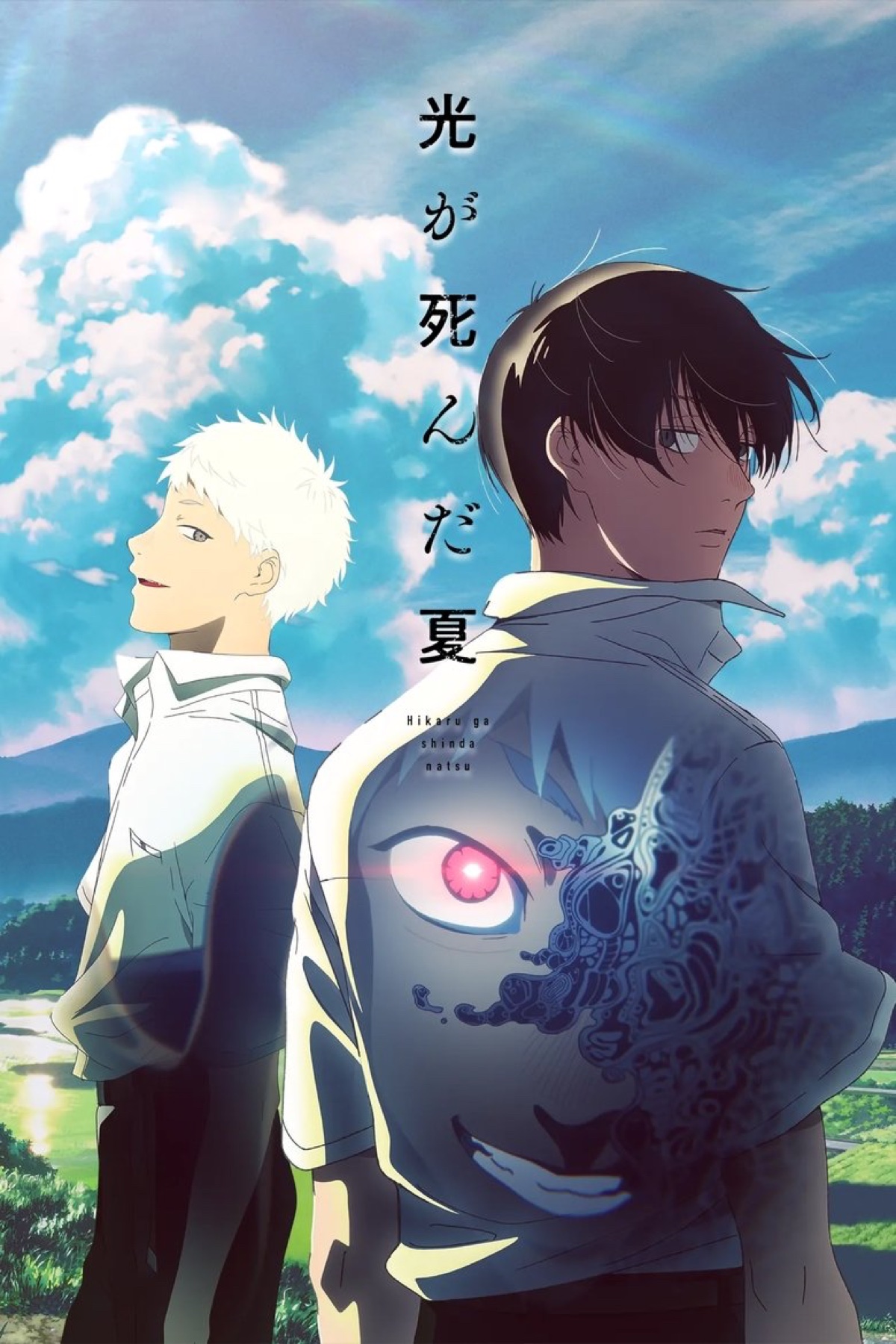
That is the first thing you notice, and it keeps bothering you for twelve episodes. Rice paddies at two in the afternoon. Asphalt blown out white by the sun. Cicadas. Convenience store ice cream on the walk home. Every visual shorthand for a Japanese summer holiday is present, and the whole thing is deeply unpleasant to sit through. In episode 1, a boy named Yoshiki Tsujinaka turns to the friend walking beside him and says it out loud: you are not Hikaru. Six months earlier, Hikaru Indou vanished on the mountain. He came back a week later with the same face, the same voice, the same memories, and something else living inside them. The picture stays bright, and the exits keep disappearing.
📺 Where to Watch The Summer Hikaru Died (August 2026)
| Service | Status | Notes |
|---|---|---|
| Netflix | Streaming | All 12 episodes. Subtitles plus an English dub |
| Crunchyroll | Not available | Netflix holds it as a worldwide exclusive |
| Hulu | Not available | — |
| Amazon Prime Video | Not available | No rental option either |
| HBO Max | Not available | — |
As of August 10, 2026, Netflix is the only place this exists in the US. That is unusual for a seasonal anime, and it is deliberate: the show was announced as a Netflix worldwide exclusive before it aired, so it never went to Crunchyroll, and it has never been offered as a rental anywhere. Availability does change, so check the service directly before you commit to anything. One note for the curious: in Japan the series also ran on terrestrial TV, on Nippon TV at 12:55 AM on Saturdays, with the streaming release landing an hour behind the broadcast.
If the idea of living alongside something inhuman rather than destroying it is what draws you here, Mushishi is the show that built that template decades earlier.
🎬 Trailer
Work Info
- Title: The Summer Hikaru Died (Hikaru ga Shinda Natsu), Season 1
- Aired: July to September 2025 on Nippon TV / 12 episodes, 24 minutes each
- Director and series composition: Ryohei Takeshita
- Animation production: CygamesPictures
- Original manga: Mokumokuren (serialized on KADOKAWA’s Young Ace UP)
- Japanese cast: Chiaki Kobayashi (Yoshiki Tsujinaka), Shuichiro Umeda (Hikaru), Chikahiro Kobayashi (Tanaka)
- Music: Taro Umebayashi / OP: Saikai by Vaundy / ED: Anata wa Kaibutsu by TOOBOE
📖 Synopsis – No Spoilers
A small settlement in the mountains of Mie Prefecture, deep in rural Japan. Yoshiki Tsujinaka and Hikaru Indou have lived next door to each other their whole lives. Then Hikaru disappears on the mountain, and a week later he strolls back into the village as if nothing happened. What returned has Hikaru’s body, Hikaru’s voice and Hikaru’s memories, and is not Hikaru.
Yoshiki works it out almost immediately. He does not report it. He does not run. He lets the thing stay, as Hikaru. (The series marks the difference in writing: the dead boy is the kanji 光, the thing wearing him is the katakana ヒカル.) While the two of them quietly continue their summer, the village starts producing incidents nobody can explain, and an outsider arrives to sniff around whatever is buried in the local soil. What is on that mountain? What happened during that missing week? Season 1 gets you close to those answers and then stops.
✨ What Makes It Special
Why It’s Exceptional
- A bright rural summer is used as the horror apparatus, not as relief from it
- The whole village has half-noticed, and the whole village has agreed to say nothing
- The monster is written as the one who wants to become human
- The cicadas that have been droning all episode stop for a beat
The Scariest Frames Are the Sunniest Ones
Horror usually reaches for darkness. Night, rain, an abandoned house, a shadow across a doorway. This series skips all of it and builds its dread entirely out of daylight. If you grew up in Japan, the imagery here is almost aggressively familiar: the walk home along the paddy, the humming vending machine, the shrine steps, the smell of hot grass. Japanese viewers kept describing it the same way, as a summer that makes you sweat for the wrong reasons.
The claustrophobia is geometric. Wherever you look in the frame, your eye hits a mountain. The show keeps cutting to high overhead shots of the settlement, which places you above the rim of a bowl looking down at the people inside it. You go looking for a way out on their behalf, and the walls get higher every time.
Sound does most of the heavy lifting. Cicadas, an electric fan, a distant public address speaker. The ambient layer runs constantly, and then for one beat it is gone. Nothing frightening is added. Something ordinary is removed, and your body reacts before you have worked out why. Viewers who say they cannot handle horror tend to tap out at the sound design rather than at anything on screen.
Then there is the texture work. In episode 2, in a dim equipment shed at school, Yoshiki puts his hand inside Hikaru. The scene commits to sound and viscosity and nothing else. No blood, no elaborate creature design. Because the show withholds the image, plenty of people came away reporting they could not touch raw chicken for a few days.
Nobody in the Village Will Say It Out Loud
This series gets filed under folk horror, and that label undersells what is actually frightening about the setting. Nothing sinister arrives from outside. The wrong thing is already inside, and everyone has quietly decided to let it stay.
Classmates, neighbours, Yoshiki’s own family — you can see it register on them that something is off about Hikaru. Nobody raises it. It is less that the secret is safe and more that pointing at it is simply not done. Anyone who has lived in a small Japanese community will recognise the mechanism instantly, and it is far more uncomfortable than the usual cursed-village formula.
So the longer the show runs, the more the village looks like an accomplice. The place is keeping the two of them out of sight. Protecting them, if you want to be generous about it, though what is actually happening is a whole community looking the other way in unison.
The Thing Wearing Hikaru Wants to Be a Person
The second pillar is the creature’s own point of view. Something that spent its existence alone on a mountain borrows a human body and discovers, for the first time, what enjoying yourself feels like. It hurts people without meaning to, gets pulled up short by Yoshiki, and slowly learns to hold itself in check. Having a heart is what makes all of this painful, and having no heart would mean none of the good parts either. That contradiction is the most human thing in the twelve episodes.
Which is where the show flips its own premise. Somewhere around the midpoint you stop wanting the monster to be dealt with.
I keep writing “scary,” so a correction is in order: nothing here makes you shout. It is closer to a fish bone caught in your throat for twelve episodes.
🎭 Memorable Scenes
The friend who came back was a stranger.
That is the official tagline, and episode 1 is titled “Substitute.” Framed that way it is still a normal ghost story. What makes the series its own thing is where Yoshiki lands next: he would rather have the fake than have nothing. A boy who has correctly identified an impostor declines to report it, declines to run, and asks it to stay. As a horror setup it is completely wrong, and the show builds eleven more episodes on it. Everything after is the bill coming due.
The other one worth flagging is quieter. Watch Hikaru perform “ordinary high schooler” in a crowd or a classroom. Shuichiro Umeda is voicing a thing that is imitating a voice, which is a strange assignment, and he lands it. It is convincing enough that you start wondering how many people around you are running the same routine.
💭 How It Made Me Feel
Across twelve episodes Yoshiki never once makes the right call. He should have reported it, or backed away, or told a single adult. Somehow none of that turns into blame. The show consistently rules in favour of desperation over correctness, and by the end your moral instrument is reading a few degrees off true.
What stays with you afterwards is the texture. Long after the plot details blur, the afternoon glare, the cicadas and that low-grade wrongness come back as a set every time summer does.
Deeper Themes
The idea the series keeps returning to is that you never get access to what is inside another person. Hikaru cannot weigh death or pain the way you do. But the assumption that other human beings register pain on the same scale you do is not guaranteed either, and never has been. Hikaru’s inability to understand is a matter of degree rather than category. Read that way, Yoshiki’s choice stops looking like a strange perversion and starts looking like the ordinary wish to keep someone near you, pushed all the way to its edge. Keeping a person whose interior you cannot verify: that is not a ghost story, that is Tuesday.
Who Should Watch This?
- Anyone who wants to spend twelve episodes inside a rural Japanese summer
- Folk horror people: local deities, buried customs, villages with rules
- Viewers who want atmosphere over jump scares, with almost no gore (highly recommended)
😅 Where It Falls Short
Ask anyone who finished season 1 for their first reaction and it probably will not be a compliment. Let me stand on that side of the line for a while.
Twelve Episodes, and the Questions Are Still Open
What is on the mountain. Who the outsider works for and who is paying him. Where Hikaru came from. Very little of that gets settled inside season 1. What the season accomplishes is showing you how far Yoshiki will go to keep the arrangement, and the machinery underneath the story is left almost untouched.
A second season is confirmed, but no broadcast window has been announced as of this writing. If you need a story that closes inside one cour, this is a hard sell.
The Middle Stretch Barely Moves
A show driven by atmosphere runs light on incident. The middle episodes deliver a run of days where nothing much occurs, and whether you can sit with that repetition decides your entire opinion of the series. That is where people dropped it during the original broadcast. The back half changes gear, so if you are wavering, get to episode 8 before you make the call.
A Note on the Dialect (Japanese Audio)
This one is for subtitle watchers, since the English dub sidesteps it entirely. The characters do not speak standard Japanese, and they do not speak textbook Kansai dialect either. It sits somewhere between the two, matched to that mountain region of Mie. The cast are not native speakers of it: Chiaki Kobayashi has said his grasp of the dialect was shallow, and he and Shuichiro Umeda both worked with a dialect coach. The language is doing real work for the setting and the attempt deserves credit, but if your ear is sensitive to intonation, expect to spend a few episodes adjusting.
Who Might Not Enjoy This?
- Anyone who needs a self-contained story (the rest is waiting on season 2)
- Fast-paced or splatter horror fans (blood and creature gore stay minimal)
- Viewers who would rather the closeness between two boys not be the centre of the story
📺 Streaming Guide by Service
Netflix Is the Only Option, and That Was Always the Plan
The series was locked to Netflix worldwide from the announcement, so Crunchyroll, Hulu, Amazon Prime Video, HBO Max and Disney+ never got it, not even as a paid rental. For a seasonal anime that is genuinely unusual, and it is worth knowing before you go hunting.
Netflix does not run a free trial in most regions any more. On the other hand all twelve episodes sit behind a single subscription with nothing else to pay, so a one-month run at it works cleanly. Both subtitles and an English dub are available. If the trailer above already feels wrong to you in a good way, the series will not talk you out of it, and if it does nothing for you, twelve episodes will not change that either.
Where to Stream
- Netflix: Streaming worldwide, all 12 episodes
- Crunchyroll / Hulu / Amazon Prime Video / HBO Max: not available
Soundtrack
Scored by Taro Umebayashi. The official soundtrack runs 36 tracks including the insert song, and roughly half of the show’s clammy atmosphere is coming from here. The drop into TOOBOE’s ending theme is part of the effect.
- Spotify: available
- Apple Music: available
📚 Read the Manga
Mokumokuren’s original manga has run on KADOKAWA’s Young Ace UP since 2021, and Yen Press publishes it in English. In Japan it is up to nine volumes, the most recent released on June 4, 2026, with the series still ongoing. Season 1 covers the opening stretch and nothing more, so with no broadcast date for season 2, the manga is currently the only way forward.
🎬 If You Loved The Summer Hikaru Died, Watch These 5 Next
1. Summer Time Rendering
A closed-off island, a summer, childhood friends, and something that is not human. This is the title Japanese viewers reached for first when describing Hikaru. The difference is pace: Summer Time Rendering pays off its mysteries episode by episode. If twelve episodes of withheld answers left you unsatisfied, the contrast is the whole appeal. Streaming on Hulu in the US. (The only official trailer is the Japanese one from Shueisha’s channel.)
2. Mushishi
The ancestor of this whole mode. Spirits are not enemies to be defeated, they are conditions to be lived alongside, and the show treats rural Japan as a place with its own logic rather than a backdrop. Where Hikaru is claustrophobic, Mushishi is calm, and the folklore underneath is the same soil.
3. Cure
Kiyoshi Kurosawa’s 1997 film runs on the same fuel: something inexplicable seeping into ordinary Japanese life. Here the thing hollowing people out is another human being. Live action rather than animation, and the daylight is every bit as unsettling.
4. DAN DA DAN Season 1
Teenagers, local yokai, small-town Japan, occult nonsense. Same ingredients, opposite temperature. DAN DA DAN plays the supernatural loud and funny where Hikaru plays it damp and quiet. Useful as a palate cleanser, and useful for seeing how wide the genre stretches.
👉 Read the DAN DA DAN Season 1 review
5. Made in Abyss
For the specific trick of a lovely surface concealing something cruel. The art invites you in and then refuses to protect you. Fair warning: this one is considerably more explicit about the damage than Hikaru ever gets.
👉 Read the Made in Abyss review
For more in this vein, The Summer Hikaru Died sits on my list of Japanese horror anime, with nine other titles and where each of them streams in the US.
📝 Final Thoughts
Season 1 of The Summer Hikaru Died is not twelve episodes of solving something. It is twelve episodes of two people stretching out a situation that should never have been allowed to continue. Calling the unresolved ending a failure is therefore half right and half beside the point. Refusing to move the plot is exactly what let the humidity and the silence get this thick.
The wait is a real cost, though. With no date for season 2, anyone who wants the full picture now has to go to the manga. If you came for atmosphere rather than answers, this delivers completely. Rot needs warmth and damp more than it needs darkness, so watch it in the afternoon. This show works better in daylight than after dark.
⭐ Series at a Glance
| Category | Rating |
|---|---|
| Art / Direction | ★★★★★ |
| Sound / Score | ★★★★★ |
| Dread / Atmosphere | ★★★★☆ |
| Character Dynamic | ★★★★★ |
| Plot Progression | ★★★☆☆ |
| Season 1 as a Standalone | ★★☆☆☆ |
Usagi’s Recommendation Score
⭐⭐⭐⭐⭐⭐⭐☆☆☆
7.5 / 10
The questions stay open. The summer stays on your skin.

