*This page contains affiliate links. We may earn a commission if you make a purchase through these links.
Most parts of JoJo are a journey or a war. Part 4 is a town. JoJo’s Bizarre Adventure: Diamond Is Unbreakable never leaves Morioh, a quiet seaside town in Japan, and its Stands turn up in a restaurant kitchen, a manga artist’s studio, a game of rock-paper-scissors. Of the six parts I’ve seen, it may be the only one that lives this close to ordinary life, and I love it. As for characters, this could be the part with the most of my favorites in it.
Here’s my bias, though: I still rank Part 3 a little higher. The anime runs 39 episodes, set in 1999, following high schooler Josuke Higashikata and the Stand users who live in his town. Below you’ll find where it streams in the US, a character map with all the key Stands, which part to start with, and the reason a part I love ended up with a lower score than Stardust Crusaders.
📺 Where to Watch JoJo’s Bizarre Adventure: Diamond Is Unbreakable (November 2026)
| Service | Status | Notes |
|---|---|---|
| Netflix | Streaming | Season 3 of the JoJo page |
| Hulu | Streaming | Season 3 of the JoJo page |
| Crunchyroll | Streaming | Search for JoJo’s Bizarre Adventure |
| Amazon Prime Video | Add-on | Needs the Crunchyroll channel |
| Tubi | Free with ads | No subscription needed |
| Pluto TV | Free with ads | No subscription needed |
| Apple TV | Rent / Buy | Sold by season |
| HBO Max | Not available | Not in the US catalog |
| Disney+ | Not available | Not in the US catalog |
Checked on November 2, 2026: Part 4 streams on Netflix, Hulu and Crunchyroll in the US, and Tubi and Pluto TV list it free with ads. Netflix and Hulu file it as Season 3 of one JoJo page, since Parts 1 and 2 together make up Season 1 and Part 3 is Season 2. One catch for Prime members: Prime Video carried Part 3 at no extra cost, but for Part 4 it only offers the Crunchyroll channel, which is a separate subscription. Here in Japan the picture is different again. Part 4 is on Netflix, U-NEXT and d Anime Store, while Prime Video in Japan offers only the first episode free and rents the rest one by one. Licenses come and go, so confirm on the service itself before paying.
📣 Part 4 brings back Jotaro Kujo, the hero of Part 3, now an adult. If you haven’t seen JoJo Part 3, Stardust Crusaders yet, start there, and his arrival in Morioh carries a lot more weight.
🎬 Trailer
I couldn’t find an official English-language trailer for the anime, so this is the first promotional video from Warner Bros. Japan, in Japanese. For the English dub, VIZ Media posted a short promo with the English cast when Part 4 started on Toonami.
Part 4 in Three Lines
- No journey this time: the whole story stays in one town, Morioh
- A chef, a manga artist, a schoolkid: the townspeople have Stands too
- Somewhere in that town, a killer is hiding
Work Info
- Title: JoJo’s Bizarre Adventure: Diamond Is Unbreakable (JoJo no Kimyō na Bōken: Daiyamondo wa Kudakenai, Part 4)
- Broadcast in Japan: April to December 2016
- Episodes: 39, about 24 minutes each
- Director: Naokatsu Tsuda / Series Director: Toshiyuki Kato
- Series Composition: Yasuko Kobayashi / Music: Yugo Kanno
- Japanese Voice Cast: Yuki Ono (Josuke Higashikata), Yuki Kaji (Koichi Hirose), Wataru Takagi (Okuyasu Nijimura), Takahiro Sakurai (Rohan Kishibe), Toshiyuki Morikawa (Yoshikage Kira)
- Original Work: Hirohiko Araki, JoJo’s Bizarre Adventure Part 4 (Shueisha)
- Animation Production: david production
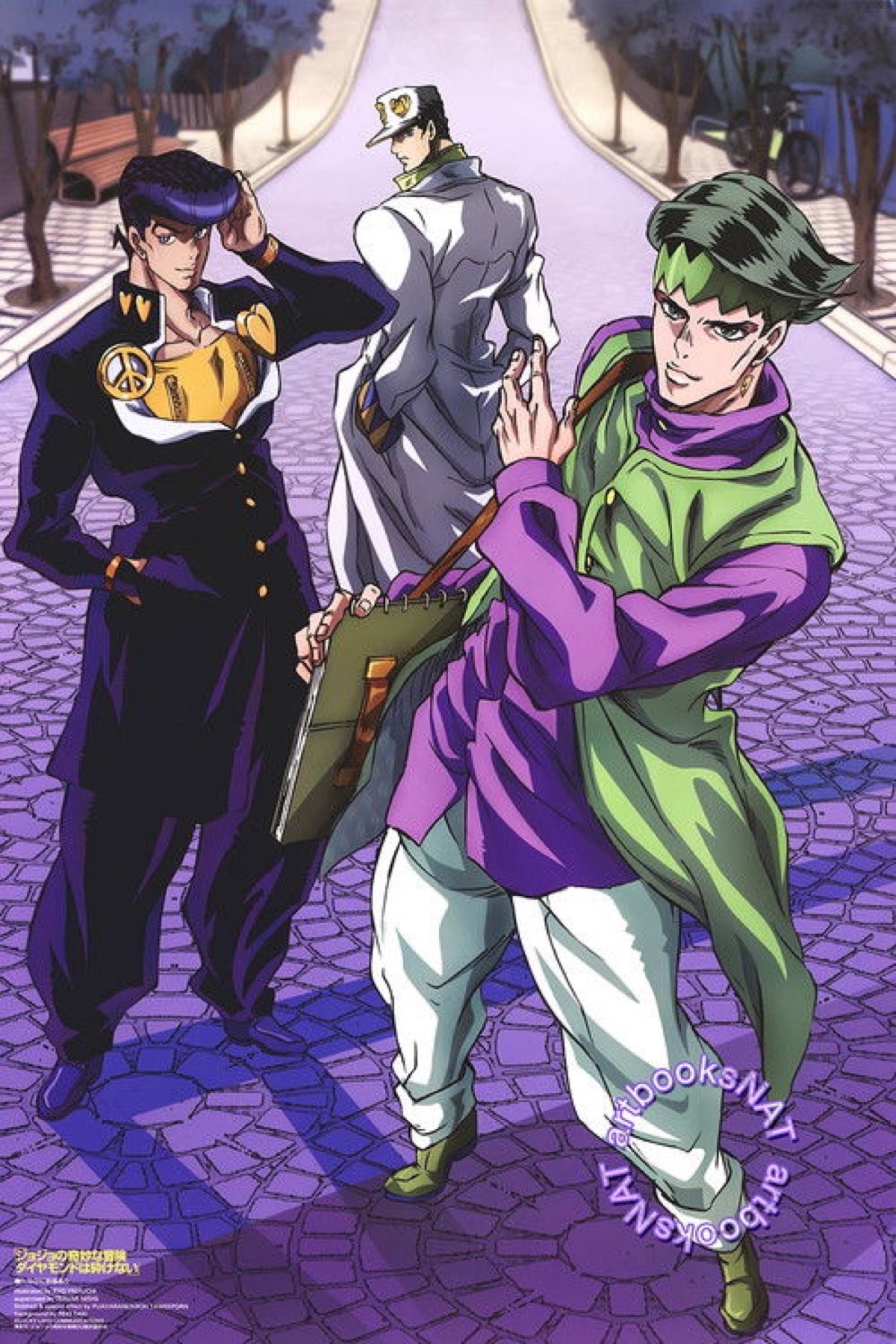
📖 Synopsis – No Spoilers
Morioh, 1999. Jotaro Kujo comes to town looking for Josuke Higashikata, a first-year high school student who turns out to be the secret son of Jotaro’s grandfather, Joseph Joestar. Jotaro is there on business tied to Joseph’s estate. So the two meet for the first time: a younger uncle and an older nephew.
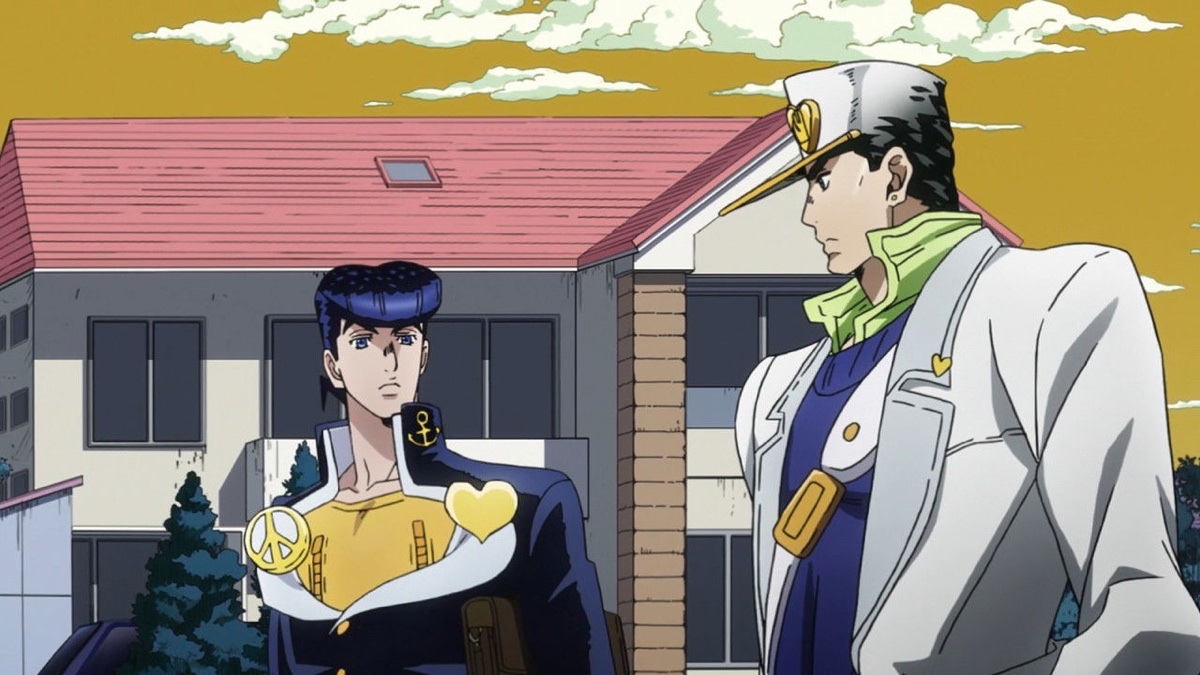
Josuke already has a Stand, Crazy Diamond, which can restore broken things and heal wounds. Jotaro soon realizes he isn’t the only Stand user in Morioh. Someone has brought the Bow and Arrow to town, and anyone it pierces can awaken a Stand. With his classmates Koichi Hirose and Okuyasu Nijimura, Josuke starts running into one new Stand user after another, all of them his neighbors.
🧭 Which JoJo Part Should You Start With? My Pick Is Part 3
My recommendation is start with Part 3, then go through the rest in order. Every part has a different appeal, and a few are tightly linked, the way Jotaro carries over from Part 3 into Part 4. Still, each part works on its own, so the order matters less than people think.
The one exception worth knowing about is Parts 1 and 2. They come before Stands exist, so the fights run on different rules. The heroes battle vampires and the Pillar Men with Hamon, a martial art powered by breathing, and the feel is very different from Part 3 onward. If what drew you in is two Stand users trying to read each other’s powers, Part 3 is where you’ll find the JoJo you came for.
| Part | Anime Episodes | Setting |
|---|---|---|
| Parts 1–2 | 26 | 19th-century England, then the 1930s; Hamon instead of Stands |
| Part 3: Stardust Crusaders | 48 | A trip from Japan to Egypt; the first part with Stands |
| Part 4: Diamond Is Unbreakable | 39 | Morioh, 1999; Stands in everyday town life |
| Part 5: Golden Wind | 39 | Italy, 2001; a gang war from the inside |
| Part 6: Stone Ocean | 38 | A Florida prison, 2011 |
Part 7, Steel Ball Run, is airing now on Netflix, with a new episode every Friday through December 4, 2026. Its story takes place in a separate world from Parts 1 to 6. Every part in order, with where each one streams, is laid out in our JoJo watch order.
How Many Episodes Is Diamond Is Unbreakable? 39, and Part 3 Helps
You can follow Part 4 without having seen anything else. The show explains who Jotaro and Joseph are early on, as much as you need. But if you’ve watched Part 3 first, it means something different when Jotaro, eleven years after his 50-day trip to Egypt, walks back in as a grown man helping a small town. At about 24 minutes an episode, the full 39 come to roughly fifteen and a half hours.
👥 JoJo Part 4 Characters and Stands: Who’s Who in Morioh
Almost everyone in Part 4 lives in Morioh: classmates from Josuke’s high school, a manga artist, a chef. Jotaro and Joseph are the only ones who come in from outside. I’ve mapped the 14 people you’ll want to keep straight, Stand names included, in a single chart. It leaves out who survives, plus anything that would give away the killer’s secrets.
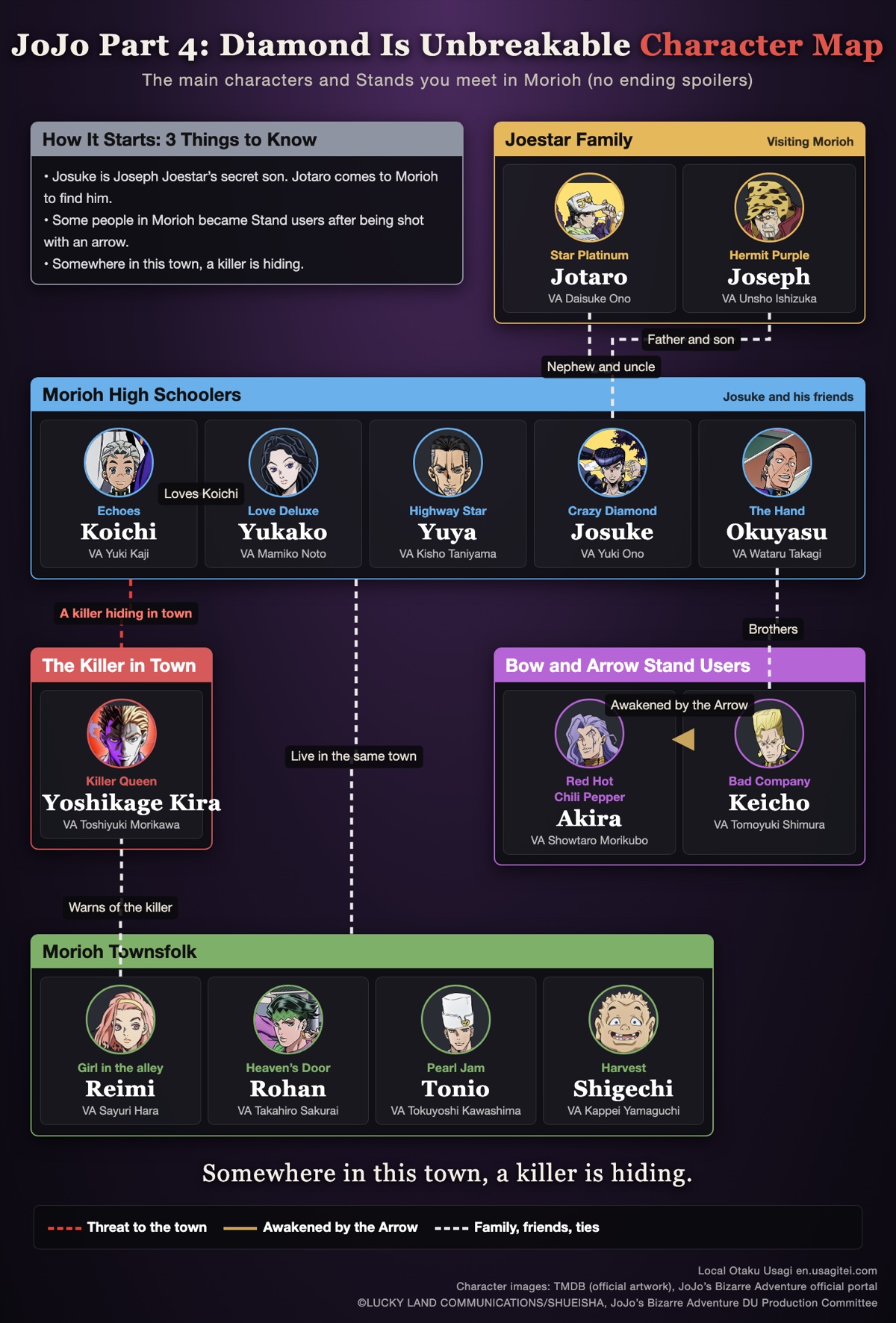
Josuke and his classmates sit in the middle of the chart. Above them is the Joestar family, linked as “father and son” and “nephew and uncle.” On the right are the Bow and Arrow Stand users, the ones adding new Stand users to the town. And on the left is Yoshikage Kira, the killer hiding in Morioh.
Unlike Part 3, the chart doesn’t split cleanly into enemies and allies. Plenty of people clash with Josuke first and then simply stay on as part of the neighborhood. Below, the 14 are grouped by where they stand in town.
Morioh High Schoolers
The Joestar Family
Morioh Townsfolk
The Bow and Arrow Stand Users
The Killer Hiding in Town
A note on names. Part 4 is full of Stands named after Western songs and bands, and the English release renamed several of them: Crazy Diamond is Shining Diamond, Echoes is Reverb, Red Hot Chili Pepper is Chili Pepper, Highway Star is Highway Go Go, and Killer Queen is Deadly Queen. That’s why the English episode titles include “Chili Pepper” and “Highway Go Go.” I use the original names here because they’re what Japanese fans still say.
✨ What Makes It Special
Why It’s Exceptional
- Stands get used for cooking, rock-paper-scissors, everyday mischief, not only for fighting
- Someone Josuke fights one week becomes his neighbor the next
- A biker, a schoolkid, ordinary people hold the line when it counts
- Rohan, Koichi, Okuyasu: the cast is simply full of strong characters
Stands, Part of Everyday Town Life
In Part 4, a Stand isn’t only a weapon. People in town each have their own ability and use it in their own daily lives. Stands woven into everyday life are fun in a way the battles aren’t, and I haven’t found that anywhere else in the series.
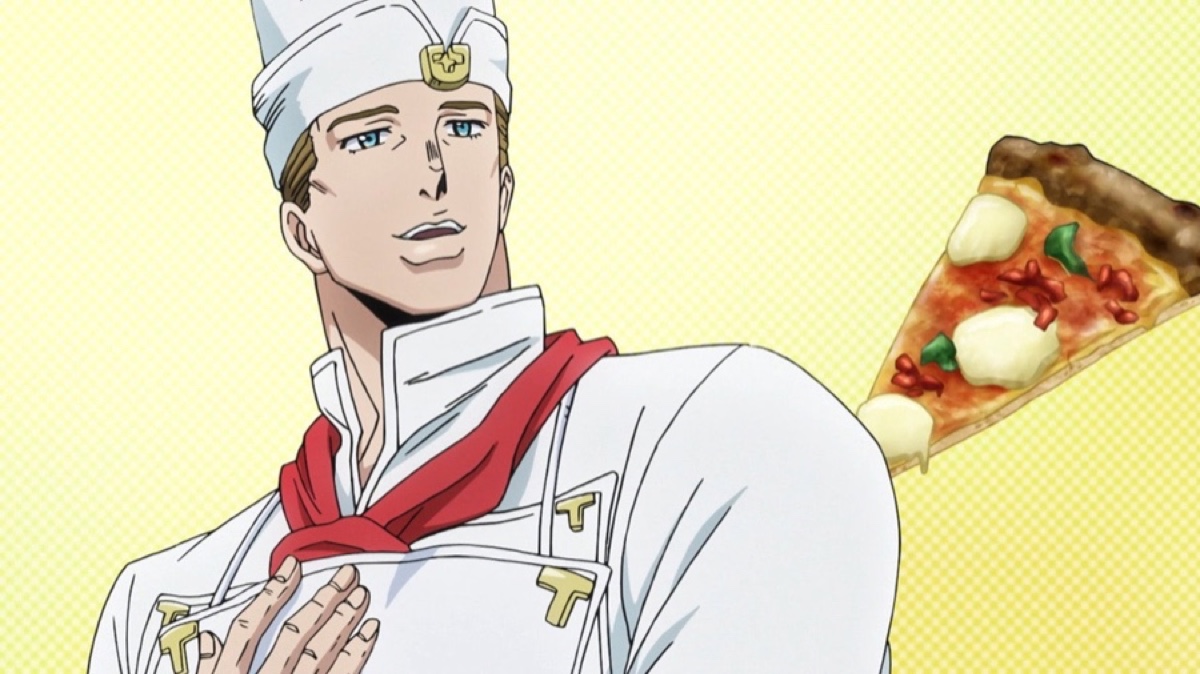
The clearest example is episode 10, Let’s Go Eat Some Italian Food. On the edge of town there’s an Italian restaurant with no menu. The owner, Tonio Trussardi, decides what to cook just by looking at a customer’s body. Okuyasu takes a bite, and his body starts doing strange things. Is it an enemy attack, or something else? Nearly the whole episode happens in the kitchen and the dining room. The Tonio episode is a standout episode of a kind no other part could have made.
There are more episodes that step away from life-or-death stakes: episode 26, Janken Boy Is Coming!, where manga artist Rohan Kishibe ends up in a rock-paper-scissors duel with a schoolboy, and episode 27, I’m an Alien, where a new kid insists he’s from outer space. Each one starts as some small incident in the life of somebody who lives in Morioh.
And underneath all of it, a killer is hiding in town. Since nobody goes on a journey, no enemy comes marching toward them either. Josuke and his friends have to find someone living somewhere in their own town. That feeling of a familiar place turning a little creepier each week is close to what Summer Time Rendering does with its island full of lookalike “Shadows.”
Neighbors Who Never Pick a Side
My favorites are Rohan Kishibe and Koichi Hirose. Okuyasu Nijimura is great too. Part 4 is just packed with characters who stand out.
Rohan is the popular manga artist Josuke and Koichi clash with in episodes 14 and 15. He’ll read another person’s memories without a second thought if it helps his manga, so he’s no saint. Yet he keeps showing up afterward as a Morioh local, and sometimes fights side by side with Josuke’s crew. Okuyasu, too, first stands in Josuke’s way alongside his older brother Keicho. Koichi starts out as the shaky classmate and, episode by episode, earns everyone’s respect.
In Japan, Rohan became popular enough to carry his own live-action drama series. Part 4 is where he first appears, in his most selfish, prickly form.
With so many slice-of-life episodes, a lot of characters never settle neatly into enemy or ally. Most other JoJo parts push forward on life-or-death tension. In Part 4, people who clashed once simply carry on as familiar faces around town, and the show treats that as normal. (I’ll be honest: that’s probably why, if I counted, this part might hold more of my favorite JoJo characters than any other.)
Ordinary People, One Act of Courage
The bravery that sticks with you in Part 4 doesn’t belong to chosen warriors. In episodes 28 and 29, Yuya Fungami is a biker high schooler with total faith in his own good looks, and at one point he puts himself on the line anyway. Ordinary people refusing to back down at the one moment that matters: that small courage decides the story’s turning points.
Deeper Themes: The Town Is Protected by the People Who Live in It
Part 3 sent a chosen group far away to defeat a distant enemy. Part 4 flips that: the enemy is inside the town, and the people who stand up to him are the people who live there. Even the hero’s Stand fits. Crazy Diamond’s power is to fix things, not just smash them. A hero who puts broken things back the way they were spends the whole part trying to keep his own town the way it was. After three parts of journeys, JoJo lowers its eyes here to the level of ordinary people.
🎭 Memorable Scenes
Episode 10, Tonio Trussardi’s restaurant. Every time Okuyasu eats another course, something happens to his body, and every time he says it’s delicious and keeps eating. Until you learn what Tonio really is, you can’t tell whether you’re watching an attack or a dinner.
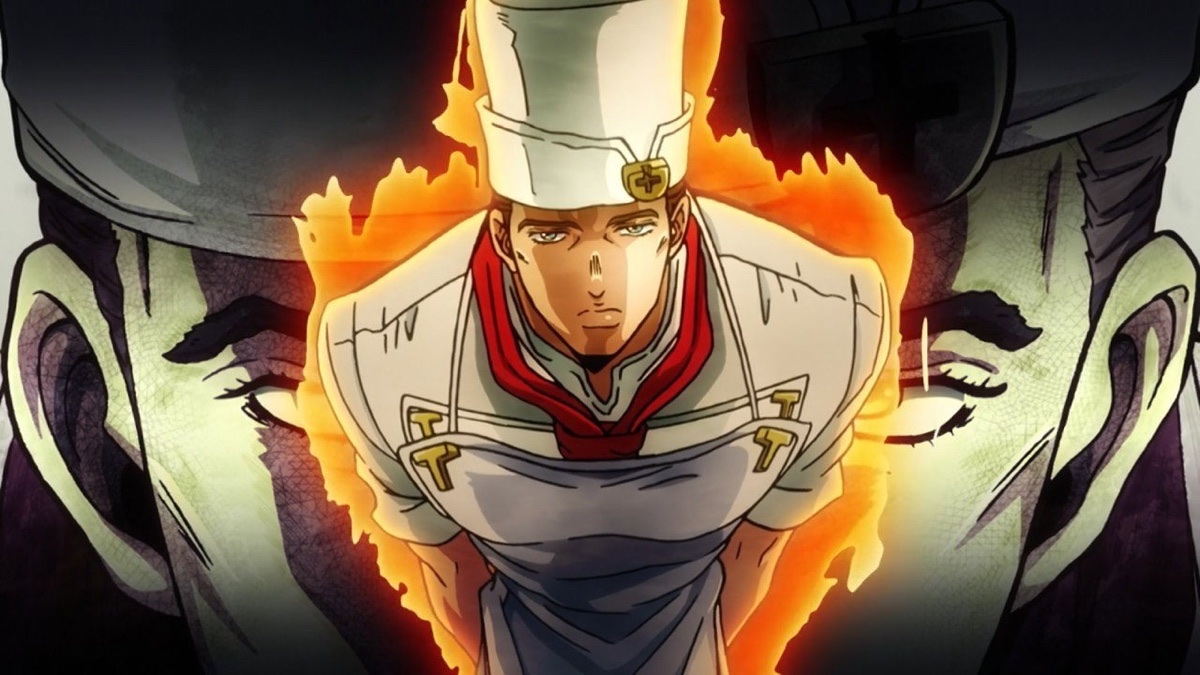
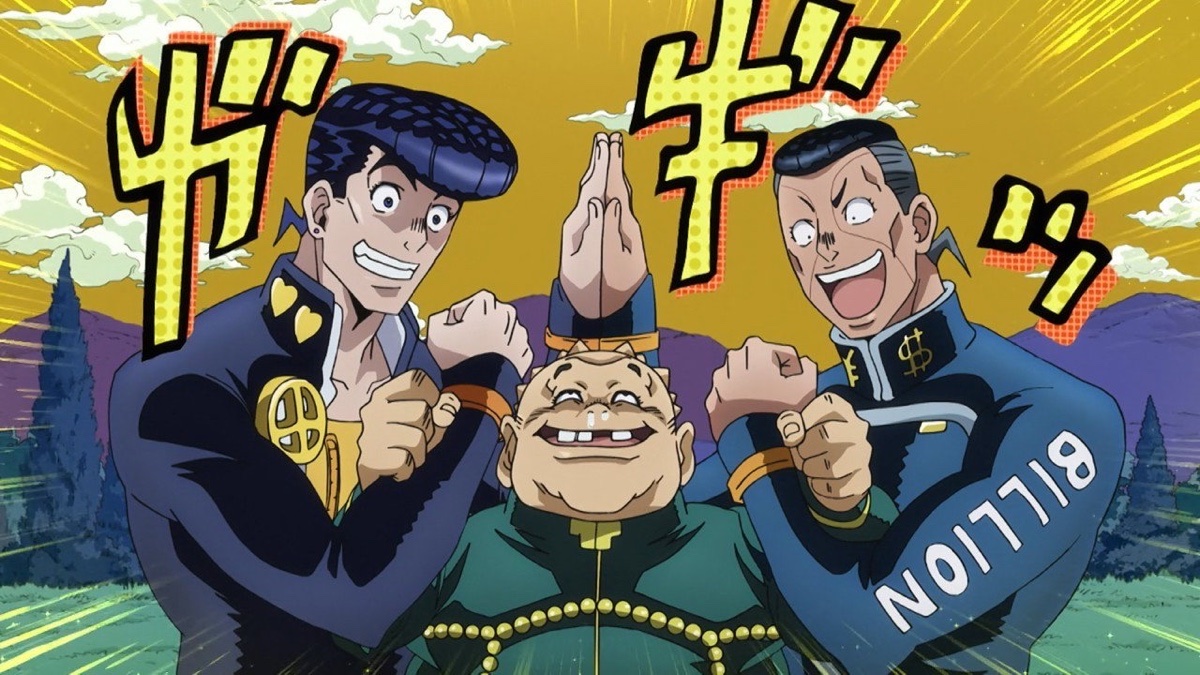
Episodes 18 and 19, Shigechi’s Harvest. It opens as a goofy two-parter about a middle schooler obsessed with making pocket money, with Josuke and Okuyasu tagging along. I won’t say what happens, but by the end, Morioh no longer seems the same town.
The final stretch, from episode 31 on. A schoolboy with no Stand at all edges closer to the secret of the killer hiding in town, completely on his own. He can’t turn to a single adult, so he thinks his way forward, and that boy is one of Part 4’s best answers to what courage means.
💭 How It Made Me Feel
I scored it below Part 3. Even so, Part 4 is without question a part I love. Rohan and Koichi, my favorites, plus Okuyasu. Tonio’s restaurant and Rohan’s house turn into familiar places the further the story goes.
😅 Where It Falls Short
I’ve been gushing, so let me balance it out: I still prefer Part 3. There are two main reasons, the villain and the animation.
Yoshikage Kira Doesn’t Loom as Large as DIO
Put the two parts side by side and the gap is Kira versus DIO. As the title of episode 21 says, Yoshikage Kira Just Wants to Live Quietly. He has none of DIO’s grand ambition to rule the world. Without that ambition, he can’t help seeming lightweight next to the other parts’ final villains. To put it bluntly, even if nobody stopped him, he probably wouldn’t do much harm outside Morioh.
Of course, a killer who blends into town and never shows his face is exactly what makes this a story about searching. Plenty of fans rank Kira among the series’ best villains for that unsettling quality. But if you want a final boss with the whole world riding on the fight, I’ll take DIO from Part 3.
If a villain with a huge plan is what you missed, Golden Kamuy has a soldier scheming on a scale that could move a nation. I come back to it in the picks at the bottom of this page.
The Animation Dips More Than in Other Parts
The animation bothered me here and there, too. Compared with the other parts, I’d say it’s a notch lower. Most of the complaints about off-model episodes point to the middle stretch of the run.
Josuke Sometimes Ends Up on the Sidelines
This is the flip side of having so many strong characters: Josuke, the lead, steps aside in more than a few episodes. Grown-up Jotaro is almost too reliable, and Koichi or Rohan carry plenty of episodes themselves. If you’re coming for Josuke, you may find he’s on screen less than you expected.
The Weak Spots
- Kira has no grand ambition, so he feels lighter than DIO
- The animation is a notch below the other parts, now and then noticeably
- Josuke, the lead, steps aside in some episodes
Who Should Watch This?
- Anyone who just finished Part 3 and is deciding whether to keep going
- Fans of stories where something sinister slips into an ordinary, familiar place
- Anyone who met Rohan in the Thus Spoke Kishibe Rohan anime on Netflix and wants to see where he comes from
Who Might Not Enjoy This?
- Viewers who want a battle with the fate of the world at stake
- Anyone expecting Part 3’s tension from the first episode to the last
- Viewers who put steady animation quality above everything else
📺 Streaming Guide by Service
Which Service Should You Use?
If you already pay for Netflix, Hulu or Crunchyroll, you have all 39 episodes at no extra charge. With none of them, Tubi and Pluto TV are the free route, with ads. The one to watch out for is Prime Video: it carried Part 3 for Prime members, but Part 4 sits behind the Crunchyroll channel add-on. If you plan to keep going after Part 4, Netflix is the safest pick, since it’s the only US service with all seven parts, while Hulu and Crunchyroll end at Part 5.
Where to Start Watching
- Netflix: Streaming (Season 3)
- Hulu: Streaming (Season 3)
- Crunchyroll: Streaming
- Amazon Prime Video: Add-on (Crunchyroll channel)
- Tubi, Pluto TV: Free with ads
- HBO Max, Disney+: Not available in the US
Theme Songs
- Openings: “Crazy Noisy Bizarre Town” by THE DU / “chase” by batta / “Great Days” by Karen Aoki & Daisuke Hasegawa
- Ending: “I Want You” by Savage Garden
The score is by Yugo Kanno again, carried over from Part 3. Three openings follow the story as it moves along, and their mood shifts step by step from the sunny town of the early episodes to the tension of the final stretch.
📚 The Source Manga
The anime adapts Part 4 of Hirohiko Araki’s manga. VIZ Media publishes it in English as a hardcover series; start with JoJo’s Bizarre Adventure: Part 4, Diamond Is Unbreakable, Vol. 1. If the animation dips bothered you, the manga gives you every page in Araki’s own drawing.
Back home in Japan, readers who start at Part 4 usually pick up the pocket bunko edition, where it runs twelve volumes, 18 to 29.
🎬 If You Loved Diamond Is Unbreakable, Watch These 3 Next
Summer Time Rendering
For anyone who got hooked on “someone is hiding in my town.” A young man comes home to a small island off Wakayama and starts hunting the Shadows, things that copy the islanders down to the last detail. Not knowing which familiar face is real, plus a time loop that edges him closer to the truth, comes close to the tension of Part 4’s final stretch. The story never leaves its one island, which echoes Morioh too. All 25 episodes stream on Hulu in the US.
👉 Read my Summer Time Rendering review
Odd Taxi
Part 4’s townspeople who never quite pick a side, pushed all the way into an ensemble mystery. Odokawa, a taciturn taxi driver, gets pulled into the disappearance of a high school girl through the small talk of the passengers he drives around. Nobody’s secrets are clear, and the threads tying the town together connect one at a time. The easygoing animal designs against a story that keeps turning darker echo Part 4’s mix of pop and dread. All 13 episodes stream on Crunchyroll in the US (the trailer above is the official Japanese one).
Golden Kamuy
The villain’s ambition I missed in Part 4 is right here. In Hokkaido at the end of the Meiji era, former soldier Sugimoto and an Ainu girl named Asirpa chase a hidden fortune in gold. Among the people after that gold is a military officer quietly nursing a plan big enough to move a nation, and the size of his ambition drives the story. At the same time, most of the cast are wildly eccentric, and former enemies casually become traveling companions. A show that runs on character this hard suits Part 4 fans best of all. In the US it streams on Crunchyroll.
📝 Final Thoughts
Part 4 is the 39 episodes where JoJo stops traveling, just this once, and settles into one town. The chef, the manga artist and the schoolkid all have Stands as fellow residents. Enemies become neighbors, and people who are nobody’s idea of a hero protect the place they live. That everyday texture is the heart of this part. My score is 7.8 out of 10, a little under Part 3’s 8.0.
I said at the start that Part 3 still edges this one out, and that hasn’t changed: ask me where to start JoJo and I’ll still say Part 3. But once you finish it, go straight on to Part 4, where Jotaro shows up again. The villain doesn’t reach DIO’s size, and that’s fine. Rohan, Koichi and Okuyasu are reason enough to move to Morioh for a while.
📣 Up next is Part 5, Golden Wind, which trades a quiet town for a gang in Italy. My JoJo Part 5, Golden Wind review walks through its characters and Stands.
⭐ Series at a Glance
| Category | Rating | Comment |
|---|---|---|
| Characters | ★★★★★ | Rohan, Koichi, Okuyasu; hardly anyone stays a simple enemy |
| Everyday Fun | ★★★★★ | Standout episodes with no fighting at all; Tonio’s restaurant is the best |
| Battles | ★★★★☆ | Mostly small fights inside town, still full of clever ideas |
| Villain | ★★★☆☆ | Kira is unsettling, but lacks DIO’s ambition |
| Animation | ★★★☆☆ | Some episodes dip below the other parts |
Usagi’s Recommendation Score
⭐⭐⭐⭐⭐⭐⭐✨☆☆
7.8 / 10
JoJo stops traveling and finds Stands in everyday life

