*This page contains affiliate links. We may earn a commission if you make a purchase through these links.
When The Lion King opens, one lion stands at the tip of Pride Rock. When it ends, a different lion stands on that same ledge, and this time he is not alone. The whole film is an argument about what makes a king, and it makes that argument with a single rock. The lion who wants that ledge most is Scar, Mufasa’s younger brother and Simba’s uncle.
For kids, this is about as fun as animation gets: hand-drawn animal faces that stretch further than any actor’s, and songs that carry them all the way to the end. Watch it as an adult and stop there, though, and you miss most of what is going on. Is a king made by birth, or by how he behaves? The film asks that from its first frame to its last. I land at 7.5 out of 10. Below: where the 1994 animated original streams in the US, what the film is really about, where it falls short, and how the old Kimba question looks from Japan, where I’m writing this.
📺 Where to Watch The Lion King (1994) in the US (November 2026)
| Service | Status | Notes |
|---|---|---|
| Disney+ | Streaming | The 2019 remake, Mufasa too |
| Amazon Prime Video | Rent / Buy | Not included with Prime |
| Apple TV | Rent / Buy | Also on YouTube, Google Play, Fandango at Home |
| Hulu | Not available | Not in the Hulu library |
| Netflix | Not available | No US listing |
As of November 6, 2026, the 1994 animated The Lion King streams on exactly one US subscription: Disney+. The 2019 remake and Mufasa: The Lion King (2024) sit on the same Disney+ shelf, so all three are one app away. Everywhere else it is pay-per-title, and a Prime membership on its own does not cover it. Licensing can change without notice, so check the title on Disney+ before signing up for this one film.
👉 If the question of who deserves a crown is what pulls you in, the Japanese anime Ranking of Kings asks it from the other side: its prince is deaf, small, and laughed at by everyone who has already decided what a king should be.
🎬 Trailer
This is the original 1994 trailer, posted by Disney+ on its official channel.
Work Info
- Title: The Lion King (1994), released in Japan under the same name, Raion Kingu
- Directors: Roger Allers, Rob Minkoff
- Music: Hans Zimmer (score), Elton John (songs), Tim Rice (lyrics)
- Voices: Matthew Broderick (Simba), Jonathan Taylor Thomas (young Simba), James Earl Jones (Mufasa), Jeremy Irons (Scar), Moira Kelly (Nala), Nathan Lane (Timon), Ernie Sabella (Pumbaa), Rowan Atkinson (Zazu), Robert Guillaume (Rafiki), Whoopi Goldberg (Shenzi)
- Japanese dub: Mitsuru Miyamoto (Simba), Tatsuya Nakazaki (young Simba), Shinya Owada (Mufasa), Haruhiko Jo (Scar), Yuji Mitsuya (Timon), Atom Kobayashi (Pumbaa)
- Runtime: 88 minutes, rated G
- Released: June 15, 1994 in two US theaters, nationwide on June 24; July 23, 1994 in Japan
- Awards: Best Original Score, plus Best Original Song for Can You Feel the Love Tonight, at the 67th Academy Awards
- Studio: Walt Disney Feature Animation
- Source: TMDB
📖 Synopsis – No Spoilers
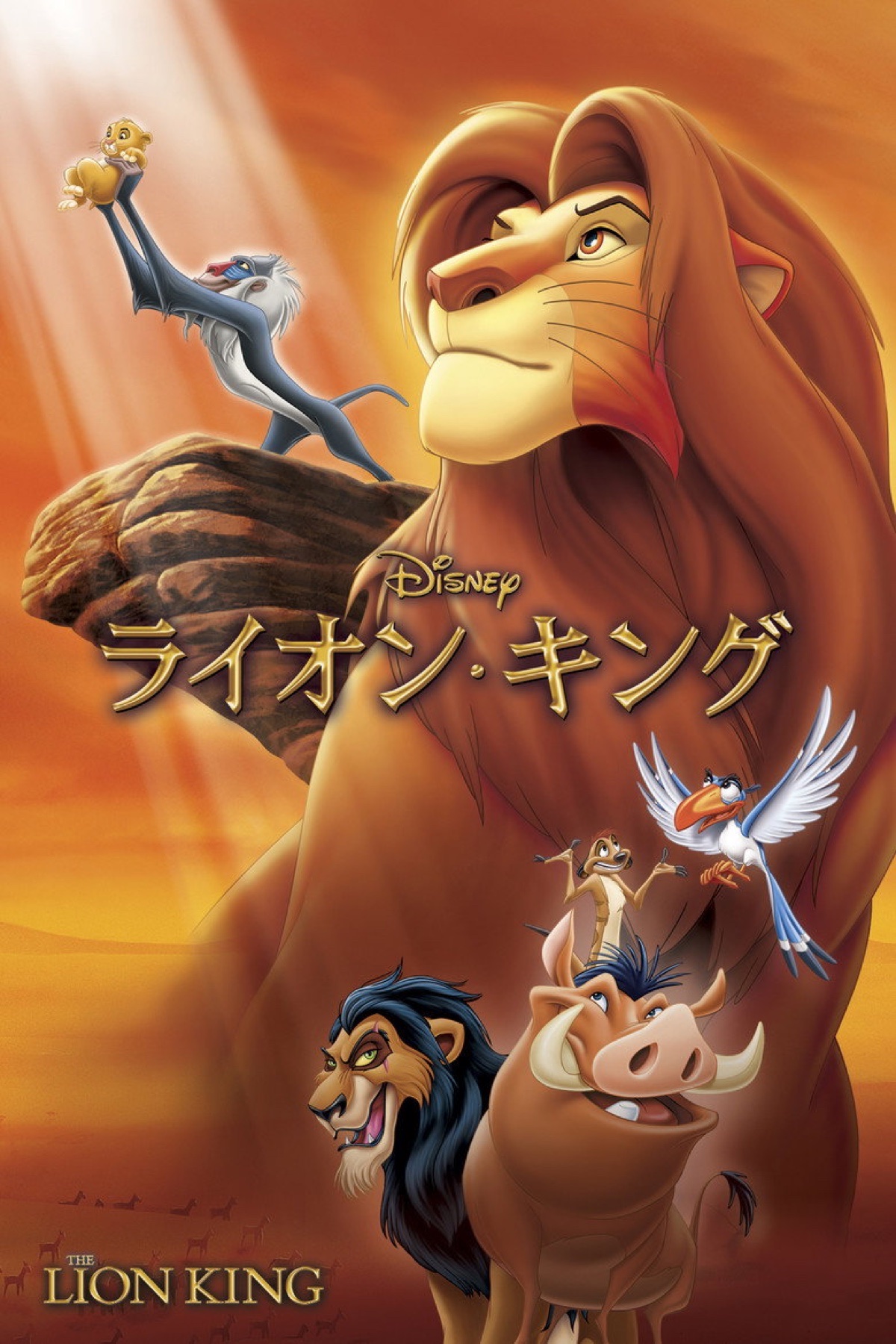
The Pride Lands, a kingdom on the African savanna. King Mufasa and Queen Sarabi have a son, Simba, and the old baboon Rafiki presents the newborn cub to every animal in the kingdom. As Simba grows, Mufasa takes him up to look out over the land and starts teaching him what a king needs to know. Simba cannot wait to be king, and he talks his best friend Nala into going exactly where he was told never to go.
Watching all this, and not sharing the joy, is Scar, Mufasa’s younger brother. With Simba born, the throne is never coming to him. He wins over a pack of hyenas and starts working his way toward the crown. Later, far from home, Simba is taken in by a cheerful meerkat, Timon, and a warthog, Pumbaa. In one line: a lion forgets who he is, and has to go back to remember.
✨ What Makes It Special
Why It’s Exceptional
- Hand-drawn animal faces that move far more than the still, painted backgrounds behind them
- Circle of Life sets up the kingdom, and the promise of the whole film, within minutes
- The same ledge of Pride Rock, framed at the start and again at the end, shows what earns a crown
- Scar, a villain born into the royal family without any of what it takes to rule
Hand-drawn faces and songs that hook kids in minutes
Start with the kid’s-eye view. The animation is a delight, and for children this film is as fun as it gets. The backgrounds sit still, painted storybook pages, while on top of them Simba bounces, Zazu flaps in a panic, and the hyenas roll around cackling. An animal’s face here changes more than a human actor’s ever could.
The songs pull just as hard. Circle of Life lands with its very first note, and Hans Zimmer, Elton John and Tim Rice took both music Oscars that year. From Hakuna Matata to Scar’s Be Prepared, each number shifts the mood so clearly that even a small child never loses the thread.
A king is made by how he acts, not how he was born
If you are watching as an adult, look here first. In the opening, Mufasa stands alone at the tip of Pride Rock. Later, showing young Simba the land, he tells him that everything the light touches is their kingdom. When Simba says he thought a king could do whatever he wants, Mufasa answers that there is more to being king than getting your way, and that a king has to respect the delicate balance tying every creature together. Being born a prince is no reason to become king. Simba forgets that, runs from the title, and still climbs back onto that rock on his own feet.
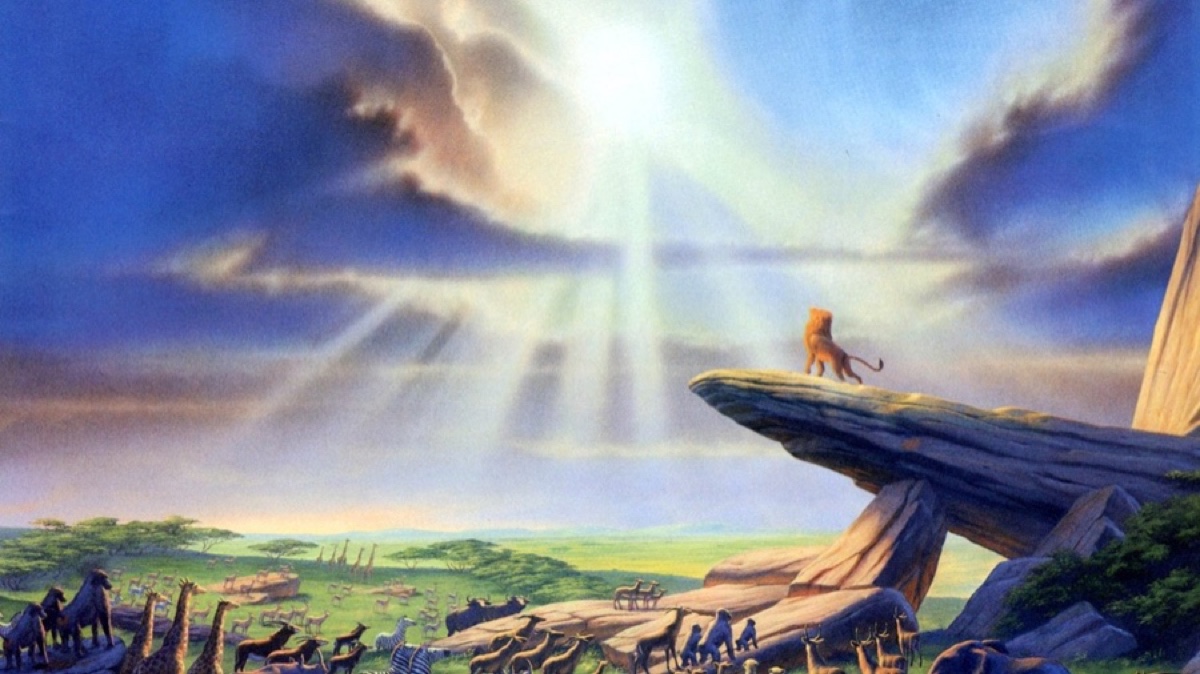
By the end, Simba stands on that same rock with Nala at his side and his friends close by. Put the two shots next to each other and the gap from a king who stood alone to a king held up by the people around him shows itself without a word of dialogue. Is the one on top a boss, or a leader? Because the film is drawn in thick, kid-friendly lines, the point is easy to miss. With adult eyes, you can see the film working on it from start to finish.
Circle of Life, Hakuna Matata, and the road back
The film offers two ways to live. Mufasa’s Circle of Life says all life is connected, so take up your part in it. Timon and Pumbaa’s Hakuna Matata says put the past behind you, no worries. Simba is born into the first, flees into the second after the worst day of his life, and in time walks back to the first.
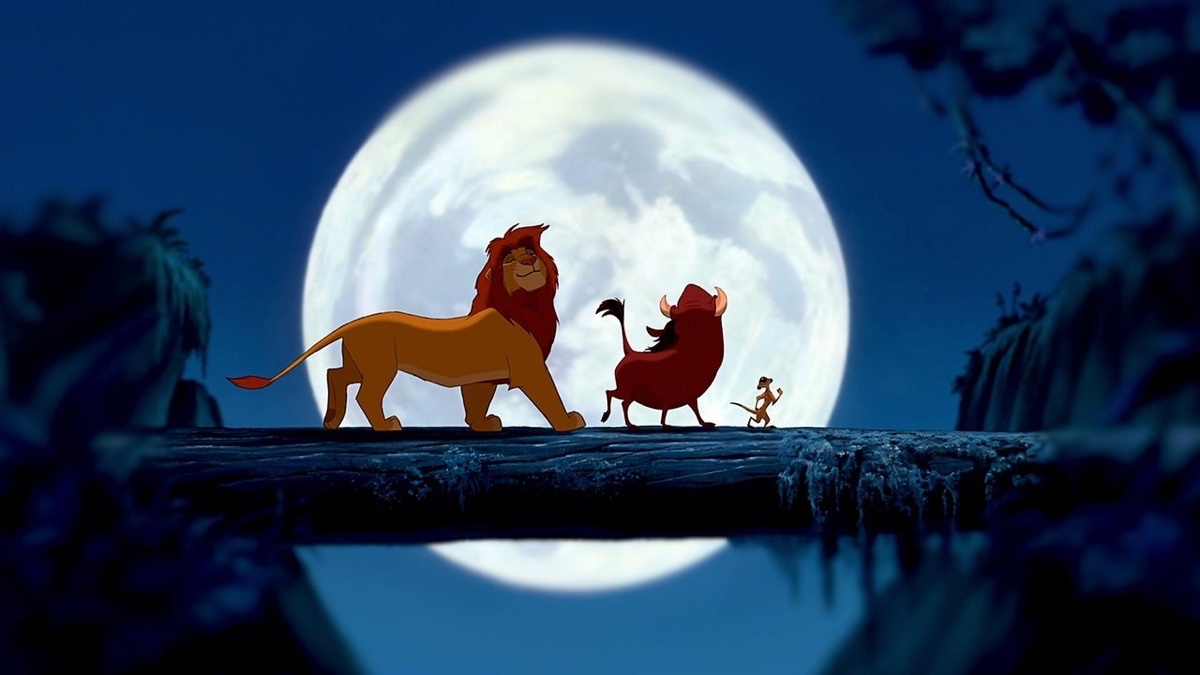
What I admire is that Hakuna Matata is never treated as a villain’s philosophy. As a place for someone who has fallen apart to stop and heal, the song gets a real yes. The film just will not let him stay there forever. In the jungle, Simba’s body grows big and strong while the rest of him slides backward, further from the cub he was at home. Once you notice those two arrows pointing opposite ways, Hakuna Matata stops being only a happy song.
Who is Scar? Born royal, never fit to rule
Scar is Mufasa’s own younger brother, marked by the scar over his left eye and a black mane. He is sharper than his brother and weaker in a fight. Until Simba arrives he is next in line, so his nephew’s birth is the day he stops being heir. What makes him chilling is less the terrible things he does than his belief that being king means being free to do anything at all. It is Mufasa’s lesson turned inside out. A family fight over power, fueled by envy of an older brother, is why people keep reaching for Shakespeare’s Hamlet when they talk about this film, and the filmmakers have said Hamlet was a model. Wrapping a story that raw in musical numbers and comic hyenas, so a child can sit through it, is exactly why it gets under an adult’s skin.
I know this reads as gushing so far. In fairness to the other half of the ledger: everything above is about the film’s images and ideas, and the plot carrying them is a much plainer thing. I will come back to that.
Deeper Themes
What this film keeps circling is less who ends up on the throne than who deserves it. Mufasa is a king by birth who treats the crown as a duty. Scar comes from the same family and wants the throne without the duty. Simba falls off the path in the middle and learns, out in Hakuna Matata country, what becomes of someone who runs from responsibility. Birth hands you the title of prince. It does not make you a king. What does is the will to come back after you have run. Circle of Life is a big phrase, and it reads as a way of saying exactly that in words a child can hold on to.
🎭 Memorable Scenes
Remember who you are.
1. Rafiki holds up the newborn Simba
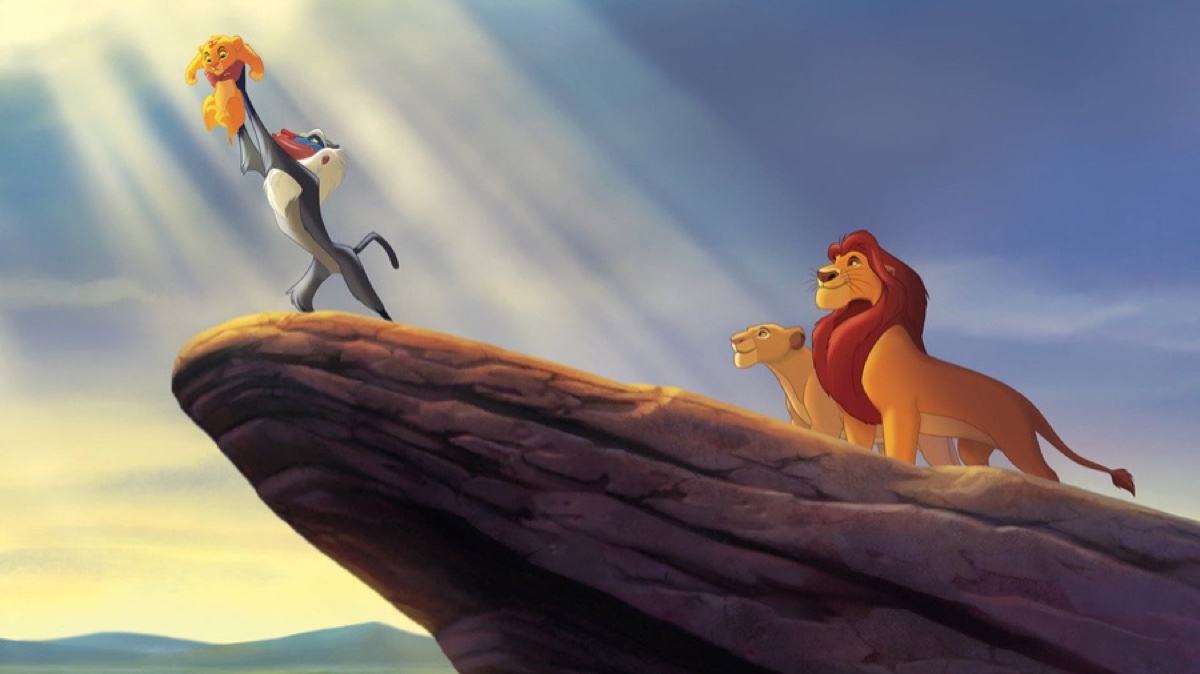
At sunrise, animals from all over the savanna stream toward Pride Rock. Rafiki carries the newborn Simba to the edge and lifts him high, the clouds part, a beam of light finds him, and the animals bow. The film announces “this is the next king” in its first minutes and spends the rest of its runtime making good on it. Come back to this scene after the ending and it reads a little differently.
2. The wildebeest stampede
A gorge fills with wildebeest. The hand-drawn herd pours out of the back of the frame with a rumble you can almost feel through the floor, thousands of animals flowing past in patterns. This is the scene where the film throws everything it has, and it is where the story breaks in two. This is the scene that tends to frighten small children, in Japan as much as anywhere, and I understand why. If you are watching with a small child, this is the one to be ready for.
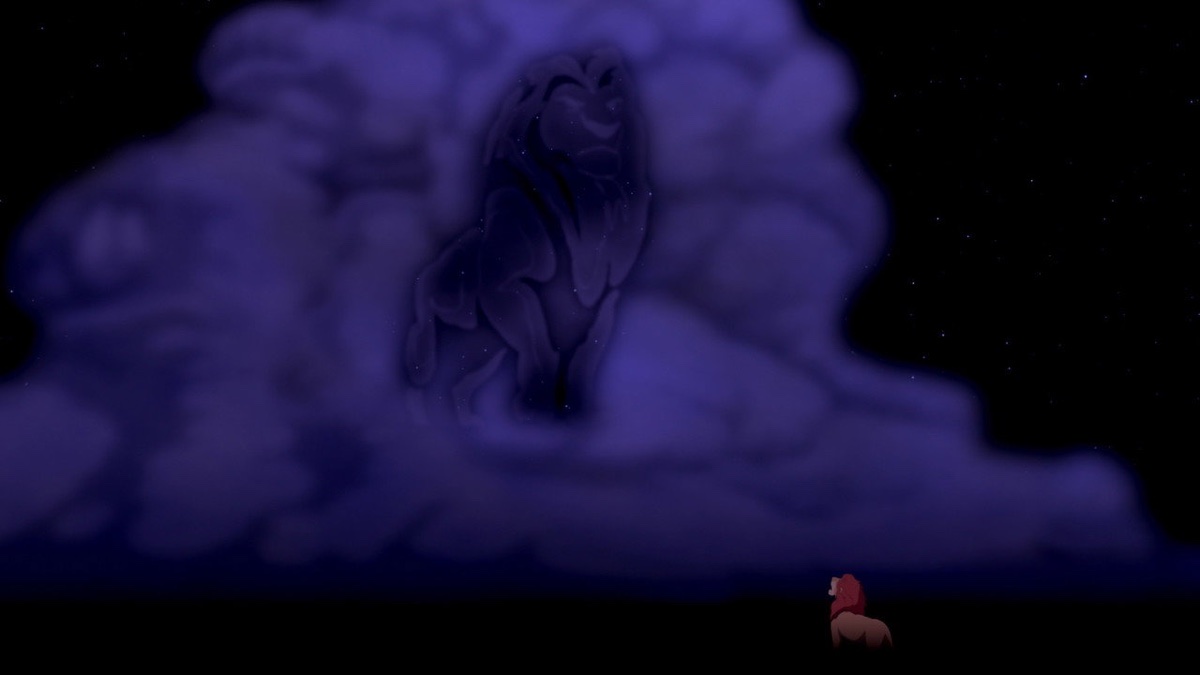
3. Mufasa in the night clouds
Rafiki turns up in the jungle and leads Simba away. Under the night sky, the clouds slowly gather into the shape of a great lion, and he speaks: remember who you are. Not the kingdom story, not the Hakuna Matata story, just a father and his son. The film is never quieter than here.
💭 How It Made Me Feel
What stays with you first is the bounce of Hakuna Matata and the sheer size of that opening song. That is what kids want to watch again, and it is plenty. Adults get something more on top: the two shots on the same rock. If you last saw this as a child, expect that rock to look different now. Am I living up to the title I hold? If you have ever been in charge of anyone, at work or at home, Mufasa’s lines end up aimed at you.
If you want another animated film where animals sing, my pick is Illumination’s Sing, which also puts a father and son near its center. I go into it in the picks at the bottom of this page.
👉 To watch it now, The Lion King is streaming on Disney+ in the US.
Who Should Watch This?
- You saw Mufasa: The Lion King and want to find out where Scar and Mufasa end up
- Families looking for a Disney classic that runs under 90 minutes
- Adults who last saw it as kids. Once you have been the one in charge, Mufasa’s words weigh more
😅 Where It Falls Short
Now the part I owe you after all that praise. Even granting the adult layer, here is why it stops short of a perfect score.
Follow only the plot, and nothing surprises you
A prince is born, his uncle wants the throne, the prince leaves, the prince comes back. The bones of the story are big and simple, and at no point do you doubt he will come back. Pay attention to the framing and the two philosophies and the picture changes, but follow only the plot and it holds very few surprises. It is also a classic almost everyone knows going in, which makes it easy to watch from a distance.
Mufasa and the hyenas bend to fit the plot
Mufasa, supposedly the wisest and strongest animal in the kingdom, barely suspects his own brother. The hyenas are less a threat than Scar’s hands and feet, moving wherever the plot needs them. For a children’s story it is a clear setup, but an adult will snag on it. Part of why Scar’s scheme seems so sharp is that everyone around him is drawn a little dull.
The ending is rushed
Once Simba remembers who he is, the last stretch flies by. Probably to fit inside 88 minutes, the film goes from his decision to go home to the final showdown in one rush, and the feeling it has built does not catch up before it is over. The night-sky scene is so quiet and so good that the next part deserved a few more minutes.
The Downsides
- A simple plot skeleton with few surprises as a story
- Mufasa and the hyenas move conveniently for Scar’s scheme
- The showdown after Simba returns home is rushed
Who Might Not Enjoy This?
- Very young children may find some scenes too much. Watch together, so you can talk them through it
- Anyone after photoreal animals. The 2019 remake is the better fit
- Anyone hoping for a twisty story that keeps you guessing about the villain
❓ Before You Press Play
Is The Lion King a copy of Kimba the White Lion?
This one runs deeper in Japan than most American viewers realize. Osamu Tezuka’s Jungle Emperor (Janguru Taitei) aired in the US as Kimba the White Lion from 1966, and when The Lion King came out in 1994, people on both sides of the Pacific pointed to the overlap: a lion cub who loses his father, a villain lion with hyenas at his side, a talkative bird. In Japan, where Tezuka is a national icon, 488 cartoonists and animators, led by the manga artist Machiko Satonaka, signed a petition asking Disney to give him credit. Disney’s answer has always been that the filmmakers were not working from Kimba; director Roger Allers has said he only became aware of the show when the film was nearly finished.
Tezuka’s own company took it more calmly than the petition did. Takayuki Matsutani, president of Tezuka Productions, said in 1994 that similarities are hard to avoid once you draw animals as characters, and that Tezuka would have been pleased if Disney had taken a hint from his work. Tezuka himself was a lifelong admirer of Disney animation. His company has never taken Disney to court. Jungle Emperor is also a story about animals living alongside humans, while The Lion King does not have a single human in it. Plenty of shared parts, pointed at different ends.
Should you watch it before Mufasa: The Lion King?
Release order is the easier path, so start with this 1994 film. Mufasa: The Lion King (2024) is the prequel, about how the orphaned cub Mufasa met a prince named Taka and rose to become king. It is a story about the bond of two brothers, and knowing what becomes of them later changes how their first meeting reads. If you saw Mufasa first, watch this one next, and young Taka will be sitting under every dry line Scar delivers. Both are on Disney+. Here in Japan, Mufasa gets its first free-to-air broadcast, uncut, on November 6, 2026, in Nippon TV’s weekly movie slot Kinyo Roadshow, so this exact question is being asked in Japanese living rooms right now.
The 1994 film or the 2019 remake?
The 2019 version retells the same story with photoreal CG animals. The plot and songs stay close to the original, and the fur and light are far more realistic. The price is that a photoreal lion cannot stretch its face the way a drawing can. For expressive faces and comedy, take the 1994 film; for visual realism, the 2019 one. With kids, the hand-drawn version is easier to get into, because every feeling is right there on a face. One small thread runs through both, in both languages: James Earl Jones voiced Mufasa in English in 1994 and again in 2019, and in the Japanese dub Shinya Owada did the same.
How does the Japanese dub compare?
Owada’s Mufasa aside, almost every Japanese voice changed from one version to the next. The 1994 dub has Mitsuru Miyamoto as adult Simba and Haruhiko Jo as Scar, and Jo’s acid-soaked Be Prepared (Junbi o Shite Oke) is the highlight of the dub. One difference worth knowing: in English the songs went to separate singers, Jason Weaver for young Simba and Joseph Williams for adult Simba, while in Japanese, Tatsuya Nakazaki (young Simba) and Miyamoto (adult Simba) handle both the dialogue and the singing. The Japanese soundtrack, with Yuji Mitsuya and Atom Kobayashi singing Hakuna Matata, is on Apple Music in the US (linked below). Japanese families also know this story from the stage: Shiki Theatre Company has been performing the musical in Japanese since 1998, and no show in Japanese theater history has played more performances.
📺 Streaming Guide by Service
Netflix and Hulu do not have it. Disney+ holds all three Lion King films
Only one US subscription has it, so the choice makes itself. The 1994 film, the 2019 remake and Mufasa all sit on Disney+, so you can go from Simba’s story to Mufasa’s to the photoreal retelling without switching apps.
If all you want is this one film, renting it digitally from Prime Video or Apple TV is enough. Just know that Prime itself does not include it, so you pay for the film on top.
Where to Stream
- Disney+: Streaming, alongside the 2019 remake and Mufasa: The Lion King
- Amazon Prime Video: rent / buy, not covered by Prime
- Apple TV: rent / buy, also on YouTube, Google Play, Fandango at Home
- Hulu / Netflix: not available in the US
Soundtrack
- Apple Music: available (English, with Elton John’s Can You Feel the Love Tonight)
- Apple Music, Japan release version: available in the US, with the Japanese dub cast singing Hakuna Matata and Be Prepared
📀 On Disc
The Lion King has no novel or manga to collect, so if you want it on a shelf, the disc is the thing. That suits a family that wants Circle of Life on the big TV as often as the kids ask for it, without depending on a subscription.
🎬 If You Loved The Lion King, Watch These 3 Next
Ranking of Kings
A 2021 TV anime based on Sosuke Toka’s manga. Bojji, prince of a great kingdom, is deaf and cannot properly swing a sword, and the people around him laugh that he is not king material. Simba is born with a strong body and still runs from the crown once; Bojji has a weak one and is asked, again and again, whether he deserves it. It is the same question about what makes a king, asked from the opposite side. Its soft, picture-book art also shares something with the warmth of the hand-drawn Lion King. All 23 episodes stream on Crunchyroll in the US.
👉 Read the Ranking of Kings review
Princess Mononoke
Hayao Miyazaki, 1997. Ashitaka, the young prince of a remote village, is cursed while defending his people and has to leave home for good. He ends up caught in a war that pits the gods of a forest against an iron-making town. Simba runs from his kingdom and comes back to rule; Ashitaka leaves his and never gets to go back, and becomes someone worth following anyway. And where The Lion King sings about the circle of life, Mononoke puts it on screen as a god, the Forest Spirit, who gives life and takes it in the same step. In the US, HBO Max carries it.
👉 Read the Princess Mononoke review
Sing
Illumination’s 2016 animated film. Buster Moon, a koala whose theater is going under, holds a singing competition to save it, and animals line up to audition. Animals singing, with the songs pushing the story forward: that pleasure comes straight down from The Lion King, where every number changes the scene. Johnny, a young gorilla, is expected by his father to join the family business while he wants a different life. Next to Simba, who spends the film chasing his father’s shadow, Johnny’s father-and-son story runs the opposite way. In the US, Sing is free with ads on Tubi for now.
📝 Final Thoughts
For kids, The Lion King is a film of pictures and songs; for adults, it is a film about what earns a crown. The expressive hand-drawn faces and the size of Circle of Life leave nothing to complain about as children’s entertainment. Look past them at Scar’s idea of kingship, fed by envy of his brother, and at what Simba has to relearn, and under the thick lines there is a question about how the one on top should behave. The simple plot and the rushed ending keep it off the top shelf. It is still well worth an adult’s 88 minutes.
If you came in through Mufasa, this is the answer key. And keep an eye on the tip of that rock where Mufasa stood alone: who is standing there 88 minutes later, and how. That is where the meaning of king flips.
⭐ The Film at a Glance
| Category | Rating | Note |
|---|---|---|
| Story | ★★★☆☆ | A simple skeleton with few surprises |
| Animation | ★★★★★ | Hand-drawn faces full of expression |
| Music | ★★★★★ | Both music Oscars, earned |
| Characters | ★★★★☆ | Scar carries the film |
| Depth of Themes | ★★★★☆ | A king made by conduct, not birth |
| Family Viewing | ★★★★☆ | Under 90 minutes, one scary stretch |
Usagi’s Recommendation Score
⭐⭐⭐⭐⭐⭐⭐☆☆☆
7.5 / 10
Being born a prince is not enough. The one who comes back is the king.

 streams on Disney+ in the US alongside the 2019 remake and Mufasa. A reviewer i)