*This page contains affiliate links. We may earn a commission if you make a purchase through these links.
For most of its 141 minutes, watching Nobody Knows is a bit of a guilty act, as if you were looking through a gap in a neighbor’s curtains. Four children, one small Tokyo apartment, no adults. Then, somewhere in the second half, you notice the gap works in both directions. Hirokazu Kore-eda built this 2004 film out of a real case from 1988, and Yuya Yagira, who plays the eldest son Akira, won Best Actor at Cannes for it at the age of 14.
I rate it highly, and I also have no wish to sit through it again. Both of those are explained below. First: where Nobody Knows streams in the US right now, then the true story behind it (with a clear spoiler line), the cast, and what kept me from going higher than 7.5.
📺 Where to Watch Nobody Knows (November 2026)
| Service | Status | Notes |
|---|---|---|
| AMC+ | Streaming | Included in the subscription |
| Sundance Now | Streaming | Included in the subscription |
| Philo | Streaming | Part of its on-demand library |
| Kanopy | Streaming | Free with a US library card |
| Prime Video Channels | Add-on | AMC+ channel, billed through Prime |
| Apple TV | Rent / Buy | Digital rental from the Apple TV store |
| Netflix | Not available | Not on US Netflix |
| Hulu | Not available | No listing |
| HBO Max | Not available | No listing |
| Crunchyroll | Not available | Live-action, outside its catalog |
| Japanese services | Japan only | U-NEXT streams it in Japan |
As of November 3, 2026, Nobody Knows streams in the US on AMC+ and Sundance Now, and free on Kanopy if your library takes part. Philo carries it too. Prime Video itself does not include it; the Prime Video listing only plays through the paid AMC+ channel. If you would rather not sign up for anything, Apple TV rents it. It is not on Netflix, Hulu or HBO Max. I checked TMDB’s US listings and JustWatch’s US catalog that day, and they matched. Availability changes, so confirm on the service before you subscribe.
In Japan, the picture is narrower than yours: U-NEXT is the only subscription that streams it, and Prime Video Japan sells it as a rental.
🎬 Trailer
The original Japanese trailer is age-restricted on YouTube, so it cannot be embedded, and I could not find a playable English trailer for the film alone. This one is from the BFI’s official channel, made for its UK release of four Kore-eda films. Nobody Knows is one of the four, along with After Life, which comes up again near the end of this review.
Work Info
- Title: Nobody Knows (Japanese title: Dare mo Shiranai)
- Released: August 7, 2004 (Japan)
- Written, directed and edited by: Hirokazu Kore-eda
- Runtime: 141 minutes
- Music: Gontiti (song: “Hoseki” by Takako Tate)
- Cast: Yuya Yagira, Ayu Kitaura, Hiei Kimura, Momoko Shimizu, Hanae Kan, You
- Language: Japanese (English subtitles on US services)
- Source: TMDB
📖 Synopsis – No Spoilers
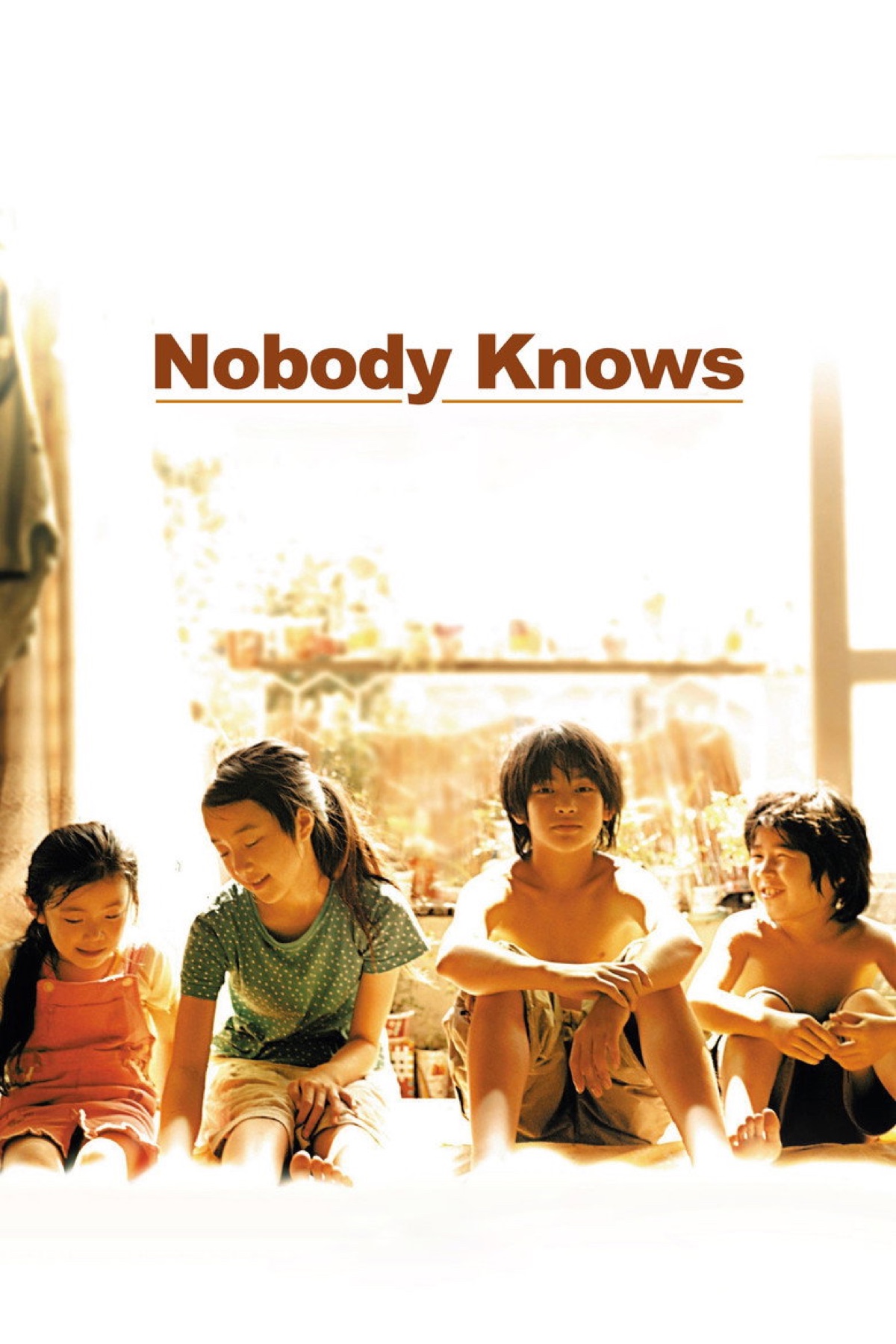
Keiko (You) and her son Akira (Yuya Yagira) move into an apartment in Tokyo. The landlord has been told it is just the two of them. In fact there are four children, and the two youngest are carried in inside suitcases. The kids are told not to go outside and not to make noise. Each of the four has a different father, and none of them goes to school.
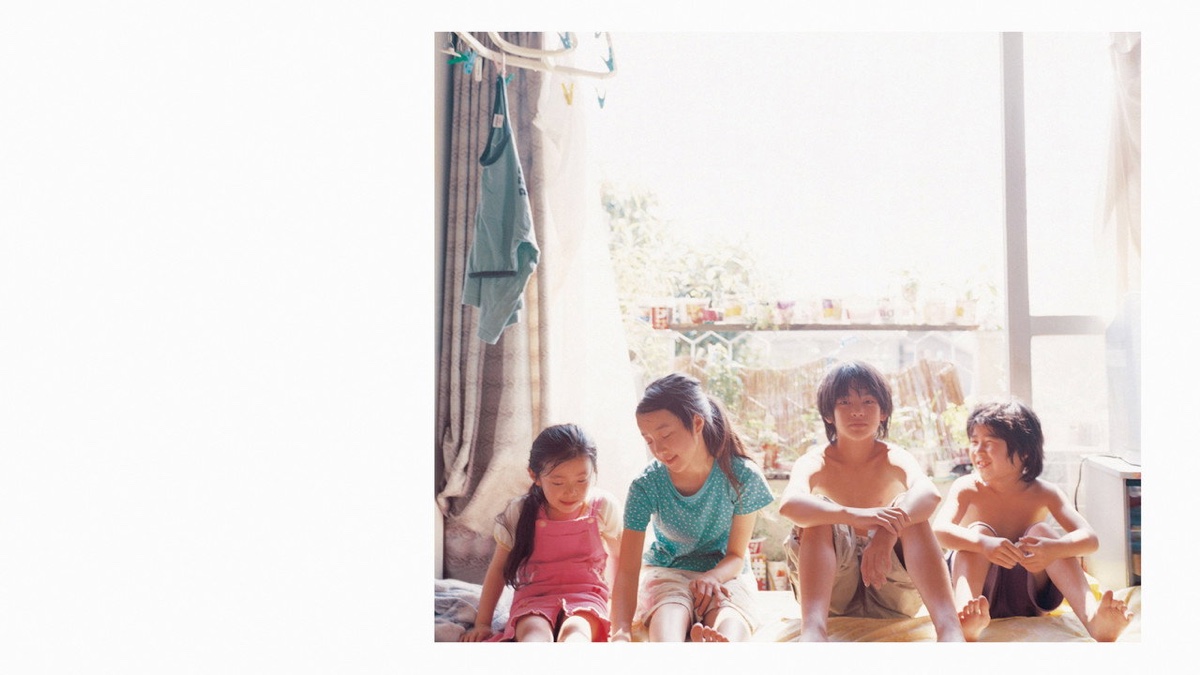
Before long, Keiko starts leaving for stretches at a time, with some cash and a note on the table. Akira looks after his brother and sisters and waits for her to come back. None of the adults outside the apartment notices what is happening inside it.
📰 Is Nobody Knows a True Story? The 1988 Sugamo Case
Yes. The film is based on a case uncovered in July 1988 in Nishi-Sugamo, in Tokyo’s Toshima ward, known in Japan to this day as the Sugamo child abandonment case. The mother had moved out to live with a boyfriend, and her eldest son was left to look after his younger siblings. None of the children’s births had been registered, according to reports at the time, and the eldest boy had never been enrolled in elementary school.
Spoiler line. The next paragraph touches on how the real case ended. It does not describe the film’s ending, but knowing the case makes the film’s second half easy to guess. If you have not seen it, you may want to come back afterward.
In the real case, young children in the family died, and the mother was convicted of abandoning children in her care and given a suspended sentence. What actually happened was far harsher than the film.
The film does not retell the case step by step. Names are changed, so are the details of daily life, and there is no reenactment of the case itself. What Kore-eda filmed is the time the four children spent inside that room, rather than how the story came out. Akira is written as a boy who cares deeply about his siblings.
The children in the real case went on to live as private people. This review does not go into what happened to them afterward.
🎭 Nobody Knows Cast: Yuya Yagira at 14, You, and Four Siblings
- Akira Fukushima: Yuya Yagira
- Kyoko Fukushima: Ayu Kitaura
- Shigeru Fukushima: Hiei Kimura
- Yuki Fukushima: Momoko Shimizu
- Keiko Fukushima, the children’s mother: You
- Saki Mizuguchi, a girl who befriends Akira: Hanae Kan
- Also appearing: Ryo Kase, Susumu Terajima, Kenichi Endo, Takako Tate
Yuya Yagira won Best Actor at the 57th Cannes Film Festival for this role. He was the youngest winner in the history of the award, and the first Japanese actor to receive it. The jury was headed by Quentin Tarantino, and Yagira was 14. If you have watched the horror series Gannibal on Hulu, he is the police officer at its center, nearly two decades later.
You, who plays the mother, is someone most Japanese viewers know first as a TV personality, and that easy, chatty warmth is exactly what makes Keiko so unsettling. She won Best Supporting Actress at Japan’s Kinema Junpo awards for the role, and the same poll named Nobody Knows the best Japanese film of the year.
✨ What Makes It Special
Why It’s Exceptional
- Four child actors filmed without a script, with no trace of performing
- A household falling apart, told almost entirely through the room
- No villain, so the question lands on the audience
- Yuya Yagira at 14, saying more with his eyes than with lines
The children never seem to be acting
Most films with child leads have a faint smell of rehearsal somewhere. A line delivered a beat too neatly, a reaction that waits for its cue. Nobody Knows has none of it. Kore-eda shot the children without handing them a script, and it shows: when the four of them squabble, laugh or go quiet, none of it sounds scripted by anyone. You never catch the moment where a memorized line arrives on schedule. They are simply living in the film.
Because they are not performing for the camera, the viewer ends up in an odd spot. You are not being shown something. You feel as if you are watching something you were not meant to see, and that sense of peeking in stayed with me the whole way through.
From that spot, you watch the household come apart a little at a time. Most of the film stays in one apartment, and what changes is the stuff in it. The floor gets messier. Clothes wear thin. What is on the table gets poorer. The gas, the electricity and the water are cut off, and the children start fetching water from a park. Almost nobody explains any of this out loud, and you understand all of it from the room.
If this family lived next door, would you help?
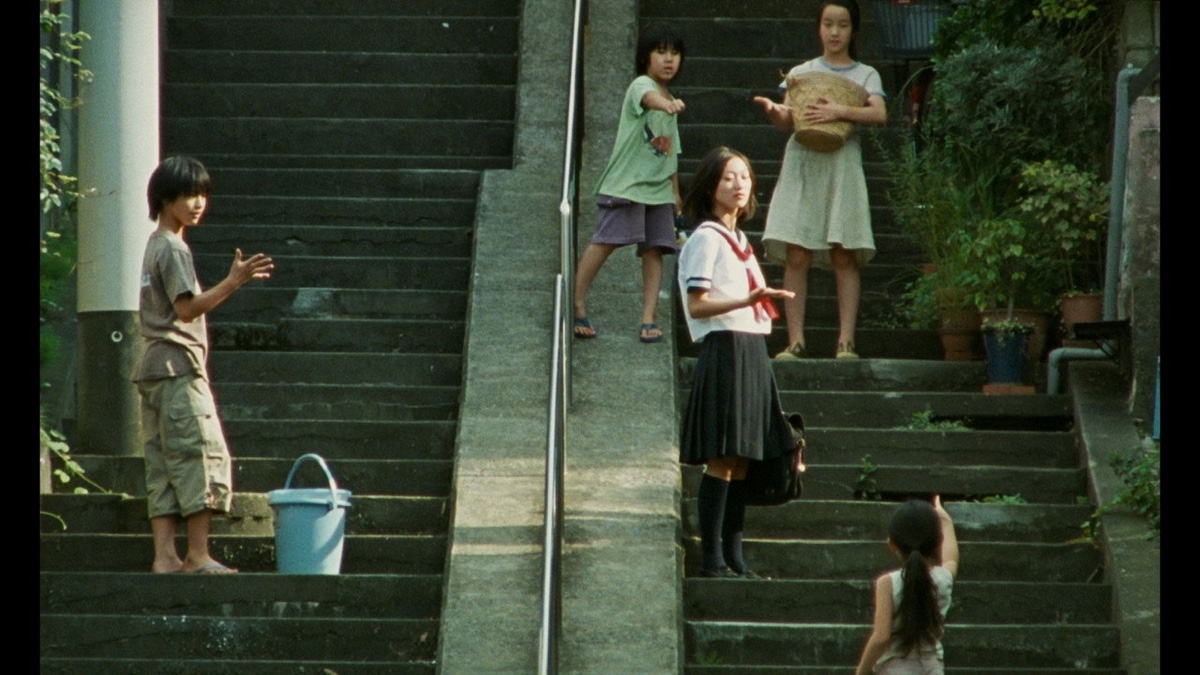
The landlord, the convenience store clerks, the kids Akira gets to know. Plenty of people in this film are close enough to notice that something is wrong. Nobody does anything decisive, and no adult is painted as a villain.
In most films, a setup of this kind would make me pull back a little and think, surely someone would have noticed. Here, the moment that thought arrives, the film turns it around. If this family lived next door, would you help them? Would you knock on their door, tell someone, or decide it was none of your business? I’ll be honest about my own reaction: I felt seen through, as if the film had already guessed that I would hedge. Films that put a question to the audience this directly are rare, and this one does it without a single speech.
Yuya Yagira says it with his eyes
Yagira’s presence is overwhelming. Akira barely puts his feelings into words. With his siblings he wears the face of the big brother; with adults he goes silent and just looks at them. Everything he cannot say collects in his eyes.

Once it is clear his mother is not coming back, he shifts back and forth from a kid who wants to play to a kid carrying a whole household. The changes in his face are small, and you still cannot look away. After watching, the Cannes jury’s decision makes complete sense.
Deeper Themes
In Japan, a birth that is never reported never makes it into the koseki, the family register, and a child outside it does not exist on paper. No school sends a letter. No one comes looking. The four children are plainly there in that apartment, and as far as the system is concerned they are not. Because the film refuses to make the mother the single villain, there is no one person to blame. Her carelessness, the adults who do not notice, a system that never counted these children: each of them does a little of the work of making the four invisible.
🎭 Memorable Scenes
The move-in. The suitcases are carried into the new apartment, opened, and a small child climbs out. It passes as an ordinary moving-day scene, early in the film. Those few minutes tell you everything about the state of this family.
The promise. After leaving with money and a note, Keiko comes back once, promises the children she will be home for Christmas, and leaves again. They believe her and wait. She says it so lightly that only the audience gets nervous.
The phone call. Akira calls his mother, and she answers with a family name he has never heard. That one word tells him she has already started another life. He puts the receiver down without saying anything, and in that silence you understand the old life of this home is not coming back.
Are only the grown-ups alive?
The film’s Japanese tagline (my translation)
💭 How It Made Me Feel
Before you watch, the title reads as a plain fact: nobody knows these four children exist. By the end, it had turned into a question for me. Did nobody really know? Or did nobody want to know?
Then I read it once more from the children’s side. The time the four of them spent laughing in that cramped room, and the small things they treasured there, are also things nobody outside knows. The title is a question aimed at the adults who did not know, and at the same time a record of the children’s time that nobody saw. I sat down to peek at someone else’s life and came away being the one asked.
Who Should Watch This?
- Anyone who came to Kore-eda through Shoplifters or Monster and wants to go back to where that started (my strongest recommendation)
- Parents who are ready for something painful
- Viewers who care about neglect, children outside the system, and neighbors who look away
😅 Where It Falls Short
I’ve been praising this film for a while. But here’s where I have to be honest about why it is not a 9 or a 10 for me.
I don’t want to watch it again
Ask me whether I want to watch Nobody Knows again, and the answer is no. What stays with you afterward is mostly the pain of watching these children get cornered, and that weighs more than anything else in the film.
That is less a flaw than a matter of my own taste. For someone who wants to face a heavy subject head-on, that pain is the reason to watch it at all.
141 minutes without big turns
This is not a film where events push the plot forward. The four children’s days just keep going, one after another, often under Gontiti’s light acoustic guitar. If you need a story to pull you along, it will feel long.
Who Might Not Enjoy This?
- Viewers looking for a film that leaves them feeling better
- Anyone who finds it hard to watch small children suffer
- Viewers who want a plot that keeps moving
📺 Streaming Guide by Service
The Available Routes
- AMC+: streaming, also sold as a channel inside Prime Video and Apple TV
- Sundance Now: streaming
- Kanopy: free with a participating US library card
- Philo: in its on-demand library
- Apple TV: digital rental and purchase
- Netflix, Hulu, HBO Max, Crunchyroll (US): not available
If you have a library card, check Kanopy first; it costs nothing. If you are going to pay for one month of something, AMC+ is the more useful pick, since it is the service with the most ways in (on its own, through Prime Video, through Apple TV). For a copy on the shelf, Amazon lists DVD and Blu-ray editions of Nobody Knows; check the region code before you buy.
Soundtrack
The score is by Gontiti, a Japanese acoustic guitar duo whose gentle sound sits strangely, and effectively, against what is happening on screen. The song “Hoseki” is by singer-songwriter Takako Tate, who also appears in the film as a convenience store clerk. The soundtrack EP is on Apple Music in the US.
🎬 If You Loved Nobody Knows, Watch These 3 Next
One film that shows where Kore-eda’s way of working began, one that turns the same mother-and-child story around, and one that goes to the darkest version of a world without adults.
After Life (1998)
Kore-eda’s earlier film. The newly dead arrive at a way station before heaven, where each of them has to pick a single memory to keep. The staff restage that memory on film, and the person leaves with it. Many of the people in it were given only a rough situation and spoke for themselves. This is where the method behind the unscripted children of Nobody Knows begins. The clip above is from the BFI’s official channel. In the US it is a digital rental on Amazon and Apple TV.
Changeling (2008)
If Nobody Knows is about a mother who leaves her children, Clint Eastwood’s film is about a mother who refuses to stop looking for hers. In 1928 Los Angeles, her son goes missing, and the police bring back a different boy and tell her he has been found. Angelina Jolie’s character will not accept it. Both films come from real events. Put them side by side and Keiko’s lightness feels even heavier. In the US it is a digital rental on Amazon and Apple TV.
All About Lily Chou-Chou (2001)
Shunji Iwai’s film about junior high students whose friendships turn cruel, built up without explanations. The fear of a children’s world that keeps running where no adult is watching lives in the same place as the apartment in Nobody Knows. The cruelty here is far more visible, so go in prepared. There is no embed here because its only English trailer is age-restricted on YouTube. This one is easier to get in the US than back home: it is free with a library card on Kanopy, and free with ads on Tubi.
👉 Read my All About Lily Chou-Chou review
👉 More films drawn from real Japanese cases are in Japanese movies based on true stories, and if it is the family side of this film that stays with you, see the 10 best Japanese movies about family.
❓ Nobody Knows (2004) FAQ
Is Nobody Knows based on a true story?
Yes. It draws on a child abandonment case uncovered in Sugamo, Tokyo, in 1988. The film changes the names and many details and does not reenact the case.
Is Nobody Knows on Netflix?
No. US Netflix does not carry it. When I checked on November 3, 2026, the subscription options were AMC+ and Sundance Now, with Kanopy free for library card holders.
How old was Yuya Yagira when he won at Cannes?
He was 14. He was the youngest Best Actor winner in the festival’s history, and the first Japanese actor to win it.
📝 Final Thoughts
Nobody Knows carries the weight of a true story not by restaging the case, but through the texture of four children’s days in one room. Because of the unscripted kids and Yuya Yagira’s eyes, the viewer who sat down to look in from outside ends up on the receiving end of the question.
If you watch it, pick a day when you have time and some room in your heart. The film is not finished when the credits roll; it includes the time afterward when you ask yourself what you would have done.
⭐ Film at a Glance
| Category | Rating |
|---|---|
| Story | ★★★★☆ |
| Acting | ★★★★★ |
| Visuals & Direction | ★★★★☆ |
| Music | ★★★★☆ |
| Accessibility for newcomers | ★★☆☆☆ |
Usagi’s Recommendation Score
⭐⭐⭐⭐⭐⭐⭐☆☆☆
7.5 / 10
I thought I was the one looking in. The film was looking back at me.

