*This page contains affiliate links. We may earn a commission if you make a purchase through these links.
Slower. That is the first thing to know about Season 2 of That Time I Got Reincarnated as a Slime. Politics and meetings take up far more of the runtime, and the brisk, everything-falls-into-place rhythm of Season 1 is deliberately held back. Even so, if you enjoyed Season 1, I want you to watch this. Building a nation and protecting the people inside it: the two ideas at the heart of TenSura are still here, and the season never lets go of them.
My own bias, stated up front: I don’t mind the meetings. The story refuses to settle things by convenience, and the characters argue a decision through until they are actually persuaded before anyone moves. I think that is a fair way to run a plot. The pace does slow, though, and that is exactly where viewers split. Parts 1 and 2 add up to 24 episodes, and between them they cover the birth of a Demon Lord and the moment Tempest takes its finished shape as a nation.
📺 Where to Watch That Time I Got Reincarnated as a Slime Season 2 (September 2026)
| Service | Status | Notes |
|---|---|---|
| Crunchyroll | Streaming | Part 1 plus Part 2, subtitled or dubbed |
| Amazon Prime Video | Add-on | Needs the paid Crunchyroll channel on top of Prime |
| Apple TV | Rent / Buy | Purchase only, no subscription tier |
| Hulu | Not available | Carried from April 2025, no longer in current US listings |
| Netflix | Not available | Season 2 is not in the US catalogue |
| HBO Max | Not available | No US licence |
As of September 25, 2026, Season 2 sits inside a regular US subscription on exactly one service: Crunchyroll, with both parts available in Japanese with subtitles or in the English dub. Prime members can reach the same episodes through the Crunchyroll channel on Amazon, which is a separate monthly charge. Hulu picked the season up in April 2025, but it has dropped out of the current US listings, so do not count on it without checking the app first. Licences move without much warning; confirm on the service itself before you pay for anything.
Season 2 takes place inside the city that Rimuru and his friends built in Season 1. If you want to remember how that city grew out of an empty forest, start with our Season 1 review.
🎬 Trailer
Work Info
- Title: That Time I Got Reincarnated as a Slime Season 2 (Tensei Shitara Slime Datta Ken, 2nd Season)
- Broadcast in Japan: Part 1 from January 12 to March 30, 2021 / Part 2 from July 6 to September 21, 2021
- Episodes: 24 (episodes 25 to 48 in the series count) plus 2 specials
- Director: Atsushi Nakayama / Series Composition: Kazuyuki Fudeyasu
- Original Work: Fuse (light novel) / Manga: Taiki Kawakami / Original Character Design: Mitz Vah
- Animation Production: 8bit
📖 Synopsis – No Spoilers
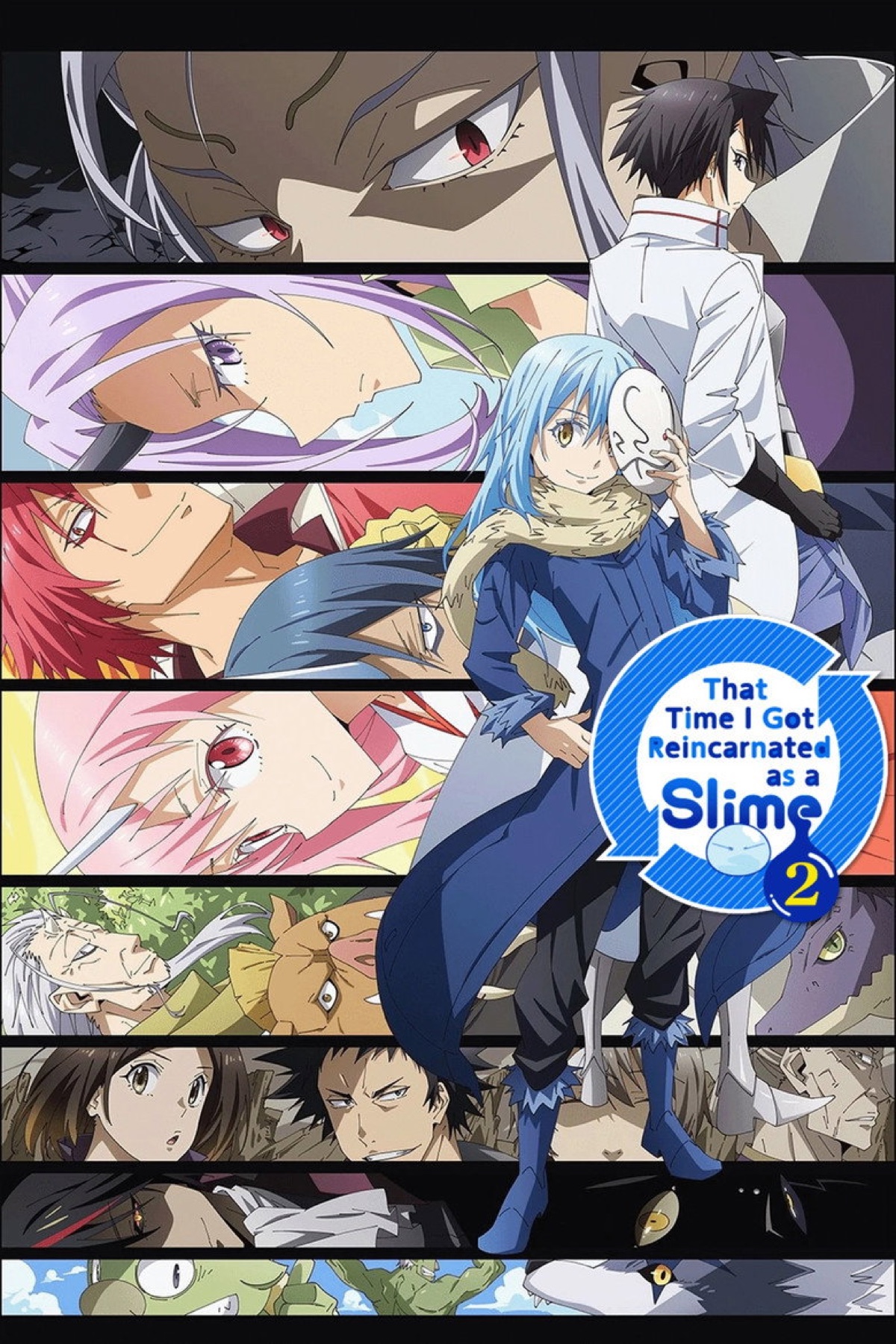
Satoru Mikami, the office worker who was reborn as a slime and now goes by Rimuru, rules the Jura Tempest Federation, a nation of monsters. It trades with the dwarf kingdom and with human countries, and it is growing quickly. Not everyone is pleased about that. There are humans who cannot stomach the idea of a monster nation getting rich.
While Rimuru is away from home, the neighbouring Kingdom of Falmuth and the Western Holy Church, which refuses to accept that monsters have any right to exist, make their move. Part 1 follows the peace built across Season 1 as it comes apart, up to the point where Rimuru decides to become a Demon Lord. Part 2 turns to Clayman, the Demon Lord who had been pulling strings behind all of it, and carries the confrontation into a gathering where the other Demon Lords are watching too.
📅 Part 1, Part 2, and What to Watch After
Season 2 aired in two halves. Part 1 is episodes 25 to 36 (January to March 2021), and Part 2 is episodes 37 to 48 (July to September 2021); the numbering carries straight on from Season 1. There are also two specials. Episode 24.9, “Digression: Hinata Sakaguchi,” aired just before Part 1, and episode 36.5, “Tales: Veldora’s Journal 2,” is a recap that sits between the two parts.
One point of confusion is worth clearing up. In Japan, a surprising number of viewers take Part 2 for Season 3. It is not. Season 3 is a separate season that started in April 2024.
After Season 2, the order runs: Season 2 → the film Scarlet Bond (Japan, November 2022) → Season 3 (2024) → the film Tears of the Azure Sea (Japan, February 2026) → Season 4 (from April 2026). Both films are original stories written by Fuse, the author of the novels. Scarlet Bond fits after Season 2, and Tears of the Azure Sea bridges Seasons 3 and 4. You can skip straight from Season 2 to Season 3 and follow the story fine, but if you want to watch in order, put Scarlet Bond in between.
✨ What Makes It Special
Why It’s Exceptional
- The town and the friends Season 1 spent a whole season building become the source of Season 2’s tension
- The decision to become a Demon Lord comes with both a procedure and a price
- A village story grows into a story about nations, religion and the pecking order of Demon Lords
- The cast is huge, yet you never lose track of who is who
The Town You Watched Being Built Becomes the Hostage
Season 1 had almost no moments that made you nervous. Rimuru names the goblins, takes in dwarf craftsmen, lays roads, puts up houses. Allies arrive, the town grows, and simply watching it happen was the pleasure. Part 1 of Season 2 takes that entire accumulation and holds it hostage.
What makes this work is that none of Season 1’s lazy afternoons turn out to be wasted. Gobta gets dragged into a duel against Gabiru; the ogres who received names settle into village life. You laughed through that everyday life, and because you know it, you tense up the moment something hostile starts closing in on the town. Anyone who skipped Season 1 and started here would not feel that weight in the same way. The tension of Season 2 is paid for out of the savings Season 1 put away over a full season.
The villains are also drawn with a certain nastiness. The King of Falmuth and the people of the Western Holy Church are written as so unpleasant that negotiation never looks possible. By the time Rimuru strikes back, the audience has already moved over to his side. That is why the counterattack reads as taking something back, and not as one more display of an overpowered hero.
Becoming a Demon Lord Comes with a Procedure
You know Rimuru will win before you press play. That is what TenSura is. The back half of Part 1 is gripping anyway, because the win comes with a method. What is missing, what it would take to fill the gap, and what happens once he has it: the logic of becoming a Demon Lord is laid down one piece at a time, and there is real enjoyment in following the steps.
Here is the part I can’t gloss over. What he does is heavy. As if drawing a line under his own softness up to this point, Rimuru chooses, of his own will, to become the one who takes a very large number of human lives. Whether you can accept that as resolve changes how the whole season looks to you. For me, the face Rimuru wears once he has decided to cross that line for his friends carries a menace Season 1 never had.
The Overpowered Wins Are Set Up in Meetings
The scale jumps. Season 1 was village-building in a forest; Season 2 reaches trade with neighbouring countries, religious conflict and the balance of power among Demon Lords. Part 2 especially is full of meetings, before the war and after it. Watch them as preparation for winning and they make sense: TenSura’s easy victories rest on choosing the opponent and the conditions first, and the meeting room is where those conditions get built. The large cast stays readable because everyone has a clear post (general, strategist, craftsman), so each seat at the table works as a character introduction.
Deeper Themes
What Season 2 is really asking is how far violence in defence of your own can be excused. Every person Rimuru strikes down has been built to be hard to sympathise with, so the payback plays as satisfying. Step back, though, and the scale of what he does is staggering. From the human side, this is the moment a Demon Lord was born inside a monster nation, and the season never fully erases that discomfort. From the monsters’ point of view it is justice; from the humans’ it is terrifying, and both readings share the same frame. In Japan, stories that grew out of the Shosetsuka ni Naro web-novel site get filed under the label narou-kei, usually as shorthand for easy wish fulfilment. This is the season where TenSura pushes a little past the edge of that label.
🎭 Memorable Scenes
The episode where Tempest is attacked. With Rimuru away, the town is invaded, and the monsters find their power sealed so they cannot fight properly. The square and the streets you saw again and again in Season 1 are trampled in the very same compositions. How much is lost here is something you should find out from the episode itself. It is the coldest stretch of the entire season.
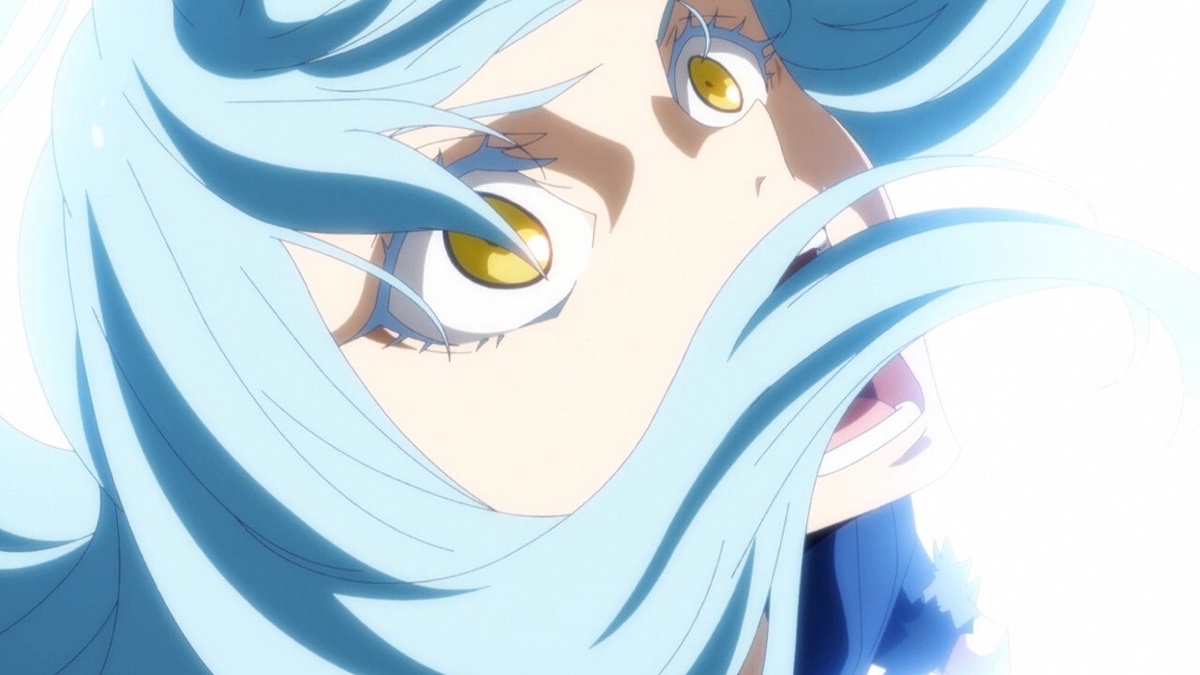
Rimuru’s evolution into a Demon Lord. The Japanese introduction to the season’s second promotional video puts this one line at the very top:
“I’ve decided to become a Demon Lord.”
The tone stays casual and the action is brutal. Once the evolution ritual, the Harvest Festival, begins, his skill Great Sage turns into Raphael, and Rimuru is no longer the slime of Season 1. Exhilaration and pain come out of the same scene at the same time. Whether you watch it as a counterattack or as the protagonist taking human lives decides what you take from it.
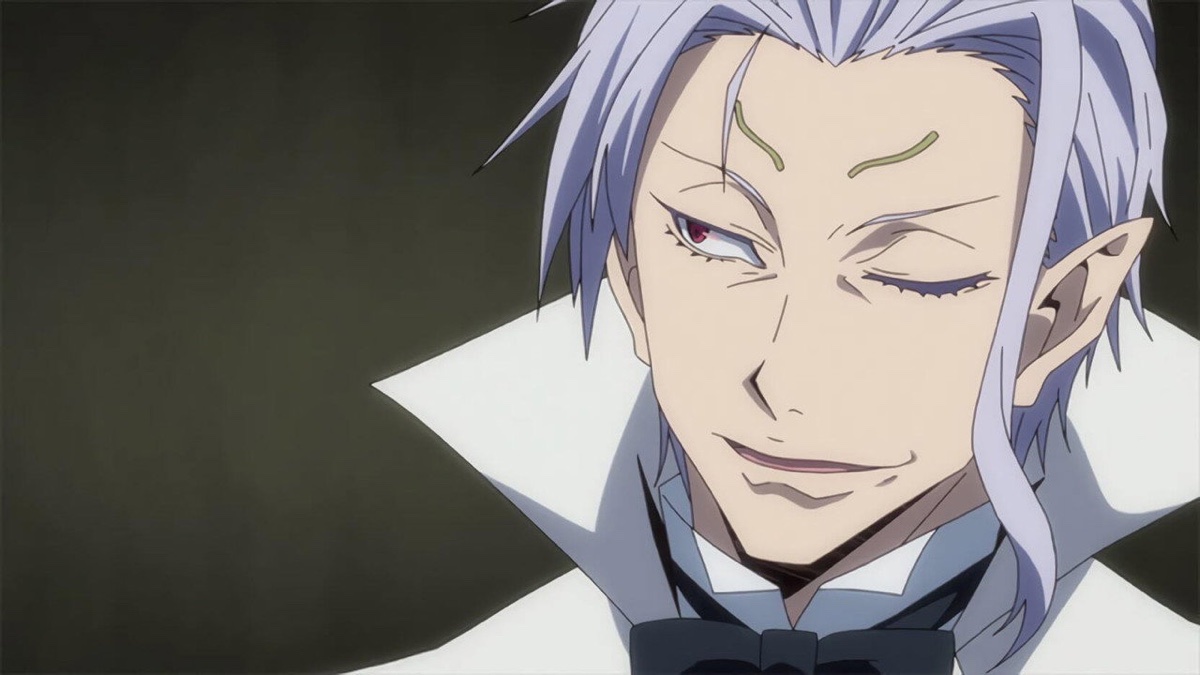
Part 2’s Walpurgis, the banquet of the Demon Lords. All ten Demon Lords gather in one place, and this is where Rimuru faces Clayman. Milim’s behaviour hides a trick, and Shion gets her own moment in the spotlight. Council, farce and a contest of strength all happen at the same table, which makes it the peak of Part 2. After the showdown, Rimuru is put on the spot to come up with a name for the new group of Demon Lords, and he lands on Octagram. That closing beat is pure TenSura.
💭 How It Made Me Feel
The first time I finished Season 2, I caught myself wondering whether Season 3 would have anything left to say. By the end of this season the Jura Tempest Federation is essentially complete. Rimuru is a Demon Lord, the other Demon Lords have acknowledged him, and the big threats to the nation have been pushed back for now. The story of building a country, running since Season 1, reaches a full stop here.
In practice, the story keeps going through Season 3 and beyond. There are still formidable opponents outside the borders, and the meetings carry on exactly as before. Season 2 turned out to be a chapter break, not a finale.
😅 Where It Falls Short
I have been defending this season for a while now, so here is the other side, stated plainly. Among Japanese fans, one blunt verdict trails it around: 2-ki wa tsumaranai, “Season 2 is boring.” If you press play expecting Season 1’s mood, you will probably be thrown. The complaints mostly come down to three things.
While the Meetings Run, the Story Stands Still
I praised the meetings above, but the loss of pace is real. The first half of Part 2 spends several episodes on war preparations and discussion. You learn exactly what each person is thinking, yet if you came for Season 1’s speed, you spend a long time waiting in front of the screen. For anyone who cannot get interested in what is being discussed, this is the hardest stretch. The back half moves fast, so Part 2 comes down to whether you make it through the first half.
The Main Cast Can No Longer Die
In Season 2, Rimuru crosses a certain line. I won’t say what he does, but when I saw it, my thought was: once he can do this, none of the main characters are ever going to die again. This is the season where TenSura settled into being an ore TUEEE story, Japanese web-novel slang (roughly, “man, I’m strong”) for a series where the hero simply outclasses everyone.
It is reassuring to watch, and the tension thins out noticeably. The battles in Part 2 have visible outcomes from the first blow, and the allies have grown so strong that the whole team starts to read as monsters on Rimuru’s level. Something else fades too: the pleasure of watching a defeated enemy join the party. In Season 1 the orcs came over with Geld and the lizardmen with Gabiru, while most of Season 2’s enemies are simply beaten and leave the stage.
Part 1 Starts Heavy and Ends Abruptly
The opening of Part 1 is mostly carry-over from the end of Season 1: trade and diplomacy, with a while to go before anything unique to this season happens. Then, right at the peak, Part 1 stops. In Japan, viewers had to wait more than three months for Part 2. On streaming you can go straight on, so that part no longer matters.
The Weak Spots
- The first half of Part 2 is meeting after meeting, and the pace sags
- Main characters stop dying, so the fights lose their tension
- Part 1 is slow to get going and is cut off mid-climax
Who Should Watch This?
- Anyone who finished Season 1 and got lost among Part 1, Part 2 and Season 3
- Fans of a long, slow build that ends in one big, decisive payback
- Viewers who get more excited by diplomacy and council scenes than by the fights
Who Might Not Enjoy This?
- Viewers who loved Season 1 purely for its brisk pace
- Viewers who need the main cast’s lives on the line to feel any suspense
- Viewers who cannot accept a protagonist taking a huge number of lives
📺 Streaming Guide by Service
Which Service Should You Use?
For US viewers the choice is simple. Crunchyroll has both parts, subtitled or dubbed, as part of the regular plan. If you already pay for Prime, the Crunchyroll channel on Amazon gets you the same episodes for an extra monthly fee, and Apple TV sells them if you would rather own them. At roughly 24 minutes an episode, the 24 episodes of Season 2 run about ten hours, so a steady four or five a day gets you through in under a week. If you plan to continue into the films and Seasons 3 and 4, check how much of the franchise your service actually carries before you sign up; the films in particular are not always part of a subscription.
Where to Start Watching
- Crunchyroll: Streaming (Part 1 plus Part 2, sub or dub)
- Amazon Prime Video: Add-on via the paid Crunchyroll channel
- Apple TV: Buy only
- Hulu, Netflix, HBO Max: Not available in the US
Soundtrack
- Part 1 opening: “Storyteller” by TRUE / ending: “STORYSEEKER” by STEREO DIVE FOUNDATION
- Part 2 opening: “Like Flames” by MindaRyn / ending: “Reincarnate” by Takuma Terashima, the voice of Benimaru
- Score: Hitoshi Fujima (Elements Garden). The soundtrack album is on the major music streaming services
📚 The Source Novels
The original is Fuse’s light novel series, published in English by Yen Press. In Japan it finished with its 23rd main volume on November 29, 2025. Together with Season 1, this season covers roughly the first six volumes, so That Time I Got Reincarnated as a Slime, Vol. 7 (light novel) is the natural place to pick up the story where the anime leaves it.
Taiki Kawakami’s manga adaptation, published in English by Kodansha, is still running. It gives the meetings more room than the anime can, and it spends longer on the characters whose backstories the adaptation had to trim.
🎬 If You Loved Slime Season 2, Watch These 3 Next
Mushoku Tensei: Jobless Reincarnation Season 1
Another isekai, with the weight of a life set at the opposite extreme. In Slime Season 2, Rimuru’s side stops losing. Rudeus, the hero of Mushoku Tensei, gets no such guarantee. He has magical talent, but a single mistake cannot be undone, and one event is enough to scatter his family. The more the thin tension of Slime Season 2 bothered you, the more clearly you will feel the difference here.
👉 Read our Mushoku Tensei Season 1 review
Game of Thrones
Statecraft between kingdoms, councils over who gets the throne, betrayal. Everything that made Part 2 exciting, pushed to its limit in a live-action epic. The direction is reversed, though: here the major characters are removed without mercy, and the outcome of a council meeting leads straight to somebody’s death. If you want to see the other side of Slime’s nobody-dies safety net, there is no better choice. In the US it streams on HBO Max.
Overlord
Another isekai whose protagonist stands on the monster side, opposed to the human nations. The difference is that Ainz has no hesitation. When Rimuru takes human lives, there is a reason (protecting his friends) and a visible reluctance about crossing the line. Ainz has neither. Two protagonists who turn humanity into an enemy, and the whole impression changes on whether the act costs them any resolve. Straight after Slime Season 2, the contrast is even sharper.
📝 Final Thoughts
If someone asks me whether Slime Season 2 is bad, my answer is no. What made Season 1 good is still here. What splits people is how much politics and council talk they are willing to sit through, and the pace really does slow. I said at the start that the meetings don’t bother me, and that is still true. They are also the price of the story refusing to cheat.
If you liked Season 1, judge this one with your own eyes. Watch through to the back half of Part 1 and you will know what kind of season it is. If Season 1 made you care about Rimuru’s country, seeing how that country is defended and how it takes its final shape is worth your time. And if you want more after that, Scarlet Bond and Season 3 are waiting.
⭐ Series at a Glance
| Category | Rating | Comment |
|---|---|---|
| Story | ★★★★☆ | Two big milestones: a Demon Lord is born, and the Clayman showdown |
| Pacing | ★★☆☆☆ | More meetings, more diplomacy, slower than Season 1 |
| Characters | ★★★★☆ | A huge cast, each with a clear role |
| Tension | ★★☆☆☆ | Part 1 is taut, Part 2 is decided early |
| World-Building | ★★★★★ | Nations, religion, the Demon Lord hierarchy, all at once |
Usagi’s Recommendation Score
⭐⭐⭐⭐⭐⭐⭐☆☆☆
7.0 / 10
Slower, but still a story about a nation and the friends who built it

