*This page contains affiliate links. We may earn a commission if you make a purchase through these links.
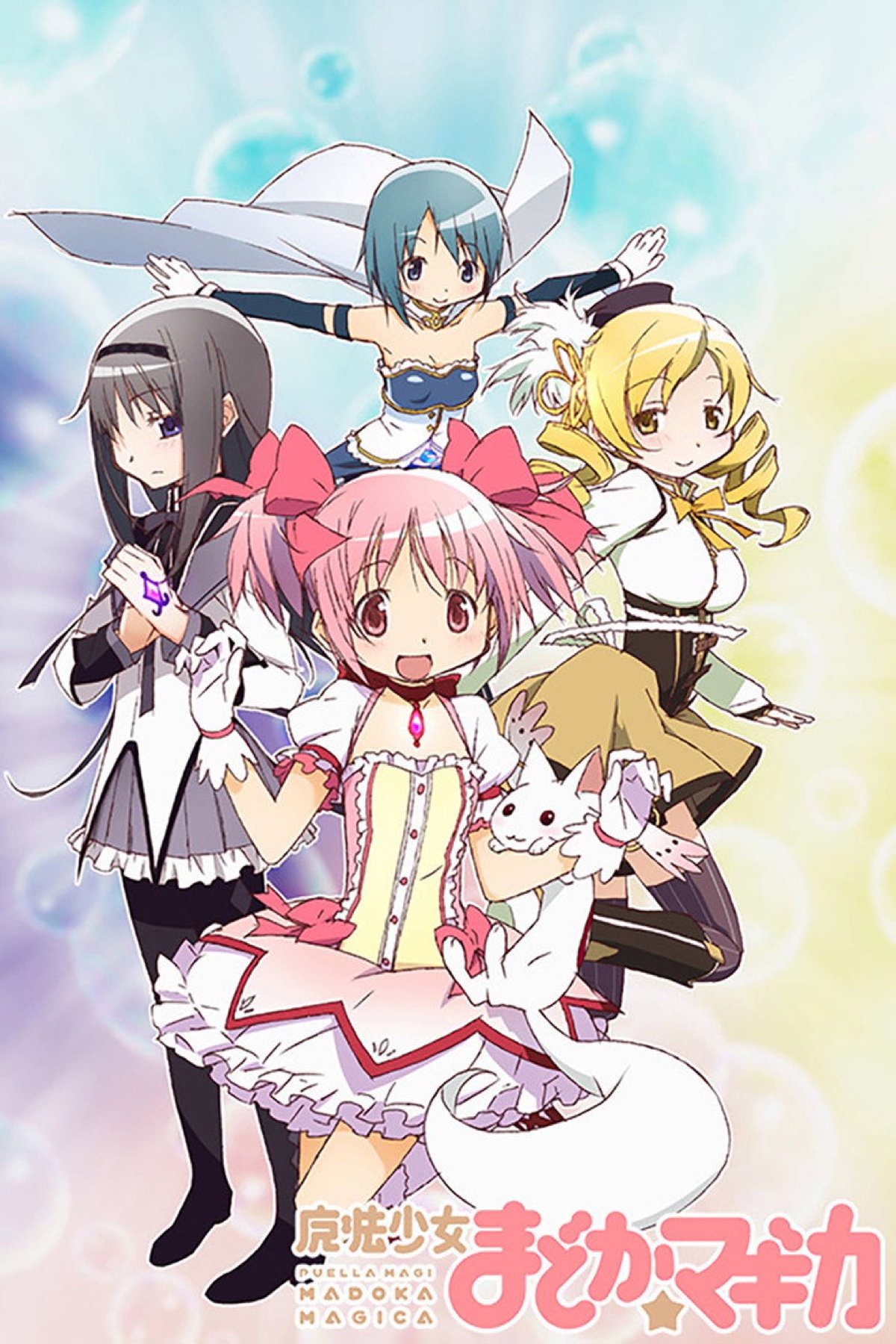
The standard line on Puella Magi Madoka Magica is that the soft pastel art is bait, a trap set for anyone who thought they were sitting down to a cute show. I have come round to the opposite reading. The art style is not the trap. It is the thing that let me finish. This is a heavy twelve episodes, and it is wrapped in round lines and gentle color so that a viewer can keep looking at it. Put these same events on characters drawn with any real physical weight and I am not certain I would have stayed in the chair.
I came to it late, long after the fandom had settled and the reputation had hardened, and I watched the whole run in one go. The reason most people are reading about this show in 2026 is different: a new film opened in Japanese and North American theaters on August 28, and the obvious worry is that the 2011 series will leave you halfway up a staircase. It will not. The twelve episodes close. Streaming first, then the four films and what order they go in.
📺 Where to Watch Puella Magi Madoka Magica (October 2026)
| Service | Status | Notes |
|---|---|---|
| Crunchyroll | Streaming | Included on any paid plan. Subtitled plus English dub |
| Netflix | Streaming | All 12 episodes on the standard plan, ad tier included |
| Hulu | Streaming | Listed as 24 entries because both language tracks are shelved separately |
| Amazon Prime Video | Add-on | Only through the paid Crunchyroll channel. A Prime membership on its own does not include it |
| HBO Max | Not available | Not in the US catalog |
| Disney+ | Not available | No US offer |
| Digital rental / purchase | Not available | No US digital storefront found. Disc only |
In the United States all twelve episodes stream on a regular plan at Crunchyroll, Netflix and Hulu. On Amazon they come only through the paid Crunchyroll channel.
One practical note that matters more than usual here. Crunchyroll and Hulu both carry the English dub as well as the subtitles, and the dub is a good one: Christine Marie Cabanos as Madoka, Cristina Vee as Homura, Cassandra Lee as Kyubey, recorded for the Aniplex of America release. If a friend has told you to watch this and you bounce off subtitles, that route is open and nothing important is lost on it.
👉 Twelve episodes that finish is a rarer commodity than it should be. The rest of that shelf is in 10 Best One-Season Anime That Tell a Complete Story.
🧭 The Madoka Magica Movies and Watch Order: 12 Episodes, 4 Films
Most people arrive with this question in 2026, so first: there are twelve TV episodes and four theatrical films, and the four films are two different kinds of thing. The last column is where each one can be seen in the US today.
| Title | Year | What it is | In the US |
|---|---|---|---|
| TV series, 12 episodes | 2011 | The main work. The story finishes here | Streaming: Crunchyroll, Netflix, Hulu |
| Movie Part I: Beginnings | 2012 | Episodes 1 to 8, recut for theaters | Rent / Buy |
| Movie Part II: Eternal | 2012 | Episodes 9 to 12, recut for theaters | Rent / Buy |
| Movie Part III: Rebellion | 2013 | A new story. A sequel | Rent / Buy |
| Walpurgisnacht: Rising | 2026 | A new story. Sequel to Rebellion | Theatrical release. No US streaming found |
Parts I and II are compilations. The animation was reworked and the sound rebuilt, so they are not worthless, but no new plot happens in either of them. If you only want the story, the twelve episodes cover it. Rebellion and this year’s Walpurgisnacht: Rising are the real continuations.
So the order is short: TV series, then Rebellion, then Walpurgisnacht: Rising. Drop the two compilations in wherever you feel like, or skip them entirely and lose nothing. And the point worth repeating, because it is the thing people are anxious about: the series lands cleanly on its own. Stopping at episode 12 is a legitimate ending, not a cliffhanger you are being tricked into.
Where American readers hit a wall is the films. None of the four is on a US subscription service. Beginnings, Eternal and Rebellion are rent-or-buy only, across Amazon, Apple TV, Fandango at Home and Google Play. Walpurgisnacht: Rising opened in Japanese and North American theaters on the same day, August 28, 2026, with IMAX screenings across 37 countries, which is a first for this franchise. As of October 2026 I could not find it on a US service.
🎬 Trailer
That is the Aniplex USA trailer cut for the English dub, so you get the voices you will actually hear if you take the dubbed route. Watch what it declines to show you. Ninety seconds of magical girls and a white animal, and almost nothing about where any of it goes.
Work Info
- Title: Puella Magi Madoka Magica (Mahou Shoujo Madoka Magica)
- Broadcast: January 7 to April 21, 2011 on MBS. 12 episodes, an original work with no manga or novel behind it
- Director: Akiyuki Shinbo / Animation studio: SHAFT
- Series composition and screenplay: Gen Urobuchi
- Original character concepts: Ume Aoki, the creator of the four-panel comedy Hidamari Sketch
- Witches and labyrinths designed by Gekidan Inu Curry, an art unit, not an animation department
- Music: Yuki Kajiura. Opening Connect by ClariS, ending Magia by Kalafina
- Japanese cast: Aoi Yuki as Madoka, Chiwa Saito as Homura, Emiri Kato as Kyubey
- English dub: Christine Marie Cabanos, Cristina Vee, Cassandra Lee, Carrie Keranen, Sarah Williams, Lauren Landa, for Aniplex of America
📖 Synopsis – No Spoilers
Madoka Kaname is fourteen, in her second year of middle school, and has nothing wrong with her life. Good friends, a warm house, a mother she admires. Then a small white animal called Kyubey turns up with an offer that has no obvious catch in it: one wish, anything at all, granted. In return, become a magical girl and fight witches. A transfer student named Homura Akemi arrives in the same week, walks straight up to Madoka, and tells her not to take the deal.
An older girl, Mami Tomoe, takes Madoka and her friend Sayaka along to see the work up close, and it turns out the offer was accurate in every particular. The wish is real. Magic is real. Witches are real, and they are killing people in this city while nobody notices. What Kyubey has not said, because nobody has asked him in the right words, is what the wish costs and who ends up paying it. Everything in this show follows from that gap between what is true and what has been said.
✨ What Makes It Special
Why It’s Exceptional
- Twelve episodes with nothing padded and nothing rushed, which almost no one manages
- The ending is derived from the two rules set out in episode one, not invented to escape a corner
- The witch labyrinths change what the screen is physically made of. Cut paper, photographs, scribble
- Kajiura’s score, and the discipline about when the two famous songs are allowed to play
Twelve episodes with no slack anywhere in them
The first thing to be impressed by is arithmetic. A story this large has been fitted into twelve episodes without a seam splitting. One cour is roughly three months of broadcast. Into that, this show has to build a contract system and its costs, give five girls separate situations and separate reasons, open up how the world actually works, and then finish. Normally something goes thin. Here nothing does.
Part of how it manages that is a trick of subtraction. The magical girl genre arrives pre-installed in the audience’s head. There is a transformation, there is a mascot, there are monsters. Because the shape is already known, the show never spends a minute explaining that it is a magical girl show, and every minute saved goes into events and into feeling instead.
I suspect this reads differently if you grew up here. In Japan, magical girl does not primarily mean Sailor Moon nostalgia. It means Pretty Cure, Toei’s Sunday morning franchise that has been running since 2004 and is aimed squarely at actual small children, with the toy line to match. Pretty Cure was what Japanese viewers had in the room in 2011. The genre was on television that very morning, for kids, and this show is standing directly on top of it.
The second thing about the compression is that there is nowhere to stop. Each episode moves the situation, the movement forces somebody into a decision, and the decision starts the next episode. I did not binge this out of discipline. I binged it because no clean exit ever came. You press play thinking the next one will settle things down, and twelve episodes later nothing has settled down.
The original broadcast was interrupted. The Tohoku earthquake struck on March 11, 2011, and the final three episodes were pulled from the schedule and did not air for about a month; in the Kansai region, where the broadcast ran ahead, it was the final two. Fans here waited in that gap with the story open at its worst point. Watching all twelve without a break is a luxury only the streaming era grants, and it changes the show. Take it.
The ending is earned rather than escaped
The rules laid out at the start are almost insultingly simple. One wish granted. In exchange, you fight. From those two lines the middle of the series raises a harder question about where the cost of a wish actually goes, and the last act answers that question instead of dodging it. Nothing is sprung on you from outside. That is why the final leap, large as it is, still lands as a consequence instead of a rescue.
The detail that made me sit up is smaller. In this show the exact wording of a wish decides a fate. Not what a character wanted. What she said. The girls whose sentences were slightly off from their real desire are the ones who suffer for it later, and the show never underlines this. It just lets it happen. It is the real reason people push a second viewing on you, and it is a better reason than the usual one: lines you heard as ordinary in episode two are doing different work once you know what a wish is.
I have been building this up, so let me complicate it. Praise the show wrongly and it collapses into “the dark magical girl one”, which is how a lot of people file it and how a lot of people are put off it. That framing sells it short. It is not admired for being bleak. It is admired because the road into the bleakness is built correctly, plank by plank, and you can walk back along it afterwards and find every plank.
The witch labyrinths change what the screen is made of
When a fight starts, the picture stops being animation and becomes something else. The drawn world drops away and you are inside a collage of cut-out photographs, fabric, stamped shapes and childlike scrawl, assembled by an art unit called Gekidan Inu Curry. The closest reference point is a European picture book that has been forced to move against its will. It is charming and it is wrong, at the same time, and for those minutes you are no longer watching anime in any normal sense.
The screen tells you that witches do not obey the rules of your world before a single line of dialogue does. No exposition was added. The material changed, and that was enough.
Deeper Themes
Kyubey was not written as a villain. He never lies, and he answers every question he is asked. He simply does not volunteer what nobody asked about. What he stands for is not personal malice but a system that runs on somebody else’s sacrifice and considers that arrangement reasonable. Even the choice of teenage girls is explained as an efficiency: their emotional swings are the largest. The anger a viewer builds up toward him has nowhere to land, because there is no personality in there to hate. A Japanese reviewer described him as the interviewer at a bad company, the one who withholds nothing you asked about and everything you did not, and I have never found a better description.
🎭 Memorable Scenes
Episode three is where the premise of the show is swapped out underneath you. I am not going to say what happens. What I can say is that the more comfortably you watched the first two episodes as the genre you assumed it was, the harder that twenty minutes hits. After it, the same visuals cannot be watched in the same frame of mind.
How thoroughly that episode landed in Japan can be told without spoiling it. Japanese fans coined a verb out of a character’s name, and it entered general anime slang, and it is still in use fifteen years later. I cannot tell you what the verb means, because explaining it would be the spoiler. So: an episode so widely discussed that the language absorbed it, and non-Japanese viewers can walk in unspoiled anyway, because the word does not travel.
The other one is the opening credits. Same ninety seconds every week, same song, not a frame altered. Go back to it after a certain point in the second half and everything in it means something different. Nothing changed except where you are standing. When you finish episode twelve, play the opening one more time. Nothing more is required.
“Make a contract with me and become a magical girl!”
Kyubey’s catchphrase reads today as something close to an incantation for a curse. On a first viewing it is just a cheerful invitation and nothing more. The distance between those two hearings is the show in miniature. Sayaka gets the other famous one in episode four, “Miracles and magic do exist”, and it has the same property: you are allowed to take it at face value exactly once.
💭 How It Made Me Feel
I was handed something heavy. That it is good was never in question. But twelve episodes of girls being pushed to their limits, with the show holding the camera on whatever comes out of them at that point, is not a thing you finish and then start something else. I did not put on another show that night.
And the reason I did not give up somewhere in the middle is the thing I opened with. The art carried it. Ume Aoki drew the original character concepts, and Japanese viewers in 2011 knew that name from Hidamari Sketch, a gentle four-panel comedy about art students where the worst thing that happens is a burnt dinner. That face, on this material. The softness here is structural rather than decorative, and it was never a bait-and-switch.
😅 Where It Falls Short
I said every one of the five girls has her own situation. The lead is the exception, and she is the exception for twelve straight episodes.
The protagonist spends the whole series unable to decide
Madoka is confused, and stays confused. Should she sign or not. Who should she save, and can she save anyone. For most of the run she cannot answer, and the role she ends up occupying is the one watching other people act.
Intellectually I have no argument. A fourteen-year-old who was offered a contract with her life on it and answered immediately would be the more frightening character. Structurally it is also deliberate: her paralysis is the still surface that makes everybody else’s choices visible. The design is sound and I can see the design.
It still irritated me, in specific episodes, more than once. Other people are paying the bill in front of her while the lead has not decided anything yet, and that stretch is long. Being convinced by an argument and being comfortable watching it are separate matters. Japanese viewers split on this too, including some who love the show; I have seen a good number of them describe being annoyed with her for eleven episodes and then having that feeling turned over in the twelfth. Your mileage will vary.
The weight late on, with very little mercy attached
Facts keep arriving in the last stretch and every one of them is heavy. Very little comfort is provided alongside. The story is coherent, and refusing to manufacture a soft place to put your feelings is a kind of honesty. It also costs the viewer something. On an evening when what you want is a show that treats you kindly, this is the wrong pick.
Then there is Kyubey. After everything, he is still operating at the end. Not punished, not corrected, not sorry. Thematically that is exactly right; a system is not a person, and shouting at it does not switch it off. I understood that while I was watching and I still finished with a small bone stuck sideways. Some viewers reach the finale and find the resolution arrives from too high up, a rule change, not a solution. I do not read it that way, but I understand where the objection comes from.
The Weak Points
- The lead is undecided for most of the run, and watching that is a strain even when you accept why
- The volume and weight of the late revelations, against a very thin supply of relief
- Kyubey, the one target your anger has, is still functioning when the credits roll
Who Should Watch This?
- Anyone who has looked at the key art for fifteen years and decided it was not for them. You are the reader this article exists for
- People who saw a new Madoka film in theaters this year and want to catch up from the beginning, properly
- Viewers who want one short, finished, important anime instead of a 26-episode commitment
- Anyone who enjoys taking a story apart afterwards. The rules here reward it
Who Might Not Enjoy This?
- Anyone who wants to finish a show feeling better than when they started
- Viewers who need a protagonist who drives the plot from the front
- People who have already had the big turn spoiled for them. It survives that, but it survives it diminished
📺 Streaming Guide by Service
Crunchyroll, Netflix or Hulu: does it matter which one you use?
For the twelve episodes, barely. All three carry the full run, and if you already pay for any of them you are done. Use what you have and skip the rest of this section.
If you are subscribing from scratch, the tiebreaker is what you do next. Crunchyroll is the only one of the three with a meaningful amount of the rest of the genre behind it, so if this is your way into anime generally, start there. Netflix is the convenient answer if the household already has it. Hulu lists the series as twenty-four entries, which is not a second season: the subtitled and dubbed versions are shelved as separate episodes, so check which track you have opened.
The sequel films are not waiting in the same app, so line up a rental of Rebellion before you reach episode 12 if you know you will want it.
Where to Stream
- Crunchyroll: Streaming, subtitled and dubbed, on any paid plan
- Netflix: Streaming, all 12 episodes, ad tier included
- Hulu: Streaming, subbed and dubbed listed as separate entries
- Prime Video: add-on only, through the paid Crunchyroll channel
- Blu-ray: the complete series on disc
The Music
Yuki Kajiura wrote the score, and the Music Collection covering the series is on Spotify and Apple Music.
Two songs sit around the episodes. Connect by ClariS opens, bright and completely straightforward, and Magia by Kalafina closes, in Latin and in a different key of seriousness altogether. Both are Kajiura’s, and the second one is doing something the first one is pretending not to know about. The show is also careful about when it lets either of them start, which is a small thing you will only notice on a rewatch, and then cannot stop noticing.
📚 The Manga
There is no source novel or manga: the anime came first. What exists is a comic adaptation drawn by Hanokage, which Yen Press published in English across three volumes from 2012. It covers the same twelve episodes.
Read it afterwards, not instead. The interior monologue goes further on the page than it can on screen in a few places, particularly for the girls whose reasoning the anime shows you only from the outside, and a second pass through the story is where this show pays out anyway. The English volumes are on Amazon, though print stock on a 2012 license comes and goes.
🎬 If You Loved Puella Magi Madoka Magica, Watch These 3 Next
Made in Abyss
Madoka descends into how its world is built. This one digs into an actual hole. Same round, harmless-looking character design, children going somewhere they should not, and the same category of price charged to people far too young to be paying it. If the art style question is what kept you away from Madoka, you will recognize the exact trick being run here, and you will not be caught by it twice.
👉 Read the Made in Abyss review
Cyberpunk: Edgerunners
A second answer to the same design problem: how do you close a story in one short run. Ten episodes, a kid who takes a deal that upgrades him and bills him for it, and a machine around him that regards the arrangement as normal business. Madoka spends its twelve episodes digging downward into the rules; this one spends its ten running in a straight line at full speed. Opposite methods, and both finish.
👉 Read the Cyberpunk: Edgerunners review
Haibane Renmei
No official trailer survives on any studio channel for this one, which is why there is no video here.
The third pick is the opposite density on purpose. Thirteen episodes about girls with small wings living in a walled town, knowing neither where they came from nor where they are going. Madoka detonates something every week. Here almost nothing happens at all, and the question of why any of them are there weighs precisely the same. It works as the thing you put on afterwards, to get your breathing back.
👉 Read the Haibane Renmei review
👉 Handing a middle schooler the weight of the world was already done here sixteen years earlier, in Evangelion. And for the wider shelf of shows built around a turn you do not see coming: 10 Anime and Films With the Best Plot Twists.
📝 Final Thoughts
What this show does not do is use its length as an excuse. It carries in two rules about wishes in the first episode and it imports nothing else for the remaining eleven. Events keep coming, you cannot stop watching, and when it lands there is no contradiction left lying around. This is the achievement, and it is why the title keeps being said out loud fifteen years on.
Remember what I said at the start about the art being the reason I could finish? I will go further. It is also the reason people never start. If the pastel is what has kept you away, you have had it exactly backwards for fifteen years. Against that, the long stretch of a lead who cannot decide, and an ending short on comfort, will not suit everybody, and they did not entirely suit me. I can see why the fandom is as large as it is. It still did not end up on my personal top shelf. Twelve episodes, one clean landing, and the films can wait until you have decided for yourself whether you want more.
⭐ The Series at a Glance
| Category | Rating | Note |
|---|---|---|
| Story | ★★★★★ | Twelve episodes, no padding, no shortcuts at the end |
| Characters | ★★★☆☆ | The supporting cast is superb. The lead is the sticking point |
| Animation / direction | ★★★★★ | The labyrinths look nothing else on television in 2011 |
| Music | ★★★★★ | Kajiura, plus real discipline about when the songs play |
| Pacing | ★★★★☆ | Relentless, occasionally at the cost of the viewer |
| Rewatch value | ★★★★★ | The wording of every wish reads differently the second time |
Usagi’s Recommendation Score
⭐⭐⭐⭐⭐⭐⭐⭐☆☆
8.2 / 10
Twelve episodes that put a price tag on a wish and then made you read it, in the softest lines available.

