*This page contains affiliate links. We may earn a commission if you make a purchase through these links.
*This page contains affiliate links. We may earn a commission if you make a purchase through these links.
The animation didn’t drop. If anything, the kaiju fight in the finale moves more stuff around the screen than anything in Season 1. And yet I finished these twelve episodes feeling less excited than I did a year ago. It took me the whole season to work out why, and the answer surprised me: what DAN DA DAN lost in Season 2 wasn’t animation quality. It was the pause button.
For context on where I’m coming from: I’m the kind of viewer who watches Science SARU shows for the movement alone. I’ve rewatched Mind Game and Ping Pong the Animation more times than is reasonable. Season 1 satisfied me on that level alone. Season 2 delivers the same quality of motion, and I enjoyed it less. When the craft holds steady but the experience dips, the problem is somewhere else.
📺 Where to Watch DAN DA DAN Season 2 (October 2026)
| Service | Status | Notes |
|---|---|---|
| Crunchyroll | Streaming | Episodes 13–24 with subtitles, plus the English dub |
| Netflix | Streaming | Sits on the same title page as Season 1 |
| Hulu | Not available | Hulu lists Season 1 only |
| Prime Video | Add-on | Needs the Crunchyroll channel on top of Prime |
| Amazon Video | Rent / Buy | Sold as a season |
| Apple TV | Rent / Buy | Sold as a season |
| Disney+ | Not available | Not in the US catalog |
I rechecked this on October 2, 2026. In the US, Season 2 comes with a regular Crunchyroll or Netflix subscription, and Crunchyroll is where I would go if you want the dub. The surprise was Hulu: it still has Season 1, but Season 2 is not listed there today, so a Hulu-only household runs out of road at the end of episode 12. Amazon will sell you the season, or rent you the Crunchyroll channel inside Prime Video. Rights shuffle often enough that I would glance at the service’s own page before pressing play.
One warning before you press play: Season 2 opens at episode 13 with zero recap, dropping you into a hot spring scene mid-conversation. If Season 1 has gone fuzzy, read our DAN DA DAN Season 1 review first and refresh yourself on how that cliffhanger left everyone standing.
⏱️ How Many Episodes Is DAN DA DAN Season 2, and How Long Is Each One?
Twelve episodes, numbered 13 through 24, at about 24 minutes apiece. Back to back, that is 288 minutes, a little under five hours with the opening and ending songs left in, and I would leave them in, because Aina the End’s opening gets better each time you hear it.
Those five hours do not feel even, though. The season sprints from the first minute and never slows down, and my own complaint further down is that it never gives you a breather. So I would make one for yourself. Episode 18, the festival episode, is where I would stop for the night: it is the best thing in the season, it lands right in the slow middle, and stopping there means you start the second sitting fresh for the run into the giant robot finale.
Here in Japan it aired one episode a week from July to September 2025, and the weekly gap suited it. The show was designed to be absorbed in 24-minute doses. If you binge all twelve in one evening, expect the fatigue I describe below to arrive faster than it did for me.
🎬 Trailer
Work Info
- Title: DAN DA DAN Season 2
- Aired: July 4 – September 19, 2025 (12 episodes, #13–24 overall)
- Directors: Fuga Yamashiro / Abel Gongora
- Series composition: Hiroshi Seko
- Studio: Science SARU
- Original manga: Yukinobu Tatsu (Shonen Jump+)
- Music: Kensuke Ushio
- Opening: Aina the End “Kakumei Douchu” / Ending: WurtS “Doukashiteru”
- Season 3: confirmed, scheduled for 2027
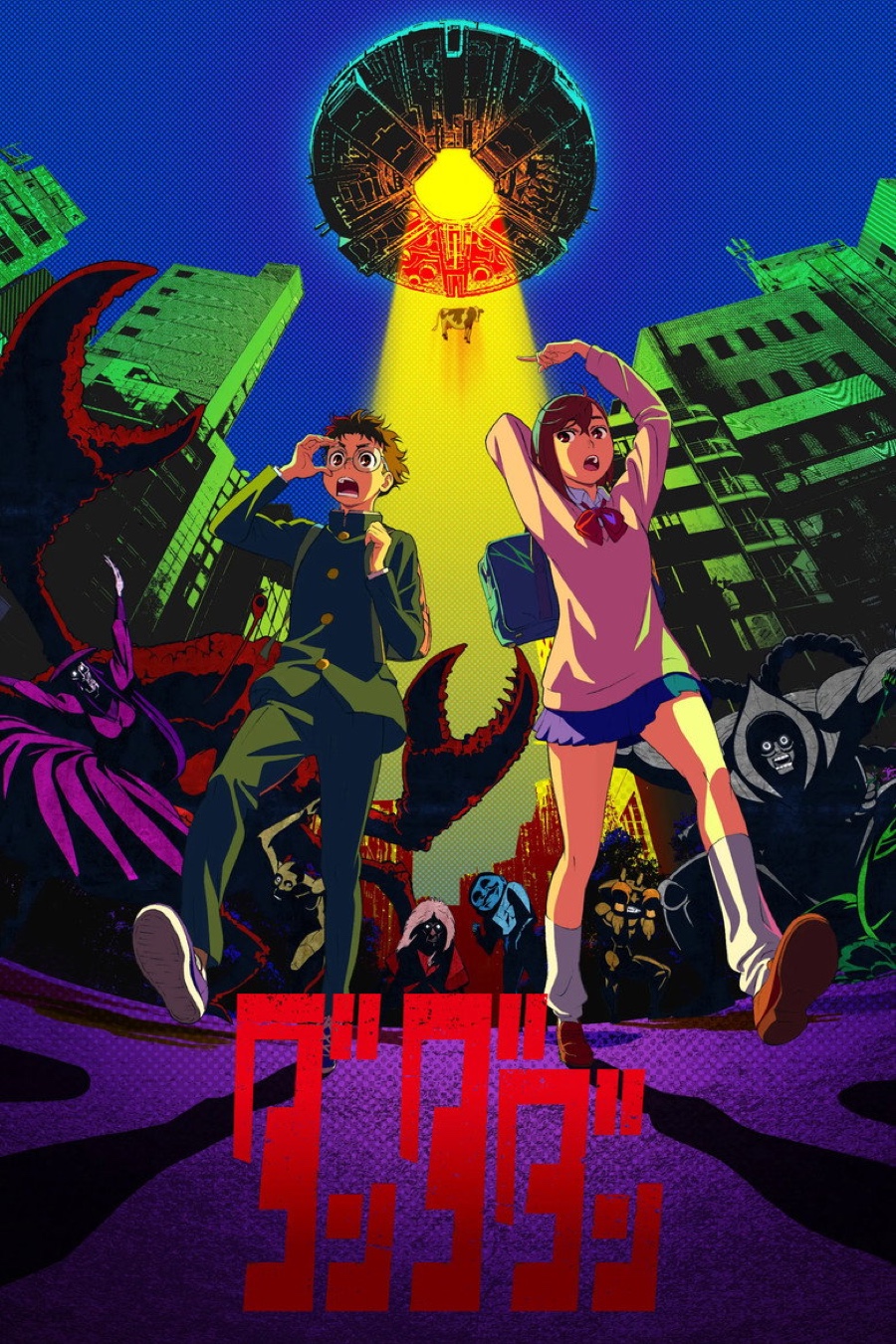
📖 Synopsis – No Spoilers
Momo doesn’t believe in ghosts. Okarun doesn’t believe in aliens. Season 1 dragged both of them into a world where they were each wrong, and left them there. Season 2 picks up in a mountain town where their classmate Jiji grew up, on land carrying a story the locals would rather not repeat out loud. Something called the Evil Eye takes Jiji’s body for a ride.
That’s the first half: folk-horror soaked in rural Japanese superstition. Then the show moves back to school and the city, and by the final stretch it’s a full-blown giant monster brawl with a mech in it. The genre changes three times in twelve episodes. And then, exactly like last time, the season stops at the worst possible moment. How you feel about that final beat will decide how you feel about the whole season.
✨ What Makes It Special
Why It’s Exceptional
- Twelve more episodes less than a year after Season 1, with no drop in quality
- A villain in nothing but briefs, animated with total sincerity, and it works
- Reference density high enough that spotting the source becomes its own game
- Aina the End’s opening theme gets better the deeper into the season you get
The stamina of this animation is genuinely abnormal
The thing that impressed me most about Season 2 is that the quality never dips across all twelve episodes. Most single-cour anime front-load their budget, coast through the middle, and spend what’s left on the finale. DAN DA DAN doesn’t budget that way. The worm fight, the volcanic eruption, the maid café filler, the robot brawl: all of it moves with the same weight.
Consider the calendar. Season 1 wrapped in December 2024. Season 2 premiered in July 2025. That’s twelve more episodes in under a year, at this level. In Japan we’ve gotten used to hit shows taking two or three years between seasons, so what Science SARU is doing here reads as slightly unhinged from the inside as well.
The Evil Eye design deserves specific credit. Jiji’s possessed form is a shirtless teenager in white briefs, which on paper is a joke and nothing else. In motion it’s frightening. The gap between how stupid the design is and how seriously the animators treat it is the whole engine of this series, and Season 2 doesn’t soften it an inch. The transformation trigger (contact with water) stays funny for twelve straight episodes because everyone on screen keeps reacting to it like a genuine emergency.
The acting has also gotten denser. Watch how fast Momo breaks eye contact when she catches herself thinking about Okarun. Watch Okarun’s mouth after he says the wrong thing. There are simply more drawings in the non-action scenes now, and that’s where a lot of Season 2’s charm actually lives.
Three genres in one cour
Rural folk horror, then urban ghost story, then tokusatsu kaiju battle. Three seasons’ worth of material crammed into twelve episodes. Each stretch comes with its own set of homages: the way a giant robot rises is lifted straight from mecha grammar, and the mountain god sequence will feel very familiar to anyone raised on Studio Ghibli. Something is always hidden in the frame for you to catch.
This restlessness is also why DAN DA DAN never became anime-fan-only property. A tokusatsu person, a mecha person and a horror person can each walk in through a different door. Watch it purely for the kaiju fight in the back half and the season still works.
Here’s the catch, though: every compliment I just made is one I already made in our Season 1 review. The list of things that are new and good in Season 2 is short.
Deeper Themes
Almost every supernatural thing in DAN DA DAN is tied to somebody’s land or somebody’s family. The Evil Eye isn’t a disaster that wandered in from outside. It’s something Jiji’s household has been carrying for generations. For a show where aliens and yokai punch each other, the foundation is a quiet, old-fashioned idea: what the people of a place chose to pass down about that place. Growing up in Japan, this is the texture of every summer ghost story you hear as a kid, and it’s not an accident that Season 2 starts in the mountains.
🎭 Memorable Scenes
Episode 16, first. Momo gets cornered, and one by one everyone she met in Season 1 shows up for her: the anatomical model, the crab, the grandmothers, all of them. It’s a payoff that only lands if you watched Season 1, and the show still makes it ridiculous by having them descend from a UFO. I was laughing through what was supposed to be a life-threatening scene.
Second, episode 18 and the festival music sequence used to drive out the Evil Eye. This is my favorite thing in the season. It became a news story in Japan for reasons having nothing to do with its quality: a rock legend objected publicly to how closely the in-show band resembled his own, and the production ended up issuing a statement. Set all of that aside and watch the scene itself: it’s the purest example of what happens when this studio’s animation locks into a piece of music. The frame bounces on the beat, and every character on both sides of the ritual is committing completely. I rewound this one three times.
Exorcism by festival drums. Not by logic, by sheer volume. Everything good about this show is in those few minutes.
Third, the finale: a homemade giant robot against a space kaiju. The control panel barely functions, so the pilot moves the thing on willpower and imagination. It’s the “runs on guts” logic that mecha anime spent decades building, played completely straight. If you grew up on tokusatsu, this is the scene that will get a noise out of you.
💭 How It Made Me Feel
When I learned Season 3 is scheduled for 2027, part of me was relieved. After the Season 1 finale my only thought had been “give me the rest right now.” That difference is the honest summary of my feelings about Season 2.
I’m not saying I disliked it. I looked forward to it weekly and never skipped an episode. But what came out of my mouth during the closing credits wasn’t “more, please”. It was “let me rest for a second.” Coming from someone who spent all of 2024 recommending this show to people, that caught me off guard.
Who Should Watch This?
- Anyone stuck on that Season 1 cliffhanger, deciding whether to continue
- Viewers who choose shows by how they move, not by what happens (best fit)
- Anyone who enjoys a romance that refuses to resolve. Season 2 moves it forward
- Tokusatsu and mecha fans who don’t usually follow seasonal anime
😅 Where It Falls Short
Twelve episodes of nothing but chorus
Here’s the core of it. What Season 2 lacks is quiet. Every episode has someone screaming, someone swinging, a new character arriving, a new mystery being planted. The tension never comes down. If this were a song, it would be twelve episodes of chorus with no intro and no bridge.
In Season 1 that speed was the weapon. When you don’t yet know the rules of a world, not being able to predict the next thing is the pleasure. By Season 2 the audience has learned that anything can happen here. Run at the same speed and nobody flinches. The moment a space kaiju shows up and your reaction is “sure, why not,” velocity has stopped doing its job.
Let me stop and be fair here. This isn’t only the show’s doing. The audience adapted. It’s an awkward thing to argue when you praised Season 1 as loudly as I did, but boredom usually arrives when your eye adjusts, not when the quality falls. Even so, Season 2 did nothing to counter that adjustment. A little variation in pace would have made the same material land harder.
The middle stalls, except for one sequence
After the direct confrontation in the Evil Eye arc ends, the show settles into preparation: a part-time job episode, a training episode, hangout material. The story’s legs stop moving here. It’s clearly there to develop the cast, but because everything around it sprints, the stall feels longer than it is.
The festival music episode sits inside that same stretch, and it’s the exception. Plenty of viewers in Japan filed this whole section under “padding,” and the controversy gave people an extra reason to be annoyed with it. I’d still watch the entire season again for those few minutes. The best sequence of the year buried inside the slowest stretch of the season. That clumsy placement is very DAN DA DAN.
The cliffhanger trick, used twice
The finale cuts out right as the story finally moves. Same move as last time. In Season 1 the shock of “you’re stopping there?” was itself a talking point. Repeat it and the shock becomes a house style. Knowing the next season is two years out makes it land as abandonment rather than anticipation.
There’s also a scale problem forming. A show about yokai fistfighting aliens has escalated to space kaiju versus giant robots. Anything-goes is a strength right up until anything actually goes, at which point nothing that arrives feels like an event. Topping a kaiju in Season 3 is going to be a real problem.
The Downsides
- Twelve episodes at one constant pitch, with almost no variation in pace
- The middle of the Evil Eye arc stalls on prep and training material
- The Season 1 cliffhanger trick repeated, turning surprise into formula
- Escalating to kaiju and mecha leaves fewer cards to play later
Who Might Not Enjoy This?
- Anyone who hasn’t seen Season 1. Episode 13 assumes everything and explains nothing
- Viewers who need a season to close properly. This one gets cut off again
- Anyone worn down by crude humor and constant insult comedy. Season 2 doubles down
📺 Streaming Guide by Service
Is DAN DA DAN Season 2 on Netflix or Crunchyroll?
Both. Crunchyroll is the better default because it carries the English dub alongside the subtitled version, and because Season 1 is right next to it in the same library. Netflix has the full run as well. Hulu is the exception: it currently stops at Season 1, so if that is your only subscription you will need another one for episodes 13 to 24.
Budget your time honestly: since Season 2 begins mid-story, a newcomer is looking at 24 episodes, roughly ten hours. On Amazon, Prime by itself does not cover it: you either add the Crunchyroll channel or buy the season outright.
Where to Stream
- Crunchyroll: streaming, sub and English dub
- Netflix: streaming, Seasons 1 and 2
- Amazon Prime Video: Crunchyroll channel add-on, or buy the season (not included with Prime)
📚 Read the Manga
The source is Yukinobu Tatsu’s Dandadan, serialized in Shonen Jump+ and published in English by VIZ Media. Season 2 adapts through chapter 71, which sits inside Volume 9, so the story continues at chapter 72 in that same volume. Buy Volume 9, not Volume 10, a mistake that’s easy to make here. With Season 3 two years away, reading ahead is a reasonable move.
🎬 If You Loved DAN DA DAN Season 2, Watch These 3 Next
Shin Godzilla
If the back half of Season 2 worked on you, here’s the same material played entirely straight. One enormous creature wrecking a city carries a whole two-hour film. What DAN DA DAN processes as comedy, this one treats as a national emergency, and it’s the best possible companion piece.
👉 Read our Shin Godzilla review
Evangelion: 1.0 You Are (Not) Alone
The robot-and-mysterious-girl combination in the Season 2 finale comes from this lineage. An unidentifiable enemy, a pilot who doesn’t want to be there, and adults with agendas. DAN DA DAN uses those parts as light homage. Here they’re played for weight, and it’s an easy entry point if you don’t normally watch anime.
👉 Read our Evangelion: 1.0 review
Princess Mononoke
The mountain-and-curse atmosphere of the first half is drawing directly from this well. Same skeleton: humans provoke the thing that lives in the land. What DAN DA DAN handles in a few minutes of pastiche, this spends two hours on properly, ideal if that village arc got under your skin.
👉 Read our Princess Mononoke review
That space kaiju finale is what sent me back to the old monster films afterwards. If it did the same for you, the live-action side of that tradition is collected in our Japanese monster movies list, with where each one streams in the US.
📝 Final Thoughts
DAN DA DAN Season 2 is weaker than Season 1. The reason isn’t the animation. The drawings actually improved. What happened is that twelve episodes ran at one unbroken speed, and our eyes caught up before the show did. For a series whose main weapon is velocity, an audience getting used to velocity is close to a worst-case scenario.
Watch it anyway. The festival sequence and the final robot fight are worth the twelve episodes on their own. If you haven’t seen Season 1, start there. If you’re stuck at the Season 1 cliffhanger, come back with your expectations set slightly lower than last time. The season plays better that way. I’ll be there for Season 3. Honestly, a two-year breather sounds about right.
⭐ Series at a Glance
| Category | Rating |
|---|---|
| Animation | ★★★★★ |
| Story | ★★★☆☆ |
| Pacing | ★★☆☆☆ |
| Characters | ★★★★☆ |
| Music | ★★★★★ |
| Newcomer friendly | ★★☆☆☆ (Season 1 required) |
Usagi’s Recommendation Score
⭐⭐⭐⭐⭐⭐⭐☆☆☆
7.2 / 10
Better drawings than Season 1, worse rhythm. The festival scene alone justifies the watch.

. The anima)