*This page contains affiliate links. We may earn a commission if you make a purchase through these links.
I watched this one to close a gap. Bayside Shakedown N.E.W. opened in Japanese theaters on September 18, 2026, and this 2005 spin-off was the single entry in the franchise I had never gone back to. Two hours later I had a page of notes, and almost none of them were kind.
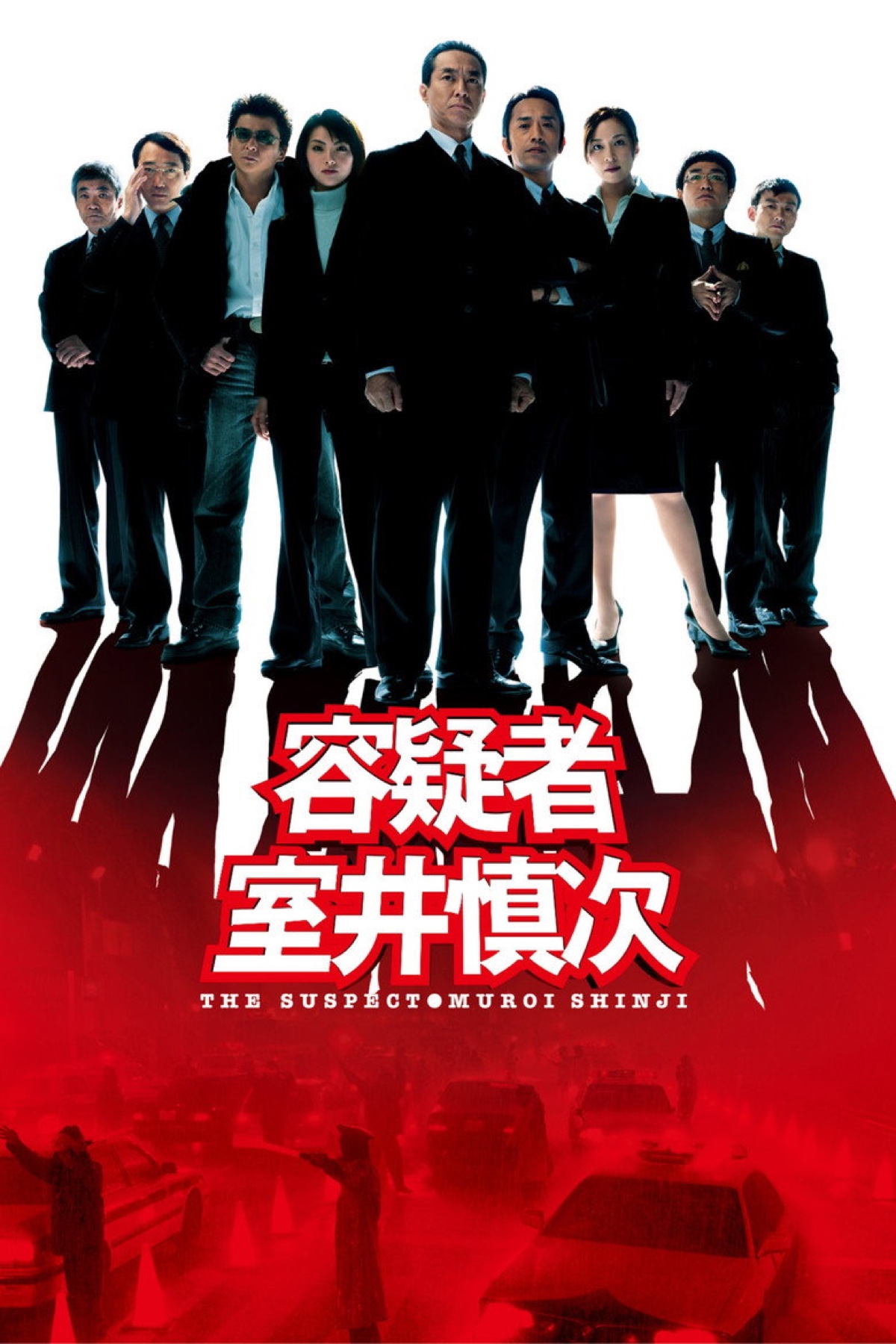
The pitch really is a good one. Shinji Muroi is the senior officer at the top of the Bayside Shakedown hierarchy, the man the street cops have to go through to get anything approved. This film opens with him in handcuffs. That image alone sold 3.83 billion yen of tickets in Japan without the franchise’s lead actor appearing in a single frame.
📺 Where to Watch The Suspect: Muroi Shinji (October 2026)
| Service | Status | Notes |
|---|---|---|
| Netflix | Not available | Has the 1997 TV series, not this film |
| Crunchyroll | Not available | A live-action police drama. Wrong shelf |
| Amazon Video | Not available | Nothing to stream, nothing to rent |
| Apple TV | Not available | No US digital purchase |
| Hulu | Not available | No entry on the service |
| HBO Max | Not available | Not in the US catalog |
| Kanopy / Hoopla | Not available | Absent from both library platforms |
No US service I checked carries this film, to stream or to rent. Import DVDs from Japan do turn up on Amazon. I have not been able to confirm English subtitles on any of them.
Japanese subscribers have it on Netflix, Hulu, U-NEXT, FOD and DMM TV.
📼 Can You Watch Any of Bayside Shakedown in the US?
One part of it. The 1997 television series, all eleven episodes, streams on Netflix in the US, where it arrived in January 2025. None of the theatrical films, from the 1998 original through The Final in 2012, is there with it.
For anybody curious about this film, the series is the better use of the time, and not only because it is the part you can reach. The series is where Muroi becomes the man upstairs, the headquarters officer in the meeting room while Aoshima does the running on the street. Everything this 2005 film does with him draws on that picture. The handcuffs in its first shot are a shock only if you have already spent hours with him as the one person in the building who never has to get his hands dirty.
Watching the series also explains what this film is missing. Muroi was written as the partner in a two-man arrangement, and the franchise is at its best when the two are in the same story. The film keeps one of them.
🎬 Trailer
Japanese, with no English version in existence. As far as I can find, the film never had an American release, so there was no English campaign to cut a trailer for. This is the official upload from My Theater D.D., a licensed distributor channel, which is where the franchise’s original theatrical trailers now live. Watch the first fifteen seconds even without the language. The handcuffs are the whole sell, and the 2005 campaign knew it.
Work Info
- Title: The Suspect: Muroi Shinji (Japanese title: Yogisha Muroi Shinji)
- Released: August 27, 2005 (Japan). No US theatrical release
- Director and writer: Ryoichi Kimizuka, directing for the first time
- Music: Akihiko Matsumoto
- Cast: Toshiro Yanagiba, Rena Tanaka, Norito Yashima, Show Aikawa, Shiro Sano, Toshio Kakei, Miki Maya
- Runtime: 117 minutes
- Japanese box office: 3.83 billion yen
- Source: TMDB
📖 Synopsis – No Spoilers
A man is stabbed to death in Shinjuku. The investigation points at a serving police officer from the local station, and he is brought in for questioning. During that questioning he breaks away, runs into the road, is hit by a car, and dies. With the only suspect gone, the brass want the file closed on the spot.
Muroi, who ran the investigation, keeps going. Sorting through the seized property, he finds a connection between the dead officer and the dead victim, and starts pulling on it privately. That is when a lawyer named Hideki Haijima arrives, puts the dead officer’s mother forward as a plaintiff, and sues the police. The charge that lands on Muroi is conspiracy to commit violence and cruelty by a special public officer, a real provision of the Japanese penal code written for police who abuse people in their custody. The commander of the investigation ends up in the interrogation chair. Sitting behind all of it is a promotion race between the National Police Agency and the Tokyo Metropolitan Police.
✨ What Makes It Special
Why It’s Exceptional
- Toshiro Yanagiba holds the center of the frame for 117 straight minutes
- Norito Yashima pushes a badly dated role through on performance alone
- The Shinjuku North station is built from a texture the Bayside station never had
- People who spent three films obstructing Muroi start working for him
Two hours of Muroi, which is the entire case for watching
Everything I liked about this film fits in one sentence. You get to look at Shinji Muroi for two hours. Counting from the 1997 television series, this character had been built over roughly eight years as the man on the other side of the door, the one in the meeting room while somebody else does the running. Here he carries a film by himself for the first time. Yanagiba is strong enough to make that work.
Muroi barely speaks, so the performance lives in the face and in the pauses. He gets hit from above, does not defend himself, and walks in the direction he thinks is right without announcing it. A crease in the forehead. A low voice. A body that does not move. Nothing showy happens at any point, and yet the single fact that this man is in trouble is enough to hold the frame. That is the return on eight years of deposits into one character.
Then the people around him move. Okita, the officer who spent the whole of Bayside Shakedown 2 getting in the way of the ground units, keeps the investigation alive on faith here. Shinjo, who fought Muroi inside the agency, ends up on his side. The heat in this film comes from other people changing their minds, not from the protagonist achieving anything. That is a real structure, and I felt it. It also only works if you have watched the previous films. If this is your first Bayside Shakedown, nothing in that paragraph will land at all.
That is four paragraphs of praise, so let me stop there. The credit ends at the people in the cast list. From here the compliments get considerably harder to write.
The villain lawyer is a 2005 stereotype rescued by his actor
Haijima is usually described as a great antagonist. He does the job he was hired to do. He keeps a camera pointed at whoever he is talking to, and informs them which criminal offense they have just committed. No threats, no violence, everything from inside the law, which leaves the police with nothing to swing at.
Did he make me angry, though? Not really. The character design is pure stereotype. A sneering lawyer who waves statutes around for money, straight off the shelf, never one step past the template. Down to the habit of playing a handheld game while he ruins somebody’s career, he is the 2005 Japanese TV idea of a bad lawyer, reproduced without comment. Norito Yashima is good. He is very good. The trouble is that the type shows through before the acting does, and what I mostly felt was sympathy for an actor handed a part that was already old when it was written.
Deeper Themes
There is a problem sitting under this film that it never deals with. Almost everything Haijima says about the police is accurate. Violent interrogations, confessions squeezed out of people, evidence shaped to fit. Judged against what this film itself shows the police doing, his accusations hold up. So does the prosecutor sent in from the Tokyo District Public Prosecutors Office, who is positioned as an obstacle while making better arguments than anyone on the hero’s side. A film that wanted this would be fascinating: the lawyer is right, the cops are guilty, now watch our man live inside that. What we get instead is a story that puts the contradiction on screen, never looks at it, and expects you to boo the person telling the truth. Meanwhile Muroi himself is running an unofficial investigation without a badge, which is to say the man defending due process has stepped outside it.
🎭 Memorable Scenes
The handcuffs, first shot. Muroi is brought out in restraints before the film has explained a thing. I am fairly sure the project was commissioned off this image and nothing else, and everybody who saw it in a 2005 trailer had the same reaction, which was to sit up. The strength of that one frame is real. The film spends the next 117 minutes failing to catch up with it.
The Three Amigos come to visit. Mashita, Hakamada and Akiyama, the comic trio from the series, turn up at the detention center together. It is the only time in the film anybody in the audience gets to exhale. They have no actual business being there, which is exactly why three grown men sitting in a row is funny, and the longer you have followed this franchise the more your shoulders drop. It is also the only laugh in the picture. The rest is dark from end to end.
Late on, an interview conducted with a crowd of detectives standing behind the questioner. As an image it is ferocious, and I will not forget it. On a rewatch, though, it stops reading as police work. It reads as a performance staged for an audience. I understand wanting that shot. The cost is that the film’s whole relationship with reality snaps for a minute and turns into something else. When I think back on this movie, this is the first thing I see. That is not a compliment.
💭 How It Made Me Feel
The first thing out of my mouth at the end was not anger. It was amazement that this made 3.83 billion yen. No lead actor. No jokes. A case that is not even especially large. Japanese audiences went anyway, in numbers that most live-action films here will never see, on the strength of the brand and one photograph of a man in handcuffs. Look at how much trust that franchise had banked by 2005. Then look at how carelessly this film spends it.
The other thing I was left with is harder to name. I had already watched the 2024 two-part sequel, Muroi Shinji: Not Defeated and Muroi Shinji: Stay Alive, in which the character has left the force entirely, and the man in those films does not connect cleanly to the man in this one. The thing I praised above, everyone around him changing, turns out to have a cost when it is your lead’s own movie. Muroi investigates, but he settles nothing himself, not with the case and not with the organization. Other people move. Other people resolve it. For the one film where he is supposed to be the subject, that left me short.
Afterwards I rewatched the visiting-room scene on its own, then closed the file. That was the extent of my desire to revisit this movie.
Who Should Watch This?
- Anyone attached to Muroi as a character who wants two hours of him
- Completists with one Bayside Shakedown title left on the list
- Viewers who want to see what became of Okita, Shinjo and the Three Amigos
😅 Where It Falls Short
Ryoichi Kimizuka wrote nearly every entry in this franchise, and on this one he directed as well. It shows. Nobody on that set appears to have been in a position to tell him the script had holes. These are the things that kept pulling me out.
The arrest does not follow from anything
The premise is broken at the root. A suspect gets away from officers during questioning, runs into traffic, is struck by a car, dies. That is a death during flight. Turning it into grounds for taking the commanding officer into custody is a leap the film never makes survivable, and everything afterwards is built on top of it.
The questioning itself is worse. They lose the man mid-interview, and they lose him from what amounts to a neighborhood police box rather than a station. A suspect in a serious homicide gets taken to a station house, into a proper room. Missing that detail means the inciting incident of the film is buried under a much duller question about whether any real police force operates this sloppily.
The police stop thinking whenever the plot needs it
The television series was about how unreasonable a police organization is. The gulf between the local station and headquarters, the senior officers with no idea what the street looks like, the information that dies in a silo. Those were put on screen as problems, which is what gave the promise between Aoshima and Muroi its weight in the first place.
This film uses the same material as a machine for moving the plot. Procedure fails, decisions stall, internal coordination collapses, all precisely when the story requires it. The interrogations run at lengths no real one would. The prosecutor placed opposite our hero keeps saying the more sensible thing. Once you notice that, the question of who the audience is meant to want to win becomes unclear, and the organization itself feels a size smaller than the one the series spent years constructing.
The backstory is glued on afterwards
This is the film that finally opens Muroi’s past. University, a relationship, how it ended. As an attempt to get inside a man who does not talk, fine, I understand the intention.
The problem is that none of it was ever hinted at before. Across the series up to this point there is nothing pointing toward any of this, so a heavy piece of personal history simply drops in. Worse, it arrives as dialogue instead of images. Somebody explains the most intimate thing about this character out loud. I sat through those passages waiting to learn what they had to do with the case, and the answer never came. An episode meant to deepen a man pushes him further away.
Aoshima never comes
This is the one I cannot get past.
Yes, it is a spin-off, and yes, the lead of the main films is not obliged to appear. I follow the logic. But the film is about the worst thing that has ever happened to Shinji Muroi. The relationship between Aoshima and Muroi holds up this entire franchise. The two of them made a promise to fight the same fight from two different places, the street and the top of the building. One of them is now in custody. The other does not appear. Sumire does not appear either.
Schedules, rights, all of that, I am sure. What survives on screen is simpler. Aoshima did not come. They set out to make a Muroi film and ended up damaging how the other man reads. A single cut would have done it. One shot of his face, in a corridor, saying nothing, changes the shape of this whole movie. Call that fan whining if you want. I will take the hit.
The co-lead has nothing to carry
Kumiko Ohara, played by Rena Tanaka, is effectively the second lead. With Muroi silent, she talks, she moves, she holds the audience’s point of view. That is a lot of load.
The part is not built to take it. A firm assigning a rookie to a case of this size is odd before anyone opens their mouth, and there are scenes where she does not know basic facts about her own client. Neither her convictions nor her competence is ever demonstrated. Her stated reason for disliking the police relies on an officer behaving in a way that would have caused a scandal in real life, so the motivation leaks out as you watch.
None of that is Tanaka’s fault. The role was handed to her empty. In a film where the protagonist does not act, a second lead with no foundation leaves 117 minutes standing on nothing.
For the record, this film does have defenders, and their case is not stupid. They read it as a deliberate move away from the franchise’s carnival tone into something serious, and they value the head-on treatment of the fight between the National Police Agency and the Metropolitan Police. I take the point. My answer is that the ambition arrived without a script capable of supporting it.
Who Might Not Enjoy This?
- Anyone here for the franchise’s comedy, energy and ensemble chaos
- Viewers who cannot ignore sloppy procedure in a police story
- Newcomers trying to enter Bayside Shakedown through this title
- Anyone who wants a mystery whose solution matches its build-up
📺 Streaming Guide by Service
How to Actually See It
- Netflix (US): the 1997 series only. Start there instead
- Import DVD: reseller listings, subtitles not confirmed
- Prime Video, Hulu, HBO Max, Apple TV, Crunchyroll: not available
- Kanopy, Hoopla: not carried, so a library card does not help here
My advice on the route: given that a legal copy means an import disc of unconfirmed quality, this is not the film to spend that effort on. Of the theatrical films, the first two are the good ones.
Soundtrack
Akihiko Matsumoto has scored this franchise since the beginning, and his Bayside Shakedown theme is one of the most recognizable pieces of music in modern Japanese television. This album is the somber cousin of it: twelve cues, all weather and pressure, with the fanfare stripped out. It is on Apple Music in the US, which is more than can be said for the film.
🎬 Watch These 3 Instead
Having spent that many words complaining, I owe you somewhere better to go. Three Japanese police films that use the same ingredients without dropping them.
Negotiator: Mashita Masayoshi (2005)
The other spin-off, released three months earlier, set a few months before this one in the same continuity. Somebody takes control of a Tokyo subway train, the negotiator is the least imposing man in the franchise, and the tension holds because the threat is never explained away. Same production team, same year, a script that actually closes. If you only watch one Bayside Shakedown spin-off, this is the one.
👉 Read the Negotiator: Mashita Masayoshi review
Bayside Shakedown (1998)
The one that made the franchise enormous. Everything missing from The Suspect is present here: the organization is criticized rather than merely abused for plot convenience, Aoshima is on the street, Muroi is upstairs, and the promise between them is made where you can see it. This is where the character you are curious about was actually built.
👉 Read the Bayside Shakedown review
The Blood of Wolves (2018)
If what drew you to the premise was dirty policing, go here. Hiroshima, 1988, a detective whose methods would have Haijima reaching for his camera inside thirty seconds. The difference is that this film knows what it thinks about that man and builds the whole story out of it. It is also the rare Japanese cop film you can stream in the US today, on Shudder, which is a strange shelf for it to sit on.
👉 Read The Blood of Wolves review
📝 Final Thoughts
Muroi Shinji arrested. For anyone who had followed this franchise, that sentence was impossible to walk away from, and the box office proved it. The trouble is that nothing was prepared for the audience it pulled in. From the interview that starts the mess to the motive that ends it, you spend 117 minutes counting the things that do not add up.
If there is a reason to sit through it anyway, it is two hours of a character eight years in the making, finally outside the meeting room. Nothing else offers that. Completists should take it as the last box to tick, and nobody else should bother. If you do find a subtitled copy, keep the subtitles on even if your Japanese is decent: half this cast mutters and the mix does them no favors.
⭐ Series at a Glance
| Category | Rating |
|---|---|
| Story | ★☆☆☆☆ |
| Script | ★☆☆☆☆ |
| Characters | ★★★☆☆ |
| Performances | ★★★☆☆ |
| Value as a franchise entry | ★★☆☆☆ |
Usagi’s Recommendation Score
⭐⭐☆☆☆☆☆☆☆☆
2.0 / 10
A film for looking at Muroi. There is no other reason to recommend it.

 is on no US service. Here is what you can actually watch instead, a)