*This page contains affiliate links. We may earn a commission if you make a purchase through these links.
A man in his twenties, broke, rejected from graduate school, recently dumped, watches a music video a friend put in front of him and starts crying without being able to explain why. That is the first ten minutes, and if you have ever been rescued by something you were slightly embarrassed to love, the rest of this film is going to be a difficult two hours in a good way.
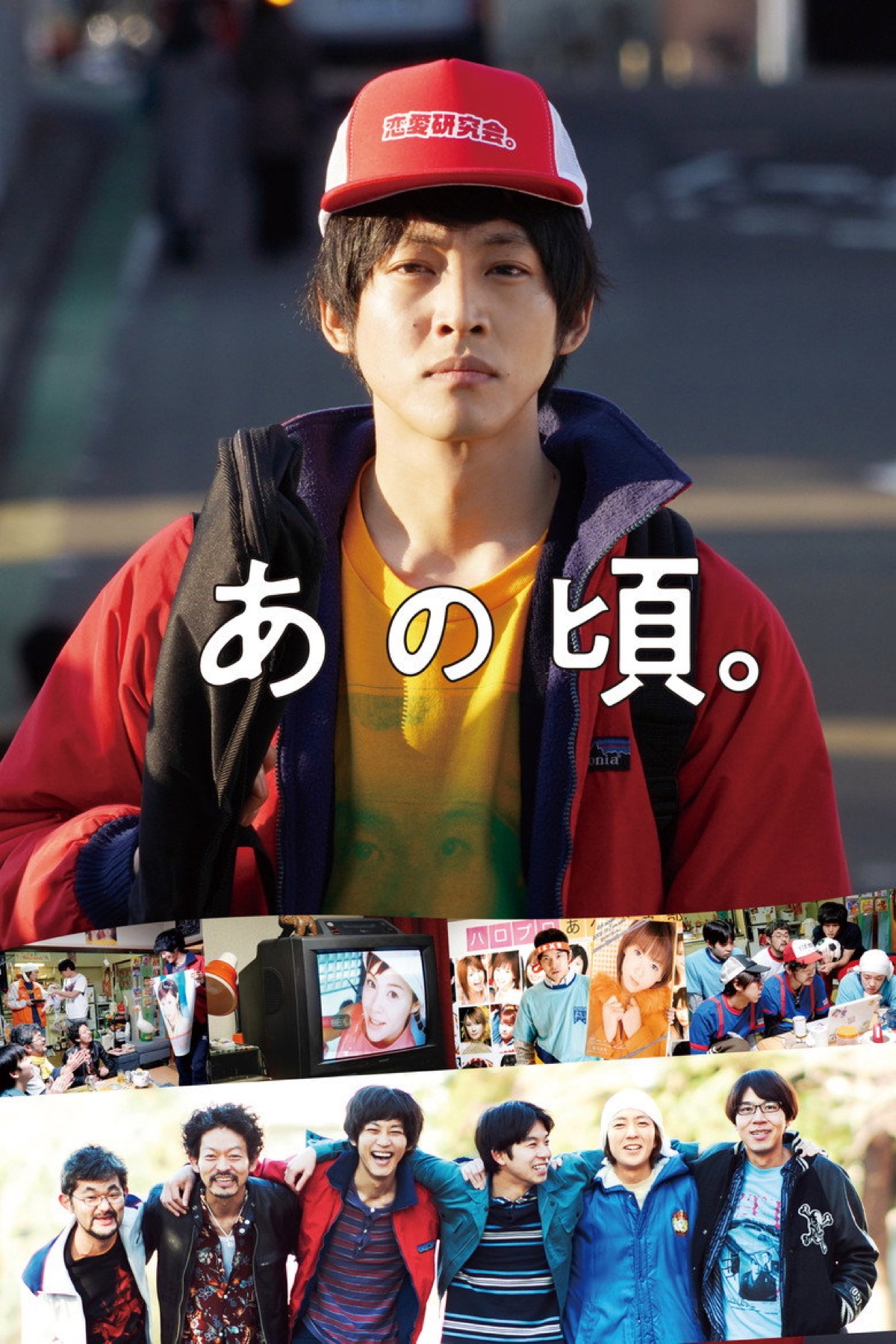
I came to it for the wrong reason, which was Tori Matsuzaka. He is a leading man in the conventional Japanese sense, and here he has switched off whatever it is that makes a face read as a leading man. The eyes go flat. The posture goes. Nobody warned me and I spent the first reel checking that it was the same actor.
📺 Where to Watch Ano Koro (August 2026)
| Service | Status | Notes |
|---|---|---|
| Netflix (US) | Not available | Netflix Japan streams it |
| Amazon Video (US) | Not available | No rental, no purchase |
| Hulu (US) | Not available | Hulu Japan is a separate service |
| Criterion Channel | Not available | No US arthouse pickup |
| Japanese services | Widely available | Netflix, Hulu, U-NEXT, plus rentals |
As of August 18, 2026, there is no legal way to watch this film in the United States. No streaming, no rental, no disc with English subtitles that I can find. It is a 2021 release from a mid-sized Japanese distributor about a subculture with no obvious export market, and it fell straight through the gap.
In Japan it is on three subscription services and every rental storefront. Writing this piece for readers who cannot act on it feels perverse, and I am doing it anyway, because the number of English-language articles about this film is approximately zero and somebody should at least record that it exists. If a distributor ever goes looking for Japanese films about fandom, this is the one.
🎬 Trailer
Japanese only, since no English campaign was ever cut for this. You can follow it anyway. Watch the group of men in the small room and note that none of them is being filmed the way Japanese cinema usually films attractive actors.
Work Info
- Title: Ano Koro, released internationally as In Those Days
- Released: February 2021, 117 minutes
- Director: Rikiya Imaizumi
- Screenplay: Masanori Tominaga
- Starring: Tori Matsuzaka, Taiga Nakano, Takashi Yamanaka, Ryuya Wakaba
- Based on: Mikito Tsurugi’s memoir of the same name
- Distributed by: Phantom Film, with Nikkatsu
📖 Synopsis, No Spoilers
Tsurugi has failed his graduate entrance exams, has no money, has no girlfriend, and is living the specific flavour of nothing that happens to men in their twenties who did not get where they intended to go. A friend hands him a disc of idol music videos, largely as a joke.
He watches Aya Matsuura perform and cannot stop crying. Shortly afterwards he is at an event, where he meets a set of men whose entire lives are organized around the same music, including a spectacularly abrasive one called Kozmin. They found a club with a joke name and spend the following years in rented rooms talking until morning about a pop group. Then everybody gets older.
✨ What Makes It Special
Why It Is Exceptional
- The rescue is taken completely seriously, with no irony attached
- Hours of unproductive time, filmed as though it mattered, because it did
- Handsome actors surrendering everything that makes them handsome
- An ending about the friendship ending, not the fandom
What oshi actually means
English has absorbed the word oshi over the last few years, mostly through anime titles, and it usually gets translated as favourite. That is not wrong and it is badly incomplete. The verb it comes from means to push, and the sense is closer to the one you back, the one you have decided to put your weight behind. It implies effort on your side.
This film is about that transaction at its most extreme, and it opens by refusing to be embarrassed. A man at the bottom of his life watches a nineteen-year-old singing about nothing much and something is repaired in him. The scene is not played for comedy. It is played as rescue, and the film’s position is that the rescue was real.
Some context helps here. Hello! Project, the agency behind Morning Musume and Aya Matsuura, was the dominant force in Japanese idol music through the 2000s, and its male fanbase built an entire subculture: coordinated chants, colour-coded light sticks, an economy of handshake events. Western readers now understand a version of this through K-pop, but the Japanese variant of the period was scruffier, poorer, and considerably less socially acceptable. These men were not participating in something cool. They were the punchline, and they knew it.
Which is the reason the film has weight. It is not arguing that the fandom was secretly respectable. It is arguing that the thing which keeps a person alive does not have to be respectable to count.
Two hours of nothing happening, on purpose
The club these men form does nothing. They gather in somebody’s flat, they talk about a pop group until the trains start running again, they go to events, they come back and talk about the events. There is no output. Viewed from outside it is a group of adult men wasting several years.
Rikiya Imaizumi films it patiently and without commentary, and by the middle of the film the effect has reversed. You start to envy them. Time spent with people who love the same unimportant thing is the least replaceable commodity there is, and almost nobody keeps it past thirty.
What makes it work is the acting, specifically the acting-down. Matsuzaka and Taiga Nakano are both extremely watchable performers who here spend two hours being neither. The posture, the way they occupy a room, the quality of eye contact: all of it is calibrated to a specific kind of Japanese man of that period, and it is done so precisely that it stops looking like performance.
The title is past tense
The Japanese title is two words and a full stop: those days, followed by nothing. The punctuation is the argument. This is not a film about a fandom, it is a film about a period that closed.
The second half is about the group thinning out. Jobs. Marriages. The gradual discovery that the person you spent every weekend with is now somebody you text twice a year. The film handles that without a single speech about growing up, which is the correct decision and a rare one, and it lands harder for it.
Deeper Themes
The film is quietly about male friendship in a culture that provides men with almost no permitted vocabulary for it. These men never say they care about each other. What they have instead is a shared object of enthusiasm, which functions as a licence to be in a room together for years without anybody needing to name what is going on.
Underneath that is a question about whether the idol was ever the point. The film’s answer, arrived at without stating it, is that she was the reason they met and not the reason they stayed. What they were actually attached to was each other, and the music was the excuse that made it possible.
🎭 Memorable Scenes
As long as we could all keep laughing like idiots tomorrow, and the day after, that was enough.
The opening remains the best thing in it. A man watching a music video and coming apart, filmed in one unhurried take, with no music cue telling you how to feel about him. Everything the film wants to argue is already finished by minute ten. The rest is evidence.
Then the late stretch involving Kozmin, whom Taiga Nakano plays as the most exhausting person in any room and who turns out to be the load-bearing wall of the entire group. What the film does with his illness is the thing I keep recommending it for: it refuses to become solemn. His friends keep talking to him exactly as they always did, in the same stupid register, and the refusal to switch tone is more affecting than any amount of dignified grief would have been.
Small, and hard to shake: a shot of the room after everyone has gone home. Cans, cushions, the television still on. The film keeps returning to that room across the years, and the last time it does, it means something completely different.
💭 How It Made Me Feel
Nostalgic for a period I never had, which is a strange trick for a film to pull. I was not a Hello! Project fan and I have never been to a handshake event. It did not matter. The film is not really about idols, and once you understand that, it starts working on whatever your own version of that room was.
What I actually did afterwards was message somebody I had not spoken to in four years. That is the effect it has. It is not a film that leaves you thoughtful, it is a film that leaves you slightly ashamed of how little effort friendship gets once you are busy.
Who Should Watch This?
- People who were genuinely rescued by something embarrassing
- People curious about Japanese idol fandom before K-pop made it legible
- Viewers past thirty who have lost touch with a group of friends
- Anyone who wants to see Tori Matsuzaka disappear inside a role
😅 Where It Falls Short
The parts that are hard to sit through
Look, I have been fond so far, so here is the honest warning. The film’s fidelity to its subject cuts both ways, and there are stretches where these men behave badly. They crash a university festival. There are remarks about women that were unremarkable in 2005 and read very differently now. The film does not endorse any of it, and it also does not stop to condemn it, which is the correct documentary instinct and will still make some viewers want to leave the room.
Second, the in-group humour is dense. Long stretches of this are men making references to a specific pop group that even Japanese viewers outside the fandom will not follow. The film knows that and does not care, and the cumulative effect for an outsider is occasionally like being the only sober person at a reunion.
Third, and this one is about you rather than the film: the secondhand embarrassment is severe. If watching people be sincerely, unselfconsciously cringeworthy is something you struggle with, this is close to a stress test. I had to pause twice, and I was enjoying it.
The Weak Points
- Behaviour that has aged badly, presented without comment
- In-group references that lock outsiders out for long stretches
- Sustained secondhand embarrassment, by design
Who Might Not Enjoy This?
- Low tolerance for sustained cringe comedy
- Viewers who need a film to judge its characters explicitly
- People looking for plot rather than accumulated time
📺 Streaming Guide by Service
What is realistically possible
Being straight with you costs nothing, so: outside Japan there is currently no way to do this legally, and I have not found one. No festival circuit release with subtitles, no boutique label, no streaming pickup. If you are in Japan or have an account here, it is on three services and every rental storefront.
The Japanese disc exists and shares a Blu-ray region with North America, but it carries no English subtitles, and this film is essentially all dialogue. That is not a workable route unless you read Japanese comfortably.
Worth watching for is the film festival circuit. Japanese films about fandom have started travelling as Western interest in the subject has grown, and this is the obvious candidate. If it turns up at a Japanese film season near you, go.
The Available Routes
- Japanese streaming services, if you are here or have an account here
- Import disc listings: Japanese release, no English subtitles
- Japanese film festivals and repertory seasons, which is the realistic hope
The Music
The score is by Hakushi Hasegawa, one of the more interesting musicians working in Japan right now, whose own records are jagged and unclassifiable in a way the film mostly does not require. Worth investigating on their own terms.
The songs that matter are Hello! Project records from the early 2000s, and they are all on streaming services. Put on Aya Matsuura’s singles from that period before you watch. Knowing what these men were listening to changes how the opening scene reads.
📚 The Source
This is adapted from a memoir by Mikito Tsurugi, who lived it and later became a musician himself. That is the reason the film’s texture is so specific: the small details of a rented room and a handshake queue are reported rather than invented.
No English edition exists and I would not expect one. A first-person account of Hello! Project fandom in the 2000s is a hard sell to an English-language publisher, which is a shame, because it is exactly the kind of document that ages into something valuable.
🎬 If You Loved Ano Koro, Watch These 3 Next
Oshi no Ko
The same word in the title, viewed from the stage rather than the floor. Where Ano Koro is about what an idol does for the people watching, this is about what the arrangement costs the person being watched. Read together they make a complete picture, and neither is comfortable.
👉 Read our review of Oshi no Ko
Bocchi the Rock!
The beginning of the party rather than the morning after. A girl with no social capacity finds the thing that lets her be in a room with other people, and the show is entirely about the arrival. Watch it before Ano Koro if you want the order to hurt more.
👉 Read our review of Bocchi the Rock!
The Blood of Wolves
Included for one reason: it is the same actor. Tori Matsuzaka plays a clean young detective who gets hollowed out over two hours, and there is no overlap whatsoever with the slumped idol fan in this film. Watching them close together is the best argument I have for why he is worth following.
👉 Read our review of The Blood of Wolves
📝 Final Thoughts
Ano Koro is a film about men who organized several years of their lives around a pop group, and it declines every opportunity to be superior about them. What it argues instead is that the years counted, that the friendships were the real object, and that both things ended anyway, which is what happens.
I cannot tell readers outside Japan how to watch it, which makes this a strange piece to have written. If Japanese cinema about fandom ever finds a Western distributor, remember the title. And in the meantime, message whoever you used to spend every weekend with. That is the actual instruction the film leaves you with.
⭐ Film at a Glance
| Category | Rating | Comment |
|---|---|---|
| Writing | ★★★★☆ | Accumulated time rather than plot |
| Performances | ★★★★★ | Two leading men switching off entirely |
| Direction | ★★★★☆ | Patient, unjudging, never solemn |
| Music | ★★★☆☆ | The needle-drops carry it |
| Emotional impact | ★★★★☆ | Sends you to your contacts list |
| Accessibility | ★★☆☆☆ | In-group humour, no US release at all |
Usagi’s Recommendation Score
⭐⭐⭐⭐⭐⭐⭐☆☆☆
7.0 / 10
About the friends, not the idol. Unreachable outside Japan, and worth the note anyway.

