*This page contains affiliate links. We may earn a commission if you make a purchase through these links.
You already know the piece of music. Almost everybody does. Four notes, a synthesizer, and a melody that has been used to sell everything from luxury cars to grief, and that a great many people can hum without having any idea what it belongs to.
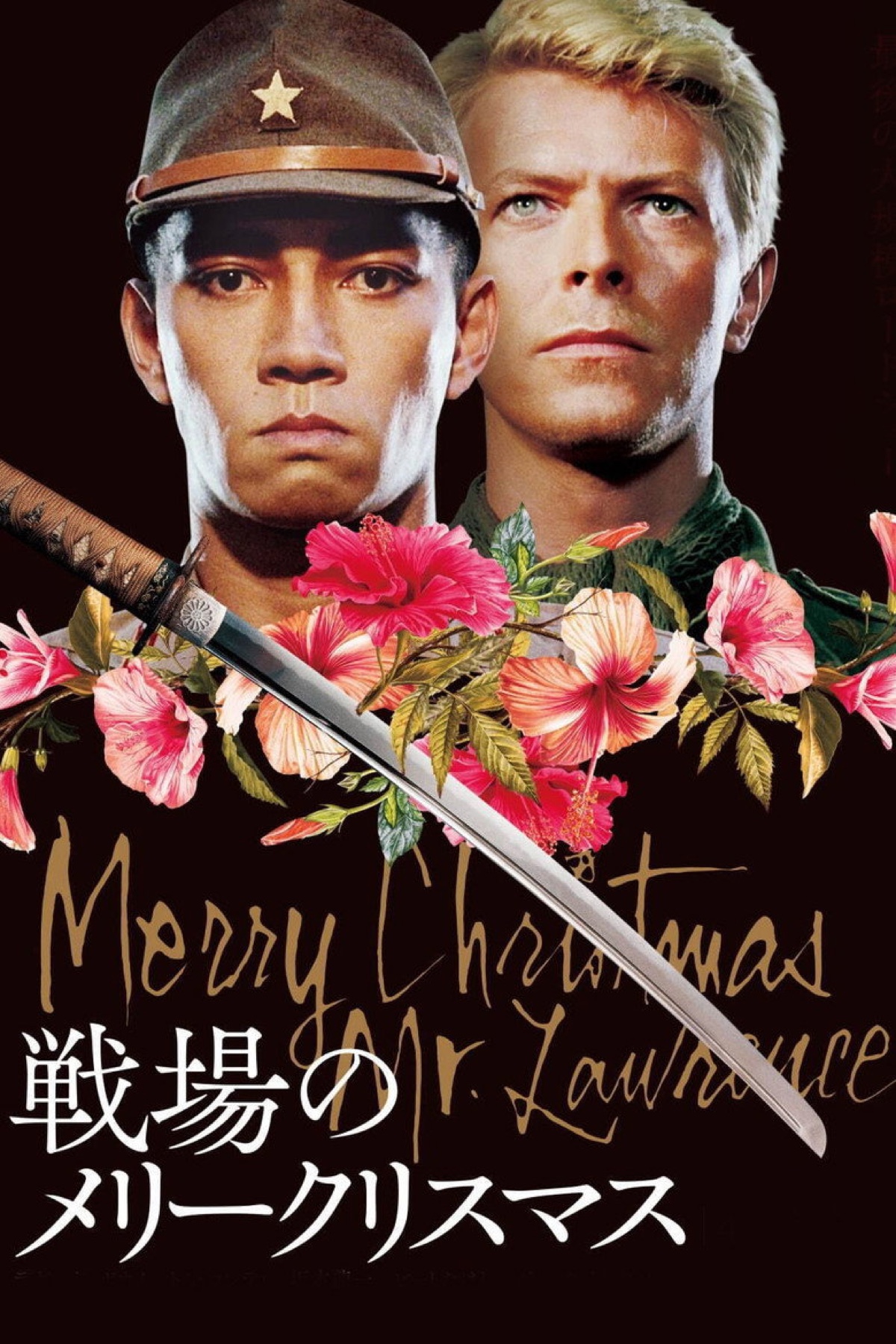
It belongs to a 1983 prisoner-of-war film by Nagisa Oshima in which there is not one second of combat. Ryuichi Sakamoto wrote it and also acted in it, opposite David Bowie, opposite a Japanese television comedian nobody had ever cast in anything serious. The film is much stranger than the song suggests, and in the US it is easy to watch, which is a change from most of what I cover here.
📺 Where to Watch Merry Christmas, Mr. Lawrence (October 2026)
| Service | Status | Notes |
|---|---|---|
| Plex | Streaming | Free with ads, listed in HD |
| YouTube | Streaming | Free with ads, listed in HD |
| Shout! Factory TV | Streaming | Free with ads, listed in HD |
| Tubi | Streaming | Free with ads, listed in SD only |
| Blu-ray / DVD (Amazon US) | Rent / Buy | Disc, for an ad-free copy |
| The Criterion Channel | Not available | Carried it in summer 2026, no longer listed |
| Amazon Prime Video | Not available | Not included with Prime in the US |
| Netflix | Not available | Not in the US catalog |
| Crunchyroll | Not available | It is a live-action film, not anime |
As of October 2, 2026, the film is free to stream in the US with ads, on at least four services. The Criterion Channel, which I recommended here in August, has since dropped it, and none of the major paid streaming services has picked it up. Of the free options, Plex, YouTube and Shout! Factory TV list it in HD and Tubi only in SD, which matters more than usual for a film this dependent on faces in close-up. Check the service page before you start; free catalogs shift without notice.
Japan: Prime Video, U-NEXT and FOD, all paid.
🎹 What Merry Christmas, Mr. Lawrence Is About, and What the Song Means
It is a 1983 live-action war drama, not an anime, set in a Japanese prisoner-of-war camp on Java in 1942. Nagisa Oshima directed it and it runs 123 minutes. At its center are two Japanese officers and two Allied prisoners, each living by a code the others cannot read, and the film watches what that does to all four inside one compound.
The famous piece is Ryuichi Sakamoto’s main theme, and it carries the film’s title. In the film it is instrumental. The vocal version, “Forbidden Colours,” with words and voice by David Sylvian, came out separately the same year. The title is a line spoken in the film, and the song means what that line means when you finally hear it. I will not say who says it or when, because the last scene is built around exactly that moment, but it is a greeting offered across the line between captor and captive, by someone you would not expect.
Here in Japan the melody has had an odd second life. Every December it comes back as seasonal background music, a pretty Christmas tune in shops and on television, with almost nobody thinking about a camp on Java. I do not begrudge anyone the tune. The film simply gives the “Merry Christmas” in it a weight that the shop speakers leave out.
🎬 Trailer
The Criterion trailer, which does the film a favor by not pretending there is action in it. Two men looking at each other for slightly too long is an accurate summary of the running time.
Work Info
- Title: Merry Christmas, Mr. Lawrence. In Japanese, Merry Christmas on the Battlefield
- Released: 1983, 123 minutes
- Director: Nagisa Oshima
- Cast: David Bowie, Ryuichi Sakamoto, Takeshi Kitano, Tom Conti
- Music: Ryuichi Sakamoto
- Source: The Seed and the Sower by Laurens van der Post
- Production: a Japan, UK and New Zealand co-production
📖 Synopsis, No Spoilers
Java, 1942, under Japanese occupation. In a prisoner-of-war camp, Sergeant Hara runs discipline through violence, and Colonel Lawrence, a British officer who speaks Japanese, is the only prisoner he will talk to as a person. The two of them have an understanding that neither would describe as friendship and that neither can explain to anyone else.
Then Major Jack Celliers arrives, and the camp commander, Captain Yonoi, cannot look away from him. What Yonoi feels has no name available to either of them in 1942, and the film never supplies one. Around that, two value systems grind against each other: a Japanese code in which capture is disgrace and suicide is honorable, and a Western one in which staying alive is the first duty. The film is not interested in deciding between them.
✨ What Makes It Special
Why It Is Exceptional
- A war film with no combat in it, and no loss of force from the absence
- A score so famous it has escaped the film entirely
- Three leads who were not actors, and whose presence beats acting anyway
Nobody fires a shot and the war is everywhere
There is no battlefield in this despite the Japanese title, no artillery, no aircraft. Everything happens inside one compound, and what the film puts under pressure is not survival but the beliefs people brought in with them.
The Japanese guards regard the prisoners as men who dishonored themselves by not dying. The prisoners regard suicide as a sin and endurance as a duty. Neither side is written as correct, and neither is written as monstrous. Oshima puts two coherent moral systems in a locked room and lets them fail to translate, and the result is a clearer account of what war does to people than most films that show the fighting.
Worth saying plainly: it is also a film about desire between men, made in Japan in 1983, in which nothing is stated and everything is legible. What Yonoi wants is obvious from his first scene and is never once said aloud, by him or by the film. That silence is period-accurate rather than evasive, and it is where most of the tension actually lives.
The music, and what happened to it
Sakamoto’s score is used sparingly, which is why the main theme detonates when it arrives. He wrote it and he is on screen in the film, which is an odd combination and might explain why the piece feels less like accompaniment than like the character’s interior finally getting a voice.
Ryuichi Sakamoto died in March 2023, and in Japan that changed the temperature around this piece of music permanently. It plays at memorials. It gets covered constantly. A theme that was already detached from its film became detached from its composer’s life as well, and a lot of people here now associate it with mourning him rather than with a POW camp. If you only know the song, the film is the thing that explains why it sounds the way it does, and I would put that as the single best reason to watch.
Casting a comedian as a war criminal
Bowie was a rock star, Sakamoto a musician, and Takeshi Kitano a comedian, and none of them had an acting career worth the name in 1983. Bowie’s unreality is the correct instrument for Celliers, and Sakamoto’s stiffness works for a man holding himself together by rule.
Kitano is the part that does not survive the trip. In 1983 he was Beat Takeshi, half of a manzai duo, one of the most famous comedians on Japanese television and famous specifically for being crude and fast and funny. Casting him as Sergeant Hara was like handing a brutal wartime role to a late-night comedy host. A Japanese audience in 1983 could not stop seeing the comedian, and that is precisely what makes the last scene land here the way it does: a face the whole country associated with laughing is doing something else entirely. An American viewer meets Hara cold and gets a good performance. In Japan the casting was itself part of the effect.
I am aware I am arguing that you had to be there, which is an annoying thing for a reviewer to do. So here is the version that does travel: Oshima looked at a television comic and saw a great screen actor five years before Kitano directed anything, and he was right.
Deeper Themes
The film’s position is that the two sides never understand each other and are changed by the collision anyway. Nobody converts, nobody is persuaded, and everybody leaves altered. That is a harder and more honest claim than the usual one about our shared humanity.
Oshima is also making a point about who gets judged. The final act moves the men into a situation where the moral positions have swapped, and the film declines to enjoy it. What it offers instead is the possibility that a man can be guilty and still not a monster, both at once.
🎭 Memorable Scenes
Merry Christmas, Mr. Lawrence.
Four words, said at the end, by a man whose position has reversed completely since the last time he said anything to Lawrence. The smile is enormous and the eyes are not doing the same thing as the mouth. Then the theme starts. I have seen this film several times and the ending has never once failed to work on me.
Before that, the kiss. Celliers walks through a parade ground where an execution is about to happen, puts his arms around Yonoi and kisses him on both cheeks, and the entire camp stops. It is an act of violence answered with affection, and the film treats it as the only move on the board that Yonoi has no defense against. The camera shakes during the take, apparently by accident, and it was kept. There is also a scene where Yonoi comes at night to cut a lock of Celliers’ hair and salutes, without a word spoken, which tells you more about him than any dialogue he gets.
💭 How It Made Me Feel
Unresolved, in the way the film intends. Did any of these men understand each other? I do not think so, and I do not think the film thinks so. What passed between them was real without being comprehension, and sitting with that is more uncomfortable than a reconciliation would have been.
What stays afterwards is smaller than the themes. Four men in a compound, none of whom could explain themselves to the others, all of whom kept trying. That is the part I come back for, and it is why the ending works on a rewatch when you already know it is coming.
Who Should Watch This?
- Anyone who knows the Sakamoto theme and has never seen where it comes from
- Bowie completists, since this is the best screen work he did
- Viewers who came to Takeshi Kitano through his own films and want the origin
- Anyone drawn to relationships that never resolve into understanding
😅 Where It Falls Short
The one time subtitles make you better off than we are
A complaint you will not have: the Japanese dialogue in this film is hard for Japanese people to follow. Tom Conti’s Japanese is a guessing game, Sakamoto was not a trained actor and does not project, and Kitano’s delivery has always been idiosyncratic. Japanese screenings do not subtitle Japanese speech, so a domestic audience is left straining, and the English scenes are frequently the clearest thing in the film. Watching this with subtitles is not a compromise. It is the better version.
The real weakness is the withholding. Oshima strips out so much motivation that first-time viewers often cannot say why a character did what they did, and the flashback to Celliers and his brother is dropped in with almost no connective tissue. This is a film that assumes a second viewing, and it does not warn you.
Also worth setting expectations: nothing happens for long stretches, in the conventional sense. If you arrive because it is billed as a war film, the first hour will feel like an error.
The Weak Points
- Motivation is withheld to the point of obscurity on a first viewing
- The Celliers flashback sits awkwardly against the main story
- The Japanese audio is muddy, which affects Japanese viewers more than you
Who Might Not Enjoy This?
- Anyone expecting a war picture in the ordinary sense
- Viewers who want motives spelled out on screen
- People with no patience for a film that withholds its own ending’s meaning
📺 Streaming Guide by Service
An HD free stream if you can, Tubi if it is already open
Plex, YouTube or Shout! Factory TV is the recommendation, and not out of snobbery. This is a film of faces held in close-up in tropical light, and the difference between their HD listing and Tubi’s SD one is visible in a way it would not be on something busier.
That said, Tubi costs nothing, and a free copy you actually watch beats a better copy you keep meaning to get to. If the ads bother you during the last twenty minutes, and they will, the disc gets you an uninterrupted copy.
One scheduling note. Give the ending room. The final scene plus that piece of music is not something to walk away from into your inbox, and the film is engineered so that the whole thing pays off in the last ninety seconds.
Watch It Here
- Plex: free with ads, in HD
- Tubi: free with ads, no account required, SD only
- Shout! Factory TV: free with ads, as is YouTube
- Blu-ray / DVD on Amazon: the disc, uninterrupted
Soundtrack
Both major streaming services carry the score, and this is the rare film album a lot of people own without owning the film itself.
Worth knowing that the vocal version, Forbidden Colours with David Sylvian, is a separate piece from the instrumental main title, and that Sakamoto rerecorded the theme repeatedly over four decades. The solo piano performances from late in his life are the ones to hear after watching.
📚 The Source Novel
The film comes from The Seed and the Sower by Laurens van der Post, who was himself held in a Japanese prison camp on Java during the war. It was written in English, so unlike most things I cover here there is no translation to hunt for.
The book is available on Amazon and gives Lawrence the interiority the film deliberately withholds, including a far more tangled set of feelings about his captors. If the ending left you unsure what you had watched, this is the productive place to go next.
🎬 If You Loved Merry Christmas, Mr. Lawrence, Watch These 3 Next
Sonatine
Where Kitano went after Oshima found him. He directs and stars, and the film is about men waiting on a beach for a death they have stopped fearing. The stillness and the sudden violence are the same instincts Hara was built from, now under his own control.
Jin-Roh: The Wolf Brigade
Animation, and the same question: what a code does to the person carrying it. A man inside an institution he believes in finds that belief steadily removing the parts of him that could have chosen otherwise. Colder than Oshima, and arriving at a bleaker version of the same place.
👉 Read our review of Jin-Roh: The Wolf Brigade
EUREKA
Three hours and thirty-seven minutes of people who survived something together and cannot discuss it. If what held you here was four men failing to say what they meant to each other, this is the Japanese film that takes that condition as its entire subject.
📝 Final Thoughts
A war film with no war in it, carried by three men who were not actors and a piece of music that outgrew the movie it was written for. Forty years on nothing has replaced it, largely because nobody else has tried to stage a collision of value systems and then refused to award the argument to either side.
If you know the melody and nothing else, this is the assignment. The tune is not simply beautiful. It is what four men in a compound could not say to each other, and once you have seen where it sits, it does not sound the same again.
⭐ Film at a Glance
| Category | Rating | Comment |
|---|---|---|
| Writing | ★★★★☆ | Withholds so much that it needs two viewings |
| Visuals | ★★★★☆ | Faces in tropical light, and little else |
| Music | ★★★★★ | One of the most recognizable scores ever written |
| Presence | ★★★★★ | Three non-actors, and none of them replaceable |
| Clarity | ★★★☆☆ | Deliberately hard to follow the first time |
Usagi’s Recommendation Score
⭐⭐⭐⭐⭐⭐⭐⭐☆☆
8.5 / 10
Learn what the melody is for, and the last scene will take you apart.

