*This page contains affiliate links. We may earn a commission if you make a purchase through these links.
For years I kept two drawers in my head. Pixar was the studio that built stories. DreamWorks was the studio that built jokes. It was lazy filing, and nothing had ever forced me to reopen it. Then I finally sat down with How to Train Your Dragon, and the thing that surprised me was not the dragons. It was how carefully the thing is put together.
The film reached Japan on August 7, 2010, four and a half months behind the American release, under the title Hikku to Doragon: Hiccup and the Dragon. The English title offers to teach you a method for training a creature. The Japanese title promises nothing and simply names the two of them. Having watched it, I think Japan chose the better one, and the gap between those two titles is exactly where my one real complaint with this film eventually turned up.
📺 Where to Watch How to Train Your Dragon (October 2026)
| Service | Status | Notes |
|---|---|---|
| Paramount+ | Streaming | Included on Essential as well as Premium |
| Prime Video Channels | Add-on | Through the Paramount+ channel |
| Amazon Video | Rent / Buy | A Prime membership does not cover it |
| Apple TV | Rent / Buy | Also on Fandango at Home, YouTube, Google Play |
| Netflix | Not available | Netflix has the 2025 live-action remake instead |
| Peacock | Not available | DreamWorks belongs to Universal, still not here |
| Disney+ | Not available | This is DreamWorks, never Disney |
| Crunchyroll | Not available | Not an anime service title |
Prime members can add Paramount+ as a channel inside the Prime Video app. The two services people get wrong are Netflix and Peacock, for different reasons. The next section sorts them out.
👉 If a story about people discovering that the monsters they were raised to kill are not monsters sounds familiar, Japan arrived there in 1984. Nausicaä of the Valley of the Wind runs the same experiment with insects. Miyazaki is far less gentle about it.
🐉 Which How to Train Your Dragon Is on Netflix?
The one on Netflix in the US is the 2025 live-action remake, not this film. The 2010 animated original is on Paramount+. Both go by the same title with no subtitle, so searching either app turns up whichever version that service holds. Check the year on the listing before you press play.
The two are close relations. Dean DeBlois co-directed the 2010 film with Chris Sanders and then directed the remake himself, John Powell scored both, and Gerard Butler is Stoick in each, first as a voice and then in person. The remake runs 125 minutes against the original’s 98.
The remake took a roundabout path to Netflix. It streamed first on Peacock, from October 10, 2025, then moved to Netflix on February 10, 2026, and it is set to go back to Peacock afterward. The animated film is outside that arrangement, and Peacock does not carry it either.
If you have seen neither, my advice is the order. Watch the 2010 one first. The rule that the dragon never speaks, and the idea that the boy’s weapon is attention rather than muscle, were both settled here, and the remake inherits them.
🎬 Trailer
Work Info
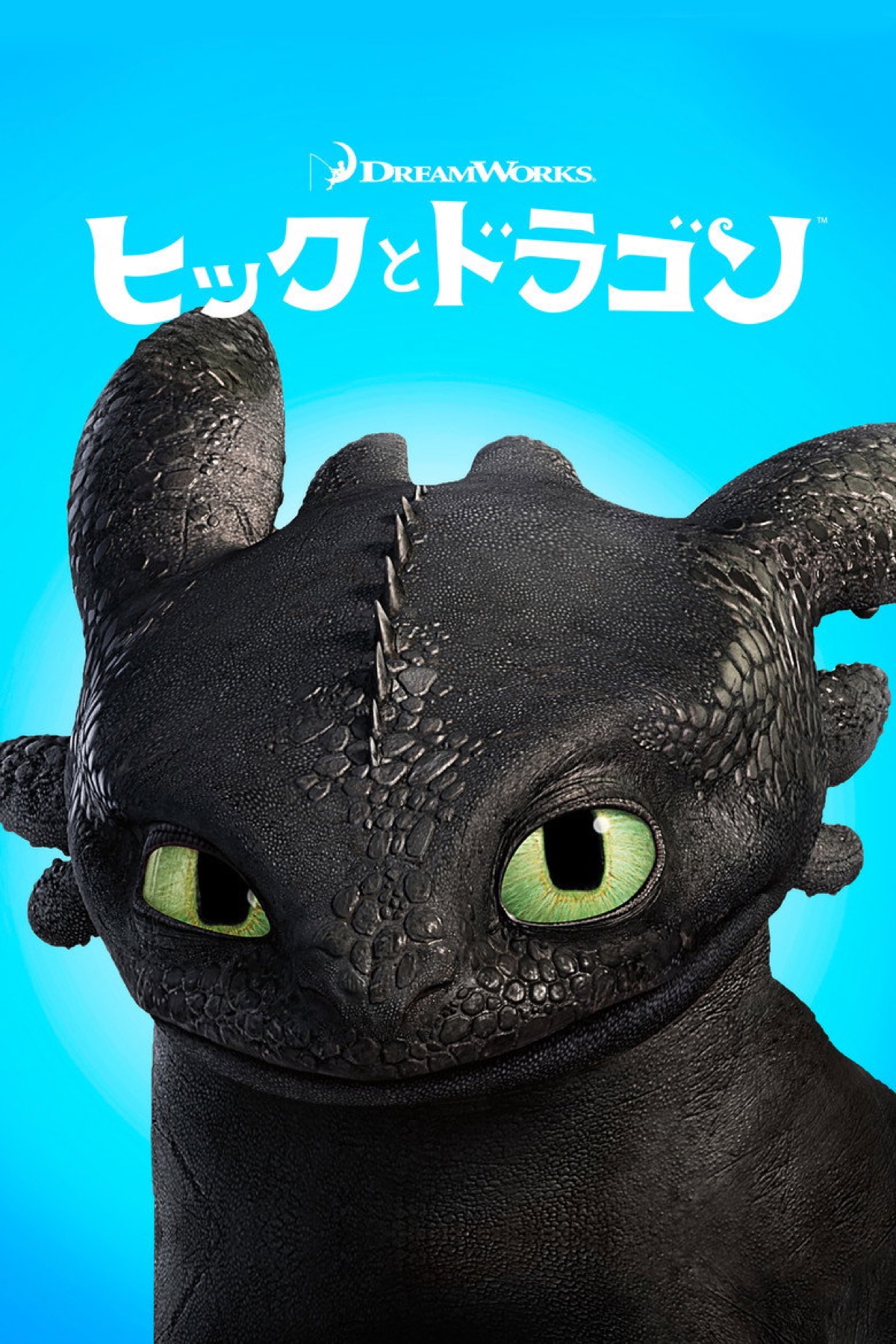
- Title: How to Train Your Dragon (2010)
- Directors: Chris Sanders / Dean DeBlois
- Runtime: 98 minutes
- Studio: DreamWorks Animation
- Music: John Powell
- Based on: the children’s novel by Cressida Cowell
- US theatrical release: March 26, 2010
- Japanese theatrical release: August 7, 2010
📖 Synopsis – No Spoilers
Berk is a viking island. In the opening narration Hiccup explains, with a certain amount of pride, that the village is seven generations old while every single building on it is brand new. Dragons keep burning the place down; the vikings keep rebuilding it. Raids are routine weather. Killing a dragon is the job, the honor, and the proof that a boy has become an adult.
Hiccup, the chief’s son, is the least suitable candidate on the island. Thin, unable to swing anything heavy, permanently in the forge building odd machinery. One night a bolas launcher of his own design actually connects, and something black that nobody on Berk has ever seen goes down in the woods. The next morning he goes out to finish it. He cannot. From there the island’s certainties begin to shift.
✨ What Makes It Special
Why It’s Exceptional
- The hero never gets stronger. The island changes its mind instead
- The category called enemy is taken apart one small fact at a time
- A dragon that never speaks a word, and never needs to
- A John Powell flight cue that carries whole scenes by itself
Hiccup never gets stronger. Berk does the changing
The default for this kind of story is fixed. Weak protagonist trains, awakens, wins by force in the final reel. This film declines the whole route. Hiccup finishes the film as thin as he started it, still unable to handle a weapon properly.
What he does instead is observe. He goes back to the downed dragon every day, tests what it flinches from and what it likes, and writes the results down. The island’s ancestral Dragon Manual lists each species by the method it will use to kill you, and closes every entry with the instruction to kill on sight. Hiccup’s notebook fills up with how to avoid making one angry. That is not training. It is research.
The interesting part is that none of the research converts into personal strength. When Hiccup suddenly starts topping the class at dragon training, his arm has not improved at all. He simply knows how to put a dragon in a good mood. Everyone around him reads this as Hiccup got strong. What has actually happened is that the definition of winning got quietly swapped out underneath them.
And the swap refuses to stay inside one boy’s head. His classmates start copying him. Then the adults. The character who grows in this film is the island. Something that opened as a chief’s son trying to satisfy his father turns, without ever announcing it, into a story about an entire population changing its mind. That transposition is the best thing in the film, and it is far too good to leave filed under children’s animation.
Yes, it is a kids’ movie. No, that does not mean what you think it means. The complaint that the plot is conventional is fair, and I will make it myself further down. But conventional stories are separated by how they are carried. This one refuses to deliver the island changed its mind as an announcement, and instead shows you who breaks first, who breaks second, and who holds out longest. That is why the closing stretch has any weight at all.
Watching the word enemy come apart
Berk hates dragons for the reason most groups hate most things: everybody was told to, from birth. It is written in the manual, the parents repeat it, the entire village behaves accordingly. Nobody has checked. Nobody doubts it either.
The discipline here is that the film refuses to break the assumption in one blow. What Hiccup notices first is not the grand conclusion that dragons are innocent. It is that this one will not go anywhere near an eel, that a particular plant makes it go limp with pleasure, that it chases reflected light like a housecat. Trivial, useless little facts. They accumulate until the large conclusion collapses on its own. The order never gets reversed.
The structure reads perfectly well outside the film. Calling something an enemy while declining to look at it closely is not a rare condition. What is skillful is that this is carried entirely by one boy and one animal, with nobody delivering a lecture. Not a single character says anything about prejudice. Nobody has to, because the audience gets there without help. I say that as someone who is normally allergic to films carrying a Message.
The flying, and John Powell’s score
The flight sequences are my favorite thing in this film, and I do not have a more sophisticated word available than beautiful. I am aware that my vocabulary is shrinking here. This is the part that works somewhere other than the logic of the plot.
Half of the reason is the music. The score brought John Powell his first Academy Award nomination; the film went into the 83rd Academy Awards with two nominations, Best Animated Feature and Best Original Score, and came away with neither. The cue everybody means is Test Drive. The moment the two of them punch up into cloud the sound opens out, and elation and the possibility of falling arrive in the same bar.
Deeper Themes
This is also built as a father and son story. Stoick is not a bad father. He is a competent chief carrying responsibility for an entire island, and that responsibility surfaces in the form of a rejection of his own child. The son does not hate him either. Two people who are both not wrong, failing to meet, and the film never resolves that by making one of them foolish. The island’s premise only updates when the generation does. Swap the dragons for something else and the shape holds.
🎭 Memorable Scenes
1. The knife he does not use
He shot it down himself. He is holding the blade himself. There is nobody in the woods to see what happens next, and doing it would make him a hero before breakfast. His hand will not move. This half minute decides the character of the entire film. What Hiccup sees on the ground is not a monster but a frightened animal, and once you have seen something that way you cannot put it back in the old category.
2. The first time they fly side by side
Not reins. Not obedience. The two of them become a single machine, and if either half is slow both halves die. Nothing about this is explained; it is simply shown, in a sequence with almost no dialogue. How level that relationship looks here is the foundation everything in the back half rests on.
3. Two people give Hiccup advice, and it contradicts
His father hands him an axe and explains what carrying it means: “you walk like us, you talk like us, you think like us. No more of... this.” Hiccup, glancing down at himself: “You just gestured to all of me.” Gobber, the blacksmith, gives him the opposite instruction entirely: “Look, the point is, stop trying so hard to be something you’re not.” Hiccup takes Gobber’s advice, and by taking it becomes more useful to the island than anybody. Stoick’s demand ends up satisfied in a form Stoick never once imagined. Very neatly built.
💭 How It Made Me Feel
What surprised me most was that the storytelling never went slack. I did not expect that from this studio. Walking in with a jokes-first impression meant the careful construction landed considerably harder than it would have otherwise.
Films in which dragons look cool are not in short supply. What I came away holding was a different sensation entirely: so that is how an idea travels. One person checks something. The person next to them copies it. The most stubborn one in the room folds last. I had not expected something shelved under children’s animation to hand an adult that particular texture.
It did not land while I was watching, either. It landed a few days later, in the middle of an argument about something completely unrelated, when I noticed I had started thinking in this film’s terms.
👉 It is on Paramount+ in the US.
Who Should Watch This?
- Adults who have skipped this for years on the grounds that it is a kids’ cartoon
- Live-action regulars who get through maybe two animated films a year
- Anyone hunting for the one film to watch with their kid. Strongly recommended
😅 Where It Falls Short
I have been selling this hard for a while, so here is the other column. Four items. The fourth is one I have not seen anybody else raise, which means it is either a real observation or a personal quirk, and I am not sure which.
The last act changes scale on you
Everything up to that point runs on one boy, one dragon, and the slow spread of what he found out. Then the film swaps into a large-scale battle. The thing it swaps into was set up earlier, so it is not unearned in plot terms. It is simply the wrong size for the story that was actually being told. There was a version of this that settled the whole matter as a question about a relationship, and I think that version would have been better.
You can see all of it coming
Who opens up, who folds last, at what point the secret gets found out. There is no development in this film you will not have predicted. If a story you can see coming reads to you as a boring one, this is not your film. It is built to be enjoyed at the level of execution rather than surprise, and that is precisely where opinions divide.
Nobody outside the main three has an interior
Hiccup, Toothless and Stoick are handled with real care. The cost of that shows up everywhere else. The twins and Snotlout hold exactly one comic function from their first scene to their last. Even Astrid could have used a visible process for changing her mind about him, rather than arriving at the new position mostly offscreen.
Plenty of people disagree with me here and say the entire supporting cast is lovable. I still land on the unsatisfied side. I understand it perfectly well as the price of a 98-minute running time. It remains a price.
The coexistence lands closer to pet ownership than partnership
This is a small thing, and I want it on the record anyway. The story resolves toward humans and dragons living together, which is the correct ending. But the picture of that life has moments where it looks less like equal neighbors and more like domesticated animals fitted neatly into a human household.
Back in the woods, at the moment Hiccup did not use the knife, the two of them were unambiguously level. Each was in a position to kill the other and each declined. Once the whole island accepts dragons, that tension drains away very cleanly. Accepting something is not the same as keeping it. I know why the film ends where it ends, and it still nags at me. This bothered me, and I still think this is one of the best animated films of its decade.
Which brings me back to the two titles I opened with. The English one offers to teach you how to train your dragon. The Japanese one just calls them Hiccup and the Dragon. The film is at its best whenever it is being the second of those.
The Downsides
- The large-scale finale is the wrong size for the story it follows
- Every development is visible well in advance
- Characters outside the main three never move off their assigned function
- The coexistence ending reads closer to domestication than to equality
Who Might Not Enjoy This?
- Anyone who needs a plot to surprise them
- Anyone who wants an ensemble where every character gets developed
- Anyone who gets caught on where the line sits between humans and animals
📺 Streaming Guide by Service
In the US this one is simple. Paramount+ is the subscription carrying it, and Prime members can reach it through the Paramount+ channel on Amazon, so either one covers it. Without them, a rental on Prime Video or Apple TV does the job.
Where to Stream
- Paramount+: Streaming, on either plan
- Prime Video Channels: Add-on, through the Paramount+ channel
- Amazon Video: Rent / Buy
- Apple TV: Rent / Buy
- Blu-ray: For the flight sequences at full bitrate, where the sky holds its color
- The Cressida Cowell novels: The books the film adapts very loosely
Soundtrack
John Powell’s score, with Test Drive as the track everybody comes back for. Played after you have seen the film, it reruns the flight in your head at no charge.
- Spotify: Available
🎬 If You Loved How to Train Your Dragon, Watch These 5 Next
This site is written from Japan, so what follows is five Japanese titles rather than the obvious sequels. The questions this film raises, about the creatures a society has agreed to call enemies and about winning without getting any stronger, have been standing subjects in Japanese animation for decades.
Nausicaä of the Valley of the Wind
1984. A princess who studies the giant insects everyone else is organized around killing, who arrives at the unglamorous small facts first, and who then has to drag an entire population toward a different conclusion. Miyazaki built Hiccup’s structure twenty-six years earlier and was considerably harder about it, because the people in Nausicaä’s world have far better reasons to be afraid than Berk ever did. She also flies, constantly, and the film treats flight the same way this one does. If you take a single recommendation off this list, take this one.
👉 Read the Nausicaä of the Valley of the Wind review
Princess Mononoke
The version in which nobody is allowed to be the villain. The humans wrecking the forest have families to feed; the gods defending it are not remotely gentle. If what you valued here was the dismantling of enemy as a workable category, this pushes it much further than a family film is permitted to go.
👉 Read the Princess Mononoke review
Dr. Stone Season 1
Hiccup’s real weapon was a notebook. This is that idea, given a stone age and several hundred episodes of room. A boy who wins on knowledge alone, and more to the point whose knowledge propagates through a population until the population itself is a different thing. Same pleasure, no dragons.
👉 Read the Dr. Stone Season 1 review
Castle in the Sky
For the flying, and for the watch it with your kid then get ambushed yourself register. Miyazaki’s 1986 adventure also contains a robot built as a weapon that spends the film deciding to be a gardener instead, which is this exact conversation held in different equipment.
👉 Read the Castle in the Sky review
A Letter to Momo
Three non-human creatures move in with a girl, and at no point does any of them become a pet. They are rude, greedy houseguests she has to negotiate with, which is the answer to my fourth complaint above. Underneath the comedy it is about a letter from her father that was never finished. If the father material on Berk did something to you, go here next.
👉 Read the A Letter to Momo review
For the opposite end of Western animation, Sing is a talent-show comedy with nothing at stake but stage fright. 👉 Read the Sing review
📝 Final Thoughts
What this film is finally about is not a weak boy becoming strong, but a weak boy rebuilding what his island believes. The plot is visible from a considerable distance, the supporting cast is thin, and I have my reservations about where the coexistence lands. What is real is the patience: it shows one person checking something, the next person copying it, and the last holdout giving way, without skipping any of the steps in between.
If the flying is what stays with you, Japan’s answer to it is mostly Miyazaki, and three of the five picks above, Nausicaä, Princess Mononoke and Castle in the Sky, are also the backbone of my Japanese fantasy anime guide, which is where I would go next for more sky after Toothless.
⭐ Series at a Glance
| Category | Rating |
|---|---|
| Story | ★★★★★ |
| Visuals | ★★★★★ |
| Music | ★★★★★ |
| Characters | ★★★★☆ |
| Unpredictability | ★★★☆☆ |
| Rewatch Value | ★★★★★ |
Usagi’s Recommendation Score
⭐⭐⭐⭐⭐⭐⭐⭐⭐☆
8.8 / 10
Ninety-eight minutes in which nobody gets stronger and an entire island changes its mind.

