*This page contains affiliate links. We may earn a commission if you make a purchase through these links.
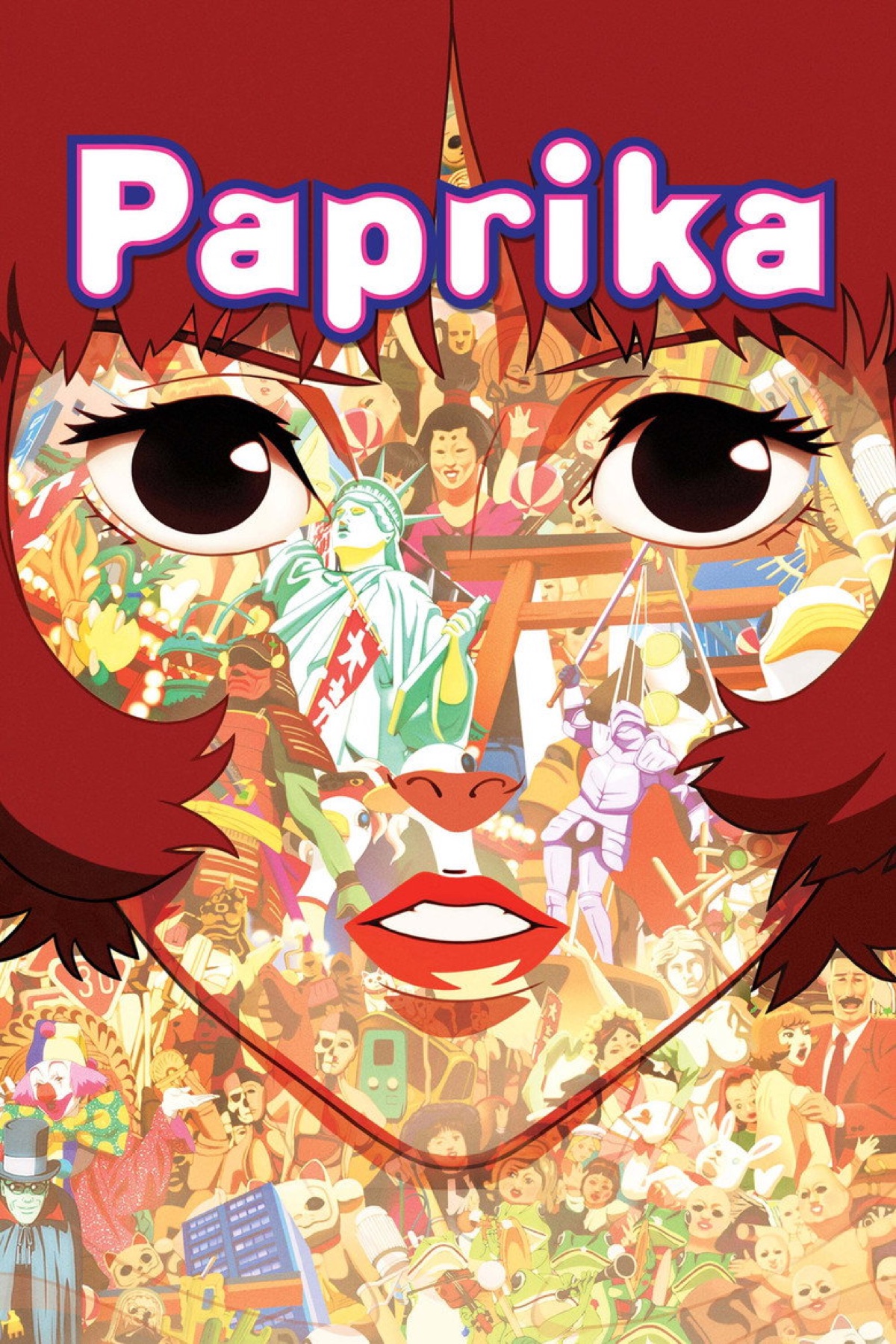
Paprika turns 20 in Japan on November 25, 2026, and twenty years on it is still a famously hard film to explain. Refrigerators, Japanese dolls and torii gates march down a city street as if they were a band in a festival, and nobody in the film can tell you where the procession is going. It is a movie about the dreams you locked away, coming back out in a parade.
It is also hard to follow, and I’ll say why up front. The characters try to hold their dreams down with reason, while the audience tries to keep up with the plot through reason, and both get left behind. I love it anyway. Below: where Paprika streams in the US right now (free, as it happens), then the parade, the Inception comparison, my reading of what the film is about, and the two things that held my score at 7.4.
📺 Where to Watch Paprika (November 2026)
| Service | Status | Notes |
|---|---|---|
| Tubi | Free with ads | No subscription needed |
| YouTube | Free with ads | Listed under YouTube’s free movies |
| Sony Pictures Core on Prime Video | Add-on | A paid channel, not part of Prime itself |
| Amazon Prime Video | Rent / Buy | $3.99 to rent |
| Apple TV | Rent / Buy | $3.99 to rent, $12.99 to buy |
| Fandango at Home | Rent / Buy | $3.99 to rent |
| Netflix | Not available | Not in the US catalog |
| Crunchyroll | Not available | Not listed |
| Hulu | Not available | Not listed |
| HBO Max | Not available | Not listed |
As of November 11, 2026, Paprika streams free with ads in the US on Tubi and on YouTube. No major subscription includes it in the base plan. The only subscription route is Sony Pictures Core, a paid channel you add on top of Prime Video. Amazon, Apple TV and Fandango at Home rent it. It is not on Netflix, Hulu, HBO Max or Crunchyroll. I checked TMDB’s US listings and JustWatch’s US page that day and they matched, though I could not open Tubi’s own page from Japan. Free titles rotate in and out, so confirm on the service before you settle in.
Here in Japan, it is not free anywhere I checked. U-NEXT and d Anime Store include it in their subscriptions, and Prime Video Japan only rents it.
📣 If you want Satoshi Kon with no dreams at all, Tokyo Godfathers is his Christmas film about three homeless people in Shinjuku who find an abandoned baby.
🎬 Trailer
This is the US trailer from the official channel of Sony Pictures Classics, which brought the film to American theaters in 2007.
Work Info
- Title: Paprika (Japanese title: Papurika)
- Released: November 25, 2006 (Japan); 2007 in the US through Sony Pictures Classics
- Director: Satoshi Kon
- Based on: the novel Paprika by Yasutaka Tsutsui
- Runtime: 90 minutes
- Music: Susumu Hirasawa
- Japanese voice cast: Megumi Hayashibara (Atsuko Chiba / Paprika), Toru Furuya (Kosaku Tokita), Akio Otsuka (Toshimi Konakawa), Toru Emori (Seijiro Inui), Koichi Yamadera (Morio Osanai), Katsunosuke Hori (Torataro Shima)
- Studio: Madhouse
- Festival: In competition at the 63rd Venice International Film Festival
- Source: TMDB
📖 Synopsis – No Spoilers
At the Institute for Psychiatric Research, a team has built the DC Mini, a device that lets one person step into another person’s dreams. It was made for therapy. Before it has been approved, the psychotherapist Atsuko Chiba is already using it, slipping into patients’ dreams as a different self named Paprika. One of those patients is Toshimi Konakawa, a police detective who keeps having the same nightmare.
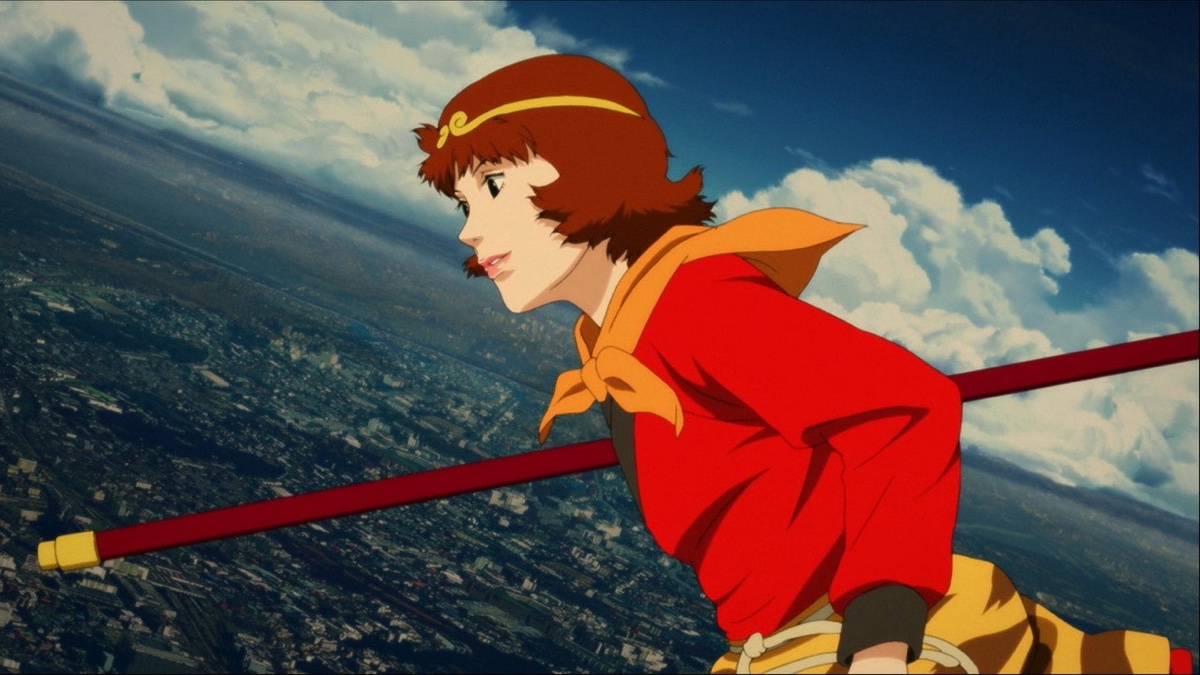
Then an unfinished DC Mini is stolen. Soon after, the institute’s chief, Shima, starts pouring out a stream of words that make no sense and throws himself through a window. Someone is using the device to reach into other people’s dreams from the outside. Atsuko and the DC Mini’s inventor, Kosaku Tokita, go after whoever took it, while the line separating dreams from waking life keeps wearing thinner.
👥 Paprika Characters and Japanese Voice Cast (No Spoilers)
Paprika introduces a whole research institute, plus a heroine with a second self, within its first few minutes, and the story moves on before the names sink in. So here are the ten people you meet early on, grouped by where they belong, with their Japanese voice actors. Who stole the DC Mini and how the story ends are not in here.
The four at the center
Character images: TMDB (official artwork) and a Sony Pictures press release. ©2006 MADHOUSE / Sony Pictures Entertainment (Japan) Inc.
The rest of the institute, and the bar
| Character | Role | Who they are | Japanese voice |
|---|---|---|---|
| Torataro Shima | Chief of the institute | In charge of developing the DC Mini. A cheerful, white-haired man | Katsunosuke Hori |
| Kosaku Tokita | Researcher | The genius who invented the DC Mini. Childlike in some ways, close to Atsuko | Toru Furuya |
| Seijiro Inui | Chairman | An elderly man in a wheelchair who sees the DC Mini as dangerous and opposes it | Toru Emori |
| Kei Himuro | Tokita’s assistant | Worked on the DC Mini, then has not been seen since around the time it went missing | Daisuke Sakaguchi |
| Kuga | Bartender | Runs Radio Club, a bar on the internet | Yasutaka Tsutsui, the novel’s author |
| Jinnai | Bartender | Works the same bar | Satoshi Kon, the director |
Shima and Inui disagree about the DC Mini, and that split runs through the whole institute. Radio Club is where Konakawa first meets Paprika. And yes, the two bartenders are voiced by the novel’s author and the film’s director, both in cameo roles.
✨ What Makes It Special
Why It’s Exceptional
- A dream parade that is not in the novel, set to Susumu Hirasawa’s music and filling the whole screen
- Scenes slide from dream to waking life to another dream with no visible seams
- Under all the spectacle, the story of a detective who turned his back on the movies
- An institutional power struggle that keeps the runaway dreams anchored
The parade is fun to watch, and something about it is off
The parade is what everyone talks about, and for good reason. Household appliances such as refrigerators, Japanese dolls, torii gates: they all march along cheerfully. The colors are bright, the music is bouncy, and it is a pleasure to look at. And still, nobody can say where the procession is headed.
There are no ghosts and no blood. Things that look happy swallow people up while still looking happy. While you are deciding whether you are allowed to laugh, the line keeps getting longer. The unease is not horror-movie fear. It is closer to that moment in a dream when you notice something is wrong and cannot wake up.
Setting the pace is Susumu Hirasawa’s track “Parade.” In Japan, Hirasawa has a devoted following of his own, well beyond anime. The song is as bright as a march, yet the vocal sounds slightly off-key, and it fits the strangeness on screen so well that I cannot tell which came first. The parade does not appear in Yasutaka Tsutsui’s novel. Kon added it when he adapted the book, and it became the most famous scene in the film. When Paprika came out, this scene and the visuals of Ghost in the Shell 2: Innocence were the two images that burned themselves into my memory, and the parade is still there.
You stop knowing which side of the dream you are on
Paprika barely shows you where one scene ends and the next begins. You think a character has woken up, and they are still dreaming. Someone walking down a real hallway is, in the next cut, standing in another person’s dream. The film never tells you where you are.
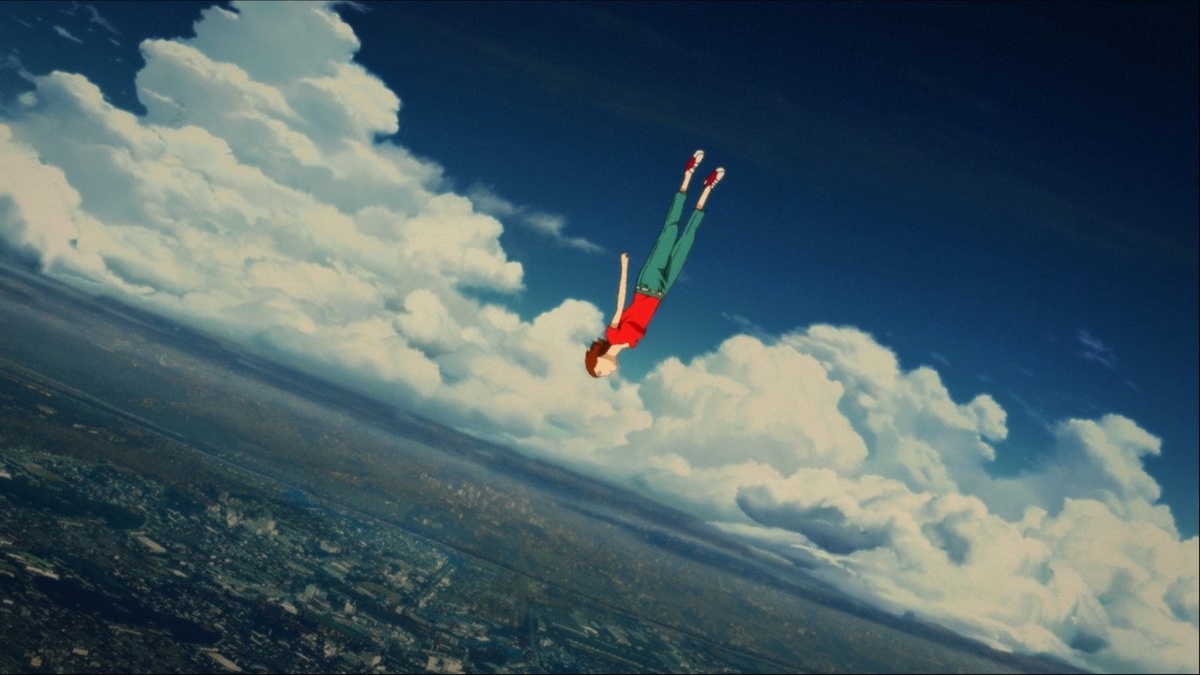
That difficulty reminds me of Christopher Nolan. Paprika is often brought up alongside Inception (2010), the other famous film about going into dreams. People have argued for years about how much one fed into the other, but I have never seen Nolan himself say so, and I am not going to claim it. What I will say is that they confuse you in different ways. Inception explains its dream levels and their rules out loud. Paprika explains nothing and slides on to the next dream. It is the few seconds after dozing off on the sofa, when you cannot tell whether you are awake, stretched out to 90 minutes.
So do not worry if you cannot hold the whole plot after one viewing. Being carried along without understanding is the experience the film is offering.
Follow Detective Konakawa and the film comes into focus
If you get lost, follow Konakawa. He has the same nightmare every night. A circus, a jungle, a scene out of an old classic: in his dream he is always a character in a movie, and it always ends with him cornered. Awake, he insists he has no interest in movies.

When he was young, he started making a film with a friend and never finished it. He is a man who turned away from something he loved and packed it away somewhere deep. While the big case of the dream thief unfolds, Konakawa is also facing what his own nightmare is made of. The flashier dreams make him easy to overlook, but he is the one who changes most, in the most human way. In Japanese he is voiced by Akio Otsuka, a voice anime fans in Japan know well as Batou in the Ghost in the Shell films.
What is Paprika actually about? My reading
Here is my answer. Reason alone cannot control people or the world. The dreams and desires we push down should not be thrown out; once we accept them as part of ourselves, we can finally live in the real world.
Read the film that way and the characters fall into place. Atsuko is a composed researcher who keeps her feelings off her face. In dreams, that same Atsuko runs around as Paprika, impulsive and friendly. What Atsuko holds back comes out in the shape of Paprika. Konakawa keeps having nightmares because he will not admit he once loved movies. The institute is working on a way to handle dreams with a machine. And whoever stole the DC Mini also wants dreams to obey their will.
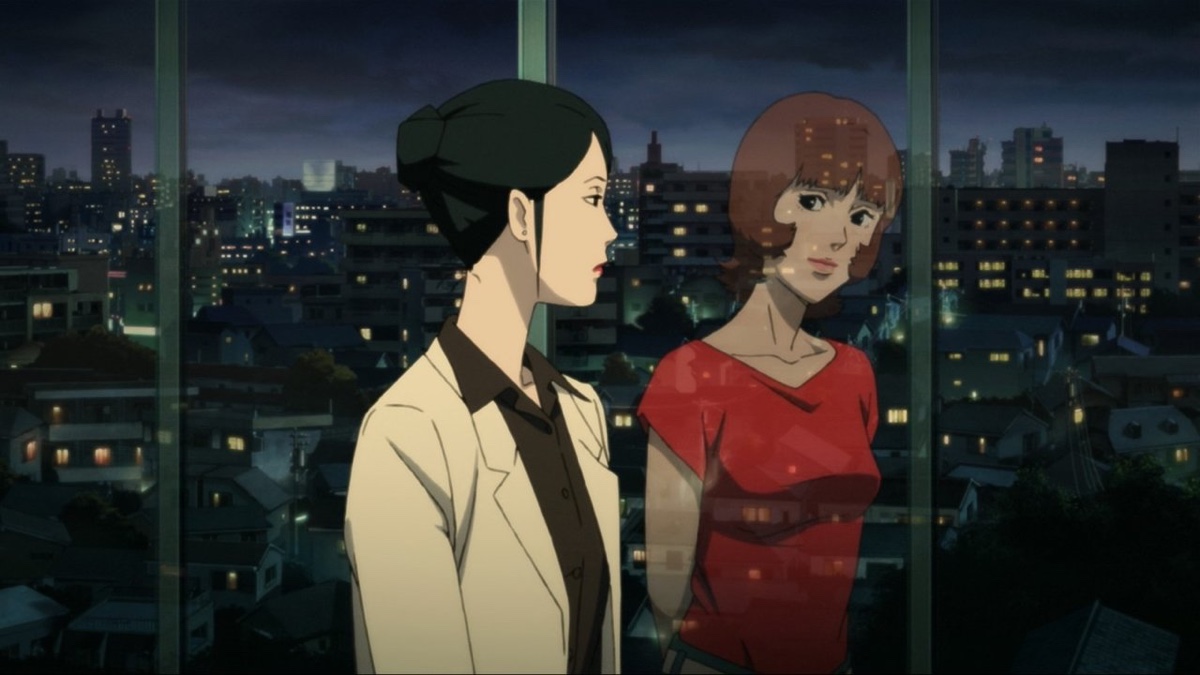
Everyone is trying to press dreams down from the side of reason, and the harder something is pressed down, the more of it spills into the streets as a parade. The audience trying to follow the plot by logic is standing on that same side, which is why the harder you chase the story, the further behind you fall. I think the parade is frightening while it looks happy because it is a procession of things someone packed away.
Deeper Themes
Japanese fans have a word for one kind of story here: sekai-kei, roughly “world-type,” for stories where one person’s actions decide the fate of the whole world. On the surface, Paprika is close to that: a single device, and the plans of whoever stole it, are enough to turn the world upside down. What sets it apart is what sits underneath. The chairman and the chief, the researchers, the detective from outside: people with different positions and different motives, and a fight over whether the research should go forward or be stopped. That social, almost political ensemble gives the story a foundation, so however wildly the dreams run, the film does not fly apart. Very few films manage both, and it is the reason I keep calling this one deep rather than merely strange.
🎭 Memorable Scenes
Dreams are being violated.
The film’s Japanese tagline (my translation)
Just as that line promised Japanese audiences, the further the story goes, the more the dreams eat into reality. Three scenes stay with me.
The parade steps out of the dream. At first the march is only playing inside someone’s dream. Later in the film, you start hearing it in the real streets. The moment a familiar cityscape fills up with appliances and dolls, the whole mood of the film changes.
Konakawa’s dream at the very start. A circus cage, a Tarzan jungle, streets that recall Roman Holiday. In his dream Konakawa is the hero of one movie after another, and each jump to a new scene corners him a little more. If you love film, you will catch yourself trying to name each reference. Those few minutes already hold his whole past.

Chief Shima loses his mind. You can make out every word, and yet the sentences mean nothing. The words just keep pouring out of him and do not stop. I have rarely seen a film make a person taken over by a dream this unsettling. If you have run into a short clip of it on social media, this is where it comes from.
💭 How It Made Me Feel
This is not a film that clicks into place the second it ends. Plenty stays unclear. Over the end credits plays Hirasawa’s “Byakkoya no Musume,” and you sit there with half the puzzle still in your hands. If you watch it a second time, follow Konakawa’s and Atsuko’s faces instead of the parade. It turns into a different story.
Who Should Watch This?
- Anyone who heard Paprika is hard and has been putting it off, especially if it would be your first Satoshi Kon film
- Fans of dream and virtual-reality films, from Inception to The Matrix
- Anyone who saw Millennium Actress or Tokyo Godfathers and wants more Kon
😅 Where It Falls Short
I have been gushing, so let me be fair to the people who bounced off it. Even in a film I love, two things bothered me.
The ending wraps up by force
Up to the middle, the film carefully builds up the way dreams and reality seep into each other. Then, near the end, the scale suddenly balloons and the conflict is settled by enormous forces crashing into each other. To me, it read as the film tying things off by brute strength. There is a real thrill in watching all the scattered threads pull together at one point, but next to the delicate mixing of the first two thirds, the resolution is broad-brushed.
Unexplained lines leave you behind
Not explaining is part of the charm, no argument there. Still, a lot of what the characters say about dreams, and a lot of what people possessed by dreams say, is hard to make sense of. The more you are trying to follow the story, the more those lines trip you up. Ask me afterward what Paprika is about and I can describe the images, but the plot is much harder to put into words.
Who Might Not Enjoy This?
- Anyone who needs every thread tied up by the end credits
- Anyone uneasy with eerie imagery, such as doll faces and bodies warping inside dreams (it is not a horror film, but it gets under your skin)
📺 Streaming Guide by Service
The Available Routes
- Tubi: free with ads
- YouTube: free with ads
- Prime Video: digital rental, plus the paid Sony Pictures Core channel
- Apple TV: digital rental and purchase
- Fandango at Home: digital rental and purchase
- Netflix, Hulu, HBO Max, Crunchyroll (US): not available
Start with Tubi; it costs nothing. If the ads break the spell (this is a film that depends on never letting you surface), a $3.99 rental is the cleaner way to see it. For a copy on the shelf, Amazon has Paprika on Blu-ray. And if you finish the film wanting the long version of the institute’s story, Yasutaka Tsutsui’s novel is available in English, translated by Andrew Driver: Paprika (Vintage paperback). The film squeezes into 90 minutes what the novel spreads across a full-length book, and the parade is the film’s own invention.
Soundtrack
The score is by Susumu Hirasawa. The parade music is “Parade,” and the ending theme is “Byakkoya no Musume.” Both are on Hirasawa’s Paprika original soundtrack, released in Japan on November 23, 2006, which streams on Spotify.
🎬 If You Loved Paprika, Watch These 3 Next
Kon’s darkest take on the same blur of real and unreal, his warmest one, and the film whose images sat next to Paprika’s parade in my head.
Perfect Blue (Satoshi Kon)
Kon’s first feature as director. Mima leaves a pop idol group to become an actress, and hounded by a stalker and by something that seems to be her own double, she stops being able to trust what she sees. Take the dream-and-reality blur of Paprika, remove the fun, and leave only the fear, and this is what you get. If the parade’s creepiness was what hooked you, this may hit even harder. US viewers can stream it on HBO Max, or rent it on Amazon.
Millennium Actress (Satoshi Kon)
A filmmaker interviews a retired actress, and as she tells her life story, her memories and the roles she played run together until you cannot separate them. Susumu Hirasawa scored this one too. Where Paprika is about making peace with the dreams you buried, Millennium Actress is about chasing one feeling all your life without letting go of it. Neither film throws fiction away as the opposite of real life, and they share the same kindness. HBO Max has it in the US, and it plays free with ads on Plex.
👉 Read my Millennium Actress review
Ghost in the Shell 2: Innocence (Mamoru Oshii)
The cyborg investigator Batou looks into a case of doll-like androids killing their owners. The dialogue is thick with quotations from philosophy and the classics, and it is just as hard to take in on one viewing. You are overwhelmed by what is on screen before you can follow the story, which makes it the same kind of film as Paprika. It is also about the line separating dolls from people, which makes the Japanese dolls in Paprika’s parade look different afterward. Batou is voiced by Akio Otsuka, Konakawa’s voice. In the US it is not streaming right now; the disc is the way in.
👉 Read my Ghost in the Shell 2: Innocence review
❓ Paprika (2006) FAQ
Is Paprika on Netflix?
No. US Netflix does not carry it. When I checked on November 11, 2026, it was free with ads on Tubi and YouTube, and available to rent on Amazon, Apple TV and Fandango at Home.
Is Paprika dubbed in English?
An English dub exists, with Cindy Robinson as Atsuko and Paprika, and US home video releases have carried it. Streaming listings differ on which audio tracks they offer, so check the audio menu before you start. In Japanese, Atsuko and Paprika are both voiced by Megumi Hayashibara, a voice most Japanese anime fans know from Evangelion’s Rei Ayanami and Cowboy Bebop’s Faye Valentine.
Did Paprika inspire Inception?
The two are often compared, and plenty of people believe Paprika influenced Inception. I have not found a direct statement from Christopher Nolan confirming it, so I treat it as a comparison, not a fact.
Was Paprika Satoshi Kon’s last film?
It was the fourth and last feature film he completed. Kon died in August 2010 at 46, and the film he was working on next, Dreaming Machine, was left unfinished.
📝 Final Thoughts
The ending felt forced to me, and there is a lot in Paprika I still cannot fully explain. It divides people, and I understand why. I love this film anyway. Few films carry a one-person-saves-the-world story on top of a story about institutions and the people inside them, and fewer still make it this much fun to look at.
If you have been told it is too difficult and keep putting it off, stop trying to follow every thread. Just watch until the parade, and let the film carry you from there. Tubi will not even charge you for it.
⭐ Film at a Glance
| Category | Rating | Comment |
|---|---|---|
| Visuals | ★★★★★ | The parade of appliances and dolls fills the whole frame |
| Music | ★★★★★ | Hirasawa’s songs move in step with the images |
| Depth of themes | ★★★★★ | People pressing dreams down with reason, and the backlash |
| Easy to follow | ★★☆☆☆ | The jumps from dream to waking life come unexplained |
| Ending | ★★★☆☆ | Settled in one big collision of giant forces |
| Eeriness | ★★★★☆ | Doll faces and warping bodies. Not horror, still unsettling |
Usagi’s Recommendation Score
⭐⭐⭐⭐⭐⭐⭐✨☆☆
7.4 / 10
Ninety minutes of dreams I loved before I understood them.

 in the US: free with ads on Tubi and YouTube, or rent it. A fan in Jap)