*This page contains affiliate links. We may earn a commission if you make a purchase through these links.
Moana is having an odd autumn in Japan. On November 13, Nippon TV’s Friday Roadshow (Kinyo Roadshow, the Friday-night movie slot that has been part of Japanese living rooms since the 1980s) gives Moana 2 its first free-to-air broadcast here. Three and a half months earlier, the live-action remake opened in Japanese theaters under exactly the same Japanese title as the 2016 film: Moana to Densetsu no Umi, “Moana and the Legendary Sea.” So people over here are asking the same thing American readers are asking. Is the original worth going back to first?
My answer is yes, with a number attached. What carries this film is an ocean that acts as a character in its own right, plus one song, How Far I’ll Go. Add a heroine with no prince and no love interest, and you get a Disney princess film that is unusually out of step with the rest of the shelf. The story, on the other hand, is predictable, and the villains barely register. I land at 6 out of 10. Below: where it streams in the US, what makes the good half so good, what drags the other half down, and what the Japanese dub sounds like.
📺 Where to Watch Moana (October 2026)
| Service | Status | Notes |
|---|---|---|
| Disney+ | Streaming | Moana 2 plus the 2026 remake are on it too |
| Amazon Prime Video | Rent / Buy | Prime members still pay per title |
| Apple TV | Rent / Buy | YouTube, Google Play, Fandango at Home too |
| Hulu | Not available | Not in the Hulu library |
| Netflix | Not available | Disney keeps its animation at home |
As of October 30, 2026, Disney+ is the only US subscription carrying the 2016 animated Moana. Moana 2 is on Disney+ as well, and the live-action remake joined the service on October 21, 2026, so all three now sit on one shelf. Anywhere else, the original is pay-per-title. Licensing can change without notice, so confirm the title on Disney+ before subscribing just for this.
👉 If what hooks you is a melody that keeps coming back with a new meaning each time, Pixar’s Coco does the same trick a year later: one song, sung to one person at the start and to someone else entirely at the end.
🎬 Trailer
Work Info
- Title: Moana (2016), released in Japan as Moana to Densetsu no Umi (“Moana and the Legendary Sea”)
- Directors: Ron Clements, John Musker, the pair behind The Little Mermaid (1989) and Aladdin (1992)
- Songs: Lin-Manuel Miranda, Opetaia Foa’i, Mark Mancina (Mancina also wrote the score)
- Voices: Auli’i Cravalho (Moana), Dwayne Johnson (Maui), Rachel House (Gramma Tala), Temuera Morrison (Chief Tui), Jemaine Clement (Tamatoa)
- Japanese dub: Tomona Yabiku (Moana), Matsuya Onoe (Maui), Mari Natsuki (Gramma Tala), ROLLY (Tamatoa)
- Runtime: 107 minutes, rated PG
- Released: November 23, 2016 in the US, March 10, 2017 in Japan
- Awards: Nominated for Best Animated Feature, plus Best Original Song for How Far I’ll Go, at the 89th Academy Awards
- Studio: Walt Disney Animation Studios
- Source: TMDB
📖 Synopsis – No Spoilers
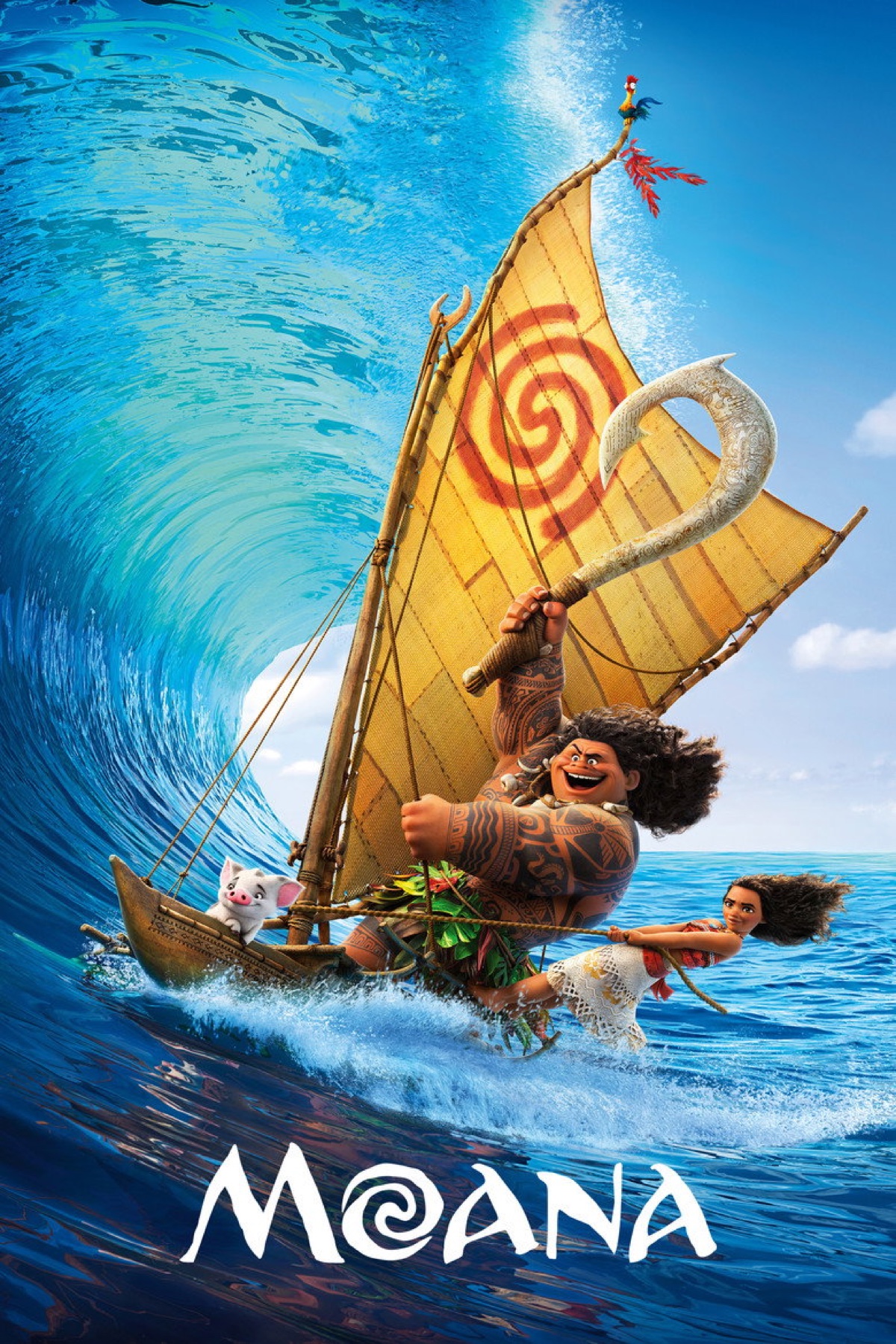
Motunui is an island in the South Pacific. Moana, daughter of Chief Tui, has been drawn to the water since she could walk, and her father has forbidden anyone to sail past the reef that rings the island. Be born on the island, live on the island, take over as chief one day: that is the road laid out for her. Then the coconuts start coming down black and rotten, and the fish inside the reef disappear.
Her grandmother Tala tells her the old story. Long ago the demigod Maui stole the heart of Te Fiti, the goddess of life, and since then a darkness has been spreading across the ocean, island by island, until it has reached theirs. Moana sets out in a small boat to find Maui and make him put the heart back. Put simply, the ocean has picked her for the job. Her sailing skills have not caught up with the appointment.
✨ What Makes It Special
Why It’s Exceptional
- The ocean rises up as a body of water that plays with Moana, helps her, sometimes shoves her away
- The melody of How Far I’ll Go keeps coming back, meaning something different each time
- Maui is at his best when the tiny Maui living in his tattoos is heckling him
- Moana and Maui never become a couple, and their bickering turns into trust instead
The ocean is the second lead
The ocean in this film never speaks a line, and it still has more expressions than anyone else on screen. When toddler Moana stands at the water’s edge, the sea draws itself back into two walls and lets her look inside. When Maui tries to escape by diving overboard, it throws him straight back onto the boat. Before you register how high a wave is or how clear the water is, you already know what mood the ocean is in. Anyone can guess that animating water is hard. This film goes one step further and gives the water a temper.
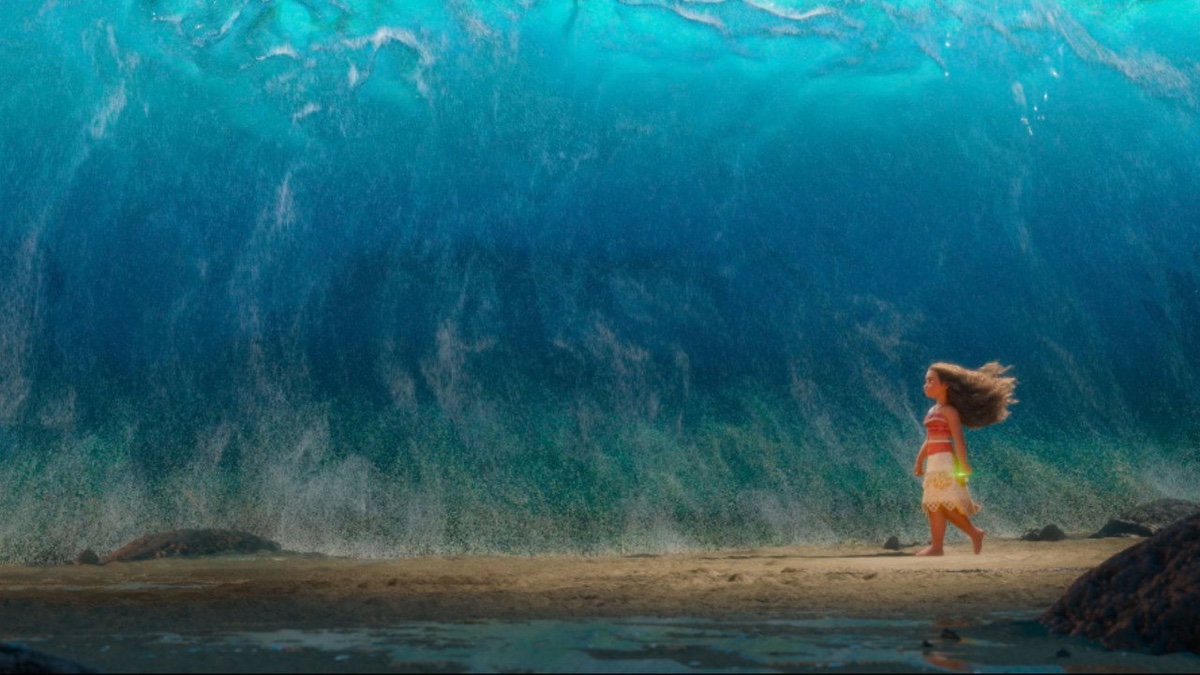
It came out in 2016, and the light on the surface, the weight of a swell, the transparency of the spray have not aged at all. Even people who are hard on the plot tend to make an exception for this. I am in that group. You can see every turn of the story coming, and the ocean still holds up as a character.
There is a reading of the ocean that circulates among Japanese viewers, and it is the one closest to how I see the film: the ocean is the mother, and the island is the father. The sea puts Moana through trials but never abandons her. The island stays where it is and teaches her to put down roots. Even Tui, who keeps telling her to stay off the water, is not trying to cage his daughter; he knows how dangerous the sea is. The film never asks her to choose one and throw the other away. Moana becomes herself at the point where she can accept both kinds of love at once. Read it that way and it becomes clear why the filmmakers gave the water a face.
Why How Far I’ll Go hits so hard
The first time through, How Far I’ll Go is not a song about hating island life. Moana loves the island and loves her family, and she still cannot keep still when she looks at the water. She sings that split alone on the beach. As the chorus opens up, you can hear the anxiety tipping, bit by bit, into wanting to go.
The melody does not stay put. There is a short reprise, and it surfaces again in I Am Moana (Song of the Ancestors) later in the film. A song that started as indecision on a beach comes back as a declaration of who she is. What lands is less the vocal performance than the time stacked up on top of one tune.
In Japan the song is called Dokomademo, roughly “as far as it goes,” and the Japanese Moana is Tomona Yabiku, a singer from Okinawa who won the part through an audition. In interviews she has said she thinks she got it because she grew up on an island, just as Moana did. The Japanese end-credits version was recorded separately by the pop singer Miliyah Kato. For what it’s worth, the songs lose nothing in the Japanese dub. The Japanese-language soundtrack album is even on Apple Music in the US (linked further down), if you want to hear how Dokomademo sits against the English original.
Maui, and a partner who never becomes a love interest
Maui is a demigod built on the hero of Polynesian mythology, a braggart who claims to have hauled islands up out of the sea with his fishhook. His tattoos are a record of his feats, and the tiny Maui inked among them moves on his own and calls out his lies. It is genuinely funny that the tattoo feels remorse before the man does. Behind the swagger is a past where all he wanted was for humans to love him, which keeps the role from being just a loudmouth.
And the two of them never fall for each other. No prince, no wedding, no kiss. What they have starts as squabbling and becomes respect. If the words “Disney princess” make you brace yourself, this is the part that will change your mind. (If that absence of romance is the appeal for you, I keep a list of Japanese anime with no romance built around exactly that.)
I’ve spent a while praising this film. Here is the honest part before it goes further: everything above is about the ocean, the songs, and the two leads. The story they are walking through is a different matter, and I will get to it.
Deeper Themes
The core of this film is Moana learning to say who she is. On one side is the role she was raised for, the chief’s daughter. On the other is the girl who cannot stop looking at the water. The goal of her voyage is not to pick one, but to carry both and say out loud, “I am Moana of Motunui.” She does the same for Maui along the way, telling him that what makes him Maui is not the gods but himself. Birth and assigned roles do not settle who you are; in the end you name yourself. The girl’s journey and her partner’s recovery run on that one idea.
🎭 Memorable Scenes
I am Moana of Motunui.
1. Toddler Moana meets the ocean
A barely walking Moana shields a baby sea turtle from the birds and walks it all the way down to the water. The sea rises up in front of her and holds out a shell. There is almost no dialogue, and it is still completely clear that the ocean has taken a shine to this kid. The whole film’s promise is made in the first few minutes.
2. The glowing manta ray at night
Gramma Tala has always said that one day she will come back to the sea as a manta ray. The night Moana leaves the island, a glowing ray appears beside her boat and lights the way ahead. The person who pushed her out the door is gone, and is still watching from inside the water. For anyone who has lost someone in their family, this lands quietly and hard.
3. Tamatoa sings Shiny
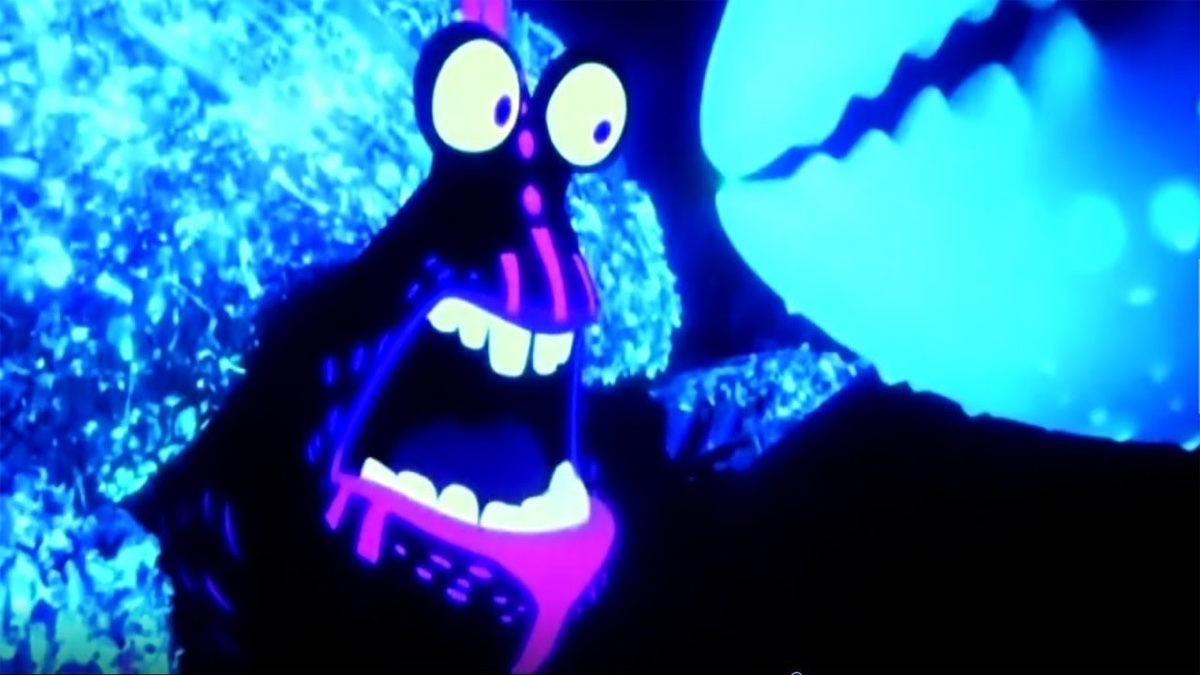
A giant coconut crab who glues treasure to his shell spends an entire number singing about how much he sparkles. The screen drops to black, the shell lights up into a disco ball, and loud neon colors dance across the dark. In a film painted almost entirely in sea blue and sky blue, this is the one stretch where the palette goes somewhere else entirely. In the Japanese dub the song goes to ROLLY, a veteran glam rocker, and his campy delivery suits the crab perfectly.
💭 How It Made Me Feel
The plot is simple and the showdowns are thin. Even so, the songs and the ocean carry 107 minutes of a girl leaving home and arriving at her own name, and they carry it the whole way. If you have ever been torn over leaving home while still loving the people in it, the beach song will probably remind you of something.
If you come away wanting more animation where water moves with a will of its own, my pick is Masaaki Yuasa’s Lu Over the Wall, where a mermaid girl lifts seawater into the air and plays with it. More on that in the three picks at the end.
👉 To watch it now, Moana is streaming on Disney+ in the US.
Who Should Watch This?
- Moana 2 is on your list, and you skipped the first film
- Anyone who saw the 2026 live-action remake and wants to see the animated version it is built on
- Adults who flinch at the word “princess.” There is no romance here, which makes it easier to walk into
😅 Where It Falls Short
Now for the story side of the ledger. Next to the ocean and the songs, there is much less here to praise.
The plot is stock, and you can see every turn coming
A girl who wants to leave her island defies her father, sets out, meets a partner, falls out with him, and finally clears the way with her own strength. It traces the coming-of-age template almost exactly, and you can usually call the next beat before it arrives. Honestly, I found the plotting crude. Being easy to follow is a strength for children, but as an adult you watch the destination, the falling-out and the reconciliation all land precisely where you predicted. If someone summed it up as “she goes there and comes back,” I would have trouble arguing.
Maui’s change of heart is rushed
In the second half the two of them break up and Maui leaves Moana. What happens on his side while he is gone is barely shown, and then he comes back. You want him back, so the return is welcome. But the film skips the stretch that connects why he left to why he returned, and the moment never gets as warm as it should. He is too good a partner for that. Give him even five minutes alone and the return would have hit much harder.
The villains are thin, and the finale is over fast
There is no villain in the classic Disney sense. Tamatoa is unforgettable, but he gets one sequence. The coconut-armored Kakamora pirates come and go quickly too. And the final showdown with the lava demon Te Kā is over fast. A Disney villain with real weight is exactly what this film does not have. If that is what you want from the studio, it will feel thin. One more nitpick while I’m here: the ocean helps with practically everything, so the obvious question, “why doesn’t the ocean just return the heart itself?”, is hard to wave away.
The Downsides
- A by-the-numbers coming-of-age plot that adults will see through
- What Maui goes through during the falling-out is left off screen
- Thin villains, and a final confrontation that ends quickly
Who Might Not Enjoy This?
- Anyone who wants a big Disney villain and a nail-biting final battle
- Anyone allergic to musicals. Every time a song stops the story, you will get restless
- Anyone looking for a script that surprises them
❓ Before You Press Play
Should you watch Moana before Moana 2?
Yes, please do. Moana 2 picks up Moana’s life after the first voyage and sends her farther out. How she and Maui became partners, where she stands in her village, what Gramma Tala meant to her: whether you know those things changes how the sequel’s opening minutes read. The first film runs 107 minutes, and both are on Disney+, so it is an easy double bill. In Japan, it is the obvious homework before Friday Roadshow airs the sequel on November 13.
Is the Japanese dub worth hearing?
My own answer: the Japanese dub is a lot of fun. Moana is Tomona Yabiku, Maui is the kabuki actor Matsuya Onoe, Gramma Tala is the actor-singer Mari Natsuki, and Tamatoa is ROLLY. The songs are sung in Japanese too, so the dub is the easy choice when kids are watching. In English you get Auli’i Cravalho as Moana and Dwayne Johnson as Maui, and Johnson does his own singing on You’re Welcome. Whichever one you start with, hearing the same songs in the other language is a good reason for a second watch.
How does it relate to the 2026 live-action Moana?
In 2026 Disney remade the same story in live action. It opened July 10 in the US and July 31 in Japan, directed by Thomas Kail, with Catherine Laga’aia as Moana and Dwayne Johnson returning as Maui. Japan’s dub made its own casting news: the new Moana is TSUZUMI of the girl group ME:I, while Matsuya Onoe returns as Maui. So in Japanese, the Dokomademo of the remake is TSUZUMI’s, and the one I have been describing here is Tomona Yabiku’s. Either order works for following the story. If you want to compare how the ocean is handled, see the animated version first.
📺 Streaming Guide by Service
Is Moana on Netflix or Hulu? No. Disney+ is the one subscription
With only one US subscription carrying it, there is not much to weigh. Moana 2 is on Disney+, the live-action remake is on Disney+, and so is The Little Mermaid, made by the same two directors. Watch the 2016 film, go on to the sequel, then work back through Disney’s other sea stories, all without switching apps.
If you only want this one film and do not need a Disney+ subscription, a digital rental through Prime Video or Apple TV covers it. Just remember that a Prime membership does not include it; it is a separate charge per title.
Where to Stream
- Disney+: Streaming, alongside Moana 2 plus the live-action remake
- Amazon Prime Video: rent / buy, not covered by Prime
- Apple TV: rent / buy, also on YouTube, Google Play, Fandango at Home
- Hulu / Netflix: not available in the US
Soundtrack
- Spotify: available (English, deluxe edition)
- Apple Music: available (English)
- Apple Music, Japanese version: available in the US, with Tomona Yabiku’s Dokomademo
📀 On Disc
Moana is an original story with no source book, so if you want to own it, it is a disc. That suits anyone who wants the ocean sequences on a big screen as often as they like, or a family that wants to replay it for the kids without depending on a subscription.
🎬 If You Loved Moana, Watch These 3 Next
Princess Mononoke
Hayao Miyazaki, 1997. The wild gods of a forest collide with an iron-making town that is cutting the forest down. At the center of both films is something taken from a god of nature, and the question of how it gets given back. Moana walks toward that question with a brightness you can show a six-year-old. Mononoke gets there through blood, and nobody arrives without losing something. The same question at two completely different weights is a good reason to put them side by side. It streams on HBO Max in the US.
👉 Read the Princess Mononoke review
Lu Over the Wall
Masaaki Yuasa’s 2017 feature. Kai, a middle schooler in a fading Japanese fishing town, meets Lu, a mermaid girl who starts dancing whenever she hears music. Lu lifts seawater up in whole blocks and plays with it. If Moana’s ocean is water with a face, Lu’s is water that keeps changing shape for fun, and both films are trying to turn the water itself into a character. Its theme song is Kazuyoshi Saito’s Uta Utai no Ballad, so it is also a story about songs moving people. It won the Cristal for best feature at the Annecy International Animation Film Festival in 2017. HBO Max carries it in the US.
👉 Yuasa’s work is all over this site. Start with Night Is Short, Walk On Girl, from the same year, or go back to his debut feature, Mind Game.
The Little Mermaid
The 1989 animated film from the same directing pair, John Musker and Ron Clements (it reached Japan in 1991). Ariel longs for the human world, falls for Prince Eric, and makes a deal with the sea witch Ursula. The same two directors made a mermaid who leaves the sea for love, and 27 years later, a girl who heads out to sea for reasons that have nothing to do with love. The two films point in opposite directions. And the villain Moana lacks is here in full: Ursula is a sea witch with presence to spare. It won Academy Awards for Best Original Score and for Under the Sea as Best Original Song. Streaming on Disney+.
📝 Final Thoughts
Moana is a film about the ocean and a song. The blue of a sea that changes its mood as it moves, and How Far I’ll Go sung alone on a beach, are things no other Disney film quite has. The trade is a predictable plot and villains without much weight. I accept that trade, and it still keeps the film a long way from a perfect score.
If Moana 2 is next on your list, whether on Disney+ or, in Japan, on Friday Roadshow on November 13, watch this one the weekend before. And while you do, keep checking what kind of face the ocean is making every time it is on screen. That is probably why a story you can predict never gets boring.
⭐ The Film at a Glance
| Category | Rating | Note |
|---|---|---|
| Story | ★★☆☆☆ | Textbook coming-of-age, every beat on schedule |
| Visuals | ★★★★★ | The ocean is a character, still stunning a decade on |
| Music | ★★★★★ | How Far I’ll Go keeps changing its meaning |
| Characters | ★★★★☆ | Moana plus Maui, partners with no romance |
| Villains / Tension | ★★☆☆☆ | Tamatoa shines, the finale ends fast |
| Family Viewing | ★★★★★ | Easy to watch with kids, songs in any language |
Usagi’s Recommendation Score
⭐⭐⭐⭐⭐⭐☆☆☆☆
6.0 / 10
You can see the plot coming. The ocean and How Far I’ll Go are still worth the trip.

 streams on Disney+ in the US with Moana 2 and the remake. A reviewer in Japan on the oc)