*This page contains affiliate links. We may earn a commission if you make a purchase through these links.
I could not watch this film without crying.
Morning in the kitchen, the ration queue, small talk on the veranda. Most of the 129 minutes is spent on ordinary days in the Hojo house in Kure, the naval port near Hiroshima where the battleship Yamato was built. Because those days are drawn with so much care, you end up meeting Suzu’s family at about the distance of a neighbor. I have also seen the 2019 extended cut, In This Corner (and Other Corners) of the World, and having seen both, the extended cut is the one I would ask you to watch.
Sunao Katabuchi adapted Fumiyo Kouno’s manga in 2016. In Japan it opened on just 63 screens, spread by word of mouth, and kept playing somewhere in the country every single day for more than 1,000 days. Below: where it streams in the US right now (one way is free), what makes it hit so hard, and how the two versions differ and which one to start with. One note first: the 2018 TBS live-action drama of the same name is a separate work and is not covered here.
📺 Where to Watch In This Corner of the World (October 2026)
| Service | 2016 film (129 min) | Extended cut (168 min) | Notes |
|---|---|---|---|
| Amazon Prime Video | Streaming | Not available | Included with Prime |
| Pluto TV | Free with ads | Not available | Listed as the English-language version |
| Hoopla | Free | Not available | Needs a library card |
| Crunchyroll | Add-on | Not available | 2016 film via its Prime Video channel |
| Apple TV | Rent / Buy | Not available | Digital rental from $3.99 |
| Netflix (US) | Not available | Not available | No US listing |
| HBO Max | Not available | Not available | No listing |
As of October 25, 2026, the 2016 film is included with Amazon Prime in the US, and it is also free with ads on Pluto TV. I checked TMDB’s US listings and JustWatch’s US catalog that day. The extended cut is a different story. Crunchyroll began streaming it outside Japan in November 2024, and it is listed in Canada, France, Germany, Australia and other countries, but I could not find a US listing on any service. Listings move around, so it is worth a quick look in each app before you press play.
A war film that hands you a family dinner table instead of a battlefield has a cousin in Europe: Life Is Beautiful, where a father keeps telling his son that the camp is only a game. If that film stayed with you, this one will too.
🎬 Trailer
Work Info
- Title: In This Corner of the World (Japanese title: Kono Sekai no Katasumi ni)
- Released: November 12, 2016 (Japan) / August 11, 2017 (US theaters, via Shout! Factory with Funimation Films)
- Director and screenplay: Sunao Katabuchi
- Based on: In This Corner of the World by Fumiyo Kouno (Futabasha; English edition from Seven Seas)
- Music: Kotringo
- Animation studio: MAPPA
- Japanese voice cast: Non (Suzu), Yoshimasa Hosoya (Shusaku), Minori Omi (Keiko), Natsuki Inaba (Harumi), Daisuke Ono (Tetsu Mizuhara), Megumi Han (Sumi), Nanase Iwai (Rin)
- Runtime: 129 minutes (extended cut: 168 minutes, 2019)
- Major awards: Animation of the Year at the 40th Japan Academy Film Prize; No. 1 Japanese film in Kinema Junpo’s 2016 Best Ten; Jury Award, Annecy 2017
- Source: TMDB
📖 Synopsis – No Spoilers
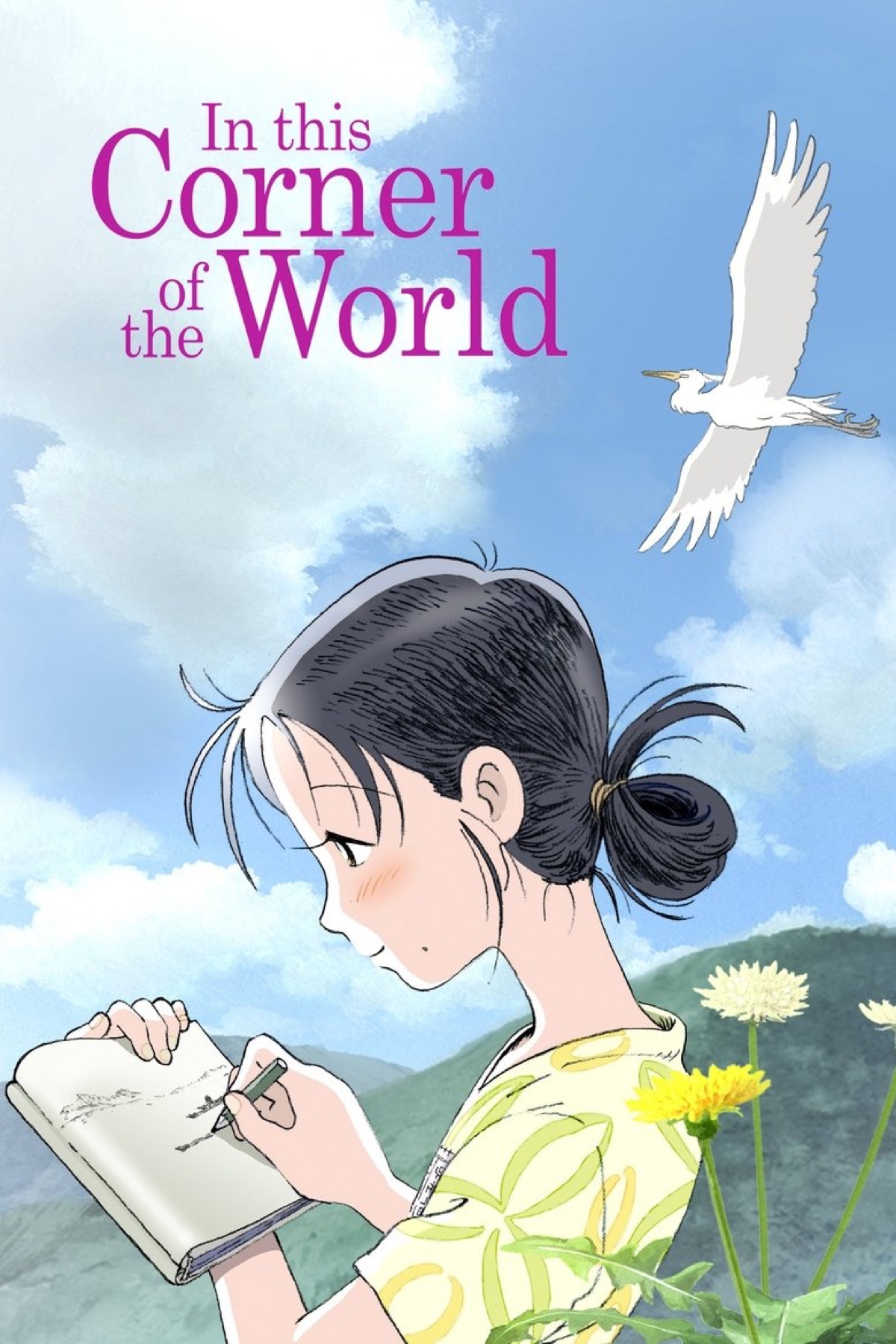
Suzu Urano (Non) grows up in Eba, a seaweed-farming district of Hiroshima. She loves to draw and is a little absent-minded. In 1944, at eighteen, she is asked for in marriage by Shusaku Hojo (Yoshimasa Hosoya), a young man she barely remembers meeting, and moves to Kure to live with his family.
The household includes kind in-laws, and Shusaku’s strict older sister Keiko (Minori Omi), who has come home with her small daughter Harumi (Natsuki Inaba). Food gets scarcer, rations shrink, and the air-raid sirens come more often. Suzu stretches meals with weeds from the roadside, makes mistakes, gets laughed at, and slowly becomes one of the Hojos. In the corner of the screen, a date keeps appearing, and it moves steadily toward the summer of 1945.
✨ What Makes It Special
Why It’s Exceptional
- The war is seen from the kitchen and the ration line, not the front
- Non’s voice turns Suzu into someone who seems to exist off screen too
- The laughs come first, so every loss lands on you personally
- Kotringo’s cover of “Kanashikute Yarikirenai” over the calm sea at Eba in the opening
A war film told from the kitchen
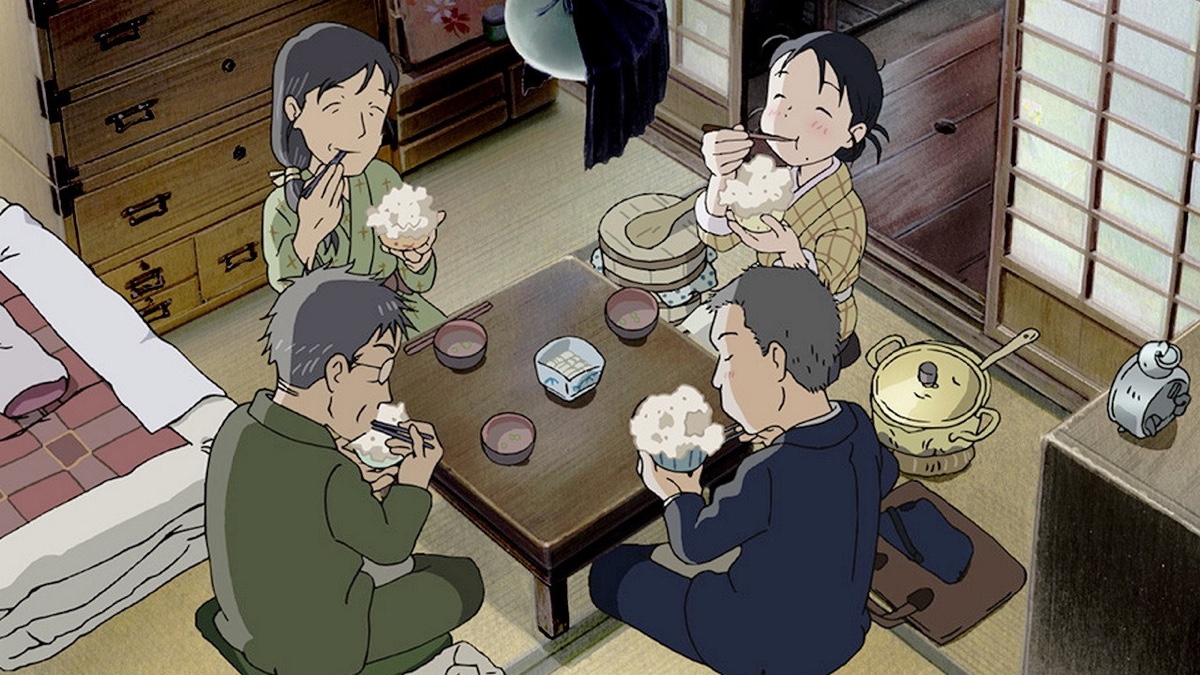
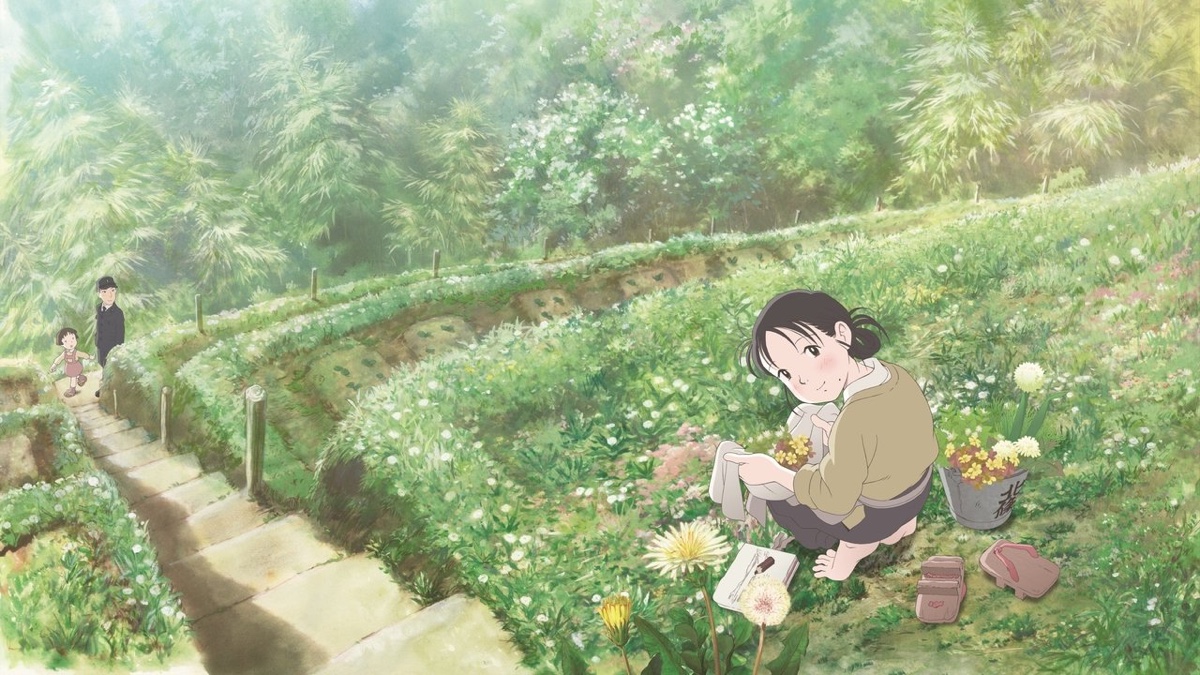
It is a war film, and there is almost no fighting in it. The camera stays in the Hojo kitchen, on the terraced fields behind the house, in the ration line.
I know I am gushing already. Hear me out, though, because the kitchen is the whole point.
Suzu picks violets and chickweed to bulk up the rice porridge. She tries nanko-meshi, a rice-stretching recipe credited to the 14th-century samurai Kusunoki Masashige, and the whole family chews it with polite, doubtful faces. She sews kimono into work trousers, digs an air-raid shelter, and is crushed when she ruins a precious jar of sugar. Scene after scene, mostly with a laugh attached.
Meanwhile the war keeps edging into that kitchen. The first sirens send everyone running. Months later the Hojos walk into the shelter with an “again?” expression, and you realize you have been getting used to it alongside them. That is a different kind of fear from being shown horror head-on.
Many Western viewers know Japan’s wartime home front through Grave of the Fireflies, which follows two children cut off from every adult who could help them. Suzu, by contrast, is surrounded by family and neighbors right to the end. When a film is relentlessly grim, you can file it away as “a story from another time.” This one gives you no such exit. The atomic bomb and the surrender arrive as one more day in a life that keeps going, and that night, someone still cooks rice. So a story set eighty years ago feels as close as an old relative’s memories told at the dinner table.
Non’s voice makes her “Suzu-san”
Non, the actress Japanese viewers first knew as Rena Nonen from NHK’s 2013 morning drama Amachan, carries Suzu’s dreamy, slightly spacey quality straight into the role. Her startled little gasps and the Hiroshima-dialect endings of her sentences come out sounding spoken on the spot, not read from a script.
Here is a small thing you only notice in Japan: people who have seen the film rarely call the heroine plain “Suzu.” They say “Suzu-san,” with the polite suffix, as if she were someone they actually know. I think Non’s voice is why. The woman who mostly murmurs raises her voice once, near the end, with a force you have not heard from her. Because of that gap, the air in the room changes.
You laugh, and the summer of 1945 gets closer
The first half is funny. Suzu sketches warships in the harbor and gets scolded by the military police as a possible spy. She goes out to buy sugar and gets lost past the black market. The film piles up the laughs first, and only then lets the dates move on.
Every laugh pulls you a little further inside the Hojo house. So when something happens, it does not stay on the far side of the screen. It reaches you as something that happened to people you were laughing with a minute ago.
Deeper Themes
What war takes first is the everyday life that was there yesterday. The film measures that loss in units of no sugar in the house, no hand to draw with, instead of bombing runs and casualty counts. History books record the war in numbers, and inside each number was one household’s worth of days. The film pulls events we know from the timeline back to the side of daily life.
🎭 Memorable Scenes
Spoiler warning: from here to the end of “How It Made Me Feel,” I discuss events in the last act. If you have not seen the film, skip ahead to “Where It Falls Short.”
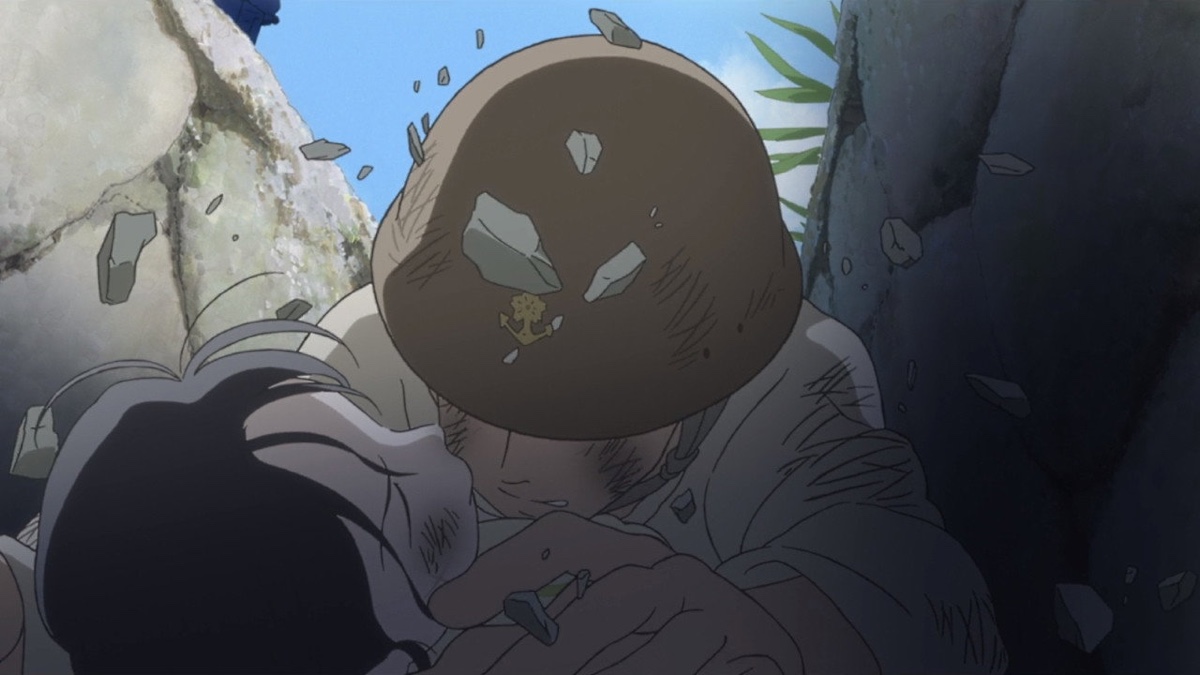
First, the hand that was holding Harumi’s. After an air raid, Suzu is walking hand in hand with Harumi when an unexploded time bomb goes off beside them. Harumi does not survive, and Suzu loses the right hand that was holding hers. This lands on a family that has been trying so hard to live as normally as it can. The everyday had been drawn so carefully up to this point that the shock came back at me at full strength.
Afterward, Suzu keeps replaying it in her head: if only I had done this, if only I had done that. The colors and lines of the picture itself start to fall apart. Keiko blames her for not protecting her daughter. And having lost her drawing hand, Suzu can no longer draw.
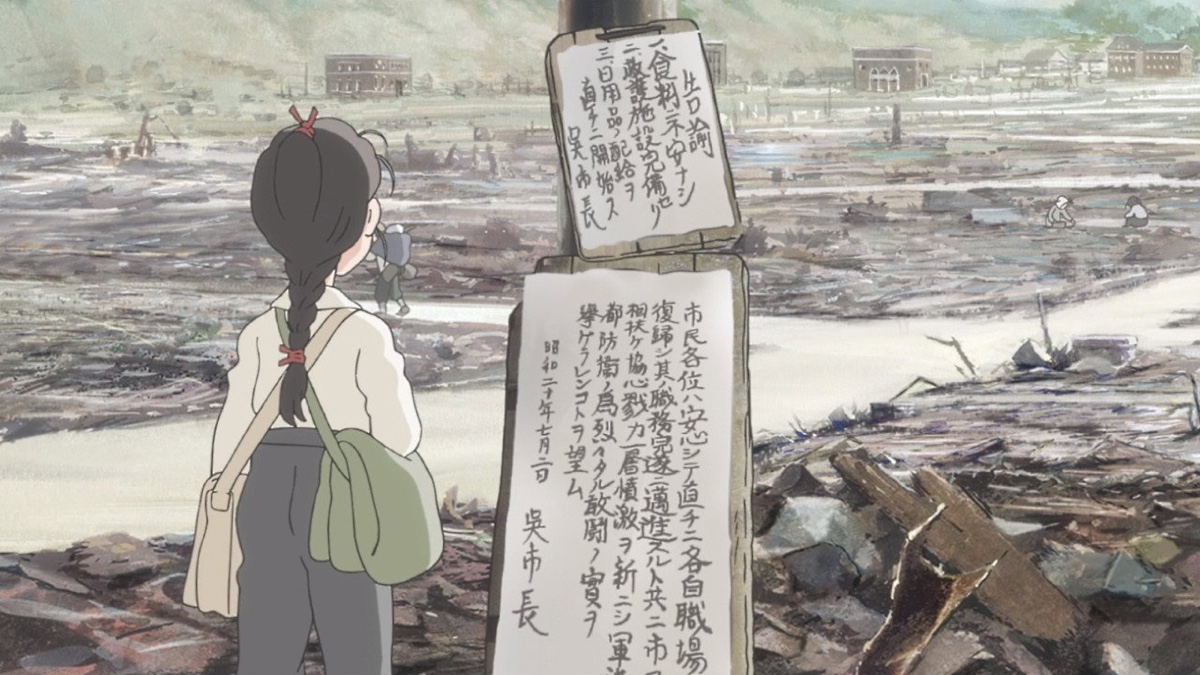
Second, Suzu after the Emperor’s radio broadcast. On August 15, 1945, the Hojo family hears the surrender announcement and takes it quietly. Only Suzu gets angry. She has kept facing forward through everything she lost. Now she shouts, asking what all that endurance was for, runs outside and breaks down crying. A Korean flag is raised over the town, and it dawns on her that her everyday meals were made of rice and beans shipped in from across the sea.
I kept wondering what Suzu was feeling in that moment. She lost Harumi, she lost her hand, and she still kept looking ahead, and all of it gives way at once. Because the film had drawn everything leading up to it so carefully, it hit me all the harder.
Third, “if only I had my paints.” In the middle of an air raid, the bursts of anti-aircraft fire look colorful to Suzu, and she finds herself wanting to paint them. It can seem a way of looking away from reality. I think it is the opposite: turning what is in front of her into a picture is how Suzu has been getting from one day to the next. That is exactly why losing her right hand weighs so much.
💭 How It Made Me Feel
The 2016 film on its own still leaves one piece of the story missing. I explain what in the second point of “Where It Falls Short.”
Nothing goes back to how it was. The Hojos simply begin the days after the war.
At the very end, a little girl who lost her mother in Hiroshima is taken in by the family. Please stay through the end credits. A little of what happens to her and the Hojos afterward is shown there.
😅 Where It Falls Short
I have been praising this film from the first line. But here’s where I have to be honest: there are two places where a first-time viewer may stumble.
The dates move fast, and first-timers lose track
Each new scene opens with a date, and the film moves through time quickly. There is very little explanatory dialogue. If you do not pick up what is placed quietly in the corners of the frame, you notice too late that someone is gone. Following who went through what on a single viewing is hard.
Rin and Shusaku are barely explained in the 2016 film
Rin (Nanase Iwai) is the woman Suzu meets outside the pleasure quarter in Kure. In the 2016 film she appears in only a few scenes, and you finish the film knowing almost nothing about who she is, or how she is tied to Suzu and Shusaku. Readers of the manga catch the hints. Viewers who only know the film do not.
The 2019 extended cut fills that hole completely.
Who Should Watch This?
- Anyone whose idea of a Japanese war anime stops at the pain of Grave of the Fireflies
- People who want one film to watch each August, when Japan marks Hiroshima, Nagasaki and the end of the war
- Parents looking for a war story to watch with their kids (the graphic violence is kept to a minimum)
Who Might Not Enjoy This?
- Viewers who need every event explained on screen
- Viewers who want to know everything about Rin from one 129-minute film
🆚 In This Corner of the World vs. In This Corner (and Other Corners) of the World: Which to Watch?
The one I want you to see is In This Corner (and Other Corners) of the World. It goes deep into Rin’s story, which the 2016 film could not, and you could say the film was completed with this version.
| Version | In This Corner of the World | In This Corner (and Other Corners) of the World |
|---|---|---|
| Released in Japan | November 12, 2016 | December 20, 2019 |
| Runtime | 129 minutes | 168 minutes |
| Rin | A few scenes | Her friendship with Suzu, plus her past with Shusaku |
| New material | None | Rin’s story, plus Teru, voiced by Kana Hanazawa |
| Suzu | A devoted young bride | A wife shaken by her husband’s past |
| US streaming | Prime Video, Pluto TV | No US listing found |
The extended cut is the 2016 film with new scenes woven in: more than 250 new cuts, and 39 minutes more running time. The filmmakers present it as a separate film, not a director’s cut. Until Crunchyroll picked it up in November 2024, it had never been released outside Japan.
Who is Rin? (Spoilers)
Rin works in the pleasure quarter in Kure. In the 2016 film, Suzu gets lost and ends up outside its gates, and Rin is the woman who gives her directions. Suzu draws pictures for her in the dirt, and for a short while the two become friends.
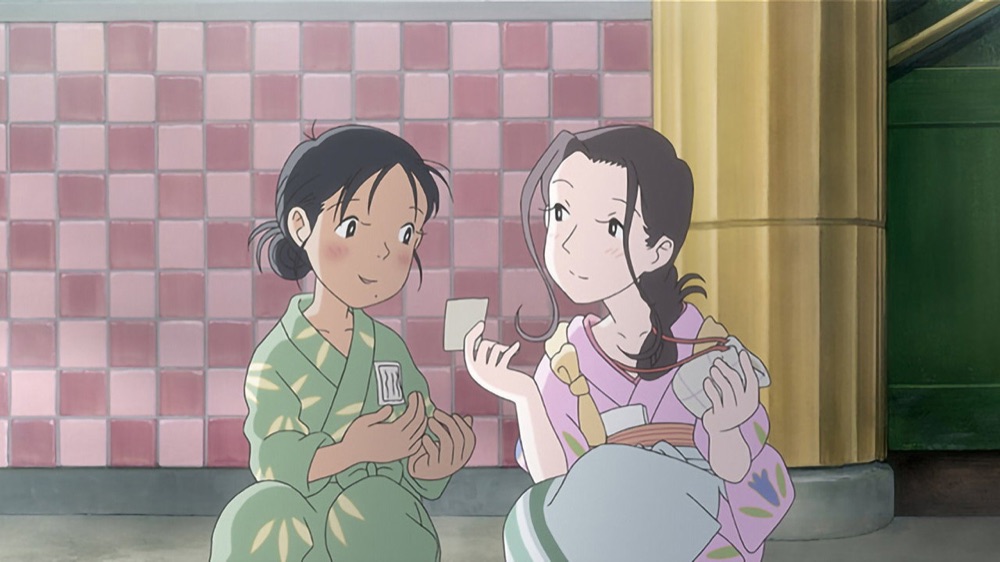
The extended cut shows what came before. Before he married Suzu, Shusaku had wanted to make a life with Rin. Suzu works this out from one small clue, and the question follows her: was I chosen to stand in for someone else? If the Suzu of 2016 reads as a dreamy, devoted young bride, the Suzu of the extended cut is a grown woman who knows her husband’s past and keeps living under the same roof.
There are more scenes of Suzu and Rin face to face, too. They are about the same age, and both are close to losing track of where they belong. What Rin tells Suzu goes even deeper when you hear it with the Suzu who has lost her right hand in mind.
Which one should you watch first?
What the extended cut changes is the weight of Suzu’s decision to make her life with the Hojos. She stays in that house knowing Shusaku’s past. Scenes that made you cry in the 2016 film come back carrying a different meaning.
For US viewers the order is mostly decided for you. The 2016 film is the one you can stream today, and it stands on its own. If it gets to you, keep an eye out for the extended cut reaching a US service, or read the manga, where Rin’s story is told in full.
📺 Streaming Guide by Service
The Available Routes
- Amazon Prime Video: included with Prime (2016 film)
- Pluto TV: free with ads, listed as the English-language version
- Hoopla: free with a participating library card
- Apple TV: digital rental, or buy it to keep
- Extended cut (168 min): no US listing as of October 25, 2026
If you already pay for Prime, you are set. If you do not, Pluto TV costs nothing. For a copy on the shelf, Shout! Factory’s US release puts the film on Blu-ray and DVD in one set.
Theme Song & Soundtrack
The music is by Kotringo. The song over the opening, “Kanashikute Yarikirenai,” is her cover of a 1968 song by The Folk Crusaders. The soundtrack album available to stream is the one for the extended cut (38 tracks), and it includes the music from the 2016 film: Apple Music / Spotify.
📚 Source Manga
Fumiyo Kouno, In This Corner of the World (Omnibus Collection, Seven Seas). The complete three-volume story in one 450-page English hardcover. Rin’s past and the threads back to Suzu’s childhood, which the 2016 film only hints at, are all here. With the extended cut out of reach in the US, this is the way to get Rin’s side of the story in English.
🎬 If You Loved In This Corner of the World, Watch These 3 Next
A hiding place in Warsaw, an island in the Seto Inland Sea, a bamboo grove in old Japan. Three very different settings, and all three end up in the same place this film does.
The Pianist (2002)
Roman Polanski’s film, based on the true story of a Jewish pianist who survived Nazi-occupied Warsaw. He never carries a gun. He is separated from his family, moves from one hiding place to the next, and hunts for food. He watches the war from behind a window, never from the front line, which puts him in the same spot as Suzu in her kitchen. It won the Palme d’Or at Cannes. In the US it streams on Peacock, and it is free with ads on Tubi.
A Letter to Momo (2012)
Hiroyuki Okiura’s animated film. After her father dies, sixth-grader Momo moves with her mother to an island in the Seto Inland Sea. The island it was modeled on, Osakishimojima, belongs to Kure, the same city Suzu marries into. The era and subject are different, but the way the story takes in a loss without making a show of grief, a little at a time inside island life, is very close. Watch the two back to back and compare how each one paints the light on the Kure sea. In the US it is free with a library card on Kanopy. My full take is in my A Letter to Momo review.
The Tale of the Princess Kaguya (2013)
Isao Takahata’s retelling of The Tale of the Bamboo Cutter, often called Japan’s oldest surviving story, drawn in brush-stroke lines and pale washes of color. The joy of a childhood spent running through the hills drains away once the girl is moved to a mansion in the capital. When she flees the mansion, the lines themselves tear and scatter. It is the same thing this film does after Suzu loses her hand, when the drawing starts to break apart, reached by a different road. In the US it streams on HBO Max.
👉 For more films about the war at home, not on the battlefield, see Japanese war anime and movies: 10 about the war, not the battles.
❓ In This Corner of the World FAQ
Is In This Corner of the World on Netflix or Crunchyroll?
Not on Netflix in the US. On Crunchyroll, US viewers can get the 2016 film through the Crunchyroll channel on Prime Video. The extended cut streams on Crunchyroll in many other countries, but I found no US listing as of October 25, 2026.
Is it as sad as Grave of the Fireflies?
It hurts, and I cried. But most of the film is warm, often funny daily life, and the family stays together around Suzu. It is a different kind of sadness from Grave of the Fireflies, and much easier to watch with children.
Is there an English dub?
Yes, for the 2016 film. The US theatrical run in 2017 played both subtitled and dubbed, and the Shout! Factory disc carries both.
📝 Final Thoughts
It is a war film with only a handful of shots fired, and the rest is the Hojo family’s days. Having spent those days with them, when that summer arrives it takes something from you too. In Japan, fewer people are left every year who can tell us about the war firsthand. This film reminded me how much the everyday is worth.
Start with the 2016 film, free or with your Prime account. And do not stop there if you can help it. The version with Rin’s story is the one I would want you to reach in the end, whether that is the extended cut someday or the manga today.
⭐ Series at a Glance
| Category | Rating |
|---|---|
| Story | ★★★★★ |
| Voice Acting | ★★★★★ |
| Visuals & Direction | ★★★★★ |
| Music | ★★★★☆ |
| Accessibility for newcomers | ★★★★☆ |
Usagi’s Recommendation Score
⭐⭐⭐⭐⭐⭐⭐⭐⭐☆
9.2 / 10
129 minutes of carefully drawn everyday life that will make you cry. With Rin’s story added, the film is complete.

